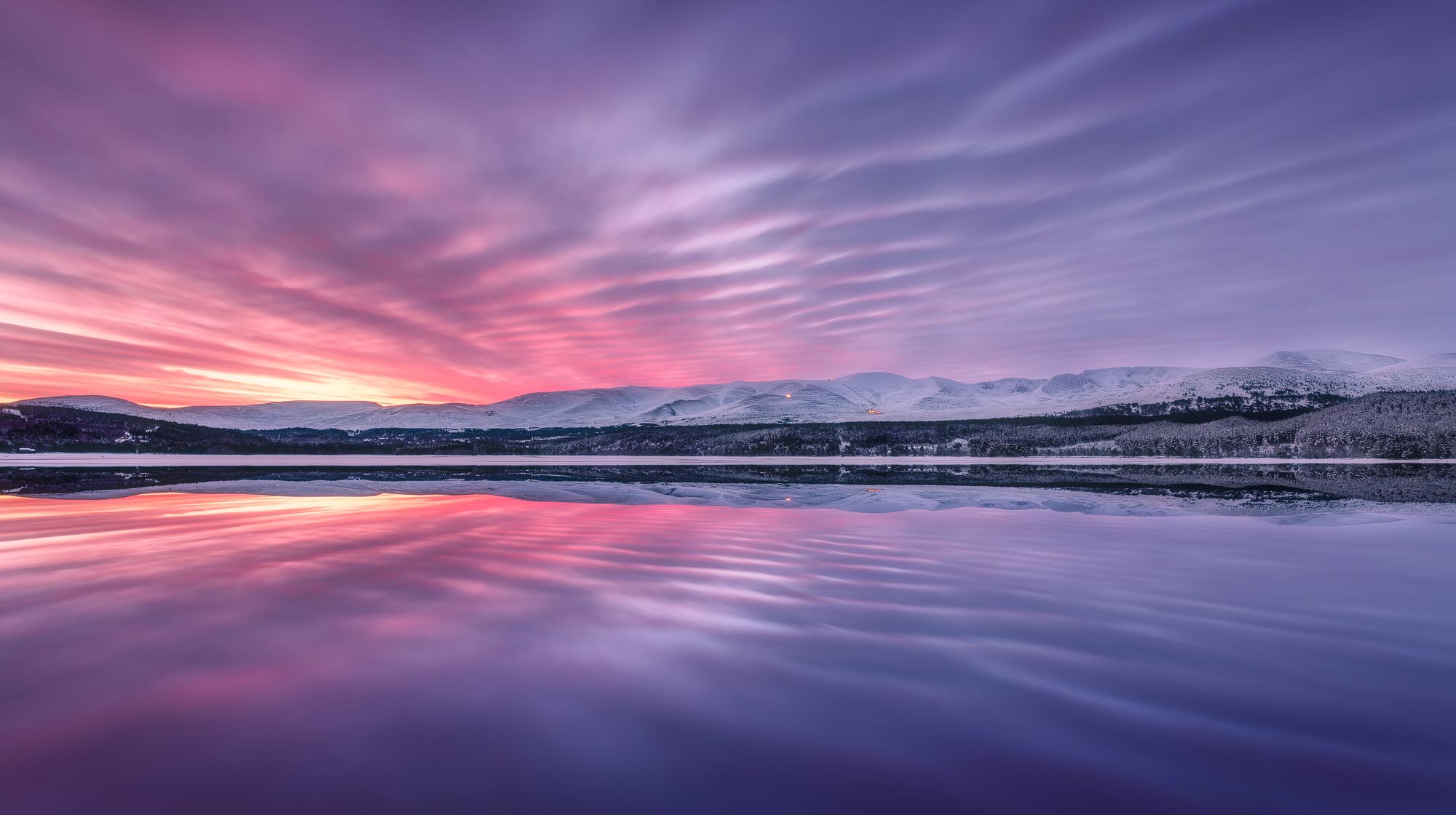
Scotland has just two national parks – the Cairngorms and Loch Lomond & The Trossachs – and between them they protect some of the most remarkable landscape, wildlife and cultural heritage anywhere in Britain. I’ve been visiting both parks for the best part of forty years, and I live a short drive from the northern edge of the Cairngorms on the Moray coast. They are, without question, two of the finest places in Scotland to spend time outdoors.
What might surprise you is how different Scotland’s national parks are from the ones you’ll find in the United States, Canada, or much of continental Europe. They aren’t owned by the state. They aren’t uninhabited wilderness. Thousands of people live and work inside them. And the paths you walk, the lochs you paddle, and the mountains you climb are mostly on privately owned land – land that you have a legal right to access under one of the most progressive pieces of legislation in the outdoor world.
This is a complete guide to both parks – what they are, how they came to exist, what you can see and do in each, and where Scotland stands on creating a third. I’ve also covered the Galloway proposal that was formally rejected in May 2025, and the ongoing question of whether Scotland will ever get a marine national park.

- Scotland’s Two National Parks
- Why Scotland’s Parks Are Different
- A Brief History of National Parks in Scotland
- The Four Statutory Aims
- Loch Lomond & The Trossachs National Park
- Cairngorms National Park
- Wildlife Across Scotland’s National Parks
- The Galloway National Park That Wasn’t
- A Marine National Park for Scotland?
- National Nature Reserves & Geoparks
- Planning Your Visit
- FAQs
- Key Information
- Conclusion
Scotland’s Two National Parks
Scotland has two national parks, both established by the Scottish Parliament in the early years after devolution:
- Loch Lomond & The Trossachs National Park – established on 19 July 2002. Scotland’s first. Covers 1,865 square kilometres (720 square miles) of the southern Highlands, just north of Glasgow.
- Cairngorms National Park – established in September 2003, extended in 2010 to include Highland Perthshire. Covers 4,528 square kilometres (1,748 square miles), making it the largest national park in the United Kingdom.
Together, the two parks cover around 8% of Scotland’s land area, and attract well over six million visits a year between them.

Why Scotland’s National Parks Are Different
When most people think of a national park, they picture Yellowstone, Yosemite, or Banff – vast tracts of state-owned wilderness protected from development, often with controlled access and strict limits on what you can do there. Scotland’s parks are nothing like that.
Both Scottish parks are classified by the IUCN as Category V – “Protected Landscape” – a category designed for areas where the interaction of people and nature over time has produced a landscape worth preserving in its own right. These aren’t wilderness reserves. They’re working, lived-in landscapes where farming, forestry, whisky production, tourism and residential communities all sit alongside conservation.
The majority of land inside both parks is privately owned. Large estates, conservation charities such as the National Trust for Scotland and the RSPB, community buyouts, and ordinary private landowners all hold parts of the parks. What binds it together is not state ownership but statutory aims, a national park authority with planning powers, and – crucially for visitors – the Scottish Outdoor Access Code.
The Land Reform (Scotland) Act 2003, passed a year after the first park was created, grants the public a statutory right of responsible access to most land and inland water in Scotland. This is a genuinely radical piece of legislation. Unlike England, where access to the countryside is largely built around designated rights of way and access land, Scotland’s default is access. You can walk, cycle, camp, kayak, climb or swim almost anywhere, provided you behave responsibly – and that right applies whether you’re in a national park or not.
Living here, I use those rights constantly, and I don’t take them for granted. They’re what makes walking, wild camping and exploring the Scottish Highlands such a fundamentally different experience from doing the same thing south of the border.
A Brief History of National Parks in Scotland
The idea of national parks didn’t originate in Scotland, but it arguably owes its existence to a Scot. John Muir was born in Dunbar, East Lothian, in 1838, and emigrated with his family to the United States as a boy. He went on to become one of the most influential conservationists in history – founder of the Sierra Club, personal friend of President Theodore Roosevelt, and a driving force behind the creation of Yosemite, Sequoia and Grand Canyon National Parks. He is widely credited as “the Father of National Parks”, and Dunbar still celebrates him with the John Muir Birthplace museum.
Despite Muir’s legacy, Scotland was remarkably slow to create parks of its own. A proposal for a Cairngorms national park was first made in 1931 by the Addison Commission, but nothing came of it. A more detailed report in 1945, chaired by Sir Douglas Ramsay, recommended five Scottish national parks – Loch Lomond & the Trossachs, the Cairngorms, Glen Coe/Ben Nevis/Black Mount, Wester Ross, and Glen Strathfarrar/Glen Affric/Glen Cannich. These areas were eventually designated as “National Park Direction Areas”, but fell short of full park status. In 1981 that designation was replaced by the system of National Scenic Areas, of which there are now 40 across Scotland.
Meanwhile, England and Wales pressed ahead. Ten national parks were established there between 1951 and 1957, starting with the Peak District. Scotland had to wait another 45 years.
The breakthrough came with devolution. The Scottish Parliament, reconvened in 1999 for the first time since 1707, passed the National Parks (Scotland) Act 2000 as one of its first pieces of legislation. That Act created the framework. Loch Lomond & The Trossachs was designated in 2002, the Cairngorms in 2003, and the Cairngorms were extended in 2010 to take in Highland Perthshire. Since then, nothing has been added – but as we’ll see, not for want of trying.
The Four Statutory Aims
The National Parks (Scotland) Act 2000 sets out four aims that the park authorities are legally required to pursue:
- To conserve and enhance the natural and cultural heritage of the area.
- To promote sustainable use of the natural resources of the area.
- To promote understanding and enjoyment (including enjoyment in the form of recreation) of the special qualities of the area by the public.
- To promote sustainable economic and social development of the area’s communities.
Although the aims carry equal weight in principle, the Act contains a subtle but important tie-breaker: where any of the aims conflict with the first – conservation – the first takes priority. In practice, this is what gives the park authorities the teeth to refuse or modify planning applications that would damage the landscape, even where there’s an economic case in their favour.
Loch Lomond & The Trossachs National Park
Scotland’s first national park sits where the southern Highlands meet the Central Belt, which is a large part of why it works so well. Roughly half of Scotland’s population lives within an hour’s drive of the park, and Glasgow is only about 35 minutes from its southern gateway at Balloch. You can be standing on the shore of Loch Lomond within an hour of leaving the city – and that accessibility is why the park now receives more than four million visits a year.

Landscape & Geography
The park covers 1,865 square kilometres and is administered in four distinct regions: Loch Lomond itself, the Trossachs, Breadalbane, and Argyll Forest. What makes the landscape so varied is that the Highland Boundary Fault runs diagonally across the park – slicing through Loch Lomond itself via the islands of Inchmurrin, Creinch, Torrinch and Inchcailloch, and over the ridge of Conic Hill. South of that line you get gentler, greener lowland scenery. North of it you’re in proper Highland country – glens, mountains, long dark lochs. Standing on Conic Hill on a clear day and seeing the geology line up beneath you is genuinely remarkable.
Loch Lomond itself is the headline act. At 27.5 square miles of surface area it’s the largest freshwater loch in Great Britain by area – and the largest single body of fresh water in the UK. It’s around 22.6 miles long with roughly thirty islands depending on water levels, and at its deepest point near Inversnaid it drops to 625 feet. Whether you see it on a gloomy November afternoon or a still summer evening, the Bonnie Banks deserve their reputation.
For hillwalkers there are 21 Munros (mountains over 3,000 feet) inside the park, plus 19 Corbetts. The highest is Ben More at 1,174 metres, but the most famous is Ben Lomond (974 metres) – the most southerly Munro in Scotland and one of the most climbed mountains in the country.
Wildlife
The park supports more than 200 species of bird, including golden eagles, ospreys, peregrine falcons and the capercaillie – the world’s largest grouse, which is sadly a rare sight almost anywhere in Britain now. You’ll find red deer across the upland areas, otters along the loch shores, and red squirrels in the native woodlands. Around a quarter of all the flowering wild plant species found in Britain grow somewhere within the park boundaries.
Things to Do
There’s genuinely something here for every kind of visitor. Some highlights:
- Loch cruises on both Loch Lomond and Loch Katrine – the historic SS Sir Walter Scott, built in 1899, still carries passengers on Loch Katrine from Trossachs Pier.
- Climbing Ben Lomond, Ben A’an (a brilliant short hill walk with Munro-quality views) or the more serious Arrochar Alps.
- Watersports of every kind on Loch Lomond – kayaking, canoeing, paddleboarding, sailing, water skiing.
- The Falls of Dochart at Killin, and the spectacular “Rest and be thankful” viewpoint.
- Cycling and walking in the Argyll Forest Park – incidentally, Britain’s first Forest Park, established in 1935.
- Visiting Rob Roy MacGregor’s grave at Balquhidder Parish Church.
- Exploring quieter corners like Loch Arklet – a gem of a loch sandwiched between Loch Lomond and Loch Katrine that most people drive past without stopping.
- Benmore Botanic Garden near Dunoon, with its famous avenue of giant redwoods.
- Inchmahome Priory on the Lake of Menteith – a small boat trip to an island monastery where the infant Mary, Queen of Scots, was hidden in 1547.
Gateway Towns
Balloch at the southern tip of Loch Lomond is the main gateway and home to the park authority headquarters. Luss, on the west shore, is a picture-postcard conservation village. Callander sits on the eastern edge of the Trossachs and is a great base for the Ben Ledi side of the park. Aberfoyle is the hub for the Queen Elizabeth Forest Park and home to the park’s main southern visitor centre.
Cairngorms National Park
If Loch Lomond & The Trossachs is the accessible, lowland-meets-Highland park, the Cairngorms is its bigger, wilder, higher cousin. This is the largest national park in the United Kingdom by some distance – 4,528 square kilometres, or about 6% of Scotland’s entire land area, stretching across five local authority regions: Highland, Moray, Aberdeenshire, Angus, and Perth & Kinross. It has been my playground for the better part of forty years, and I genuinely don’t think I could ever tire of it.

Landscape & Geography
The park is built around the Cairngorms mountain range – a vast arctic-alpine plateau above 1,000 metres which feels, on the wrong day, more like Arctic tundra than anywhere else in Britain. Five of the UK’s six highest mountains are inside the park, including Ben Macdui (1,309 metres), Britain’s second-highest peak. In total there are 55 Munros within the park boundary, along with nine National Nature Reserves and countless smaller lochs and lochans.
Two of Scotland’s great rivers – the Spey and the Dee – rise in the Cairngorms, along with the River Don. The Spey is Scotland’s second-longest river and the one I happen to live closest to. It flows out of the high tops, past the distilleries of Speyside, and into the Moray Firth at Spey Bay.
Around a quarter of Scotland’s remaining native Caledonian pine forest is inside the park. These ancient woodlands – Rothiemurchus, Abernethy, Glenmore, Mar Lodge – are the direct descendants of forests that first established themselves here around 9,000 years ago, and they support wildlife you simply won’t find elsewhere. When the writer Nan Shepherd described these mountains in her classic book The Living Mountain as “the snowiest, windiest, coldest part of the UK, containing some of its highest mountains”, she wasn’t exaggerating.
Wildlife
The Cairngorms is the single most important wildlife area in the UK. An astonishing 25% of the UK’s threatened species are found here, despite the park covering less than 2% of the UK’s land area. The BBC’s Springwatch, Autumnwatch and Winterwatch have all filmed here, and for good reason. You’ve got a realistic chance of seeing red squirrels, red deer, mountain hares (which turn white in winter), golden eagles, ospreys, crested tits, Scottish crossbills, and if you’re very lucky a pine marten – I’ve only seen one in the wild, near my home around 2019, and it’s a sighting that stays with you.
Ospreys famously returned to the Cairngorms after being driven to extinction in Britain in the early 1900s. A pair recolonised from Scandinavia at Loch Garten in the 1950s, and the RSPB nature centre there – about 20 minutes’ drive from Aviemore – is still the best place in Britain to see them.

Things to Do
This is the section I could easily write a book about. A small selection of highlights:
- Loch Morlich – famous for having the highest freshwater beach in Britain at 300 metres above sea level, with stunning Cairngorm views from its pink granite sands. The circular walk is one of the best family walks in the Highlands.
- An Lochan Uaine – the Green Loch – a short walk from Glenmore to a loch of improbable turquoise-green water, supposedly coloured by fairies washing their clothes in it.
- Highland Folk Museum at Newtonmore – a free open-air museum that featured in Outlander, and one of the best family days out in Scotland.
- Highland Wildlife Park near Kingussie – home to polar bears, Scottish wildcats, snow leopards and more.
- Ruthven Barracks – an atmospheric Jacobite-era ruin just outside Kingussie.
- Castle Roy near Nethy Bridge – one of the oldest castles in Scotland, recently restored and reopened to visitors.
- Uath Lochans – a string of little glacial kettle-hole lochans with a short walk rewarded by spectacular views over Strathspey.
- Craigellachie National Nature Reserve – a silver birch woodland rising directly behind Aviemore with superb views over the town and mountains.
- Loch Vaa – a quiet, crannog-dotted little loch north of Aviemore that most tourists never find.
- World-class Speyside whisky distilleries – around half of Scotland’s distilleries are within or near the park, including Glenlivet, Dalwhinnie, Tomintoul and Royal Lochnagar.
- Balmoral Castle on Royal Deeside – open to visitors for much of the year.
- Cairngorm Mountain for skiing, snowboarding and the UK’s highest funicular railway.
- The best walks and hikes in the country, from 10-minute strolls at Loch Vaa to full Munro days on Cairn Gorm and Ben Macdui.
Gateway Towns
Aviemore is the main hub and the place most visitors use as a base. It has everything you need – a train station on the Highland Main Line, supermarkets, plenty of places to eat, gear shops, and good road links in every direction. For a week-long stay, my pick is Scandinavian Village on the west side of town. For more specific guidance, see my detailed guides to the best things to do in Aviemore and a 5-day Aviemore itinerary.
Elsewhere, Grantown-on-Spey is a handsome Georgian town on the north edge of the park (and home to the Cairngorms National Park Authority headquarters). Ballater on Royal Deeside has royal connections and a good cafe scene. Braemar is famous for its Highland Games, traditionally attended by the Royal Family. Kingussie, Newtonmore, Tomintoul (the highest village in the Highlands) and Blair Atholl all make excellent, quieter bases.
The Dark Sky Park
The Tomintoul & Glenlivet – Cairngorms Dark Sky Park is the most northerly Dark Sky Park in the world and one of the darkest. On a clear winter night the Milky Way is plainly visible to the naked eye, and the sheer emptiness of the horizon is something you rarely experience in modern Britain. For keen photographers it’s also one of the better spots on mainland Britain for the northern lights when conditions align. I’ve covered the best stargazing locations across the country in a separate guide to dark skies in Scotland.
A Note on Fire Byelaws
Since 2024 the Cairngorms has operated a seasonal fire byelaw: open fires and barbecues are banned across the entire park from 1 April to 30 September each year, with fines of up to £500. Loch Lomond & The Trossachs has similar seasonal restrictions. Both are a direct response to escalating wildfire risk as Scottish summers become warmer and drier. If you’re camping, bring a stove.
Wildlife Across Scotland’s National Parks
Between them, the two parks protect habitats you genuinely cannot see anywhere else in Britain. The arctic-alpine plateau in the high Cairngorms supports species at the extreme southern edge of their global range. The native pinewoods support an entirely different suite of species again. And the mixed Highland-Lowland character of Loch Lomond & The Trossachs gives the south of Scotland one of its richest bird populations.
Key species to look for:
- Red squirrels – thriving in both parks, particularly in the Caledonian pine forests.
- Golden eagle – Scotland holds almost all of the UK population; both parks have breeding pairs.
- Osprey – Loch Garten is the best-known site, but ospreys now breed in many places across both parks.
- Capercaillie – critically endangered; Abernethy Forest in the Cairngorms is one of its last strongholds.
- Scottish wildcat – reintroductions are under way in the Cairngorms after the wild population collapsed.
- Pine marten – recovering well and seen increasingly often, particularly at night.
- Mountain hare – the only true alpine mammal in Britain, turning white in winter.
- Red deer – Britain’s largest land mammal, abundant in both parks (though their numbers are a source of ongoing management controversy).
- Ptarmigan, crested tit, Scottish crossbill – specialist Highland birds found mostly in the Cairngorms.
- Highland cows – not a wild species as such, but you’ll see plenty of them grazing on the hillsides in both parks.
The Galloway National Park That Wasn’t
For several years, Scotland looked certain to designate a third national park. Under the Bute House Agreement signed in 2021 between the Scottish National Party and the Scottish Greens, the Scottish Government committed to creating at least one new park by spring 2026. In October 2023 a public call for nominations went out, and in spring 2024 a shortlist of five candidate areas was announced:
- Galloway and Ayrshire
- Lochaber
- Loch Awe
- Scottish Borders
- Tay Forest
In July 2024, Galloway was formally proposed as Scotland’s third national park. The joint bid from the Galloway National Park Association and the Galloway & Southern Ayrshire UNESCO Biosphere marketed the area – rightly – as “Scotland in miniature”, taking in hills, moorland, ancient woodland, and a stunning stretch of coast. NatureScot, appointed as statutory reporter, ran a 14-week public consultation from 7 November 2024 to 14 February 2025.
The response was mixed, and far more contentious than anyone had anticipated. Supporters – including all three local authorities (Dumfries & Galloway, South Ayrshire, East Ayrshire) and South of Scotland Enterprise – argued a park would bring investment, tourism, and a clearer economic identity to a struggling region. Opponents – led vocally by local landowners, farmers, foresters, and the renewable energy sector – argued it would add bureaucracy, push up house prices, override local planning decisions, and strain infrastructure.
On 29 May 2025, the Cabinet Secretary for Rural Affairs, Land Reform and Islands, Mairi Gougeon, confirmed in the Scottish Parliament that the Galloway proposal would not proceed. The consultation had found 54% of respondents opposed and 42% in favour overall; among local respondents, the split was 57% against and 40% in favour. In her statement, Ms Gougeon said the Government had “weighed up the arguments for and against” and concluded that local opposition was too significant to override.
She also made clear that, while the Government remained committed to Scotland’s existing parks and open in principle to new ones in the future, no other nomination from the 2024 shortlist would be revisited in the current parliamentary session. The Bute House Agreement itself had collapsed in April 2024, removing much of the political impetus behind the third-park commitment.
So, as of April 2026, Scotland still has just two national parks – and the earliest realistic timeline for a third is now after the 2026 Scottish Parliament election, at the discretion of whichever government emerges.
A Marine National Park for Scotland?
As far back as 2005 the Scottish Executive announced an intention to create Scotland’s first coastal and marine national park. Five possible locations were considered:
- North Uist, Sound of Harris, Harris and South Lewis
- Solway Firth
- Argyll Islands and Coast
- North Skye Coast and Wester Ross
- Ardnamurchan, Small Isles and South Skye Coast
A second attempt in 2008 focused on the Firth of Lorn, and more recently there has been sporadic discussion of a marine park around the Western Isles. None has been designated. As of 2026 Scotland still has no marine national park, and nothing on the table suggests that is about to change.
National Nature Reserves & Geoparks
National parks aren’t Scotland’s only – or even its strongest – protection designation. Scotland has:
- 43 National Nature Reserves (NNRs) – areas of outstanding biological or geological significance, from the enormous Mar Lodge Estate NNR inside the Cairngorms to tiny Corrieshalloch Gorge in Wester Ross. Many of the UK’s rarest species depend on NNRs. The grey seal colony at Loch Fleet NNR in Sutherland is one of the easiest places in Scotland to see wild seals at close range.
- 40 National Scenic Areas (NSAs) – a step down from park status but offering additional planning protection. The Loch Lomond and Trossachs NSAs are both within the national park; others include Glen Affric, Ben Nevis and Glencoe, and the Kyles of Bute.
- Two UNESCO Global Geoparks – the North West Highlands Geopark (in Sutherland and Wester Ross) and Shetland Geopark – protecting areas of international geological importance.
- Two UNESCO Biospheres – Galloway & Southern Ayrshire, and Wester Ross – promoting balance between conservation and sustainable economic use.
- Thousands of Sites of Special Scientific Interest (SSSIs) covering smaller areas of particular importance.

It’s worth saying that many of the places people think of as “Scotland’s wild bits” – Glencoe, Glen Affric, Knoydart, the Torridon hills – lie outside the national park network entirely. They’re protected by other means, or by sheer remoteness.
Planning Your Visit
When to Go
Both parks are open year-round and each season has its own character. My honest recommendation: late May to early June gives the best balance – long daylight, reasonable temperatures, flowering gorse and broom, and the midges haven’t yet appeared in force. September is also wonderful, with autumn colour and the red deer rut. Winter is magical if you’re prepared for short days and real weather. July and August are the busiest months and peak midge season, particularly in sheltered glens on the west side of Loch Lomond & The Trossachs.
Getting There
For Loch Lomond & The Trossachs, Glasgow is the gateway – about 35 minutes by car from the city centre to Balloch, or around 45 minutes by train. Edinburgh is about 90 minutes away by car.
For the Cairngorms, the Highland Main Line runs right through the park, stopping at Blair Atholl, Dalwhinnie, Newtonmore, Kingussie, Aviemore and Carrbridge. Aviemore is around 2 hours 50 minutes by train from Edinburgh or Glasgow, or a similar drive up the A9. From the north, Inverness is half an hour away.
Where to Stay
In the Cairngorms, Aviemore is hard to beat as a base. Our go-to accommodation is Scandinavian Village, a cluster of well-equipped self-catering villas just off the main street. For a shorter stay, the Cairngorm Hotel in the town centre is excellent. Campers have plenty of options including Glenmore Campsite on the shores of Loch Morlich.

In Loch Lomond & The Trossachs, Balloch, Luss, Callander and Aberfoyle all make good bases. Wild camping is permitted under the Outdoor Access Code, but note that certain parts of the Loch Lomond shoreline now have camping byelaws in force between March and September – you need a permit from the park authority or to use a designated campsite.
Respecting the Access Code
Both parks depend on the goodwill of their residents and landowners, and that goodwill is maintained by visitors behaving responsibly. Take your rubbish home. Don’t light fires between April and September. Keep dogs under close control around livestock and during the ground-nesting bird season. Stick to tracks where obvious farming activity is taking place. The Scottish Outdoor Access Code is short, sensible, and well worth reading before you come.
FAQs
How many national parks are in Scotland?
Two: Loch Lomond & The Trossachs National Park (established 2002) and the Cairngorms National Park (established 2003). The Galloway & Ayrshire proposal was formally rejected by the Scottish Government on 29 May 2025.
Which is bigger – the Cairngorms or Loch Lomond & The Trossachs?
The Cairngorms is considerably bigger – 4,528 square kilometres versus 1,865 square kilometres, or roughly two-and-a-half times the size. The Cairngorms is also the largest national park in the whole of the United Kingdom.
Do you have to pay to enter Scotland’s national parks?
No. Entry to both parks is completely free. You may have to pay for parking at popular visitor sites (such as Loch Morlich or Trossachs Pier), and some attractions inside the parks – castles, distilleries, wildlife parks – charge admission.
Is wild camping allowed in Scotland’s national parks?
Yes, under the Scottish Outdoor Access Code, but with conditions. In Loch Lomond & The Trossachs, seasonal camping byelaws apply between March and September in certain management zones – you need a permit or must use a campsite. In the Cairngorms there are no byelaws, but you must follow the code: small groups, two to three nights maximum in any one spot, no fires, and leave no trace.
What’s the best time of year to visit?
Late May to early June and September are the sweet spots. You get long daylight, reasonable weather, and – crucially – lower midge numbers than July or August.
Are dogs allowed in Scotland’s national parks?
Yes. Dogs are welcome almost everywhere, provided they’re kept under close control. That means on a lead around livestock, during the ground-nesting bird season (roughly April to July), and near farms. Off-lead is fine in most open country if your dog is genuinely obedient.
What wildlife am I likely to see?
In the Cairngorms your best bets are red squirrels, red deer, and ospreys (at Loch Garten between April and August). Mountain hares, golden eagles and pine martens are possible with a bit of luck. In Loch Lomond & The Trossachs, red deer, red squirrels, golden eagles and capercaillie are all possible, and you’ll see an enormous range of birds around the lochs.
Will Scotland get a third national park?
Not in the current parliamentary session. Following the rejection of the Galloway bid in May 2025, the Scottish Government confirmed it would not revisit the other shortlisted areas (Lochaber, Loch Awe, Scottish Borders, Tay Forest) before the 2026 election. Any new park is therefore a matter for the next Scottish Parliament.
Key Information
- Loch Lomond & The Trossachs National Park – established 19 July 2002; 1,865 km²; 21 Munros; HQ at Balloch; managed by the Loch Lomond & The Trossachs National Park Authority (lochlomond-trossachs.org)
- Cairngorms National Park – established September 2003 (extended 2010); 4,528 km²; 55 Munros; HQ at Grantown-on-Spey; managed by the Cairngorms National Park Authority (cairngorms.co.uk)
- Entry: Free
- Access: Governed by the Scottish Outdoor Access Code (Land Reform (Scotland) Act 2003)
- Dogs: Welcome under close control
- Fires & barbecues: Banned 1 April – 30 September in the Cairngorms; seasonal restrictions also apply in Loch Lomond & The Trossachs
- Nearest cities: Glasgow (Loch Lomond), Inverness or Aberdeen (Cairngorms)
Conclusion
Scotland’s two national parks are, in my completely biased view, two of the best places in the world to spend time outdoors. They offer genuine wildness within a working, lived-in landscape; a statutory right of access that is almost unique in Europe; and a concentration of wildlife, history, whisky and scenery that would be hard to match anywhere at all.
Whether you only have a long weekend or a full fortnight, you can’t really go wrong with either of them. If you’re coming for the first time and want a simple rule of thumb: pick Loch Lomond & The Trossachs if you’re flying into Glasgow and want easy access; pick the Cairngorms if you want bigger mountains, better wildlife, and more to explore. Try to do both if you can.
And if Scotland does eventually designate a third national park – whether in Galloway after a second attempt, or Lochaber, the Borders, Tay Forest, or somewhere we haven’t thought of yet – I’ll be there to write about it. For now, we’ve got these two, and they’re extraordinary.

Leave a comment below