
Hidden on a heather-clad hillside in the heart of the Cairngorms National Park lies one of Scotland’s most curious natural wonders – the Ringing Stone. Known locally as the ‘Ringin’ Steen’, this unassuming boulder produces an extraordinary bell-like sound when struck with smaller stones, a phenomenon that has intrigued visitors and sparked local legends for centuries. Located just off the A939 near Gairnshiel Bridge in Glen Gairn, this free outdoor attraction offers a unique and interactive experience that delights visitors of all ages.

History and Folklore
The Ringing Stone belongs to a fascinating category of geological curiosities known as lithophones or sonorous rocks – stones that resonate like bells when struck. Such rocks have captivated human imagination since prehistoric times, with examples found across Scotland and around the world. The exact scientific explanation for why certain rocks ‘ring’ remains somewhat mysterious, though geologists believe it relates to the stone’s density, internal structure, and the way it sits upon its supporting rocks, allowing it to vibrate freely when struck.
The Ringing Stone sits within Glen Gairn, a valley steeped in history and folklore. The area was once home to a thriving farming community before the Highland Clearances, and the ruins of old settlements, farms, and an unfinished Catholic chapel can still be found scattered throughout the glen. Local legend speaks of 24 men from Glen Gairn who fought on the Jacobite side at Culloden in 1746, mostly McGregors, of whom 18 were killed. The survivors faced persecution from government troops in the years that followed.

The folklore surrounding the Ringing Stone connects it to the rich tradition of ‘ferlies’ – a Scots word meaning strange or unusual things – and fairies that pervades this part of the Highlands. One can easily imagine how, on a misty day, the mysterious ringing sound echoing across the glen might have fuelled tales of supernatural beings and otherworldly music.
The site sits alongside the A939, which follows the route of the Old Military Road built by Major William Caulfeild in 1751 following the Jacobite Rebellion of 1745. The nearby Gairnshiel Bridge, a distinctive hump-backed single-arch structure, is a Category A listed building and testament to this era of military road-building that opened up the Highlands. A new bridge was constructed downstream in 2023 to accommodate modern traffic, but the historic bridge remains as a monument to 18th-century engineering.
Our Visit
Getting There
Janette and I visited the Ringing Stone on a typical Scottish spring day – overcast skies with that wonderful clarity of light that makes the heather and moorland glow. We approached from Ballater, taking the A939 north towards Tomintoul. The drive itself is spectacular, winding through the Cairngorms National Park with views of rolling heather-clad hills and distant mountains.

Finding the Ringing Stone requires a bit of local knowledge, as there’s no obvious signage from the main road. The key landmark is an old lime kiln on the left side of the road, just north of Gairnshiel Bridge. Here, a section of the old military road has been bypassed, creating a perfect informal parking area with space for several cars. The ruins of the lime kiln, with its distinctive arched opening and lichen-covered stones, is worth exploring in its own right – these kilns were once vital to local agriculture, burning limestone to create lime for fertilising the acidic Highland soils.
Finding and Playing the Stone
From the parking area, we could see other visitors already up on the hillside, which helped us locate the stone. It’s a short but steep climb up the grassy slope to the right of the lime kiln – perhaps 50 metres or so. The Ringing Stone itself is a large grey boulder with distinctive grooves running down its surface, sitting amongst other boulders in a landscape dotted with heather and scattered birch trees.

What strikes you immediately is the collection of smaller stones gathered around and on top of adjacent rocks – evidence of countless visitors who have come to test the stone’s musical properties. We picked up some of these stones and gave it a try ourselves. The sound is remarkable – when you strike the stone in the right spot, it produces a clear, resonant ring quite unlike hitting any normal rock. There’s something almost magical about it.

There are two ways to ‘play’ the Ringing Stone. The first is simply to tap or throw small stones at it and listen for the bell-like tone. The second is to place a stone at the top of the central groove and let it roll down, creating a tumbling, musical sound as it bounces along the channel. Both methods produce that distinctive resonance that sets this boulder apart from its neighbours.
A word of caution: the stone sits on a steep slope, so do take care, especially with children or dogs. It’s important not to stand directly below the stone if someone above is throwing or rolling stones – even small pebbles can pick up surprising speed!

The Setting
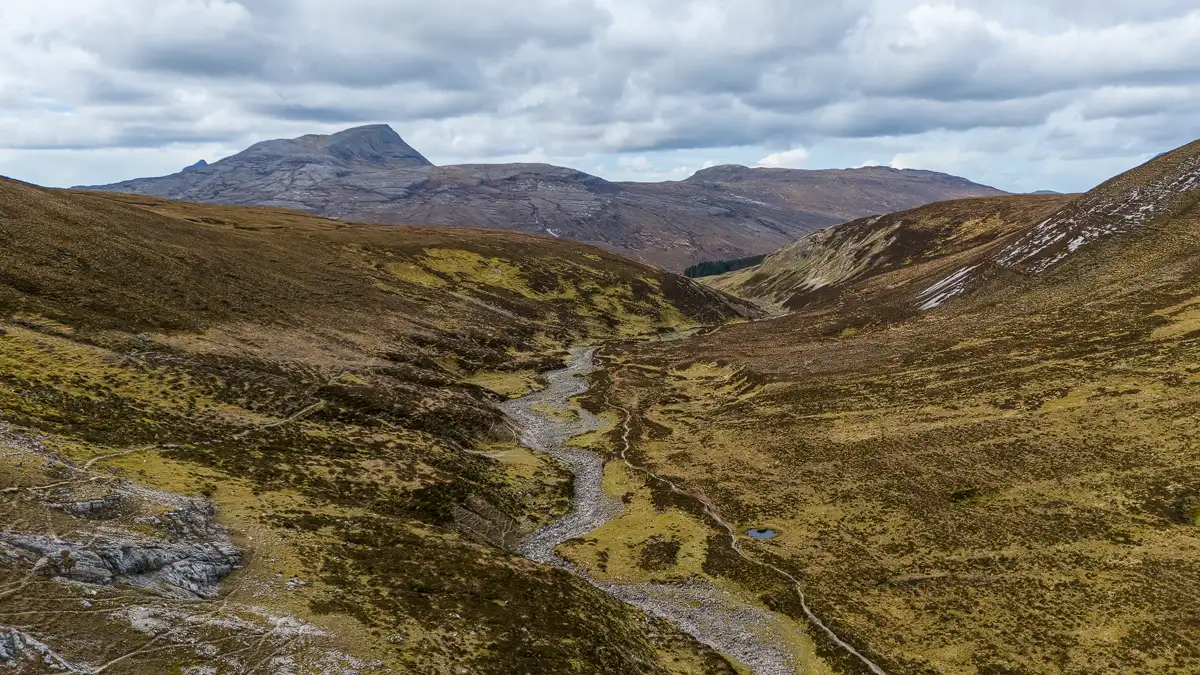
Beyond the novelty of the stone itself, the setting is beautiful. From beside the Ringing Stone, you get wonderful views down Glen Gairn, with the heather moorland stretching away towards distant hills. The landscape has a timeless quality, and it’s easy to understand why this area has inspired so many legends and stories over the centuries.
We spent about half an hour at the site, taking photographs, exploring the lime kiln, and of course, playing the Ringing Stone. The old section of road near the parking area, with its small bridge over a burn, makes a lovely spot for a picnic if the weather is kind.
Frequently Asked Questions
How much does it cost to visit the Ringing Stone?
The Ringing Stone is completely free to visit. It’s an open-air site on the hillside with no admission charges or restricted access.
Is there parking at the Ringing Stone?
Yes, there is informal free parking on a section of the old road beside the lime kiln, just off the A939. Space is limited to perhaps 4–5 cars, but we’ve never seen it completely full.
Can I take dogs to the Ringing Stone?
Yes, dogs are welcome. However, keep them on a lead as the site is close to the road and involves a steep hillside. There may also be livestock grazing in the surrounding area.
Is the Ringing Stone accessible for wheelchairs or pushchairs?
Unfortunately, the Ringing Stone is not wheelchair accessible. Reaching it requires climbing a steep, uneven grassy slope from the parking area. The lime kiln and parking area are accessible, but the stone itself is not.
Are there toilets or facilities at the Ringing Stone?
No, there are no facilities at the site. The nearest public toilets are in Ballater, approximately 8 miles to the south.
What time of year is best to visit?
The Ringing Stone can be visited year-round, though the A939 (known as the Snow Roads Scenic Route) can be closed in severe winter weather. Late summer and early autumn are particularly beautiful when the heather is in bloom.
How long should I allow for a visit?
Allow 10 minutes to climb up, explore the stone, and enjoy the views. If you want to examine the lime kiln and have a picnic, you could easily spend an hour.
Key Information
- Location: A939, Glen Gairn, near Gairnshiel Bridge, Cairngorms National Park, Aberdeenshire
- Managed by: Open access land within Cairngorms National Park
- Entry: Free
- Parking: Free informal parking by old lime kiln
- Facilities: None on site
- Accessibility: Not wheelchair accessible – steep grassy slope
What Else is Nearby?
Gairnshiel Bridge: Just metres from the Ringing Stone parking area, this Category A listed hump-backed bridge dates from 1751 and was built as part of the military road network following the Jacobite Rebellion. Though now bypassed by a new bridge, it remains a beautiful example of 18th-century engineering.
Balmoral Castle: The Scottish residence of the Royal Family lies approximately 10 miles south. The castle and grounds are open to visitors from April to July, offering a glimpse into royal life and beautiful gardens along the River Dee. Prince Albert's Cairn/Pyramid can also be visited.
Corgarff Castle: A 16th-century tower house set in a remote location 8 miles north. The castle has a dramatic history including a tragic massacre and later use as a garrison for Hanoverian troops controlling the military roads.
Burn O’Vat and Muir of Dinnet: Around 12 miles east lies this National Nature Reserve featuring the spectacular Burn O’Vat – a natural cauldron carved by meltwater at the end of the Ice Age. The reserve also includes two beautiful lochs and excellent walking trails.
Royal Lochnagar Distillery: Located near Balmoral, this historic whisky distillery has been producing single malt since 1845 and holds a Royal Warrant. Tours and tastings are available throughout the year.
Video of The Ringing Stone
Here is a video clip from our visit:
Final Thoughts
The Ringing Stone is one of those delightful Scottish curiosities that rewards those who seek it out. It won’t take up much of your day, but the experience of standing on a windswept hillside, striking a stone and hearing it ring like a bell, is genuinely memorable. Combined with the beautiful Glen Gairn setting, the historic lime kiln, and the proximity to other attractions along the A939, it makes for a worthwhile stop on any tour of Royal Deeside and the Cairngorms.
We’d highly recommend the Ringing Stone to anyone passing through the area, especially families with children who will love the interactive nature of the site. Just remember to dress appropriately for the weather and wear sensible footwear for the climb – this is the Highlands, after all!


Leave a comment below