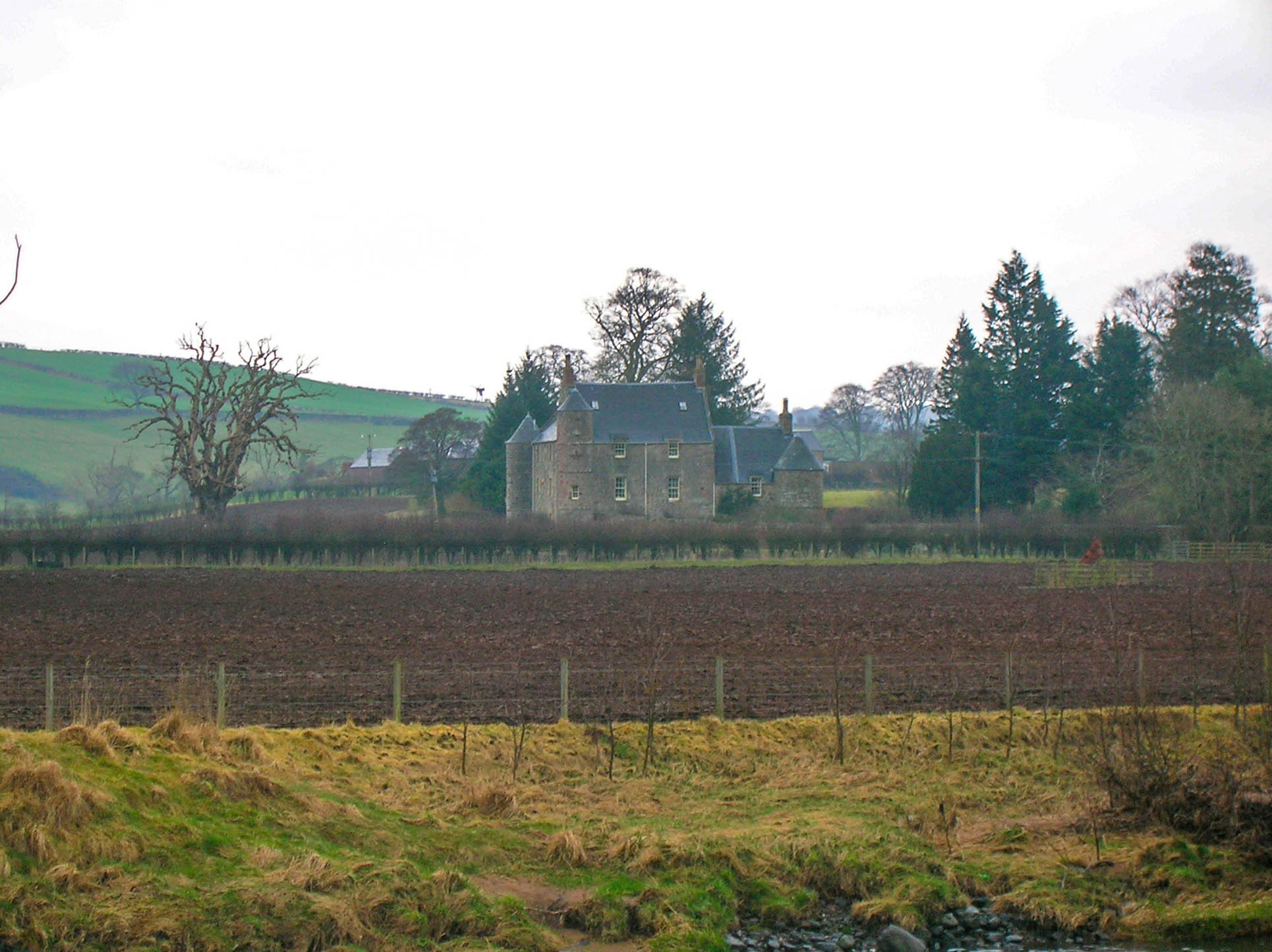

The Master of Stair and the Shadow of Glencoe
Sir John Dalrymple, 1st Earl of Stair, stands as one of the most controversial figures in Scottish history. Born on 10 November 1648 at Stair House in Ayrshire, he rose to become one of the most powerful politicians in late 17th-century Scotland. As Joint Secretary of State, he wielded immense influence over the nation's affairs during a tumultuous period of political and religious upheaval. Yet his legacy remains forever tarnished by his role in orchestrating the infamous Glencoe Massacre of 1692, an act of treachery that shocked even his contemporaries and earned him enduring infamy as "the Curse of Scotland".
A Distinguished Lineage
John Dalrymple was born into a family of remarkable intellectual and legal distinction. His father, James Dalrymple, 1st Viscount of Stair, was Scotland's greatest jurist, whose seminal work, The Institutions of the Law of Scotland (1681), laid the foundation for modern Scots law. The elder Dalrymple was not only a brilliant legal mind but also a man of principle who navigated the dangerous religious and political currents of 17th-century Scotland, ultimately going into exile in Holland during the reign of the Catholic James VII rather than compromise his Presbyterian convictions.
Growing up in this environment of intellectual rigour and political engagement, John followed his father into the legal profession. He qualified as an Advocate in February 1672, joining three of his four brothers who also pursued legal careers. In January 1669, at the age of twenty, he married Elizabeth Dundas, daughter of Sir John Dundas of Newliston. The couple would have ten children together, though only four survived to adulthood: John (who would become the 2nd Earl of Stair), Lady Margaret, William, and George.
Political Rise and the Glorious Revolution
During the 1680s, the Dalrymple family faced persecution under the regime of John Graham of Claverhouse, who quartered his troops on John Dalrymple's property and imposed fines on his tenants. Dalrymple was arrested and imprisoned in September 1684, remaining in Edinburgh Castle until November 1685. Despite serving under James VII, Dalrymple's Presbyterian sympathies and his family's reputation for independence made him suspect in the eyes of the Catholic monarch's supporters.
The Glorious Revolution of 1688 transformed Dalrymple's fortunes. When William of Orange overthrew James VII, Dalrymple became one of the most influential voices arguing for the Scottish Parliament to follow England's lead in accepting William and Mary as joint monarchs. His political acumen and legal expertise proved invaluable during this critical transition, and he was richly rewarded for his loyalty. In 1689, William appointed him Lord Advocate of Scotland, and in 1691 he was elevated to Joint Secretary of State for Scotland, effectively becoming the King's chief representative in Scotland with authority to make day-to-day decisions on the monarch's behalf.
The Jacobite Threat and Highland Policy
The overthrow of James VII sparked the first Jacobite rising in 1689. Scottish Jacobites, particularly in the Highlands, remained loyal to the Stuart king, viewing William as a usurper. The rising, led by John Graham of Claverhouse (now Viscount Dundee), initially scored victories but ultimately collapsed after Dundee's death at the Battle of Killiecrankie and James VII's defeat at the Battle of the Boyne in Ireland in July 1690.
Yet the Jacobite threat lingered, especially in the lawless reaches of the Highlands. Dalrymple, like many Lowland Scots, viewed the Highland clans with a mixture of contempt and fear. He saw them as backward, Catholic or Episcopalian in religion, and prone to cattle raiding and rebellion. In his correspondence, he made no secret of his desire to bring the Highlands under firm government control and to suppress what he viewed as their primitive way of life.
In August 1691, with King William's approval, Dalrymple devised a strategy to pacify the Highlands. All clan chiefs who had taken up arms in the Jacobite rising would be offered a pardon if they swore an oath of allegiance to William and Mary by 1 January 1692. The deadline was deliberately tight, and Dalrymple appears to have hoped that at least one clan would fail to meet it, providing an opportunity to make a brutal example that would cow the others into submission.
The Glencoe Massacre
The MacDonalds of Glencoe were a small clan with a reputation for cattle raiding. Their chief, Alasdair MacIain MacDonald, delayed taking the oath, partly because King James VII only released his followers from their oaths to him in mid-December 1691. When MacIain finally set out to take the oath, he went first to Fort William, only to discover that the oath had to be taken before a civil magistrate, not a military officer. He was directed to Inveraray, sixty miles away through harsh winter conditions.
MacIain reached Inveraray after the 1 January deadline but was allowed to take the oath on 6 January 1692. He returned to Glencoe believing he had done his duty. However, in Edinburgh, Dalrymple seized upon the technical failure to meet the deadline. He wrote to his subordinates that the Glencoe MacDonalds were "the only popish clan in the kingdom, and it will be popular to take a severe course with them." The fate of Glencoe was sealed.
In late January 1692, approximately 120 soldiers from the Earl of Argyll's Regiment, commanded by Captain Robert Campbell of Glenlyon, arrived in Glencoe. They were billeted among the MacDonalds, who, following Highland tradition, offered them hospitality for nearly two weeks. On the evening of 12 February, the officers received their orders: "You are hereby ordered to fall upon the Rebells, the McDonalds of Glenco, and putt all to the sword under Seventy."
At five o'clock on the morning of 13 February 1692, during a fierce snowstorm, the troops turned on their hosts. MacIain was the first killed, shot in his bed. The soldiers moved through the glen, killing men, women, and children. In total, thirty-eight people were murdered in their homes, and many more died of exposure as they fled into the snow-covered mountains. The massacre was not simply murder, but "murder under trust" - a betrayal of the sacred Highland tradition of hospitality that made it especially heinous in the eyes of contemporaries.
Public Outrage and Political Consequences
News of the massacre eventually reached the public, first through publication in France. The brutality of the killings and the violation of hospitality shocked people across Britain, even in an age accustomed to violence. In 1695, the Scottish Parliament demanded an inquiry. The subsequent investigation concluded that the killings were indeed "murder under trust," and responsibility lay with the King's Scottish ministers.
King William, however, shielded Dalrymple from serious punishment. The historian Lord Macaulay would later call this a "great breach of duty" on William's part. Dalrymple was forced to resign his position as Secretary of State for Scotland in 1695, but this was the extent of his punishment. That same year, upon his father's death, he succeeded as 2nd Viscount of Stair, inheriting both the title and the family estates.
The massacre left an indelible stain on Dalrymple's reputation. Jacobites spoke openly of shooting him if he appeared on the streets of Edinburgh. Yet by 1700, his considerable political talents and connections had secured his rehabilitation. He was appointed to the Privy Council of Scotland, and in 1703, Queen Anne created him 1st Earl of Stair, along with the subsidiary titles of Lord Newliston, Glenluce and Stranraer, and Viscount of Dalrymple.
The Act of Union
In the final years of his life, Dalrymple directed his energies toward what he saw as the great work of his political career: the union of the Scottish and English parliaments. Despite widespread opposition across Scotland, where many viewed the proposed union as a betrayal of Scottish independence, Dalrymple used all his influence to advance the cause. His last recorded political action was speaking in the debate over Article XXII of the Act of Union on 7 January 1707.
The following day, 8 January 1707, John Dalrymple died at his lodgings in Edinburgh, aged fifty-eight. He died just months before the Act of Union received royal assent, creating the Kingdom of Great Britain. Whether he would have viewed the union as a triumph or been troubled by the methods used to achieve it remains unknown. What is certain is that the union he championed proved as controversial in Scotland as the massacre that defined his legacy.
The Curse of Scotland
Within three years of Dalrymple's death, a peculiar memorial to his unpopularity emerged. In 1710, the nine of diamonds playing card was first referred to in print as "The Curse of Scotland." The connection to Dalrymple was unmistakable: his family coat of arms featured a blue St Andrew's Cross (saltire) bearing nine gold lozenges - diamond-shaped figures - in an arrangement strikingly similar to the nine of diamonds card.
The nickname likely arose from a combination of grievances held by different groups of Scots. Jacobites despised Dalrymple for his role in overthrowing James VII and supporting William of Orange. Many Scots blamed him for the Glencoe Massacre. Still others resented his pivotal role in bringing about the Act of Union, often called by its opponents "the Bitter Onion." The nine of diamonds became a symbol of all that Dalrymple represented to his enemies, and the card retained its unlucky reputation well into the 19th century.
A Complex Legacy
Sir John Dalrymple, 1st Earl of Stair, was a man of undeniable ability - a skilled lawyer, an astute politician, and a powerful orator. He played crucial roles in establishing the post-Revolution settlement in Scotland and in creating the political union with England. His descendants would include military heroes, diplomats, and statesmen, bearing out Sir Walter Scott's observation that "the family of Dalrymple produced within two centuries as many men of talent, civil and military, of literary, political and professional eminence, as any house in Scotland."
Yet Dalrymple's achievements are forever overshadowed by the Glencoe Massacre. His ruthless willingness to use extreme violence to achieve political ends, his manipulation of legal technicalities to justify murder, and his apparent lack of remorse for the suffering inflicted on innocent people mark him as a figure of darkness in Scottish history. The fact that he orchestrated the betrayal of hospitality, one of the most sacred traditions in Highland culture, only deepened the moral stain.
Whether remembered as a skilled statesman who helped shape modern Britain or as the architect of one of Scotland's most shameful episodes, John Dalrymple remains an inescapable figure in the nation's history. His life and actions continue to provoke debate about the relationship between political expediency and moral responsibility, and about the price that Scotland paid for its union with England. The "Curse of Scotland" may have been a card game nickname, but for many Scots, the real curse was the legacy of betrayal and bloodshed that Dalrymple left behind in the snows of Glencoe.


