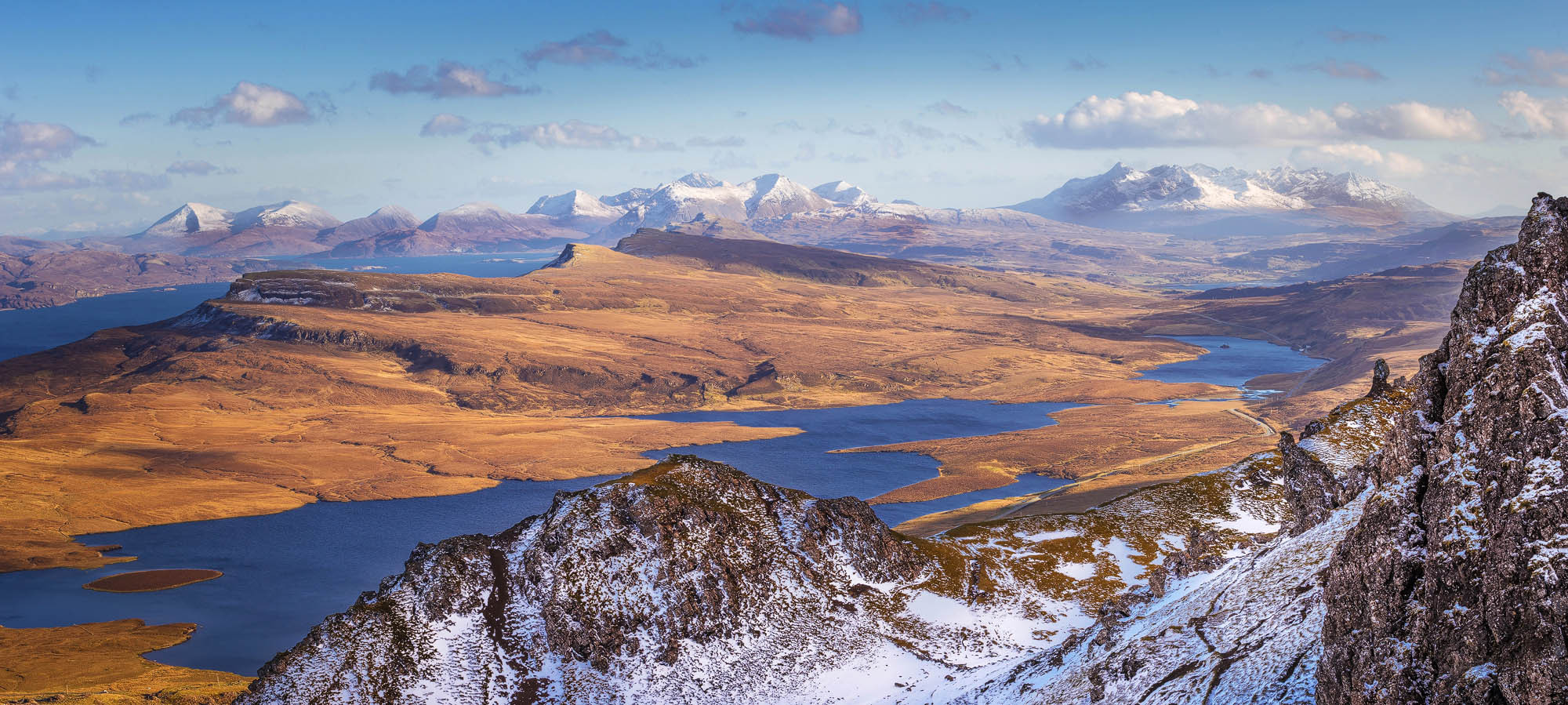
Scotland is one of those places that rewards you the longer you stay – but if you’ve only got a week, you can still experience something genuinely special. The key is being realistic about what you can fit in, making smart choices about your route, and resisting the temptation to tick every box on a Pinterest board.
I’ve lived in Scotland my entire life, and I’ve driven most of its roads more times than I can count. Janette and I have taken the girls to most of the places on this itinerary, so the advice here comes from actual experience rather than a single holiday. This guide gives you a day-by-day route through Scotland’s greatest hits, with honest driving times, practical tips, and alternatives if you want to venture beyond the usual tourist trail – including a route through the often-overlooked northeast, which happens to be my home patch.
If you’re planning a trip to Scotland and wondering how to spend your week, this is the itinerary I’d recommend to a friend.
Before You Go – Essential Planning
Do You Need an ETA?
If you’re visiting from outside the UK and Ireland, you almost certainly need an Electronic Travel Authorisation (ETA) before you travel. Since 25 February 2026, this has been fully enforced – airlines will not let you board without one. The ETA costs £16 (rising to £20 from 8 April 2026), is valid for two years, and allows multiple visits. Apply through the official UK ETA app or at gov.uk/eta. Every traveller needs one, including children and babies. Most applications are processed within minutes, but allow at least three working days before your trip. British and Irish citizens are exempt.
It is also worth sorting your mobile data before you fly, as phone signal can get patchy once you reach the Highlands and you will lean on maps and booking apps throughout the trip. Setting up Saily's affordable eSIM means you arrive with data already working, with no airport SIM queues or surprise roaming charges to deal with.
When to Visit
The honest answer is that there’s no perfect time. May and September are my personal favourites – the days are long, the weather is generally reasonable (by Scottish standards), and the worst of the summer crowds haven’t arrived or have just departed. July and August bring the longest daylight hours and the warmest temperatures, but also the highest prices, the most crowded roads, and the midges. If you’re not familiar with midges, check out my midge forecast tool – these tiny biting insects can genuinely ruin an evening outdoors if you’re not prepared.
Winter (November to February) has its own appeal – dramatic skies, snow-capped mountains, and virtually empty tourist sites – but daylight hours are short (as few as six or seven hours in December) and some attractions close or reduce their hours significantly.
Hiring a Car
You need a car for this itinerary. Public transport in Scotland is decent between cities, but once you’re in the Highlands, buses are infrequent and don’t stop at most of the places you’ll want to visit. Pick up your car at Edinburgh Airport or in the city centre – city centre pick-ups are often cheaper and save you the airport shuttle.
When planning a Scottish road trip, I always recommend comparing car hire prices before arriving, particularly if you're collecting a vehicle at Edinburgh Airport. Discover Cars is a useful comparison platform that brings together offers from numerous rental companies, making it easier to find a vehicle that suits your budget and travel plans. You can compare prices, vehicle types, customer ratings and rental conditions without having to visit several different websites. Many listings also offer free cancellation, although it's worth checking the individual terms before booking. For a week-long journey covering Edinburgh, Inverness, the Isle of Skye and Glencoe, I'd recommend checking the mileage allowance carefully, as the distances can add up surprisingly quickly. If you're unfamiliar with Scottish roads, a smaller car can make navigating narrow Highland routes and single-track roads considerably easier. Booking ahead is particularly sensible during the busy summer months, when demand increases and your preferred vehicle might not be available.
If you’re not used to driving in the UK, I’ve written a detailed guide to driving in Scotland that covers everything from driving on the left to navigating single-track roads. The single most important thing to know: once you leave the motorways and dual carriageways, Scottish roads are often narrow, winding, and significantly slower than Google Maps suggests. As a rule of thumb, add 20–30% to any Google Maps driving time estimate in the Highlands.

Budget Overview
Scotland isn’t cheap, particularly in summer. A rough guide for two adults per day: budget accommodation (Travelodge, hostels) will cost £50–£90 per night; mid-range hotels and B&Bs run £100–£200; and higher-end options start from £200 upwards. Meals out typically cost £12–£20 per person for lunch and £20–£35 for dinner. Car hire runs about £30–£60 per day depending on the season and vehicle. Petrol stations become scarce in the Highlands, so fill up whenever you see one – don’t assume there’ll be another round the corner.
One cost-saving tip: most of Scotland’s best experiences are free. Walking, landscapes, beaches, and many historic sites cost nothing. The big-ticket attractions (Edinburgh Castle, Stirling Castle, Urquhart Castle) are where the costs add up, so pick the ones that matter most to you.
Accommodation Strategy
For a seven-day road trip, I’d suggest basing yourself in no more than three or four locations to avoid the grind of packing and unpacking every single day. My recommended structure: two nights in Edinburgh, two nights in or near Inverness, two nights on or near the Isle of Skye, and one night in the Glencoe or Fort William area. Book well ahead for summer – Skye in particular has very limited accommodation and fills up months in advance.
What to Pack
Layers. Always layers. Scottish weather can change four times in an hour, and even in July you’ll want a waterproof jacket. Comfortable walking shoes are essential – ideally waterproof ones. My Scotland packing list covers everything in detail.
The Itinerary – Day by Day
Day 1: Edinburgh
Most visitors to Scotland arrive in Edinburgh, and it’s the natural starting point for this trip. Don’t try to rush through the capital – Edinburgh deserves at least a full day, and you could easily spend three or four. But with one day, here’s how I’d spend it.
Start at Edinburgh Castle, which dominates the city from its volcanic rock. Book your tickets online in advance (currently £19.50 for adults) and aim to arrive when it opens to beat the queues. The views from the ramparts alone are worth the entry price, and the Honours of Scotland (the Scottish crown jewels) and the Stone of Destiny are fascinating.

From the castle, walk down the Royal Mile towards Holyrood. Take your time – duck into the closes (narrow alleyways) that branch off on either side. Each one has its own story, and they’re where you get a real sense of the medieval city. St Giles’ Cathedral, roughly halfway down, is free to enter and worth a look for its stunning Thistle Chapel.
In the afternoon, climb Calton Hill for what I think is the best panoramic view of Edinburgh. It’s a short, steep climb from Regent Road and takes about ten minutes. The collection of monuments at the top – including the unfinished National Monument, sometimes called “Edinburgh’s Disgrace” – makes for brilliant photographs, especially in the late afternoon light.
For dinner, avoid the tourist traps on the Royal Mile itself. The Grassmarket area has much better options, or head to Stockbridge or Leith for excellent restaurants at more reasonable prices. If you want to try haggis (and you should), look for it on the menu at any decent Scottish restaurant – modern haggis dishes are nothing like the cliché.
Where to stay: The Grassmarket or Old Town areas put you right in the thick of things. For a budget option, Edinburgh has several Travelodge and Premier Inn locations within walking distance of the centre. The Ibis Styles on St Andrew Square is a good mid-range choice.
Day 2: Edinburgh to Inverness (approx. 3.5–4 hours driving, with stops)
Pick up your rental car this morning (if you haven’t already) and head north. The drive from Edinburgh to Inverness is roughly three hours on the A9 if you go direct, but you’d be mad to do it without stopping. There are two main route options, and both are excellent.
Option A: Via the Kelpies and Stirling
Head west on the M9 and stop at The Kelpies in Falkirk, about 45 minutes from Edinburgh. These 30-metre-tall horse head sculptures are genuinely impressive – photographs don’t quite capture their scale. The surrounding Helix Park is free to visit and has a good café. Allow about 45 minutes here.
From the Kelpies, it’s a short drive to Stirling Castle, which I’d argue is actually more interesting than Edinburgh Castle for anyone with an interest in Scottish history. This is where Scotland’s story really happened – the Wars of Independence, Mary Queen of Scots, and some of the most important moments in the nation’s past all centre on this castle. Entry is currently £17 for adults.

From Stirling, rejoin the A9 and head north through Perthshire. If you have time, the pretty Victorian town of Pitlochry makes a good lunch stop. Otherwise, press on to Inverness, arriving in the late afternoon.
Option B: Via the Cairngorms
Take the A9 north from Edinburgh direct, bypassing Stirling. Stop at Pitlochry for a coffee and a stroll, then continue north through the Cairngorms National Park. The stretch of the A9 through the Cairngorms is spectacular – vast open moorland, pine forests, and mountain views. If you want to stretch your legs, the Highland Folk Museum at Newtonmore is a brilliant free attraction that reconstructs Highland life from the 1700s onwards.

Where to stay: Inverness is a compact city with plenty of accommodation options. The city centre is walkable and has good restaurants along the River Ness. For something more rural, look at B&Bs in Drumnadrochit or Beauly, both within easy reach.
Day 3: Inverness, Culloden & Loch Ness
Start the morning at Culloden Battlefield, about fifteen minutes east of Inverness. This is where the last pitched battle on British soil took place in 1746, ending the Jacobite Rising and changing Highland life forever. The visitor centre is excellent – genuinely moving, with a 360-degree immersive film that puts you in the middle of the battle. Even if you’re not particularly interested in military history, Culloden has a power to it that’s hard to describe. Walk the battlefield itself afterwards; the clan headstones marking where men fell are sobering.

After Culloden, head southwest to Loch Ness. The loch is 23 miles long and famously deep, and while I can’t promise you’ll spot the monster, the scenery is undeniable. Urquhart Castle sits on a rocky promontory on the loch’s western shore and is one of the most photographed castles in Scotland. It gets very busy in summer – if you can, visit in the morning or late afternoon to avoid the worst of the crowds. Entry is £12.50 for adults, and the visitor centre has a good exhibition and a café.

If you fancy getting out on the water, the Jacobite Cruises from Inverness or from the castle dock offer boat trips along the loch. They’re touristy, but the views of the castle from the water are excellent. Alternatively, if the weather is good and you’d rather have a walk, the South Loch Ness Trail offers some beautiful sections along the quieter eastern shore.
Back in Inverness for the evening, take a stroll along the River Ness – the Ness Islands Walk is a lovely short circuit through wooded islands in the middle of the river. For food, Inverness has improved massively in recent years. The Mustard Seed on the riverfront does excellent Scottish cuisine.
Day 4: Inverness to the Isle of Skye (approx. 2.5–3 hours)
Today you drive west to the Isle of Skye, and the route itself is one of the highlights of the entire trip. Head west on the A82 along the northern end of Loch Ness, then take the A87 towards Kyle of Lochalsh.
About two hours into the drive, you’ll reach Eilean Donan Castle, possibly the most photographed castle in Scotland (and that’s saying something). Sitting on a small tidal island where three lochs meet, it looks like it was designed specifically for postcards. It’s a 20th-century reconstruction rather than a genuine medieval ruin, but it’s still beautiful and well worth the stop. Entry is around £10 for adults.

From Eilean Donan, it’s about 45 minutes to the Skye Bridge. There’s no toll – it was abolished in 2004 after a long campaign by islanders. Once across, you’re on Skye. If you’re staying in Portree (the island’s main town), it’s another 30 minutes north.
Depending on when you arrive, you might have time to explore Portree itself. The colourful harbour houses are iconic, and there are several good restaurants and pubs. The Scorrybreac does exceptional food if you can get a table (book ahead), and the Isles Inn is a reliably good pub.

Where to stay: Portree has the most options, but accommodation on Skye is limited and expensive in summer. Book months ahead. Alternatives include Broadford (southern Skye) or Sligachan (central, remote, with a famous pub).
Day 5: Exploring the Isle of Skye
A full day on Skye, and you’ll need every hour of it. The island’s roads are narrow, often single-track, and extremely busy in summer. Don’t underestimate how long it takes to get anywhere – the 25-mile drive from Portree to the northern tip can take well over an hour.
Start early with the Old Man of Storr, the iconic rock pinnacle visible from Portree. The walk from the car park to the base of the Storr takes about 45 minutes each way and is steep in places, but the views are extraordinary. The car park fills up quickly in summer, so arriving before 9am is advisable.

Continue north along the Trotternish Peninsula. Kilt Rock and Mealt Falls are a quick roadside stop with a dramatic cliff viewpoint. Further north, the Quiraing is another stunning landscape – a landslip that has created an otherworldly terrain of pinnacles, plateaus, and hidden valleys. If you have the energy, the Quiraing circular walk (about 4 miles, 2 hours) is one of the finest walks in Scotland. If not, the viewpoint from the road is still impressive.
In the afternoon, head to the western side of Skye. Dunvegan Castle, seat of Clan MacLeod for over 800 years, is worth a visit, and the Fairy Pools near Carbost are one of Skye’s most popular natural attractions – a series of crystal-clear pools and waterfalls in the shadow of the Black Cuillin mountains. The walk to the pools is about 1.5 miles each way on a well-maintained path. Neist Point, the most westerly point on Skye, offers dramatic clifftop views and is particularly beautiful at sunset.
A word of caution: Skye’s popularity has exploded in recent years, and the island’s infrastructure hasn’t kept pace. Car parks at popular sites fill up early, toilet facilities are limited, and single-track roads can become gridlocked with campervans in summer. Be patient, be courteous to other drivers, and please use passing places properly.
Day 6: Skye to Glencoe (approx. 3.5–4 hours, with stops)
Leave Skye and head south. You have two options for leaving the island: back across the Skye Bridge, or take the ferry from Armadale to Mallaig (bookable with CalMac, about 30 minutes crossing). The ferry route is more scenic but requires advance booking in summer and adds some time.
If you take the Mallaig route, you’ll pass through some of the most beautiful scenery on the west coast. The Silver Sands of Morar are stunning white sand beaches that wouldn’t look out of place in the Caribbean (the water temperature, sadly, would give the game away). The Glenfinnan Viaduct is a short detour – this is the 21-arched railway bridge made famous by the Harry Potter films, though it was built in 1898 and was impressive long before Hogwarts. The Jacobite Steam Train crosses it around 10:45am and 3pm, and the car park fills up well in advance of these times.

Continue south through Fort William (grab lunch here – the town itself isn’t Scotland’s prettiest, but it has good facilities) and on to Glencoe. The drive through Glen Coe is, for my money, the single most dramatic landscape in mainland Scotland. The valley narrows between towering mountains, and the atmosphere on an overcast day is genuinely spine-tingling. This is also the site of the 1692 Massacre of Glencoe, when government troops slaughtered members of Clan MacDonald. A monument at the village of Glencoe marks the event.

If you have time, stop at the Three Sisters viewpoint or walk to the Lost Valley (Coire Gabhail), a hidden valley where the MacDonalds reportedly hid their stolen cattle. The walk is about 2.5 miles return but involves some scrambling over boulders – it’s not suitable for young children or those with mobility issues.
Where to stay: The Glencoe and Ballachulish area has a good range of accommodation. The Clachaig Inn is legendary among walkers and serves excellent pub food. The Ballachulish Hotel has great views. Kinlochleven, at the end of the West Highland Way, is another option.
Day 7: Glencoe to Edinburgh or Glasgow
Your final day. The drive back to Edinburgh takes about three hours, or Glasgow is about two hours. Either way, there’s time for stops along the way.
Head south through Rannoch Moor (stop at the viewpoint – this vast expanse of blanket bog is hauntingly beautiful) and continue towards Crianlarich, where you join the road along the bonnie banks of Loch Lomond. The village of Luss, on the western shore, is a picturesque lunch stop with views across Scotland’s largest loch.

If you’re heading to Glasgow, you’ll arrive in the early afternoon with time to explore. Glasgow is a completely different city from Edinburgh – grittier, more modern, and with world-class museums that are (remarkably) almost all free. The Kelvingrove Art Gallery and Museum is outstanding, and the Riverside Museum on the Clyde is one of the best transport museums anywhere. Glasgow’s restaurant scene is also superb.
If you’re heading back to Edinburgh, consider a stop at The Kelpies if you missed them on the way out. You could also visit the Falkirk Wheel, the world’s only rotating boat lift, which is nearby. Both are free to visit (tours available for a small charge).
Alternative Route: One Week Including Northeast Scotland
Here’s where I get to champion my home patch. Most one-week itineraries completely ignore the northeast of Scotland, and I think that’s a real shame. The northeast has whisky distilleries, stunning coastline, magnificent castles, and far fewer tourists. If you want a different kind of Scottish experience – one that feels less like following a tourist trail and more like discovering somewhere for yourself – consider this alternative route.

Days 1–2: Edinburgh (as above).
Day 3: Drive north from Edinburgh, but instead of heading to Inverness via the A9, take the A90 coastal route to Aberdeenshire. Stop at Dunnottar Castle near Stonehaven (a spectacular clifftop ruin), then continue north to Aberdeenshire where you’ll find more castles per square mile than anywhere else in the UK. If you have time, check out my 5-day Aberdeenshire itinerary for inspiration on where to stop. Stay overnight in the Aberdeenshire or Moray area.
Day 4: Explore Speyside and the Malt Whisky Trail. This region has the highest concentration of whisky distilleries in Scotland – Glenfiddich, Macallan, Aberlour, and many more. Most offer tours and tastings (remember: designated driver!). In the afternoon, head north to the Moray coast – Findochty, Portknockie, and Cullen are gorgeous fishing villages with quiet beaches. Then drive west to Inverness (about an hour from the Moray coast). My 5-day Moray itinerary has much more detail on this area.
Days 5–7: Pick up the main itinerary from Day 4 above (Inverness to Skye, Skye day, Glencoe and return). You’ll need to trim the Skye day slightly or drop the Glencoe overnight to make the timings work, but it’s absolutely doable.
This route adds about 90 minutes of extra driving overall but gives you something that no other Scotland itinerary offers: a genuine taste of the northeast, which is a completely different Scotland from the well-worn tourist trail.
What Most One-Week Scotland Itineraries Get Wrong
Having read dozens of Scotland itinerary articles while researching this piece, I’ve noticed the same mistakes coming up again and again. Here’s what to avoid.

Underestimating driving times. This is the big one. Google Maps will tell you Inverness to Portree is 2 hours 15 minutes. In reality, on a summer day with tourist traffic, caravans, and single-track roads, it’s closer to three hours. On every Highland route, add 20–30% to the estimated time, more if you’re travelling behind campervans in July.
Trying to include the NC500. The North Coast 500 is a brilliant road trip, but it needs a minimum of five days on its own. Trying to bolt it onto a one-week itinerary that also includes Edinburgh, Skye, and Glencoe is a recipe for exhaustion and frustration. Save it for a dedicated trip – it deserves it.
Only one night on Skye. Skye is far bigger than it looks on a map, and its roads are slow. One night means you arrive late and leave early, seeing very little of the island. Two nights is the minimum to do it justice.
Ignoring the weather. Scotland’s weather is changeable to a degree that visitors from drier countries find genuinely surprising. Don’t build an itinerary that only works in sunshine. Have indoor alternatives for rainy days – whisky distilleries, museums, and castle interiors all work brilliantly when it’s wet outside.
Packing every day to the limit. Leave slack in your schedule. Some of the best moments on a Scotland road trip happen when you pull over on a whim – a waterfall you hadn’t planned for, a beach with nobody on it, a roadside viewpoint that takes your breath away. If your schedule is too tight, you’ll drive straight past all of them.
Useful Live Breathe Scotland Tools
I’ve built several free tools on this site to help with your Scotland trip planning:
- Road Trip Planner – Plan your route across Scotland with key stops and driving times.
- Midge Forecast – Check the midge levels before you go. Essential for summer visitors.
- Packing List – A comprehensive list of what to bring to Scotland, whatever the season.
- Activity Map – An interactive map of Scotland showing attractions, walks, and things to do.
- Accommodation Guide – Find places to stay across every region of Scotland.
- Word to PDF – Convert your Scotland travel plans and itineraries to PDF for easy sharing and access.
If you want a more detailed itinerary for a specific area, check out my free regional itineraries, which cover Moray, Aviemore, Aberdeenshire, and more.
FAQs on One Week in Scotland
Can you see Scotland properly in one week?
You can see the highlights, absolutely. One week gives you enough time for Edinburgh, the Highlands, Loch Ness, the Isle of Skye, and Glencoe – which covers a lot of what makes Scotland special. You won’t see everything, but you’ll get a genuine flavour of the country. Many visitors find one week is enough to fall in love and start planning their return trip.
Is it better to start in Edinburgh or Glasgow?
For a first visit, Edinburgh is the better starting point. It’s more compact, more immediately beautiful, and has more iconic landmarks within walking distance. Glasgow is a fantastic city in its own right, but it requires more time to appreciate. Edinburgh also has more frequent flight connections, making it the easier airport to fly into from most international destinations.
Do I need a car for a week in Scotland?
For this itinerary, yes. You could do Edinburgh and Glasgow by public transport, and train connections to Inverness are good, but the Highland legs of the route (particularly Skye and Glencoe) are extremely difficult without a car. Some organised tours cover the same ground if you’d rather not drive, but you lose the flexibility to stop wherever you want.
When is the best time to visit Scotland?
May and September offer the best balance of weather, daylight, and manageable crowds. June through August are warmest and have the longest days, but popular sites get very busy and midges can be a nuisance in the Highlands. April and October can be beautiful if the weather cooperates, and accommodation is significantly cheaper. Winter is for those who enjoy dramatic landscapes and don’t mind short days.
How much does a week in Scotland cost?
Budget-conscious travellers (hostels, self-catering, free attractions) could manage on £60–£80 per person per day, excluding car hire. Mid-range travellers (B&Bs, restaurant meals, paid attractions) should budget £120–£180 per person per day. Car hire adds £30–£60 per day plus fuel. Edinburgh and Skye are the most expensive areas; the northeast and southwest offer much better value.
Do I need an ETA to visit Scotland?
If you’re not a British or Irish citizen and don’t hold a UK visa, yes. The Electronic Travel Authorisation has been mandatory since February 2026 for all visa-exempt travellers. It costs £16 (rising to £20 from April 2026), is valid for two years, and can be applied for through the UK ETA app or at gov.uk. Apply at least three days before travel.
Is the Isle of Skye worth including in a one-week trip?
Yes, but only if you give it at least two nights. Skye’s landscapes are unlike anywhere else in Scotland, and the Old Man of Storr, the Quiraing, and the Fairy Pools are genuinely special. The trade-off is the driving time to get there and the fact that accommodation is limited and expensive. If you’d rather not commit two nights to Skye, you could spend that time exploring the northeast coast or doing the NC500’s northern section instead.

Final Thoughts
The thing about Scotland is that no single itinerary can capture it all. One week will show you the Highlands, the castles, the lochs, and the cities – but it won’t show you the quiet fishing villages of the northeast coast, the standing stones of Orkney, the wild beaches of the Outer Hebrides, or the rolling farmland of the Borders. And that’s fine. Scotland isn’t a country you visit once – it’s a country you keep coming back to.
Living here, I’m still discovering new places, new stories, and new reasons to appreciate it. I hope this itinerary gives you the start of something similar. Take your time, be flexible with your plans, and don’t be afraid to veer off the route when something catches your eye. The best moments of any Scotland trip are rarely the ones you planned for.
If you’d like a more bespoke itinerary tailored to your interests and travel dates, I offer a personalised travel consultation service. Or if you have questions about any of the places mentioned in this guide, feel free to get in touch.
All information was correct at the time of writing, please check things like entry costs and opening times before you arrive.

Leave a comment below