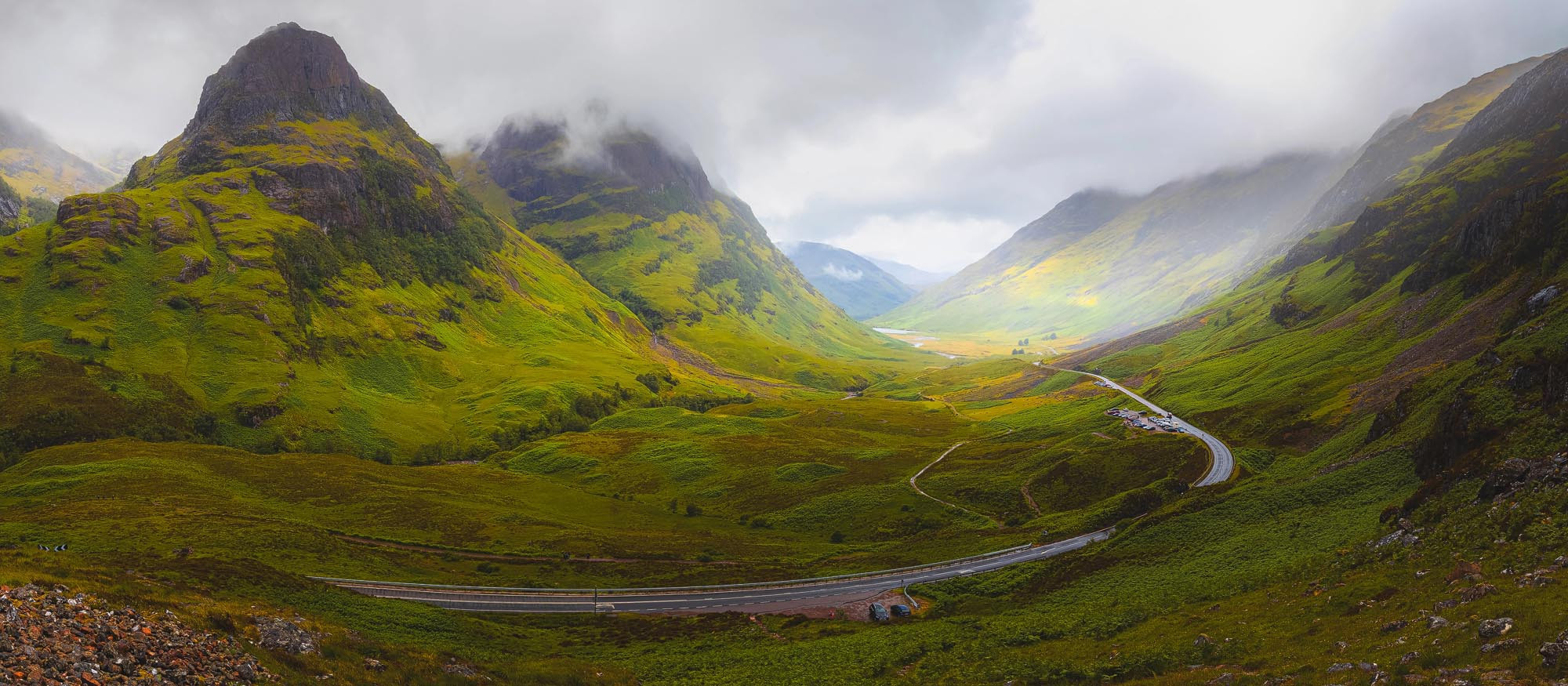
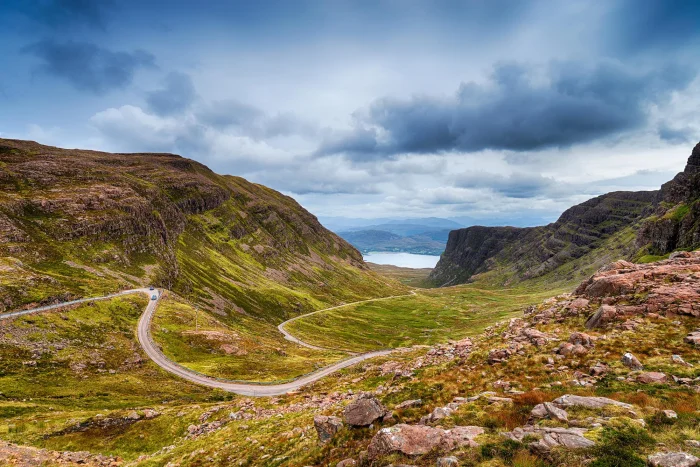
The Scottish Highlands occupy roughly half of Scotland’s landmass, yet they’re home to fewer than 250,000 people. That ratio of space to humans is part of what makes them extraordinary. This is a landscape shaped by ice, emptied by history, and largely unchanged by modernity – a place where you can drive for an hour without passing another vehicle, where mountains rise directly from sea lochs, and where a clear night sky reveals more stars than most people have ever seen.
I’ve lived in the Highlands my entire life. My home is in Moray, on the northeast coast, and I’ve spent the last 35 years exploring every corner of this region – from the Cairngorms on my doorstep to the remote northwest coast, from the battlefields near Inverness to the wild beaches of Sutherland. I’ve driven every major road (and most of the minor ones), climbed the mountains, kayaked the lochs, and eaten my way through more pub kitchens than I care to count. This guide is everything I’d tell a friend who was visiting for the first time.
Most guides to the Highlands are written by people who visited once or twice and cobbled together a list of famous landmarks. That’s fine as far as it goes, but it misses what actually makes this place special. The Highlands aren’t a checklist of postcard views – they’re a living landscape with deep history, extraordinary wildlife, world-class food and drink, and a character that changes dramatically depending on where you are, what season it is, and which direction the wind is blowing. I want this guide to help you understand all of that, so you can plan a trip that goes beyond the obvious.
- What Are the Scottish Highlands?
- The Regions of the Highlands
- Getting to the Highlands
- Getting Around
- The Best Things to See and Do
- A Brief History of the Highlands
- Wildlife in the Highlands
- Food and Drink
- When to Visit
- Practical Tips for Visiting
- Frequently Asked Questions
What Are the Scottish Highlands?
The Highlands are defined by geology. The Highland Boundary Fault is a natural fracture line that runs diagonally across Scotland from the Isle of Arran in the southwest to Stonehaven on the northeast coast. Everything north and west of that line is technically the Highlands. South of it, you’re in the Lowlands. The difference is visible – the gentle rolling farmland gives way abruptly to steeper, wilder terrain as you cross the fault line.
In practical terms, the Highland council area alone covers nearly 10,000 square miles, making it the largest administrative region in the UK. The entire area north of the fault encompasses around 15,000 square miles of mountains, glens, lochs, moorland and coastline. The population density is among the lowest in Europe – in parts of Sutherland and Wester Ross, it drops below two people per square kilometre.

The geology is ancient. The rocks in the northwest Highlands – particularly in Assynt and around Durness – are Lewisian gneiss, some of the oldest rock on Earth at around 3 billion years old. The landscape you see today was largely carved by glaciers during the last ice age, which ended roughly 10,000 years ago. Those glaciers scooped out the glens, carved the lochs, and left behind the dramatic U-shaped valleys that give the Highlands their character. Ben Nevis, Britain’s highest mountain at 1,345 metres, is the remains of a collapsed volcanic dome.
The Highlands contain two national parks – the Cairngorms National Park (the largest in the UK at over 4,500 square kilometres) and Loch Lomond & The Trossachs National Park on the southern boundary. Between them, they protect some of the most important landscapes and habitats in Britain.
The Regions of the Highlands
One of the biggest mistakes visitors make is treating the Highlands as a single destination. The landscape, atmosphere and character vary enormously depending on where you are. Here’s a rough breakdown of the main sub-regions:
The Great Glen and Loch Ness
The Great Glen is a massive geological fault line that splits the Highlands in two, running southwest from Inverness to Fort William. Loch Ness sits within it – 37 kilometres long, up to 230 metres deep, and holding more freshwater than every lake in England and Wales combined. The Caledonian Canal connects the lochs in the glen, providing a navigable waterway from coast to coast. Urquhart Castle on the shores of Loch Ness is one of Scotland’s most visited attractions, and the monster legend alone draws hundreds of thousands of visitors each year.

The Cairngorms and Strathspey
This is my backyard, and I’m biased, but the Cairngorms are magnificent. The mountain plateau sits at over 1,000 metres and includes four of Scotland’s five highest peaks. Below the mountains, the Rothiemurchus and Glenmore forests contain some of the last surviving remnants of the ancient Caledonian pine forest – trees descended from woodland that first established itself here 9,000 years ago. Aviemore is the main hub, and it’s an excellent base for everything from skiing and mountain biking to wildlife watching and loch walks. See my 5-day Aviemore itinerary for a detailed plan.

Glencoe and Lochaber
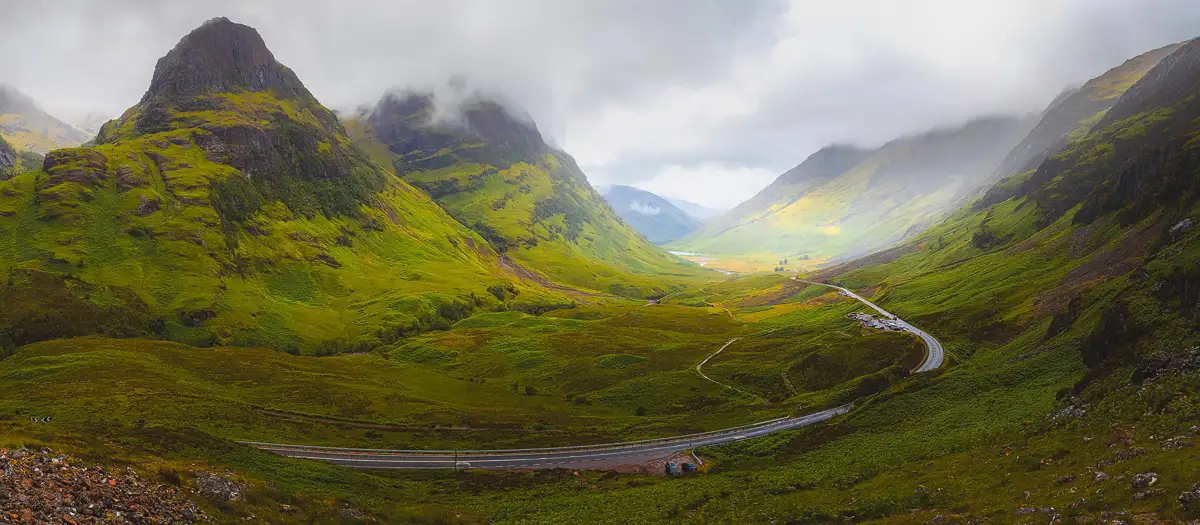
If you’ve ever seen a photograph of the Scottish Highlands, there’s a decent chance it was taken in Glencoe. The glen is extraordinarily photogenic – steep-sided, brooding, and heavy with both geological drama and historical tragedy. Fort William, at the foot of Ben Nevis, is the main town in the Lochaber region and the outdoor capital of the UK. From here you can access Steall Falls (Scotland’s second highest waterfall), the Glenfinnan Viaduct, and the Road to the Isles leading to Mallaig and the ferry to Skye.
Wester Ross and the Northwest
This is where the Highlands get properly wild. The mountains here – Torridon, An Teallach, Suilven, Stac Pollaidh – are unlike anything in the rest of Britain. They rise as individual peaks from a landscape of lochs and moorland, looking almost prehistoric. The coastline is deeply indented with sea lochs, and the villages are small, scattered and self-reliant. Ullapool is the largest settlement and a lovely wee town in its own right, serving as the ferry port for the Outer Hebrides.

The North Coast
The north coast from Cape Wrath to John O’Groats is the wildest, least visited stretch of mainland Britain. The beaches here – Durness, Sandwood Bay, Balnakeil – are astonishing, with white sand and turquoise water that looks like the Caribbean (though the temperature certainly doesn’t feel like it). The North Coast 500 route has brought more visitors to this area in recent years, but it remains genuinely remote. Smoo Cave near Durness is one of the most impressive sea caves in Britain.
The East Coast
The east coast of the Highlands – from Inverness north through the Black Isle, Tain, Dornoch and up to Caithness – is gentler and drier than the west. This is fertile farmland country with long sandy beaches, important historical sites, and some excellent golf courses. Dunrobin Castle near Golspie is one of Scotland’s most impressive stately homes, though its history is complicated by the Sutherland Clearances. The Moray Firth coast, where I live, is covered in my separate Moray Firth guide.
The Isle of Skye
Technically an island, Skye is connected to the mainland by the Skye Bridge and feels like an extension of the Highlands. The Cuillin mountains are among the most dramatic in Britain, the Trotternish Peninsula is otherworldly, and the island has first-rate restaurants, distilleries and history. It does get very busy in summer – around 650,000 visitors a year – so timing your visit carefully is worth thinking about. I’ve written a comprehensive guide to the Isle of Skye if you’re planning to include it in your trip.
Getting to the Highlands
Most visitors arrive in the Highlands by road, and the two main routes depend on where you’re starting from. From Edinburgh, the A9 is the main artery north through Perth to Inverness – a journey of roughly three hours. From Glasgow, the A82 takes you northwest through Loch Lomond and Glencoe to Fort William (about 2.5 hours), or you can head northeast via Stirling to join the A9. Both routes are scenic in very different ways – the A82 through Glencoe is arguably the most dramatic drive in Britain.

Inverness has its own airport with flights from London, Manchester, Bristol, Birmingham and other UK cities. It’s a small, manageable airport and an excellent way to reach the Highlands quickly. Edinburgh and Glasgow airports both have extensive domestic and international connections, and car hire is straightforward from all three.
By train, ScotRail runs regular services from Edinburgh and Glasgow to Inverness (around 3.5 hours), and the West Highland Line from Glasgow to Fort William and Mallaig is one of the great railway journeys in the world. The Caledonian Sleeper from London to Inverness, Fort William or Aberdeen lets you fall asleep in England and wake up in the Highlands – a romantic way to arrive, if not always the most restful.
Getting Around the Highlands
A car is, realistically, the best way to explore the Highlands. Public transport exists, but services outside the main towns are infrequent, and many of the best locations are simply not accessible by bus or train. Car hire from Inverness, Edinburgh or Glasgow is straightforward, and driving in the Highlands is a pleasure once you get used to a few things.

Single-track roads are the big one. Many roads in the west and north Highlands are single lane with passing places at regular intervals. The etiquette is simple: if a car is coming towards you, pull into the nearest passing place on your left (or stop opposite one on your right) and let them pass. If someone behind you is driving faster, pull over and let them past. Never park in a passing place. These roads are narrow, but they’re not difficult – locals drive them every day. Just take your time and be courteous.
Fuel is another consideration. Petrol stations become sparse once you leave the main towns, and prices rise the further you get from the A9 corridor. Fill up whenever you can, especially if you’re heading into the northwest or north coast. I’ve put together a guide to petrol stations on the NC500 which covers the main stops.
Distances in the Highlands are deceptive. The roads wind, the speed limits are lower, and you’ll want to stop constantly for views and photographs. A journey that looks like two hours on Google Maps can easily take three or four once you factor in single-track sections, sheep on the road, and the sheer number of times you’ll pull over because something catches your eye. Build more time into your itinerary than you think you need. If you’re planning a road trip, my 7-day Scotland itinerary covers the logistics in detail.
The Best Things to See and Do
Castles
The Highlands are thick with castles – ruined, restored, inhabited and everything in between. Eilean Donan, sitting on its tidal island where three sea lochs meet near Dornie, is probably the most photographed castle in Scotland and genuinely lives up to expectations. Urquhart Castle on Loch Ness is impressive but very busy in summer – go early or late in the day if you can. Dunrobin Castle near Golspie has a Loire Valley grandeur that feels almost absurd this far north, and its falconry display is brilliant.

For something quieter, Ruthven Barracks near Kingussie is a powerful ruin with views across Strathspey, and Lochindorb Castle – marooned on an island in a bleak moorland loch south of Forres – is one of the most atmospheric castle sites in Scotland. You can’t access it without a boat, but the setting is unforgettable.
Mountains and Walks
Scotland has 282 Munros (mountains over 3,000 feet / 914 metres), and a significant number of them are in the Highlands. Ben Nevis near Fort William is the highest and the most popular, but it’s far from the most interesting climb. The Cairngorm plateau offers a genuine Arctic experience in winter, the Torridon mountains in Wester Ross are among the most dramatic in Britain, and Suilven in Assynt is one of the most recognisable shapes in Scottish mountaineering.

You don’t need to be a mountaineer to enjoy walking in the Highlands. The Loch Morlich circular near Aviemore is flat, family-friendly and absolutely gorgeous. The walk to Steall Falls in Glen Nevis is moderately challenging but incredibly rewarding – it remains one of my favourite walks in Scotland. Rogie Falls west of Strathpeffer is a short, easy walk to a spectacular waterfall where you can sometimes see salmon leaping. And An Lochan Uaine (the Green Loch) near Aviemore is a magical spot that only takes about 40 minutes to reach on foot.

Lochs
Scotland has over 30,000 freshwater lochs, and the Highlands claim a huge proportion of them. Loch Ness gets all the attention, but Loch Morlich in the Cairngorms has a sandy beach at 300 metres elevation and views that rival anything in Norway. Loch Maree in Wester Ross is often described as the most beautiful loch in Scotland. Loch an Eilein near Aviemore has a ruined castle on its island and a pine forest walk that’s pure magic. And the sea lochs of the west coast – Loch Duich, Loch Torridon, Loch Hourn – are as dramatic as any fjord.

Beaches
This surprises many visitors, but the Highlands have some of the finest beaches in Europe. The north and west coasts in particular have stretches of white sand and clear turquoise water that look tropical in photographs. Sandwood Bay in Sutherland is regularly voted among the best beaches in Britain – the catch is it requires a 4-mile walk to reach it, which keeps the crowds away. Achmelvich near Lochinver, Balnakeil near Durness, and Clashnessie are all exceptional. On the east coast, Dornoch beach and Nairn beach are more accessible and still beautiful.

The Glenfinnan Viaduct and Jacobite Steam Train
The 21-arch Glenfinnan Viaduct, built in 1901, became world-famous after appearing in the Harry Potter films as the route to Hogwarts. The Jacobite steam train runs across it between Fort William and Mallaig during the tourist season, and watching it cross with steam billowing is genuinely spectacular. There’s a viewpoint car park on the road below, but it gets extremely busy – arrive at least an hour before the train is due if you want a good position.

Highland Villages and Towns
Inverness is the only city in the Highlands and the natural gateway to the region. It’s a pleasant, compact city with a lovely riverside setting, good restaurants, and excellent access to attractions in every direction. See my 5-day Inverness itinerary for a full plan.

Beyond Inverness, the Highlands are dotted with characterful small towns and villages. Ullapool on Loch Broom is one of the prettiest, with its whitewashed waterfront buildings and regular live music scene. Fort William is practical rather than pretty, but its setting beneath Ben Nevis is hard to beat. Dornoch on the east coast is a lovely wee town with a medieval cathedral, championship golf course, and some of the best beaches in the area. Portree on Skye has its famous coloured harbour buildings and serves as the island’s main hub. And Aviemore – while not the most architecturally beautiful town – has an energy and atmosphere that make it one of my favourite places in Scotland.

The Fairy Pools and Isle of Skye
The Fairy Pools at the foot of the Black Cuillin mountains on Skye are one of the most popular natural attractions in the Highlands. A series of crystal-clear pools and waterfalls fed by mountain burns, they’re stunning in any weather – though they can be very busy between June and September. The walk from the car park is straightforward and takes about 30-40 minutes each way. For a fuller picture of what Skye offers, see my complete guide to the Isle of Skye.

A Brief History of the Highlands
The history of the Highlands is deep, complex and often brutal. Understanding even a little of it transforms a visit from sightseeing into something more meaningful.
The earliest evidence of human habitation in the Highlands dates back to around 10,000 BC, when Mesolithic hunter-gatherers moved into the area as the glaciers retreated. By the Neolithic period, communities were building stone circles, chambered cairns and brochs – the circular stone towers that dot the Highland landscape. The Picts, a confederation of Celtic tribes, dominated Scotland north of the Forth from roughly the 3rd to the 9th century AD, leaving behind a legacy of intricately carved symbol stones. Norse settlers arrived from the 8th century onward and ruled large parts of the Highlands and Islands for several centuries. Place names across the north and west – Ullapool, Laxford, Thurso – still carry their Scandinavian origins.

The clan system that defined Highland society for centuries was a complex web of kinship, loyalty and often violent rivalry. Clans controlled territory, dispensed justice, and could raise armies at short notice. This system endured through the Wars of Scottish Independence, the power struggles of the medieval period, and the religious upheavals of the Reformation.
The Jacobite Risings of the 17th and 18th centuries were watershed moments. The final rising in 1745, led by Charles Edward Stuart (Bonnie Prince Charlie), ended in catastrophic defeat at the Battle of Culloden in April 1746. The battle itself lasted less than an hour, but the government reprisals that followed – the banning of tartan, the disarming of the clans, the systematic dismantling of Highland culture – changed the region forever. Janette and I visited Culloden a couple of years ago, and despite living relatively nearby, we were both deeply moved by the experience. The visitor centre is excellent, but it’s walking the battlefield itself and seeing the clan headstones that really hits home.
The Highland Clearances of the late 18th and 19th centuries were the final blow to the traditional Highland way of life. Landowners, many of them clan chiefs, forcibly evicted thousands of tenants from their homes to make way for more profitable sheep farming. Entire communities were uprooted and displaced to the coast, to the Lowlands, or overseas to Canada, Australia and New Zealand. The Clearances emptied vast areas of the Highlands and created the sparsely populated landscape we see today. The ruins of cleared townships are still visible across the region – a sobering reminder of what was lost.
Wildlife in the Highlands
The Highlands support an extraordinary range of wildlife, much of it unique to Scotland within the British context. Living here, I see some of these animals regularly, and it never gets old.
Red Deer
Red deer are Scotland’s largest wild land mammal, and there are an estimated 400,000 of them in the Highlands. Stags with full antlers are one of the great sights of the Scottish autumn, particularly during the rutting season in October when you can hear them roaring across the glens. You’ll see them grazing on hillsides, crossing roads, and occasionally wandering through village streets. If you want a guaranteed close encounter, Highland Wildlife Park near Kingussie has both red deer and reindeer, along with polar bears, wolves and other species.

Highland Cows
No guide to the Highlands would be complete without mentioning Highland cows – or “heilan coos” as we call them locally. These shaggy, long-horned cattle have become as much a symbol of Scotland as tartan and bagpipes. Their double coat of oily hair makes them perfectly adapted to the wet, windy Highland climate, and they’re capable of grazing on rough vegetation that other breeds would reject. You’ll find them throughout the Highlands, particularly at farms, castle grounds and Highland games events where they’re often groomed and displayed.

Eagles
The Highlands are home to both golden eagles and white-tailed eagles (sea eagles). Golden eagles are resident throughout the mountain areas, with an estimated 500 breeding pairs in Scotland. They’re solitary, elusive birds, and spotting one soaring over a glen is a genuine thrill. White-tailed eagles, Britain’s largest bird of prey with a wingspan of up to 2.4 metres, were driven to extinction in Scotland in the early 20th century but have been successfully reintroduced since 1975. They’re now established on the west coast and islands, particularly around Mull and Skye, with the population continuing to grow.

Dolphins and Marine Life
The Moray Firth is home to around 200 bottlenose dolphins – the most northerly resident population of this species in the world. Living on the Moray coast, I’ve been lucky enough to see them many times, and they never fail to stop me in my tracks. Chanonry Point on the Black Isle, near Fortrose, is one of the best places in Britain to see dolphins from the shore. The dolphins come in close to feed on salmon, sometimes just metres from the beach. The best viewing is about an hour after low tide during the summer months.

Beyond dolphins, Highland waters support harbour seals, grey seals, otters (particularly on the west coast and Skye), porpoises, minke whales and occasional orcas. Basking sharks visit the west coast in summer, and puffins breed on several seabird colonies off the coast.
Other Wildlife
The Highlands are home to red squirrels (increasingly rare in the rest of Britain but thriving in the Caledonian pine forests), pine martens (making a strong comeback), Scottish wildcats (critically endangered and incredibly elusive), mountain hares (turning white in winter), and osprey (breeding successfully at several sites including Loch Garten near Aviemore). The ancient Caledonian forest is also home to specialist bird species including the Scottish crossbill (Britain’s only endemic bird species), the crested tit, and the capercaillie.
Food and Drink
Whisky
Scotland has over 130 active distilleries, and a significant proportion of them are in the Highlands. The Speyside region alone – the area around the River Spey in Moray and Banffshire, which overlaps with the eastern Highlands – has more than 50 working distilleries, including famous names like Glenfiddich, Macallan, Aberlour and Glenlivet. Highland whisky tends to be fuller-bodied than Lowland styles, with regional variations ranging from the rich, fruity malts of Speyside to the heavier, more robust character of northern distilleries like Clynelish and Old Pulteney.

Most distilleries offer tours and tastings, and a distillery visit is one of the best rainy-day activities in the Highlands. Glenfiddich at Dufftown is one of the most popular and does a very polished tour. For something more intimate, smaller distilleries like Tomatin, Dalwhinnie (the highest distillery in Scotland) or Glen Moray offer a more personal experience. If you’re serious about whisky, the Malt Whisky Trail in Speyside connects several distilleries and a cooperage on a signposted route.
Seafood
Highland seafood is exceptional. The cold, clean waters of the Atlantic and North Sea produce langoustines (also known as Norway lobsters), crab, lobster, oysters, mussels, scallops, and a huge variety of fish. Scottish langoustines, in particular, are considered among the finest shellfish in the world. The west coast ports – Oban, Mallaig, Ullapool – are the best places to eat seafood fresh from the boat.

Cullen skink – a thick, creamy soup made from smoked haddock, potatoes and onions – is a traditional Highland dish that’s worth seeking out. It originates from the fishing village of Cullen on the Moray coast and is served in pubs and restaurants across the region. Haggis, neeps and tatties is another Highland staple, and it’s far better than its reputation suggests – properly made haggis is rich, peppery and satisfying. The food scene across the Highlands has improved enormously in recent years, with excellent restaurants in unlikely locations serving locally sourced ingredients.
When to Visit the Highlands
Every season in the Highlands has something to recommend it, and each comes with trade-offs. There is no perfect time – only the right time for what you want to experience.
Spring (March – May)
Spring arrives slowly in the Highlands. March is still wintry, with snow on the mountains and short days. By April, the light improves dramatically, lambs appear in the fields, and the landscape starts to green up. May is often the best month for photography – long days, relatively low visitor numbers, and the wild flowers beginning to emerge. Midges haven’t arrived yet, which is a major bonus.
Summer (June – August)
The longest days, the warmest temperatures, and the highest chance of decent weather. June and early July can be glorious, with daylight stretching past 10pm and the landscape at its greenest. The downside is that this is peak tourist season – popular spots like Skye, Glencoe and the NC500 route get very busy, and accommodation books up months in advance. And then there are the midges – Scotland’s notorious biting insects arrive in late May and persist through September, peaking in July and August. The west coast and sheltered glens are worst affected. Check the midge forecast before you go.
Autumn (September – November)
Autumn is magnificent in the Highlands. The heather fades to russet, the birch and rowan trees turn gold and amber, and the red deer rutting season provides one of the great wildlife spectacles of the Scottish year. September is still warm enough for comfortable walking, and the tourist crowds thin out noticeably. October brings shorter days but spectacular colours, and the first snow often appears on the high tops. November is quiet, dark and atmospheric – perfect if you prefer solitude.

Winter (December – February)
Winter in the Highlands is not for the faint-hearted, but it can be extraordinary. Snow-covered mountains, frozen lochs, short but intensely beautiful days, and the chance to see the Northern Lights. Skiing at Cairngorm, Nevis Range and other resorts runs from roughly December to April. The Highlands are very quiet in winter – many smaller accommodation providers and attractions close – but the ones that stay open often offer excellent value. Driving conditions can be challenging, with ice, snow and limited daylight, so plan accordingly.

Practical Tips for Visiting the Highlands
What to Pack
Layer everything. Highland weather can change dramatically within an hour – I’ve experienced four seasons in a single afternoon more times than I can count. A waterproof jacket and trousers are essential year-round. Good walking boots or shoes are important even if you’re not planning major hikes, as paths to viewpoints and waterfalls can be muddy and uneven. Sunscreen is worth having even in spring and autumn – the UV can be surprisingly strong at this latitude.
Midges
Midges are a reality of Highland life from late May to September, particularly on the west coast. They’re worst in sheltered, damp conditions with little wind. The east coast and exposed hilltops tend to be less affected. Skin So Soft by Avon is the locals’ choice for repellent (genuinely – this is not a joke), and Smidge is also very effective. Head nets are worth carrying if you’re camping or spending extended time outdoors. I’ve written a comprehensive guide to midges in Scotland with everything you need to know.
Mobile Phone Signal
Don’t rely on your phone for navigation in the Highlands. Mobile coverage is patchy at best outside the main towns, and large areas of the west and north coast have no signal at all. Download offline maps before you travel, carry a physical road atlas, and let someone know your plans if you’re heading into remote areas.
For the times signal is available, an eSIM is more convenient than a physical SIM card. Saily is an eSIM app that provides unlimited data plans for the UK, with no physical card to source and connection active from the moment of landing.
Right to Roam
Scotland has some of the most progressive access rights in the world. The Land Reform (Scotland) Act 2003 gives everyone the right to access most land and inland water, provided you act responsibly. This means you can walk, cycle, wild camp and canoe almost anywhere, as long as you follow the Scottish Outdoor Access Code – essentially, leave no trace, respect privacy, and don’t damage anything. It’s a freedom that visitors from other countries often find astonishing.
Highland Games
Highland games are held in towns and villages across the Highlands throughout the summer, typically between May and September. They’re wonderful community events featuring caber tossing, stone putting, Highland dancing, pipe band competitions and much more. The Braemar Gathering is the most famous (attended by members of the Royal Family), but smaller local games often have more atmosphere and are easier to get into. I’ve been going to Highland games since I was a child, and I always recommend them to visitors – they’re a genuinely authentic Scottish experience.

The Caledonian Pine Forest
The ancient Caledonian forest once covered much of the Highlands but was reduced over centuries by clearance, burning and overgrazing. Today, only fragments remain – roughly 1% of its original extent – concentrated in areas like Rothiemurchus, Glen Affric, the Black Wood of Rannoch and Beinn Eighe. These forests are among the most important habitats in Britain, supporting species found nowhere else in the country. Walking through them is a different experience from walking through planted forestry – the trees are widely spaced, the light filters through in shafts, and the ground is carpeted with blaeberry, heather and moss. They feel ancient because they are.

Frequently Asked Questions
Where do the Scottish Highlands start?
The Highlands are geographically defined by the Highland Boundary Fault, which runs from the Isle of Arran in the southwest to Stonehaven on the northeast coast. Everything north and west of this line is the Highlands. In practical terms, the landscape starts to change noticeably as you drive north from Perth on the A9 or northwest from Glasgow on the A82. Driving from Edinburgh, you’ll typically feel the Highlands beginning around Pitlochry or Blair Atholl.
How many days do you need in the Scottish Highlands?
A minimum of three or four days will let you see the main highlights, but a week or more is ideal. The Highlands cover a huge area, and the roads are slow by mainland British standards. Trying to see everything in two or three days means spending most of your time in the car. I’d recommend picking one or two sub-regions and exploring them properly rather than trying to cover the whole area at speed. My 7-day Scotland itinerary covers a good circuit including the Highlands.
What is the best base for exploring the Highlands?
Inverness is the most practical base if you want to explore in multiple directions – it has the best range of accommodation, restaurants and transport links. Aviemore is excellent for the Cairngorms and central Highlands. Fort William is ideal for Glencoe, Ben Nevis and the west coast. For the far north and NC500, Dornoch or Ullapool both work well as overnight stops.
Is it safe to drive in the Scottish Highlands?
Yes, driving in the Highlands is safe, provided you’re sensible about single-track roads, adjust your speed for conditions, and keep your fuel tank topped up. The main risks are speed (some visitors go too fast on unfamiliar roads), animals on the road (sheep and deer are common), and winter weather (ice and snow can make mountain roads dangerous). Take your time, use passing places correctly, and you’ll be fine.
When is midge season in the Highlands?
The Highland midge is active from roughly late May to mid-September, with the peak typically in July and August. The west coast, sheltered glens and areas near still water are worst affected. The east coast, exposed hilltops and breezy coastal areas tend to be less problematic. Wind is the best natural defence – midges can’t fly in winds above about 7mph. See my complete guide to midges in Scotland for everything you need to know.
Can you wild camp in the Scottish Highlands?
Yes. Scotland’s Land Reform Act 2003 provides a statutory right to wild camp on most unenclosed land, provided you follow the Scottish Outdoor Access Code. This means camping in small numbers, in lightweight tents, for two or three nights at most in any one place, and leaving no trace. Wild camping is one of the great freedoms of the Highlands, but it comes with responsibility – take all your litter with you, don’t light fires except on the shore or on bare mineral ground, and avoid camping close to people’s homes.
What is the North Coast 500?
The NC500 is a 516-mile circular driving route starting and ending in Inverness that takes in the north and west coasts of the Highlands. It’s been compared to Route 66 in the USA and has become extremely popular since its launch in 2015. The route passes through some of the most spectacular scenery in Scotland, but it gets very busy in summer, particularly with campervans on the narrow single-track sections. If possible, drive it outside peak season or consider doing just part of the route rather than the whole thing. I’ve written a guide to NC500 fuel stops which is essential reading if you’re planning the drive.
Final Thoughts
I’ve been exploring the Highlands for 35 years, and I’m still finding new places, new angles and new reasons to appreciate this landscape. That’s perhaps the best thing I can tell you about the Scottish Highlands – they’re inexhaustible. You could spend a lifetime here and not see it all.
My advice to anyone visiting for the first time is simple: slow down. The Highlands aren’t a country you rush through with a checklist. The best moments come when you pull the car over on a whim, walk down a path you hadn’t planned to take, or sit outside a pub in a village you’d never heard of and watch the light change across the water. The landscape rewards attention. Give it yours, and it will give you plenty in return.
If you’re planning a trip to the Highlands and want to explore further, I’ve built several free tools and guides to help with your planning: my 7-day Scotland itinerary, Inverness itinerary, Aviemore itinerary, and my midge forecast tool are all free to use. And if you have any questions at all, leave a comment below – I read and reply to every one.
All information was correct at the time of writing, please check things like entry costs and opening times before you arrive.

Leave a comment below