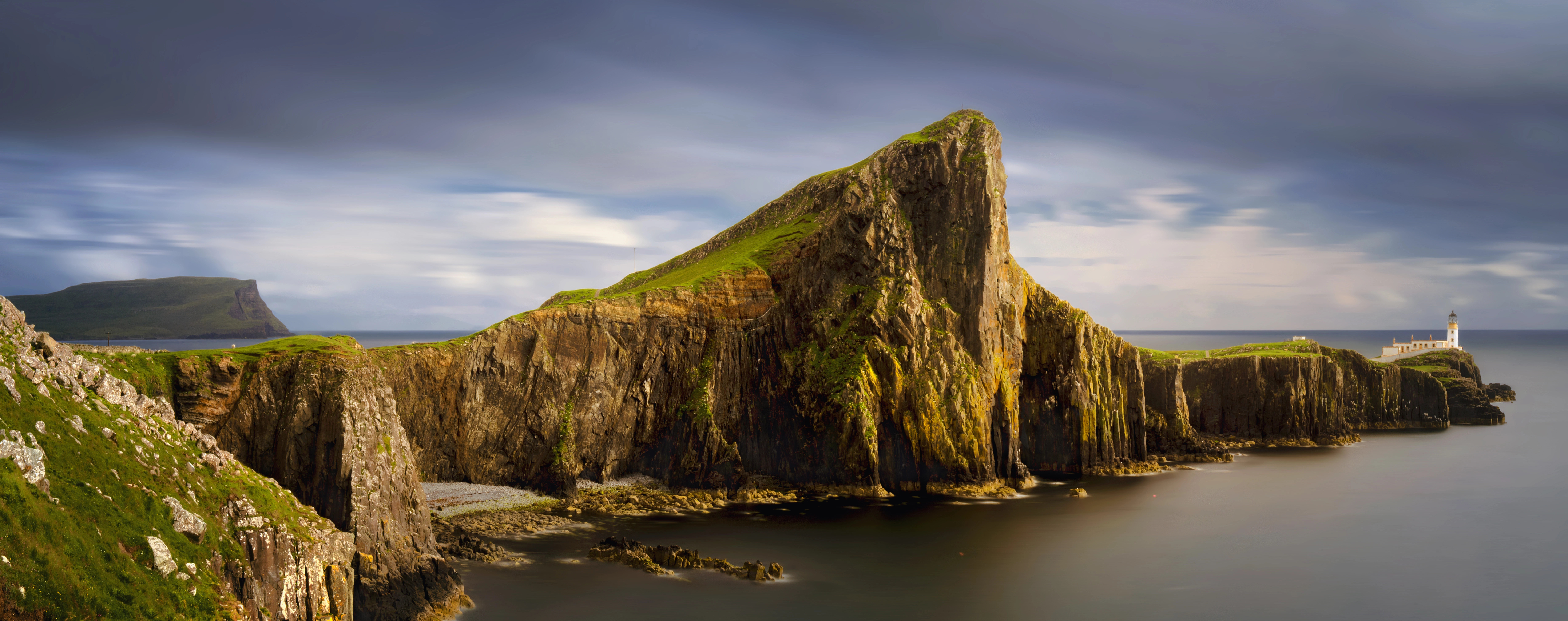
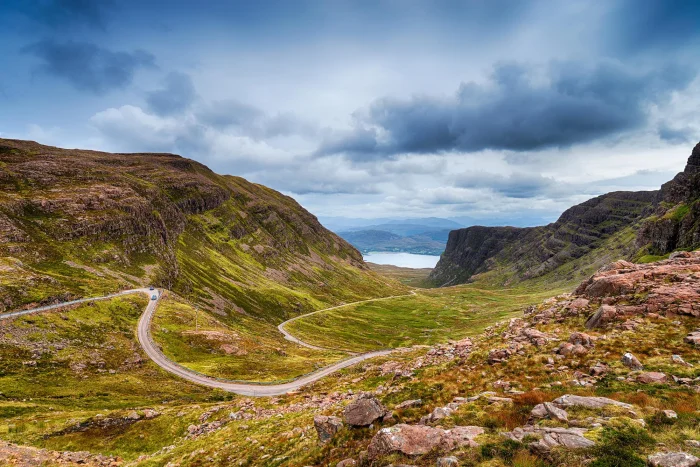
Skye is the largest island in the Inner Hebrides, stretching roughly 50 miles from north to south with a wildly irregular coastline that means you’re never more than five miles from the sea. Its Gaelic name, An t-Eilean Sgitheanach, translates as “the winged isle” - a nod to its peninsulas that radiate outward like the wings of some great bird. The Norse, who ruled here for five centuries, called it Sküyö, the “isle of cloud”. Both names feel right. On any given day, Skye can feel like it belongs to another world entirely.
With around 650,000 visitors a year - and projections suggesting that figure could top a million - Skye is Scotland’s second most popular destination after Edinburgh. But here’s the thing: most of those visitors follow the same well-worn circuit of five or six famous landmarks. Venture beyond the obvious and you’ll find an island with far more depth than most people realise. Viking heritage, clan battlegrounds, world-class food, extraordinary wildlife, and some of the finest coastal walking anywhere in Britain - it’s all here, waiting for anyone willing to slow down and look properly.
This guide covers everything you need to plan a trip to Skye, from the famous landmarks to the quieter corners that most visitors drive straight past.
Getting to the Isle of Skye

There are three ways to reach Skye, and each has its own appeal.
The Skye Bridge from Kyle of Lochalsh is the quickest and most straightforward option. It’s been toll-free since 2004, and most visitors driving up from Inverness or Fort William will cross here. The bridge itself is functional rather than scenic, but the views from Kyleakin on the Skye side are worth a quick stop.
The Mallaig to Armadale ferry, operated by CalMac, is by far the more atmospheric arrival. The crossing takes around 45 minutes and lands you in Sleat at the southern tip of Skye. If you’re driving from Fort William, the Road to the Isles (A830) that leads to Mallaig is one of the most beautiful drives in Scotland in its own right. Book in advance during summer – this ferry fills up fast.
The third option is the Glenelg to Kylerhea turntable ferry, and it’s a beauty. This is the last manually operated turntable ferry in Scotland, carrying just six cars at a time across the narrow Kylerhea strait. It only runs from April to October and the crossing takes about ten minutes, but there’s something wonderful about arriving on Skye this way. The strait is also one of the best places on the island for spotting otters.
The Iconic Landscapes
Let’s get the famous ones out of the way first. These are the sites that fill Instagram feeds and appear on every Skye list – and they deserve their reputation. The key is knowing what to expect and, ideally, when to go.
The Old Man of Storr
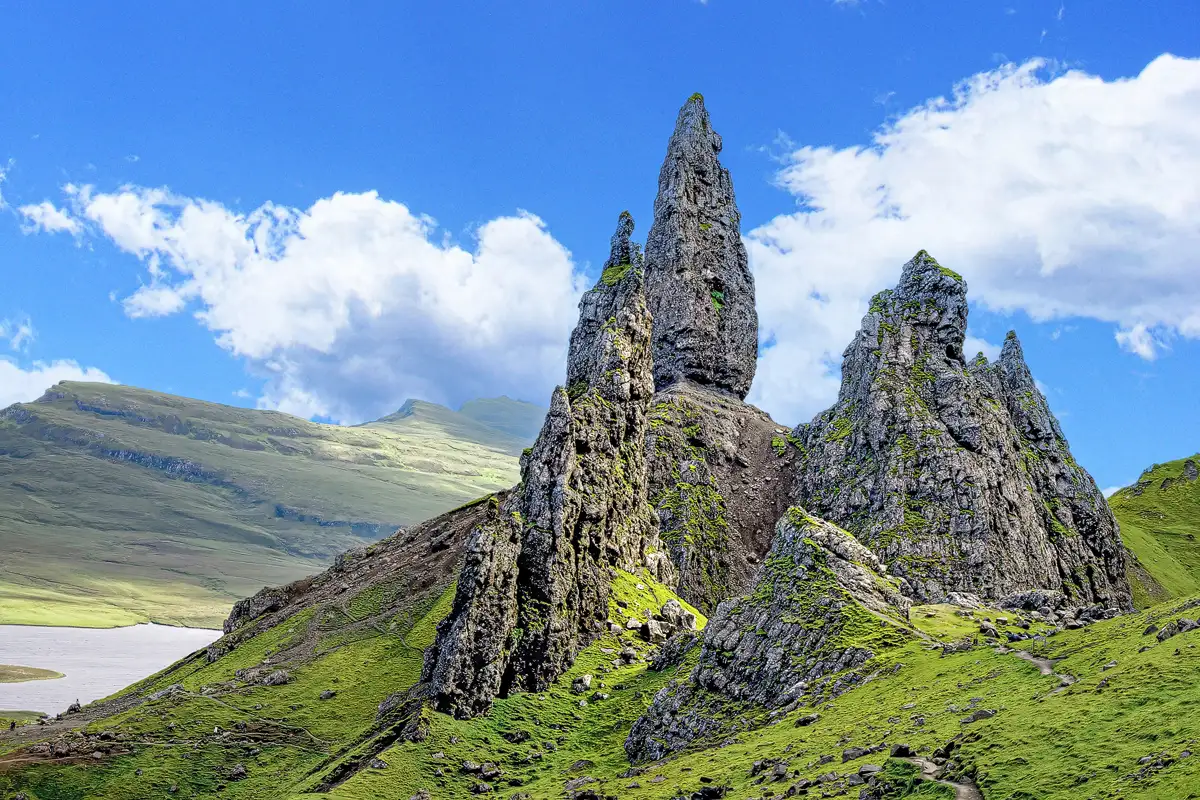
If there’s one image that defines Skye, it’s this. The Old Man of Storr is a 50-metre basalt pinnacle left standing after an ancient landslip on the Trotternish Ridge, surrounded by a surreal landscape of rock towers and grassy slopes. It’s been Skye’s most visited site for years, with visitor numbers projected at around 285,000 to 300,000 per year – and climbing.
The walk from the car park to the base of the pinnacles takes about 20 to 30 minutes on a well-maintained path, though it’s steep in places. The most iconic viewpoint is a little further up, about 45 minutes from the car park, where you can look back over the pinnacles with the coast and the Scottish mainland beyond. It’s a stunning perspective and well worth the extra effort.
A new visitor centre, Ionad an Stòir, opened at the Storr in 2024, with locally produced gifts and information about the site’s geology and Gaelic heritage. Parking is pay-and-display, and I’d strongly recommend arriving early – by 9am in summer the car park can be full.
The Quiraing

The Quiraing sits at the northern end of the Trotternish Ridge, and if anything it’s even more dramatic than the Storr. This massive landslip – one of the largest in Britain – has created a landscape of pinnacles, cliffs, hidden plateaux and grassy slopes that looks like something from a fantasy film. It’s no coincidence that it’s been used as a filming location for everything from Prometheus to Stardust.
The circular walk around the Quiraing takes about two hours and is moderately challenging, with some boggy sections and a few scrambles. The road up to the car park is steep and winding – not for the faint-hearted, and definitely not ideal for large motorhomes. If you’re into photography, sunrise here is something else entirely. The cliffs face east, so you get that warm golden light hitting the pinnacles as the mist clears. Just remember to bring layers – it can be bitterly cold and windy at the top even in summer.
The Fairy Pools

The Fairy Pools are a series of crystal-clear rock pools and small waterfalls fed by springs from the Black Cuillins. On a sunny day, the water takes on an almost Caribbean turquoise – though the temperature is anything but tropical. Brave souls do wild swim here, but even if you keep your feet dry, the walk along the river with the Cuillins towering above is spectacular.
The path is relatively flat and takes about an hour to walk to the main pools and back. A large 140-space car park and off-grid toilet block were installed in 2021 to manage the sheer volume of visitors - the Fairy Pools now attract well over 200,000 people a year. The road to Glen Brittle is single-track and can get very congested in summer, so aim for early morning or late afternoon.
Kilt Rock and Mealt Falls

Kilt Rock is a sea cliff near Staffin whose vertical basalt columns are said to resemble a pleated kilt – you need a bit of imagination, but once you see it, it clicks. The real star here is Mealt Falls, a 55-metre waterfall that plunges directly off the cliff and into the sea. It’s one of the most accessible viewpoints on Skye – you can see both the falls and Kilt Rock from a fenced lookout area right next to the car park, so no hiking required.
It’s a quick stop rather than a lengthy visit, but well worth pulling over for. If you have a drone, the view from out at sea looking back at the falls is extraordinary – though be aware that drones are prohibited during nesting season (February to July) as the cliffs are home to nesting seabirds.
Neist Point

The walk down to Neist Point Lighthouse on Skye’s westernmost tip is one of those experiences that earns its place on every list. The headland juts out into the Minch like the prow of a ship, with sheer cliffs dropping away on both sides and the lighthouse perched at the very end. On a clear evening, the sunsets from here are genuinely world-class.
The walk from the car park takes about 20 minutes each way, descending steeply down steps before levelling out along the headland. It’s not difficult, but the return climb is a good workout. Neist Point is also one of the best land-based spots on Skye for spotting minke whales and basking sharks, particularly from late spring through the summer.
Beyond the Big Five
If you only visit the five sites above, you’ll see what everyone else sees. But Skye has so much more. Here are the places that reward anyone willing to go a little further.
Brother’s Point (Rubha nam Brathairean)

Brother’s Point is the kind of place that makes you wonder why everyone is queuing at the Fairy Pools instead. This short coastal walk on the Trotternish Peninsula leads to a stunning rocky headland with views across to Raasay and the Scottish mainland. The landscape is wild, exposed and utterly beautiful, and on most days you’ll have it largely to yourself.
The walk takes about an hour and a half round trip from the small parking area near Culnacnoc. It’s moderately easy but can be boggy, so proper footwear is essential. Look out for fossils in the rock platforms at low tide – this part of Skye’s coastline has some significant Jurassic geological interest.
Fairy Glen

Fairy Glen is a small area of natural landslip-formed hills near Uig that looks like a miniature version of the Quiraing. Cone-shaped mounds, tiny lochs and curious rock formations give the place a genuinely otherworldly atmosphere – it’s easy to see why it’s associated with fairy folklore.
A word on the stone spirals: visitors have been building stone patterns and stacks here for social media photos, taking stones from old walls and disturbing the landscape. Locals regularly dismantle these, so please don’t add to them. The walk is easy – about a mile – and the whole area can be explored in an hour or so.
Coral Beach

Claigan Coral Beach, about four miles northwest of Dunvegan, is one of the most surprising sights on Skye. The beach is a sweep of brilliant white that looks like it belongs in the Caribbean, but the “sand” is actually made from fragments of dried, bleached coralline algae called maerl. On a sunny day with the turquoise water lapping at the shore, it’s genuinely hard to believe you’re on the west coast of Scotland.
The walk from the small car park at Claigan takes about 20 to 30 minutes along a well-trodden path. The area around the beach is also good for seal-spotting, with common and grey seals often visible on the rocks offshore.
Elgol and the View to the Cuillins

The view from Elgol across Loch Scavaig to the full sweep of the Cuillin ridge is one of the great views of Scotland. It’s the kind of panorama that stops conversations. The drive down to this small village on the Strathaird peninsula is winding and single-track, but the payoff is immense.
From Elgol, you can take a boat trip with operators like Misty Isle Boat Trips across to Loch Coruisk, a freshwater loch cradled in the heart of the Cuillins that feels genuinely primeval. It’s an unforgettable trip, and you’ll often spot seals, dolphins and sea eagles on the crossing. The Creel at Elgol is also worth a stop for what many consider the best squat lobster rolls on the island.
Castles, Clans and History
Skye’s human history stretches back thousands of years. The island was home to Picts, then Gaels, then Norse settlers who ruled from around the 9th century until the Treaty of Perth transferred the Hebrides to Scotland in 1266. What followed was centuries of clan rivalry, Jacobite drama and eventual forced clearance that shaped the island you see today.
Dunvegan Castle

Dunvegan Castle is the ancestral home of the Chiefs of Clan MacLeod and has been continuously inhabited for over 800 years, making it the oldest continuously inhabited castle in Scotland. The castle sits on a rocky outcrop above Loch Dunvegan, and while the exterior is imposing rather than pretty, the interior is full of fascinating clan relics.
The highlight for many visitors is the Fairy Flag – an ancient silk banner said to possess the power to protect the MacLeods in battle. Its true origins are debated, but one theory links it to a Crusader relic from the Middle East, while local legend says it was a gift from the fairies. The castle gardens are also worth exploring, and from April to September you can take a short boat trip to see the seal colony on the small islands in Loch Dunvegan.
Armadale Castle and the Museum of the Isles

At the opposite end of the island – both geographically and in terms of clan allegiance – is Armadale Castle on the Sleat peninsula. This was the seat of Clan Donald, the MacDonalds, and the 20,000-acre estate now houses the Museum of the Isles, which traces 1,500 years of clan and island history across seven galleries.
The castle itself was largely destroyed by fire in 1855 and is now an atmospheric shell covered in creeping ivy. The surrounding gardens and woodland walks are lovely, and the views across to Knoydart and Mallaig are superb. Allow a couple of hours here, and don’t miss the museum – it’s one of the best on the island.
Duntulm Castle

Perched on a cliff at the northernmost tip of the Trotternish peninsula, Duntulm is a ruin in the truest sense – crumbling walls on a wild headland with views to the Outer Hebrides. It was a MacDonald stronghold from the 15th century and was abandoned in the early 1700s, reportedly after a nursemaid dropped the clan chief’s baby from a window onto the rocks below. Whether that story is true or just good Highland legend-making, the setting is incredibly atmospheric.
There’s no admission fee – just a short walk from the roadside car park. It makes a natural stop on a drive around the Trotternish loop.
Flora MacDonald and the Jacobite Connection

Skye’s connection to the Jacobite risings runs deep. After the disastrous Battle of Culloden in 1746, Bonnie Prince Charlie fled across the Highlands with a price of £30,000 on his head. It was Flora MacDonald who famously helped him escape to Skye, disguising him as her maid “Betty Burke” and sailing with him from the Outer Hebrides to Portree.
Flora was later arrested and imprisoned in the Tower of London, though she was eventually released. She returned to Skye, married, emigrated to America, then came back to Skye where she died in 1790. Her memorial – a large Celtic cross on the clifftop at Kilmuir cemetery – is one of the most visited historical sites on the island. The nearby Skye Museum of Island Life, a cluster of thatched cottages showing how islanders lived in the 19th century, makes an excellent companion visit.
Wildlife on the Isle of Skye
Skye is one of the best wildlife-watching destinations in Scotland, and the variety of species you can see here – on land, in the air and in the water – is remarkable for a single island.
White-Tailed Sea Eagles

The white-tailed eagle is Britain’s largest bird of prey, with a wingspan of up to 2.4 metres. They were hunted to extinction in Scotland by 1918, but a hugely successful reintroduction programme beginning in 1975 on the nearby Isle of Rum has seen them establish strong breeding populations across the west coast. Skye is now one of the best places in the country to see them.
Several boat trip operators from Portree specialise in sea eagle sightings – Stardust Boat Trips can almost guarantee encounters, with skippers who know exactly where the nesting pairs are. Both white-tailed and golden eagles nest on the island, and it’s not unusual to see both species in a single day if you’re out in the right areas. Dedicated wildlife tours with local guides give you the best chance of spotting them from land.
Seals, Otters and Marine Life

Both common (harbour) and grey seals are abundant around Skye, and you’ll often spot them basking on rocky outcrops or bobbing curiously in the shallows. Boat trips from Dunvegan Castle to the nearby seal colony are one of the most reliable ways to get close.
Otters are present all around Skye’s coastline, though you’ll need patience and a bit of luck to spot one. The Kylerhea Otter Haven in the south of the island has a dedicated hide, and early morning on a falling tide is your best bet. The Kylerhea strait – the same one crossed by the turntable ferry – is a particularly good spot. Look for broken sea urchin shells on the shoreline – they’re a telltale sign of otter activity.
In the deeper waters around the island, minke whales are the most commonly sighted cetaceans, mainly from May to October. Rubha Hunish at Skye’s northern tip, Neist Point and Waternish Point are the best land-based vantage points. Bottlenose and common dolphins are frequently seen on boat trips, and in summer, basking sharks – the second-largest fish in the world – sometimes appear near Neist Point and Elgol.
Red Deer and Dinosaur Footprints

Red deer are the largest land mammals in the UK, and Skye has a sizeable population. In summer they tend to stay on higher ground, but in winter they come down to lower levels for better grazing and you’ll frequently see them by the roadside. The stags grow their antlers fresh each year for the autumn rut – seeing two stags clashing is one of the great wildlife spectacles.
For something genuinely unexpected, head to Staffin Beach (An Corran) at low tide. In 2002, a storm uncovered footprints of a three-toed Megalosaurus-type dinosaur in the rock platform here, dating back around 170 million years. It’s a remarkable thing to stand beside – proof that Skye was once a very different kind of island. There are also dinosaur footprint sites at Duntulm and at Score Bay near Broadford.
Portree – the Island’s Capital

Portree is the capital and largest settlement on Skye, with a population of around 2,500. Its Gaelic name, Port Rìgh, means “king’s port” – a reference to a visit by King James V in 1540. The town’s colourful harbour-front buildings are perhaps the most photographed scene on the island after the Old Man of Storr, and it’s easy to see why.

Portree is the main base for most visitors to Skye and has the island’s best concentration of restaurants, pubs and accommodation. It’s also where many of the island’s boat trips depart from. Somerled Square is the town centre, and there’s a good Co-op for stocking up on supplies if you’re self-catering. On Tuesday evenings during summer, the Skye Pipe Band plays in the square – it’s a proper Highland atmosphere.
For a quieter alternative base, Broadford is the island’s second-largest village and sits closer to the Skye Bridge. It’s well placed for exploring the southern half of the island, including Elgol and the Sleat peninsula.
Other Corners of Skye

Uig is a small village on the west coast of the Trotternish peninsula, best known as the ferry port for crossings to the Outer Hebrides (Harris and North Uist). It’s a beautifully quiet spot with views across Uig Bay, and makes a good base if you want to explore the Trotternish without battling for parking in Portree. The Fairy Glen is just a short drive inland from here.
The Sleat peninsula at Skye’s southern tip is known as the “Garden of Skye” for its notably greener, more sheltered landscape. It feels distinctly different from the raw, exposed north – more wooded, more gentle, and considerably quieter. Besides Armadale Castle, Sleat is home to Torabhaig Distillery (Skye’s second whisky distillery, which opened in 2017), the excellent Kinloch Lodge restaurant, and some lovely coastal walks.
The Waternish peninsula in the northwest is another area that rewards exploration. It’s home to the tiny village of Stein, where you’ll find the Michelin-starred Loch Bay Restaurant, as well as Skyeskyns, a workshop and showroom selling sheepskin and leather goods. The peninsula also offers some of the best whale and dolphin-watching on the island.
Food and Drink

Skye’s food scene has become genuinely remarkable. The island’s proximity to both land and sea means restaurants have access to extraordinary local ingredients – hand-dived scallops, langoustines landed the same day, venison from the estate down the road, and foraged sea vegetables from the shoreline.

At the fine dining end, Loch Bay in Stein holds a Michelin star for its seafood-focused menu, while Edinbane Lodge has earned four AA Rosettes and was named Restaurant of the Year at the Scottish Excellence Awards. The Three Chimneys near Dunvegan has been one of Scotland’s most celebrated restaurants for decades, set in a 100-year-old stone cottage on the shores of Loch Dunvegan. Scorrybreac in Portree is another standout – an intimate restaurant overlooking the harbour with tasting menus built around Skye produce. Book well in advance for any of these.
For something more casual, Café Arriba in Portree does excellent creative breakfasts, The Isles Inn serves proper hearty pub food with live music, and The Oyster Shed at Carbost is a legendary open-air seafood shack where you can eat fresh oysters and scallops looking out across the water. If you’re near Elgol, the squat lobster rolls at The Creel are superb.
On the whisky front, Talisker at Carbost has been producing its distinctive peaty, peppery single malt since 1830 and offers a range of distillery tours. Torabhaig on the Sleat peninsula opened in 2017 as the island’s second whisky distillery, and the Isle of Raasay Distillery on nearby Raasay makes it possible to do a three-distillery tour in a single trip. For gin lovers, the Isle of Skye Distillers in Portree runs a gin school where you can blend your own.
Practical Tips for Visiting Skye
When to Visit
May to September is the main season, with the longest daylight hours and the best (relative) weather. May and early June are my favourite times – everything is green and fresh, wildflowers are blooming, and the midges haven’t reached full force yet. July and August bring the biggest crowds and the worst midges. September and October offer beautiful autumn colours and thinner crowds, though some seasonal businesses start to close.
Winter on Skye is dramatic, quiet and not for everyone. Days are short, the weather can be brutal, and many restaurants and attractions close. But if you catch a clear winter’s day with snow on the Cuillins and the Northern Lights dancing overhead, it’s utterly unforgettable.
Driving and Single-Track Roads

A car is more or less essential on Skye. Public transport exists but is very limited, with no railway on the island and infrequent bus services.
Many of Skye’s roads are single-track with passing places, particularly the routes to Elgol, Glenbrittle (Fairy Pools) and the Quiraing. The etiquette is straightforward: pull into the nearest passing place to let oncoming traffic through, and use passing places on your left to let faster vehicles overtake. Don’t park in passing places. Don’t reverse into them with a queue behind you. And give a wave of thanks when someone lets you by – it’s the Highland way.
Parking at the most popular sites fills up quickly in summer. Arriving before 9am or after 4pm makes a significant difference. Several car parks now charge, so keep change or a card handy.
Midges and Weather
Midges are a fact of life on Skye from June through September, particularly in still, damp conditions. They’re worst at dawn and dusk and in sheltered spots. A good midge repellent is essential – Smidge is the local favourite and widely available. A midge head net might look daft, but you’ll be grateful for it if you’re caught out at sunset with no breeze. Exposed, windy locations tend to be midge-free, which is one reason the coastline is often more pleasant than sheltered glens in high summer.
As for weather, the old saying about Scotland applies double on Skye: if you don’t like it, wait 20 minutes. Four seasons in a day is not an exaggeration here. Layers, waterproofs and a sense of humour are your best friends. Temperatures are mild year-round – rarely below freezing in winter or above 20°C in summer – but the wind chill on an exposed summit can be fierce.
How Long to Stay
Three to five days is the sweet spot for most visitors. That gives you time to see the main landmarks, explore a couple of quieter corners, take a boat trip, eat well and actually absorb the atmosphere rather than just ticking boxes. If you can manage a full week, you won’t run out of things to do – and you’ll have the flexibility to work around the weather.
If you only have one day, focus on the Trotternish loop from Portree – the Old Man of Storr, Kilt Rock, the Quiraing and the Fairy Glen can all be done in a long day. But honestly, one day on Skye always feels like a tease rather than a visit.
Visiting Skye Responsibly
This is worth addressing directly, because it matters. Skye is a real place where 13,000 people live, work and raise their families. It’s not a theme park or a backdrop for social media.
The volume of visitors – particularly the “tick-box tourist” phenomenon of racing between five famous landmarks in a single day – has created real pressures. Road congestion, parking chaos at popular sites, erosion of footpaths, overflowing bins, campervans blocking passing places, and a shortage of affordable housing for locals are all genuine issues. In 2018, CNN Travel listed Skye as one of the top tourist destinations in the world to avoid – purely because of overcrowding concerns.
Local campaign #SkyeTime encourages visitors to stay longer, see less and experience more. That ethos feels right to me. Rather than trying to cram every landmark into a single day, slow down. Spend time in the quieter peninsulas. Eat at local restaurants. Shop at local businesses. Stay longer and contribute more meaningfully to the island economy rather than rushing through and leaving nothing but tyre marks.
If you’re travelling by campervan, please use designated sites rather than parking up informally. Use the public toilets where they exist. Take your rubbish with you. And please don’t rearrange the landscape for a photo – those stone spirals at Fairy Glen aren’t ancient monuments, they’re last week’s social media props built from someone else’s dry stone wall.
Frequently Asked Questions
How do you get to the Isle of Skye?
The easiest route is by car across the Skye Bridge from Kyle of Lochalsh, which is free. You can also take the CalMac ferry from Mallaig to Armadale (booking recommended in summer), or the small Glenelg to Kylerhea turntable ferry which runs from April to October. There is no airport or railway station on Skye, though buses run from Inverness, Glasgow and Fort William.
How many days do you need on the Isle of Skye?
Three to five days is ideal for seeing the main landmarks and having time to explore beyond the obvious. A full week allows for a more relaxed pace, boat trips and flexibility around the weather. One day is possible but you will only scratch the surface.
What is the best time of year to visit Skye?
May to early June offers the best combination of long daylight hours, wildflowers and fewer midges. July and August have the warmest weather but the biggest crowds and worst midges. September and October bring autumn colours and thinner crowds. Winter is quiet, dramatic and atmospheric, but many facilities close and days are short.
Is the Isle of Skye too busy to visit?
Certain sites – particularly the Old Man of Storr, Fairy Pools and the Quiraing – can be very crowded in peak summer, with full car parks and long waits. However, Skye is a large island and it’s entirely possible to find quiet corners even in August. Visiting off-peak, arriving early at popular sites, and exploring the lesser-known peninsulas (Sleat, Waternish, Duirinish) all help enormously.
Can you visit Skye without a car?
It’s possible but challenging. Local bus services exist but are infrequent and don’t serve many of the key attractions. Several tour operators run day trips and multi-day guided tours from Portree, Inverness and Edinburgh, which is a practical alternative if you don’t have your own vehicle.
What wildlife can you see on the Isle of Skye?
Skye is home to white-tailed sea eagles, golden eagles, otters, red deer, common and grey seals, bottlenose and common dolphins, minke whales, basking sharks, puffins and a wide range of seabirds. Boat trips from Portree and Elgol offer the best marine wildlife encounters, while dedicated land-based wildlife tours maximise your chances of seeing eagles and otters.
Are there good restaurants on the Isle of Skye?
Skye has one of the best food scenes of any rural area in Scotland. Highlights include the Michelin-starred Loch Bay in Stein, Edinbane Lodge (four AA Rosettes), The Three Chimneys near Dunvegan, and Scorrybreac in Portree. For more casual eating, The Isles Inn, Café Arriba and The Oyster Shed at Carbost are all excellent. Book ahead for fine dining restaurants, especially in summer.
Final Thoughts
I’ve been visiting Skye regularly for years, and it’s the kind of place that reveals more of itself the more time you give it. The famous landmarks are famous for good reason - the Old Man of Storr at sunrise, the Cuillins from Elgol, the Fairy Pools on a rare sunny day - but the island’s quieter moments are just as memorable. An otter slipping into the water at Kylerhea. A completely empty beach at Coral Beach in October. The smell of peat smoke and the sound of Gaelic conversation drifting from a Portree pub on a winter’s evening.
Skye isn’t going anywhere, but it is changing. The challenge - for visitors and islanders alike - is making sure that the thing that draws people here in the first place doesn’t get loved to death. Go. Take your time. Explore beyond the obvious. And leave it as you found it.
All information was correct at the time of writing, please check things like entry costs and opening times before you arrive.

Leave a comment below