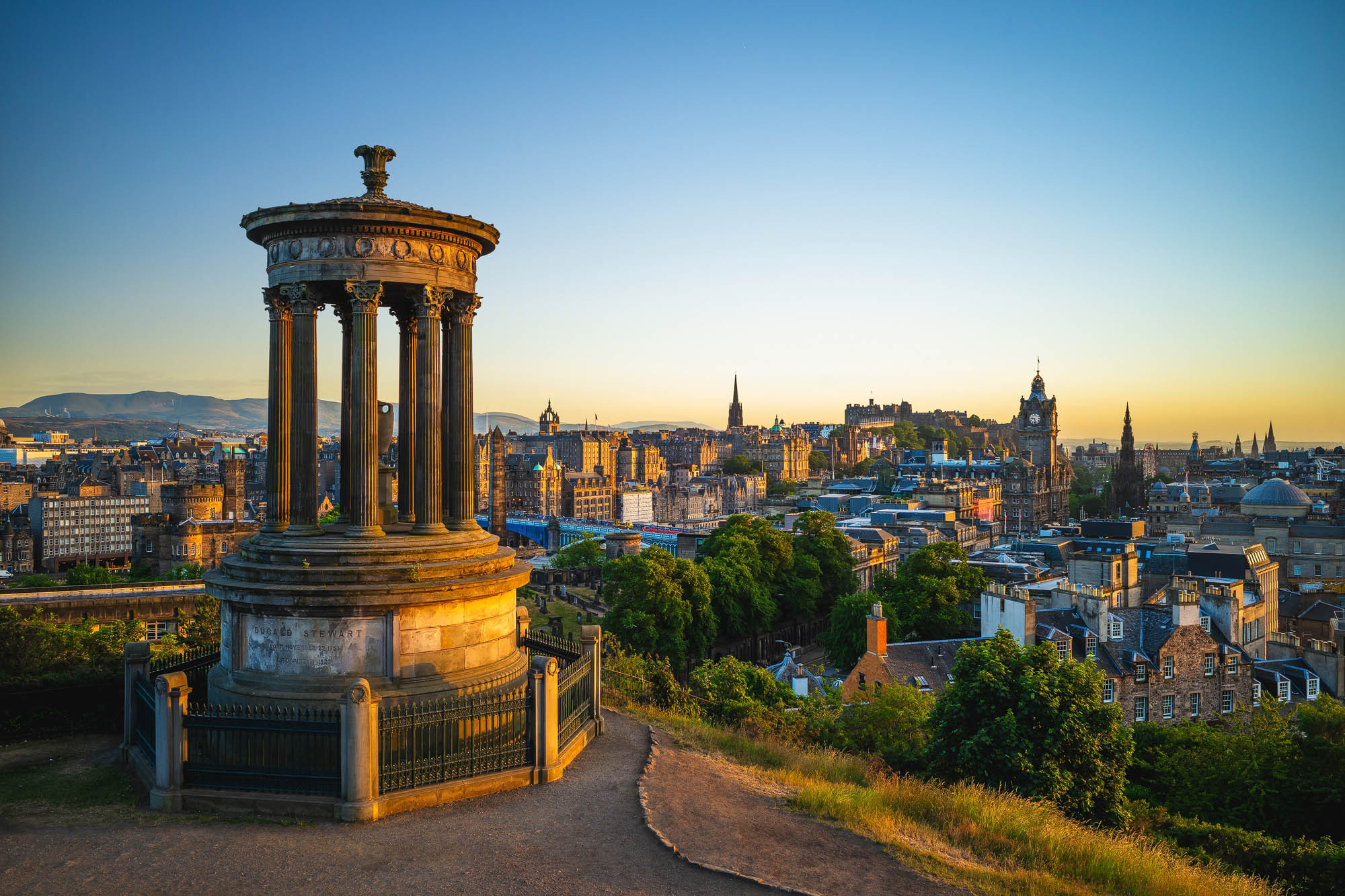
Edinburgh is a city that rewards the curious. It is built on ancient volcanoes, carved by glaciers, shaped by centuries of conflict, intellect and reinvention – and it wears all of that history without taking itself too seriously. As someone who has lived in Scotland for over 35 years and visited Edinburgh more times than I can count, I can tell you that the capital still surprises me. There is always a close I haven’t wandered down, a view I haven’t seen in quite that light, or a pub I haven’t tried.
This guide is my attempt to cover everything you need to know about Edinburgh – whether you’re planning a first visit, a return trip, or just want to understand what makes Scotland’s capital tick. I’ll cover the headline attractions, but I’ll also dig into the neighbourhoods, the food scene, the festivals, the practical stuff and the bits that most travel guides skip over. Janette and I have brought our three daughters here many times, and the city works just as well for families as it does for couples or solo travellers.
Let’s get into it.

A Brief History of Edinburgh
You cannot really understand Edinburgh without knowing a bit about how it came to be. The city’s story starts with geology. Castle Rock – the volcanic plug on which Edinburgh Castle now sits – is the remnant of an extinct volcano that last erupted around 350 million years ago. When ice sheets ground across Scotland during the last Ice Age, the hard basalt of Castle Rock resisted erosion and sheltered a tapering ridge of softer rock behind it, creating a “crag and tail” formation. That tail became the Royal Mile. The entire layout of Edinburgh’s Old Town follows this geological accident.
The earliest evidence of human activity in the Edinburgh area dates back to roughly 8500 BC, and by the Bronze Age there were settlements on Castle Rock and Arthur’s Seat. The Gododdin, a Celtic-speaking Brittonic tribe, established a hillfort they called Din Eidyn – likely the origin of the city’s name. In the 7th century, the Angles of Northumbria captured the fort and attached their own word “burh” (meaning fortified place) to the old name, giving us something close to Edinburgh.
By the medieval period, Edinburgh was growing rapidly. A royal castle was established, probably during the reign of David I in the 12th century, and Holyrood Abbey was founded at the opposite end of the ridge in 1128. The town received its royal burgh charter, and trade flourished. After the disastrous Battle of Flodden in 1513, the citizens built the Flodden Wall to protect against English invasion – but the wall also hemmed the population in. With nowhere to expand outwards, Edinburgh built upwards. Tenements of ten, eleven, even fourteen storeys were crammed along the Royal Mile, making it one of the most densely populated places in Europe. Rich and poor lived on top of one another – literally. Wealthier residents took the middle floors while the poor occupied the damp cellars and draughty attics.
The conditions were grim. Waste was hurled from upper windows with the cry “Gardyloo!” (a corruption of the French gardez l’eau – “watch out for the water”), and the city earned the nickname Auld Reekie for the constant pall of coal smoke hanging over it. Plague struck repeatedly. It was, by most accounts, a fairly unpleasant place to live.
Everything changed in the 18th century. The Act of Union in 1707 saw Scotland’s parliament dissolve into Westminster, but rather than diminish Edinburgh, the loss seemed to concentrate the city’s intellectual energy. The Scottish Enlightenment turned Edinburgh into one of Europe’s great centres of ideas. David Hume, Adam Smith, James Hutton, Joseph Black and dozens of other thinkers worked, debated and published here. Edinburgh earned a new nickname: the Athens of the North.
It was during this period that the New Town was conceived. Architect James Craig won a competition in 1767 to design a rational, spacious extension to the city north of the Nor Loch (a fetid body of water that was eventually drained and is now Princes Street Gardens). The result was a masterpiece of Georgian urban planning – wide streets, elegant squares and crescents built from honey-coloured sandstone. The contrast between the chaotic medieval Old Town and the orderly New Town is one of the things that makes Edinburgh unique, and in 1995 both were jointly designated a UNESCO World Heritage Site.
Edinburgh became Scotland’s capital in 1437, replacing Scone, and it has held that role ever since. The re-establishment of the Scottish Parliament in 1999 – with a striking new building at the foot of the Royal Mile – cemented Edinburgh’s position as the seat of Scottish governance. Today, the city has a population of around 530,000 and attracts over five million visitors a year, making it the second most visited city in the UK after London.

The Old Town – Edinburgh’s Medieval Heart
The Old Town is where most visitors spend the bulk of their time, and with good reason. It is the oldest part of Edinburgh, running along the spine of the volcanic ridge from the castle down to Holyrood Palace. The Royal Mile – which is actually closer to 1.12 miles – forms the main artery, and branching off it on both sides are dozens of narrow closes, wynds and courtyards that give the Old Town its character.
Walking the Royal Mile from top to bottom is the obvious starting point, but don’t just stick to the main drag. The real magic of the Old Town is in the closes. These narrow passageways were the arteries of medieval Edinburgh, connecting the main street to the buildings packed in behind. Some are barely shoulder-width. Fleshmarket Close, with its steep stone steps and moss-green walls, is one of the most atmospheric. Advocates Close, Riddle’s Court and Lady Stair’s Close are all worth seeking out. If you have an interest in Edinburgh’s darker side, the Real Mary King’s Close offers a tour of a preserved 17th-century street buried beneath the Royal Mile.

Victoria Street is the Old Town’s most photographed street – a curving, colourful row of independent shops that sweeps down from the Royal Mile to the Grassmarket. It is often cited as one of the inspirations for Diagon Alley in the Harry Potter books (J.K. Rowling wrote much of the series in Edinburgh). Below Victoria Street, the Grassmarket is a broad, lively square surrounded by pubs and restaurants with Edinburgh Castle looming above. It has a darker history too – this was the site of public executions for centuries, and the Covenanters’ memorial marks the spot where over 100 people were martyred for their religious beliefs.

One of the best viewpoints in the entire Old Town is the Vennel Steps, just off the Grassmarket. Climb the steps and you get a dramatic, framed view of Edinburgh Castle rising above the rooftops – it is a photographer’s dream and surprisingly few visitors seem to know about it.

The New Town – Georgian Elegance
Cross Princes Street and you step into a different Edinburgh entirely. The New Town was built from the 1760s onwards as a deliberate counterpoint to the cramped, chaotic Old Town. Where the Old Town grew organically over centuries, the New Town was planned from scratch – wide, straight streets laid out in a grid, elegant crescents and squares, and uniform Georgian townhouses built from pale Craigleith sandstone.
Charlotte Square, designed by Robert Adam, is generally regarded as the finest Georgian square in Edinburgh and possibly in Britain. The green central garden, the symmetrical facades and the copper dome of West Register House (originally St George’s Church) create a scene of perfect proportion. George Street, running parallel to Princes Street, was the New Town’s original main street and remains lined with high-end shops, bars and restaurants.

Princes Street itself is the main shopping thoroughfare, but its real appeal is the view. The south side of the street is entirely open, looking across Princes Street Gardens to the castle and the Old Town skyline. It is one of the great urban vistas in Europe. Halfway along, the Scott Monument rises like a Gothic rocket – at over 60 metres tall, it is the largest monument to a writer anywhere in the world. You can climb the 287 steps to the top for panoramic views, though be warned: the spiral staircase gets very narrow towards the top.

The New Town is also home to the Scottish National Portrait Gallery on Queen Street and numerous independent galleries, antique shops and cocktail bars tucked along the side streets. Thistle Street and Rose Street (named for the national emblems of Scotland and England respectively) are worth exploring for their pubs and restaurants away from the Princes Street crowds.
Edinburgh’s Neighbourhoods Beyond the Centre
One of the most common mistakes visitors make is spending their entire trip in the Old Town and New Town. Edinburgh has a string of distinctive neighbourhoods, each with its own personality, and exploring even one or two of them will give you a much richer picture of the city.
Dean Village
Just a ten-minute walk from Princes Street, Dean Village feels like it belongs in a fairy tale. This former grain-milling community sits in a steep valley on the banks of the Water of Leith, Edinburgh’s main river. The name comes from the Scots word “dene” meaning deep valley, and the village was a thriving milling centre for over 800 years – at its peak, eleven watermills operated along this stretch of river.
Today it is a quiet residential area of extraordinary beauty. The stone buildings of Wells Court (dating from the 1880s) are the most photographed part, but the whole village rewards a slow wander. From Dean Village you can pick up the Water of Leith Walkway, a riverside path that runs for miles through the city and connects to Stockbridge, Leith and beyond.

Stockbridge
Follow the Water of Leith downstream from Dean Village and you arrive in Stockbridge, one of Edinburgh’s most charming neighbourhoods. Originally a separate village (the name comes from the Scots for “timber footbridge”), Stockbridge has a genuine community feel with independent shops, artisan delis, a weekly Sunday market and some excellent pubs and restaurants. Circus Lane, a cobbled mews lane with St Stephen’s Church tower framed at one end, is one of the most photographed streets in Edinburgh. The Royal Botanic Garden is a short walk north from here.

Leith
Edinburgh’s historic port has undergone a remarkable transformation over the past few decades. Once a rough, run-down dockland area (and made famous by Irvine Welsh’s Trainspotting), Leith has reinvented itself as the city’s food and drink capital without losing its character. The Shore – the waterfront area where the Water of Leith meets the harbour – is lined with restaurants, bars and converted warehouse buildings. Leith has its own distinct identity and many locals will tell you firmly that they are “Leithers”, not Edinburghers.
The Royal Yacht Britannia is berthed at Ocean Terminal in Leith and is one of Edinburgh’s top visitor attractions. The tram network now extends to Newhaven, making Leith very easy to reach from the city centre.

Portobello
Edinburgh has a beach, and a very good one at that. Portobello sits on the Firth of Forth about three miles east of the city centre (roughly 30 minutes by bus from Princes Street) and has a long sandy beach, a Victorian promenade and a high street lined with independent cafes, bakeries and ice cream shops. On a sunny day – and Edinburgh does get them, despite what people say – Portobello fills up with families and locals. It is a lovely counterpoint to the intensity of the city centre.

Bruntsfield and Morningside
South of the Old Town, these leafy residential neighbourhoods have a relaxed, village-like atmosphere. Bruntsfield Links is one of the oldest public green spaces in Edinburgh (and, some claim, the birthplace of golf), while the Meadows is a large park popular with students, joggers and picnickers. Morningside, further south, has a reputation for being Edinburgh’s most genteel neighbourhood – the accent alone is worth the bus ride. Both areas have excellent independent shops, cafes and a clutch of good pubs.
Things to See and Do in Edinburgh
Edinburgh packs an extraordinary amount into a compact area. You could spend a fortnight here and not run out of things to do. Here are the highlights, starting with the big ones.
Edinburgh Castle and the Honours of Scotland
Perched on Castle Rock, Edinburgh Castle dominates the city’s skyline and has been a royal residence, military fortress, prison and symbol of Scottish nationhood for over 900 years. It is the most besieged place in Great Britain. The castle complex contains several distinct buildings and attractions, but the crown jewel – quite literally – is the Honours of Scotland. These are the oldest crown jewels in Britain, predating the English Crown Jewels by over a century. The crown was remodelled for James V in 1540, the sceptre was a papal gift from 1494 and the sword of state was presented by Pope Julius II in 1507.

Other highlights within the castle include the Great Hall (built for James IV around 1511 and featuring an impressive hammerbeam roof), St Margaret’s Chapel (the oldest surviving building in Edinburgh, dating from around 1130), the Stone of Destiny (returned to Scotland from Westminster in 1996) and Mons Meg, a massive 15th-century siege cannon. The One O’Clock Gun has been fired from the castle ramparts every day (except Sundays, Good Friday and Christmas Day) since 1861 – it will give you a fright if you are not expecting it.
Admission is currently around £19.50 for adults. I would recommend booking tickets online in advance, particularly during summer and the festival season when queues can be very long. Budget at least two hours for a proper visit.
The Royal Mile and Its Closes
The Royal Mile runs from Edinburgh Castle down to the Palace of Holyroodhouse and is the main artery of the Old Town. Along its length you will find St Giles’ Cathedral, the Mercat Cross (where you can spot Scotland’s national animal, the unicorn), the Museum of Edinburgh, the Scottish Parliament building and dozens of shops, pubs and restaurants. It can feel touristy, especially in summer, but it is still essential walking.
Take time to explore the closes that branch off the Mile. Each one has its own history and atmosphere. Advocates Close offers a beautiful view down to the New Town. Bakehouse Close was used as a filming location for Outlander. Dunbar’s Close has a hidden 17th-century garden. Part of the joy of the Old Town is simply getting lost in these passageways and seeing what you find.
The Palace of Holyroodhouse
At the foot of the Royal Mile, the Palace of Holyroodhouse is the official Scottish residence of the monarch. It started life as a guesthouse for Holyrood Abbey (founded in 1128) and has been a royal residence since the 15th century. The palace is most associated with Mary, Queen of Scots, who lived here between 1561 and 1567. It was in her private chambers that her secretary David Rizzio was dragged out and murdered by a group of nobles in 1566 – one of the most notorious episodes in Scottish royal history.

The audio-guided tour takes you through the State Apartments, the Great Gallery (with its 96 portraits of real and legendary Scottish kings) and Mary’s chambers. The ruined Holyrood Abbey, adjacent to the palace, is hauntingly beautiful. Admission is around £18.50 for adults.
St Giles’ Cathedral
Properly known as the High Kirk of Edinburgh, St Giles’ has been a place of worship since the 12th century and played a central role in the Scottish Reformation. John Knox preached here, and the National Covenant was signed in the churchyard. The exterior is dominated by its distinctive crown steeple, but the interior is where the real beauty lies – particularly the Thistle Chapel, a tiny, extraordinarily ornate chapel built in 1911 for the Knights of the Order of the Thistle. The level of craftsmanship in the carved ceiling, the heraldic stall plates and the stained glass is breathtaking. Entry to the cathedral is free, though donations are appreciated.

Arthur’s Seat and Holyrood Park
The fact that you can walk from the bustle of the Royal Mile to the summit of a 251-metre extinct volcano in under an hour is one of the most remarkable things about Edinburgh. Arthur’s Seat sits within Holyrood Park, a 640-acre expanse of hills, crags, lochs and grassland right in the heart of the city. The park has evidence of human activity dating back 10,000 years, including Bronze Age terraces and Iron Age fort remains.
The walk to the summit is steep in places and takes around 45 minutes to an hour from the Holyrood end. The reward is a 360-degree panorama across Edinburgh, the Firth of Forth and beyond. The Salisbury Crags – dramatic cliff faces on the western edge of the park – are equally impressive and an easier walk along the Radical Road path. Holyrood Park is free to enter and open year-round.

Calton Hill
Calton Hill is Edinburgh’s other great viewpoint and the place that gave the city its “Athens of the North” nickname. Standing 103 metres above sea level at the east end of Princes Street, the hill is crowned with a collection of neoclassical monuments including the Dugald Stewart Monument, the Nelson Monument (shaped like an upturned telescope) and the unfinished National Monument – a Parthenon-inspired tribute to the Napoleonic Wars that ran out of funding after only twelve columns were completed in 1829. It was dubbed “Edinburgh’s Disgrace”, though personally I think the unfinished columns look rather magnificent against the sky.
The view from the summit at sunset is arguably the single best view in Edinburgh. It takes about ten minutes to walk up from the street.

Greyfriars Kirkyard and Bobby
Greyfriars Kirk, just south of the Royal Mile, has been a place of worship since 1620 and its churchyard is one of the most atmospheric spots in Edinburgh. It was here that the National Covenant was signed in 1638, and it is the final resting place of some of Scotland’s most notable figures. The kirkyard is also associated with the Mackenzie Poltergeist, said to be one of the most well-documented cases of paranormal activity in the world – I have written more about this in my guide to Scotland’s most haunted places.
But Greyfriars is most famous for Bobby – the Skye Terrier who supposedly guarded his master’s grave for 14 years in the 19th century. The wee Skye Terrier’s statue outside the kirkyard, with its shiny nose from being rubbed by visitors, is one of Edinburgh’s most recognisable landmarks.

The Royal Yacht Britannia
Moored at Ocean Terminal in Leith, the Royal Yacht Britannia served the royal family from 1953 to 1997 and is now one of Edinburgh’s most visited attractions. The audio-guided tour takes you through five decks, from the surprisingly modest royal bedrooms to the gleaming engine room. It gives a fascinating insight into how the royal family lived and entertained at sea. Britannia is consistently rated as one of the best visitor attractions in the UK. Allow around two hours for the tour.

Royal Botanic Garden Edinburgh
Founded in 1670, Edinburgh’s Royal Botanic Garden is one of the oldest in the world and covers 70 acres just north of the city centre. The grounds are free to enter and are beautifully maintained, with a stunning collection of trees, herbaceous borders, a rock garden and a Chinese hillside garden. The Victorian glasshouses, including the elegant Temperate Palm House, charge a small admission fee but are well worth it – particularly on a cold day when the tropical heat is very welcome indeed. The garden is a short walk from Stockbridge and makes for a natural pairing with a visit to that neighbourhood.

National Museum of Scotland
The National Museum of Scotland on Chambers Street is free to enter and could easily absorb an entire day. The collections span Scottish history, world cultures, science and technology, the natural world and decorative arts. The Grand Gallery alone – a soaring Victorian hall filled with light – is worth the visit. Highlights include Dolly the Sheep (the world’s first cloned mammal), the Lewis Chessmen, the Monymusk Reliquary and an incredible array of Scottish archaeological finds. The rooftop terrace offers excellent views of the castle and the Old Town.
Scottish National Gallery
Sitting on The Mound between the Old and New Towns, the Scottish National Gallery houses Scotland’s national collection of fine art. The permanent collection includes works by Raeburn, Ramsay, Botticelli, Raphael, Titian, Monet, Cezanne and Van Gogh, among many others. Entry is free. The gallery’s position, with views over Princes Street Gardens to the castle on one side and towards the New Town on the other, is one of the finest of any gallery in the world.
Edinburgh’s Festival Calendar
Edinburgh is often called the world’s festival city, and it has earned that title. The sheer density of festivals crammed into the calendar – eleven major festivals plus countless smaller events – is extraordinary for a city of this size. Here are the ones you need to know about.
The Edinburgh Festival Fringe
The Fringe is the big one. It is the largest performing arts festival in the world, and during August it completely takes over the city. In 2025, the Fringe featured over 53,000 performances of nearly 4,000 shows across 301 venues, with participants from 68 countries. The 2026 Fringe runs from 7 to 31 August.
The festival began in 1947 when eight theatre groups turned up uninvited to perform alongside the official Edinburgh International Festival. That spirit of open access remains – anyone can put on a show, in any venue, performing anything they like. This means the quality ranges wildly from brilliant to terrible, which is part of the charm. Venues include conventional theatres, pubs, church halls, shipping containers, buses and, on one memorable occasion, a taxi.

The Royal Mile becomes a wall of performers, flyer-distributors and spectators. Comedy is the largest section (making up over a third of the programme), but there is also theatre, dance, circus, cabaret, music, spoken word, children’s shows and everything in between. Household names like Stephen Fry, Hugh Laurie, Emma Thompson and Phoebe Waller-Bridge all launched their careers at the Fringe.
If you are visiting during August, book accommodation as far in advance as possible. Prices soar and availability disappears fast. The Fringe programme launches in early June each year at edfringe.com.
Edinburgh International Festival
Running alongside the Fringe but distinct from it, the Edinburgh International Festival is a curated programme of world-class music, opera, theatre and dance. It was founded in 1947 to promote cultural recovery after the Second World War and remains one of the most prestigious arts festivals in the world. The EIF tends to use the city’s larger venues – the Usher Hall, the Festival Theatre, the Lyceum – and tickets for headline events sell out fast.
The Royal Edinburgh Military Tattoo
Also in August, the Military Tattoo takes place on the castle esplanade and features military bands, pipe bands and cultural performers from around the world, all set against the backdrop of Edinburgh Castle. The Tattoo runs from 7 to 29 August in 2026. It sells out quickly, so book well ahead.
Edinburgh’s Hogmanay
Hogmanay – the Scottish New Year – is celebrated nowhere more enthusiastically than in Edinburgh. The city’s Hogmanay festival runs from around the 29th of December through to 1st January and includes a torchlight procession, a massive street party on Princes Street, the Concert in the Gardens and spectacular fireworks over the castle at midnight. For around 400 years, Christmas was effectively suppressed in Scotland by the Kirk, and all the festive energy was channelled into Hogmanay instead. That tradition stuck. The main events are ticketed, so book in advance.

Other Festivals Worth Knowing About
Edinburgh also hosts the Edinburgh Science Festival (April, the UK’s largest), the Beltane Fire Festival (30 April, a fiery Celtic celebration on Calton Hill), the Edinburgh Jazz and Blues Festival (July), the Edinburgh Art Festival (August), the Edinburgh International Book Festival (August, the world’s largest), the Edinburgh International Film Festival (August) and the Scottish International Storytelling Festival (October). The Christmas markets run from late November through December. There is genuinely something happening in Edinburgh at almost any time of year.
Edinburgh’s Food and Drink Scene
Edinburgh’s food scene has come a long way. The city now has several Michelin-starred restaurants, a thriving street food culture and an excellent range of independent cafes, bakeries and delis across its various neighbourhoods.
For traditional Scottish food, you need to try haggis, neeps and tatties at least once during your visit. It is Scotland’s national dish and much better than it sounds – a rich, peppery, crumbly savoury pudding served with mashed turnip and potato. Most pubs and Scottish restaurants in the Old Town will serve it. Cullen skink (a thick smoked haddock chowder) and Scotch broth are other traditional dishes worth seeking out.

Leith is the epicentre of Edinburgh’s dining scene, with restaurants ranging from Michelin-starred fine dining to excellent Indian, Turkish, Italian and seafood spots. The Stockbridge area has great cafes and delis. The Grassmarket and the streets around it have a solid selection of pubs and restaurants. For whisky, the Scotch Whisky Experience on the Royal Mile offers guided tours and tastings, or you can simply work your way through the selections at any of Edinburgh’s traditional pubs.
Edinburgh also has a growing craft beer scene and an increasing number of independent coffee roasters. If you are visiting with children, most restaurants are family-friendly, particularly during the day.
Getting Around Edinburgh
Edinburgh is a compact city and the centre is very walkable. The castle and Holyrood Palace are at opposite ends of the Royal Mile – roughly a mile apart – and most of the major attractions are within a 20-minute walk of each other. That said, Edinburgh is hilly. The Old Town in particular involves a lot of climbing, and the cobblestones can be unforgiving on the feet. Wear comfortable shoes.

Lothian Buses run a comprehensive network across the city. The maroon-and-white buses are frequent and reliable. You can pay by contactless card (just tap when you board) or buy a day ticket for unlimited travel. The system automatically caps your fare at the cheapest daily or weekly rate, so there is no need to buy a separate travel card. Exact change is required if paying cash, as drivers do not give change.
Edinburgh Trams run on a single line from the airport through the city centre (Haymarket, Princes Street, St Andrew Square) and on to Newhaven via Leith. The journey from the airport to Princes Street takes around 35 minutes. For trams, you need to tap on at the platform validator before boarding and tap off when you arrive – if you forget to tap off, you will be charged the full airport fare. Lothian Buses and Edinburgh Trams share a ticketing system, so a day ticket works on both.
From the airport, the Airlink 100 bus is the other main option – it runs frequently and takes around 25 minutes to Waverley Bridge in good traffic. Taxis from the airport to the city centre cost around £25 to £35 depending on traffic and your destination.
Edinburgh Waverley is the city’s main railway station, right in the centre between the Old Town and New Town. It has direct services to Glasgow (around 50 minutes), London (around 4.5 hours), Aberdeen, Inverness and most major UK cities. The station is named after a novel by Sir Walter Scott – making it the only major railway station in the world named after a work of fiction.
My advice: do not hire a car for an Edinburgh city break. Parking is expensive and hard to find, driving in the centre is stressful, and you simply do not need a car to get around. If you are planning to explore beyond Edinburgh – to the Isle of Skye, the Highlands or elsewhere in Scotland – then pick up a hire car on your way out of the city.
When to Visit Edinburgh
Edinburgh is a year-round destination, but the experience varies hugely depending on when you visit.
Summer (June to August) brings the longest days, the warmest weather (average highs of 18 to 20°C, though it can reach the mid-20s on good days) and the festivals. August is the busiest month by far – the Fringe, the International Festival, the Military Tattoo and the Book Festival all overlap, and the city’s population roughly doubles. It is exhilarating but exhausting, and accommodation prices peak. If you want the festival experience, book months ahead.
Spring (April to May) is my personal favourite time to visit. The days are getting longer, the parks and gardens are coming into bloom, and visitor numbers are manageable. The Science Festival falls in April, providing a solid reason to visit without the intensity of August.
Autumn (September to October) offers good weather early in the season, autumn colours in the parks and gardens, and fewer crowds. The Scottish International Storytelling Festival in October is a lovely event.
Winter (November to March) is cold and dark – Edinburgh gets as little as seven hours of daylight in December – but the city takes on a moody, atmospheric quality that suits it perfectly. The Christmas markets run from late November, and Hogmanay is one of the great New Year celebrations anywhere in the world. Accommodation is cheaper outside the festive period.
A word on weather: Edinburgh can experience all four seasons in a single day regardless of the month. Pack layers, bring a waterproof jacket, and do not rely on the forecast being accurate beyond the next few hours. Wind is the big one – the city sits on the coast and exposed spots like Calton Hill and Arthur’s Seat can be very breezy even on otherwise pleasant days.
Frequently Asked Questions
How many days do you need in Edinburgh?
Three days is enough to cover the main attractions – the castle, the Royal Mile, Arthur’s Seat, the New Town and one or two neighbourhoods. Four or five days allows you to explore at a more relaxed pace and take in some of the outlying areas like Leith, Portobello and the Royal Botanic Garden. If you are visiting during the Fringe in August, you could easily fill a week. For a comprehensive look at free things to do in Edinburgh, check out our separate guide.
Is Edinburgh walkable?
Very much so. The city centre is compact and most major attractions are within a 20-minute walk of each other. Be prepared for hills and cobblestones, particularly in the Old Town. Comfortable shoes are essential.
How do you pronounce Edinburgh?
Ed-in-bruh. Not Ed-in-burg or Ed-in-burrow. The emphasis is on the first syllable. If you are curious about what people from Edinburgh are called, the official (if rarely used) term is Dunediner.
Is Edinburgh expensive to visit?
Edinburgh is not cheap, particularly for accommodation during the festival season and at Hogmanay. However, many of the city’s best attractions are free, including the National Museum of Scotland, the Scottish National Gallery, the Royal Botanic Garden, Holyrood Park, Calton Hill and Greyfriars Kirkyard. Budget-conscious visitors can have an excellent trip by focusing on free attractions, eating at neighbourhood cafes rather than tourist-zone restaurants, and visiting outside peak season.
What is Edinburgh famous for?
Edinburgh is famous for its castle, the Edinburgh Festival Fringe (the world’s largest arts festival), its UNESCO World Heritage-listed Old and New Towns, Hogmanay celebrations, its literary heritage (it was the first UNESCO City of Literature in 2004), and its association with writers from Sir Walter Scott and Robert Louis Stevenson to Arthur Conan Doyle and J.K. Rowling.
Can you visit Edinburgh Castle for free?
No. Edinburgh Castle charges admission (currently around £19.50 for adults). However, Historic Scotland members and English Heritage members get free or discounted entry. The castle esplanade, which offers excellent views, is free to walk around outside of Tattoo season.
Is Edinburgh a good base for exploring the rest of Scotland?
Edinburgh is an excellent base for day trips into the Scottish Borders, East Lothian, Stirling, Fife and the Trossachs. For the Highlands, the Isle of Skye or the west coast, you are better off basing yourself further north – or making it part of a longer touring trip. There are direct trains from Edinburgh to Glasgow (50 minutes), Inverness (around 3.5 hours) and Aberdeen (around 2.5 hours). Check out our Scotland accommodation guide for places to stay across the country.

Final Thoughts
I have been visiting Edinburgh since I was a child, and it is a city I keep coming back to because it keeps revealing new layers. On our most recent trip, Janette and I spent a morning just walking the Water of Leith from Dean Village to Stockbridge, stopping for coffee, watching the dippers and wagtails on the river, and feeling like we were a hundred miles from any city. An hour later we were back on the Royal Mile with the castle above us and the noise of a thousand stories echoing off the stone.
That contrast is the essence of Edinburgh. It is a capital city that feels intimate. A medieval city that feels modern. A place of dark histories and bright festivals, of volcanic rock and Georgian elegance, of haggis suppers and Michelin stars. Give it as much time as you can, wander off the beaten track, and let Edinburgh show you what it has. It will not disappoint.
All information was correct at the time of writing, please check things like entry costs and opening times before you arrive.

Leave a comment below