Scotland is one of the very few countries in Europe where you can walk across someone’s land, pitch a tent beside a loch, paddle a kayak down a river, or cycle through a private estate – all without asking permission. This isn’t a loophole or an oversight. It’s the law.
The Scottish Outdoor Access Code underpins one of the most progressive systems of land access anywhere in the world. Enshrined in the Land Reform (Scotland) Act 2003, it gives everyone the right to access most land and inland water in Scotland for recreation, education, and simply getting from A to B – provided they do so responsibly.
Living in Moray, Janette and I exercise these rights constantly. Whether we’re walking along the Moray coast with the girls, wild camping in Assynt, or kayaking on a Highland loch, the freedom to roam is something we genuinely value. It’s also something many visitors to Scotland don’t fully understand – or even know about. This guide explains everything you need to know about the access code: what it covers, where you can and can’t go, and how to use your rights responsibly so they’re protected for future generations.
What Is the Scottish Outdoor Access Code?
The Scottish Outdoor Access Code is a set of guidelines that explains the rights and responsibilities of both the public and land managers when it comes to accessing Scotland’s outdoors. It was created by Scottish Natural Heritage (now NatureScot) and approved by the Scottish Parliament in 2005, following the passing of the Land Reform (Scotland) Act 2003.
The Act itself established the legal right of access. The Code provides the detailed, practical guidance on how those rights should be exercised responsibly. Think of the Act as the law, and the Code as the instruction manual.
It’s important to understand that the Code isn’t just about walkers. It covers virtually every non-motorised outdoor activity you can think of: walking, cycling, horse riding, camping, kayaking, swimming, rock climbing, skiing, paragliding, wildlife watching, photography – even picnics and kite flying. The key qualifier is that everything must be done responsibly.
Equally important is that the Code applies in both directions. Land managers have responsibilities too. They must manage their land in ways that respect access rights, avoid unnecessary obstruction, and work with local authorities to support public access.
The History Behind Scotland’s Right to Roam
Scotland’s relationship with land access has deep historical roots, and understanding the backstory helps explain why the current system works the way it does.
For centuries, people in Scotland freely accessed land for work, travel, and recreation. There was no formal legal right, but equally no effective way for landowners to prevent it. This informal arrangement worked reasonably well until the mid-nineteenth century, when the rise of commercial deer stalking and grouse shooting led some landowners to try closing off large areas of Highland landscape.
The most famous confrontation came in 1847 in Glen Tilt, when Professor John Hutton Balfour led a group of botany students from the University of Edinburgh through the glen on an excursion. The 6th Duke of Atholl, who controlled around 200,000 acres of Perthshire, was having none of it. His men confronted the botanists and attempted to force them back to Braemar. The students refused to retreat, and the story goes that they eventually made their escape by jumping a stone wall and taking refuge in an inn at Blair Atholl.
What turned this from a colourful incident into a landmark moment was the involvement of the Edinburgh Society for the Preservation of Rights of Way (now ScotWays), which had been formed that same year. They took the Duke to court, and the case eventually went all the way to the House of Lords, where the Duke lost. The Glen Tilt case didn’t just protect one path – it established that the Society could bring cases on behalf of the public across Scotland, setting a precedent that endures to this day.
Throughout the twentieth century, the basic position remained the same: no formal legal right of access, but no practical mechanism for landowners to prevent it. In 1996, organisations representing walkers and mountaineers worked with land management bodies to draft the Concordat on Access, a voluntary code covering Scotland’s hills and mountains. It was a step in the right direction, but it had no legal force and didn’t address access to inland waters.
The real change came with the Land Reform (Scotland) Act 2003, which for the first time put access rights on a statutory footing. The Act gave NatureScot the task of producing the Scottish Outdoor Access Code, which was published and came into effect in 2005. Twenty years on, the Code has celebrated its twentieth anniversary and remains one of the most progressive access frameworks in Europe.

The Three Key Principles
The entire Code is built on three principles that apply equally to both the public and to land managers:
- Respect the interests of other people – Whether you’re walking across farmland, cycling past horse riders, or camping near a community, be considerate. Other people are using and working on the same land.
- Care for the environment – Leave no trace of your visit. Take litter home. Avoid damaging vegetation, disturbing wildlife, or polluting water sources.
- Take responsibility for your own actions – The freedom to access land comes with personal responsibility. Check conditions, plan appropriately, and don’t rely on others to keep you safe in remote areas.
These principles sound straightforward, and they are. The genius of the system is that it trusts people to use their judgement rather than relying on a list of rules. Of course, the Code also provides detailed guidance for specific situations – but the three principles are what it always comes back to.
Where Access Rights Apply
Access rights apply to most land and inland water in Scotland, regardless of who owns it – whether that’s the government, a private estate, a company, or a charity. Given that at least 57% of Scotland is privately owned, and around half of the country’s rural land is held by fewer than 500 landowners, this is significant. Without the access code, vast swathes of the Scottish landscape would be effectively off-limits to the public.
Specifically, access rights cover: hills and mountains, moorland, forests and woodlands, fields (where no crops are growing or sown), riverbanks and loch shores, beaches and the coast, parks and most open spaces, and paths and tracks across private land.
There are, however, sensible exclusions. Access rights do not apply to:
- Houses and gardens (the immediate surroundings needed for privacy)
- Buildings and their immediate compounds or yards
- School grounds
- Certain workplaces such as quarries, railway land, and airfields
- Land where crops have been sown or are growing (though you can walk around field margins)
- Prepared sports surfaces such as bowling greens and tennis courts (though you can cross golf courses, avoiding the greens)
- Land that has been temporarily closed by local authority order, for example for a music festival or land management operation
There’s also a category of land where access existed through longstanding custom and tradition even before the 2003 Act. These customary rights still apply, which means you may walk responsibly on land not covered by the statutory access rights without committing an offence – provided you cause no damage.
What Activities Are Covered?
The range of activities covered by access rights is remarkably broad. Essentially, if it’s non-motorised and you’re doing it responsibly, it’s almost certainly covered.
Active pursuits include walking, hillwalking, running, cycling, mountain biking, horse riding, rock climbing, caving, skiing, orienteering, and air sports such as paragliding. Water-based activities include kayaking, canoeing, rowing, sailing, windsurfing, diving, and outdoor swimming. Quieter activities such as wildlife watching, photography, painting, sightseeing, visiting historic sites, picnics, and even kite flying are all included.
The Code also covers educational activities – such as a teacher taking students to study wildlife or geology – and commercial activities, but only where the activity could also be done on a non-commercial basis. For example, a mountain guide leading paying clients is covered because anyone could walk the same route under their access rights.
Activities that are not covered include: motorised activities (off-road driving, motorcycling, powered watercraft, drones), hunting, shooting, and fishing (which require separate permission from the rights holder), and commercial foraging for items like mushrooms (though picking wild berries and fungi for personal use is fine).
There’s one important exception to the motorised vehicle exclusion: a person with a disability may use a motorised wheelchair or adapted vehicle on land where access rights apply.

Wild Camping Under the Access Code
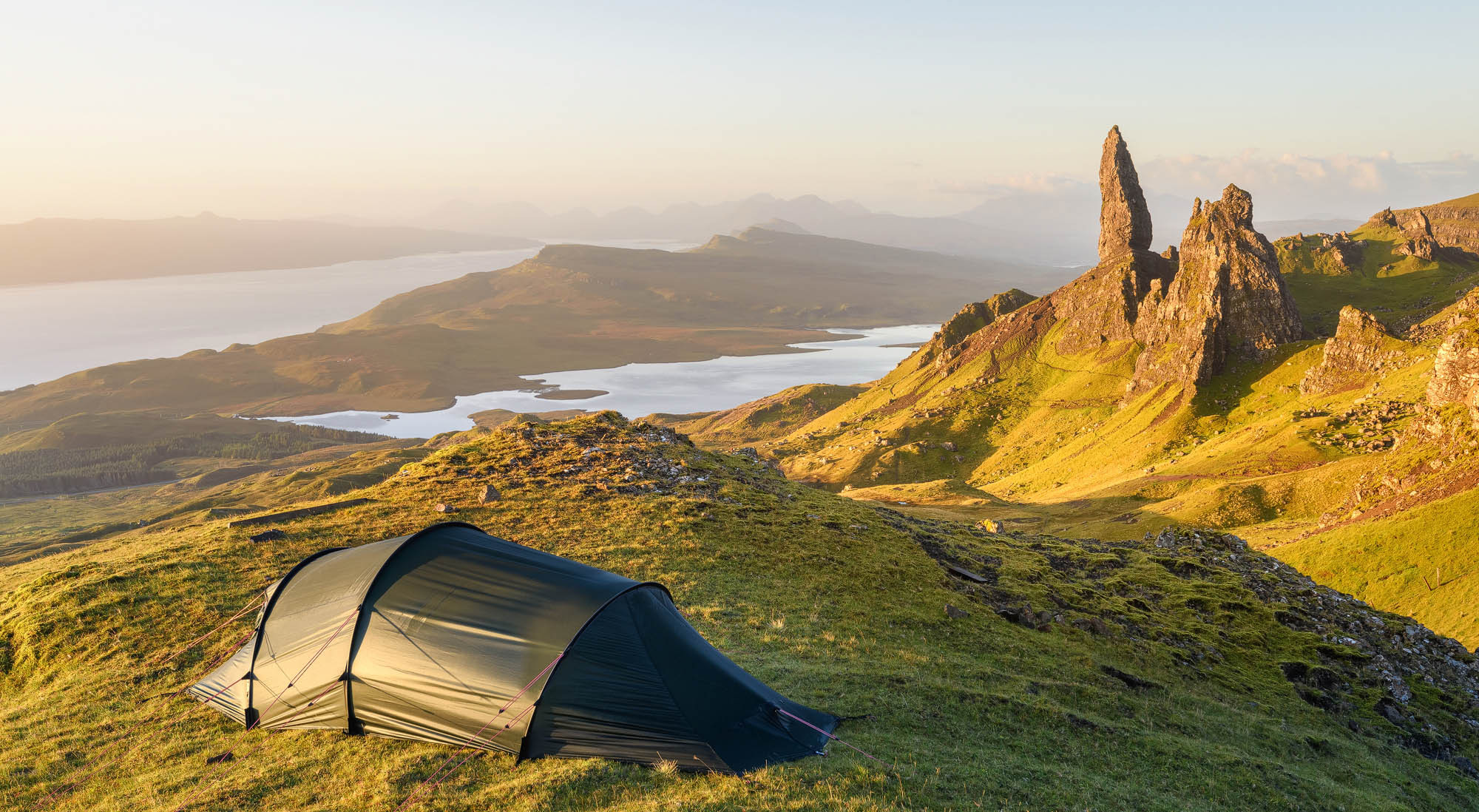
Wild camping is one of the most cherished aspects of Scotland’s access rights, and it’s the thing that catches most visitors by surprise. Yes, you really can pitch a tent in the wild in Scotland – legally and for free – as long as you do it responsibly.
The Code defines wild camping as lightweight camping by small numbers of people, staying no more than two or three nights in any one place. This is a world away from the car-based camping that has caused problems in some areas – the access code doesn’t extend to motorised vehicles, so driving your campervan onto a loch shore and setting up for a week is not what we’re talking about here.
The rules are common sense. Camp away from buildings, roads, and enclosed fields. Keep groups small. Use a camping stove rather than lighting a fire – this is strongly encouraged by the Code, and during dry periods it’s essential. Always pay attention to fire danger warnings from the Scottish Fire and Rescue Service. Carry a trowel and bury any human waste at least 30 metres from water sources. And most importantly, leave no trace – take everything with you when you leave, including all food waste.
The one significant restriction on wild camping applies to parts of Loch Lomond and The Trossachs National Park. In 2017, the park authority introduced seasonal byelaws restricting camping along stretches of loch shoreline, primarily in response to problems caused by irresponsible campers – litter, fires, and anti-social behaviour. Camping in the restricted zones (mainly around the eastern shores of Loch Lomond) is now only permitted at designated campsites or with a paid permit between March and October. The byelaws were controversial, with organisations like Mountaineering Scotland and Ramblers Scotland arguing that they criminalised responsible campers alongside irresponsible ones. But the restrictions affect only about 4% of the park – the remaining 96% remains open for wild camping.

Walking and Hillwalking
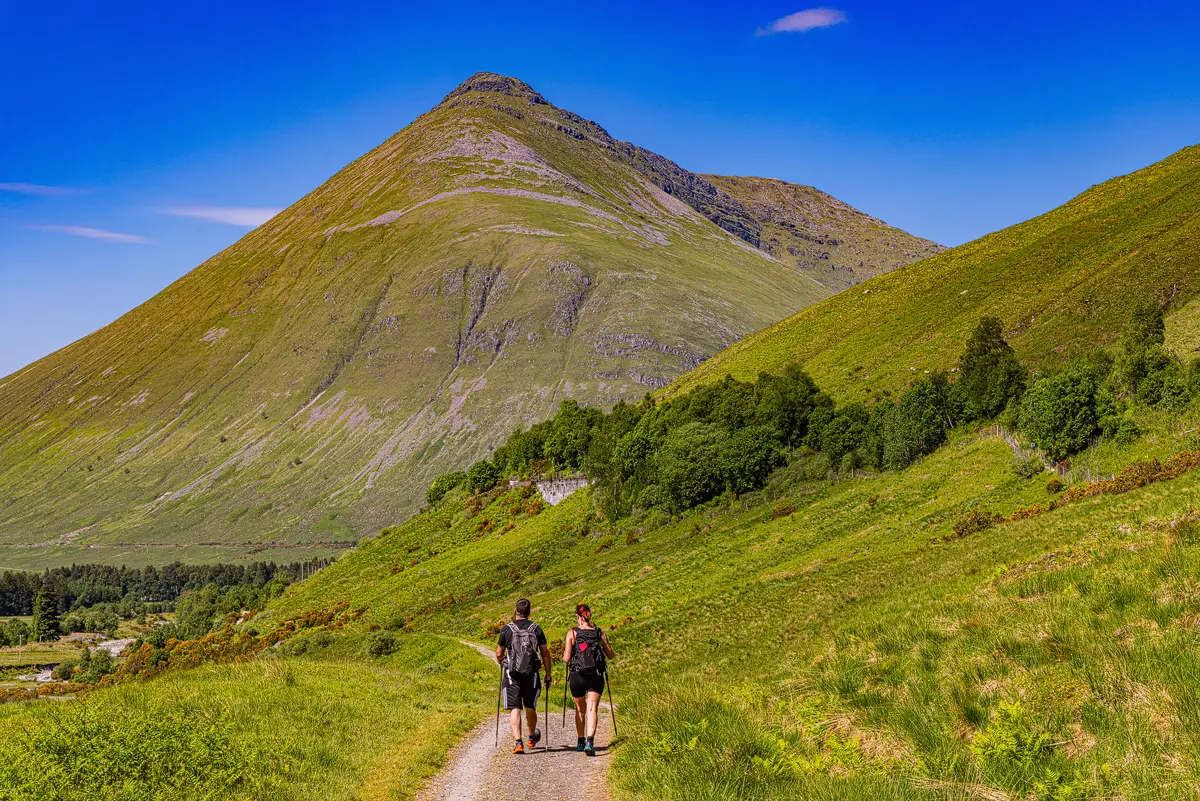
Walking is the activity most closely associated with access rights, and Scotland offers some of the finest walking in Europe. From the gentle Loch Morlich circular in the Cairngorms to epic mountain ascents and multi-day trails like the West Highland Way, the freedom to walk across open land transforms the experience completely. You’re not confined to footpaths. You can follow a burn upstream, cut across a hillside, or explore a stretch of woodland entirely on your own terms.
That said, walking responsibly means being aware of what’s going on around you. During lambing season (typically April to May), avoid fields with livestock and keep dogs under strict control. During the deer stalking season (1 July to 20 October for stags, 21 October to 15 February for hinds), be considerate in areas where stalking is taking place – the Heading for the Scottish Hills service provides current information on where stalking is happening. And when walking across farmland, stick to field margins if crops have been sown.
For inspiration on where to walk, have a look at our guide to the best walks and hikes in Scotland, which covers everything from short family strolls to challenging long-distance trails.
Cycling and Horse Riding
Both cycling and horse riding are fully covered by access rights, and Scotland’s landscapes offer extraordinary terrain for both.
For cyclists, access rights apply on roads, paths, tracks, and off-road – there’s no distinction between paved surfaces and trails in the way there is in some other countries. The Code does ask that you be considerate, particularly on narrow routes where you might encounter walkers or horse riders. If a path is too narrow for safe overtaking, dismount and walk. Avoid churning up soft or boggy ground, especially in wet conditions. And give other path users plenty of warning of your approach – a friendly bell ring or shout goes a long way.

Horse riders have the same access rights as walkers and cyclists. The Code recommends sticking to paths and tracks where possible to minimise ground damage, and being particularly careful around other path users – not everyone is comfortable around horses, and a friendly word of warning is always appreciated. If riding through forested areas, be mindful of low branches and keep to suitable tracks.

On the Water – Kayaking, Swimming, and Sailing
One of the things that surprises many visitors is that Scotland’s access rights extend to inland water. You have the right to canoe, kayak, row, sail, swim, and dive on Scotland’s rivers, lochs, canals, and reservoirs – all without needing permission. This is a significant difference from England and Wales, where inland water access is much more restricted.
The responsibilities are straightforward: respect anglers (give them plenty of space, especially if they’re actively casting), avoid disturbing wildlife on or near the water, and take care not to damage riverbanks or loch shores when launching or landing. Some lochs and reservoirs are used intensively as commercial fisheries, so use common sense – if an area is clearly busy with anglers, it might not be the best time or place for a paddle.

Wild swimming has become hugely popular in Scotland in recent years, and the access code means there’s no shortage of places to take a dip. Lochs, rivers, and the sea are all accessible. Just remember that Scotland’s waters are cold year-round – even in summer, loch temperatures rarely climb above 15°C – and there are no lifeguards in wild swimming spots. Plan your swim, check conditions, and never swim alone in unfamiliar water.
Dogs in the Scottish Outdoors
Dogs are welcome in the Scottish outdoors, and dog walking is explicitly covered by access rights. However, the Code places particular emphasis on responsible dog ownership, and for good reason – poorly controlled dogs are one of the most common sources of access-related problems.
The key requirements are: keep your dog under close control at all times. During the bird nesting season (April to July), this means keeping dogs on a short lead in areas where ground-nesting birds might be present – moorland, grassland, and coastal areas. Near livestock, dogs should always be on a short lead and under close control. If cattle become aggressive (which can happen, particularly if calves are present), the advice is to release your dog – it can outrun cattle far more easily than you can – and get yourself to safety.

The access code does not require dogs to be on a lead at all times – the requirement is that they’re under “close control”, which means they come back immediately when called and don’t chase wildlife or livestock. But near sheep, cattle, and during nesting season, a lead is the only responsible option.
For more on travelling with dogs in Scotland, including the best dog-friendly beaches, walks, and accommodation, see our dog-friendly Scotland guide.
Around Farmland and Livestock
Scotland is a working landscape, and agriculture covers a significant proportion of the countryside. The access code asks people to be thoughtful when walking through farmland, and the guidance is practical rather than restrictive.
Keep a safe distance from livestock, particularly during lambing season and when calves are present. Highland cattle may look docile and photogenic, but cows with calves can be protective, and even placid breeds can be unpredictable if they feel threatened. Never put yourself between a cow and her calf.

Access rights don’t extend to enclosed farmyards, but if a right of way or core path runs through a farmyard, you can follow it. If a reasonable alternative route is signposted, use it. If crops have been sown or are growing in a field, access rights are limited to the field margins – don’t walk through crops. Fields where crops haven’t been sown, and fields with grazing animals, are generally accessible – just be sensible and give animals space.
Beaches and the Coast
Scotland has nearly 19,000 kilometres of coastline, and it’s all covered by access rights. Beaches, dunes, rocky shores, harbours – you have the right to walk, swim, and enjoy the coast anywhere in Scotland, provided you behave responsibly.
Coastal access is one area where Scotland really shines compared to other parts of the UK. There are no private beaches in the way you might encounter in England, and no seasonal dog bans on most Scottish beaches (although a few individual beaches do have local restrictions). The combination of access rights and Scotland’s extraordinary coastline means you can walk for miles along deserted sands, explore sea caves, swim from sheltered coves, and generally enjoy the coast as it should be enjoyed – freely.

For ideas on where to start, our guide to the best beaches in Scotland covers the finest stretches of sand from Harris to Galloway.
Core Paths and Rights of Way
While access rights let you go almost anywhere, Scotland also has two specific types of designated routes that are worth understanding.
Core paths are routes designated by local authorities as important for public access. Every council in Scotland is required to produce a core path plan, and these paths connect communities, link to transport hubs, and provide access to the countryside. Core paths can be anything from paved urban routes to rough moorland tracks. The key thing is that they have a special status – land managers must not obstruct them, and local authorities have powers to maintain and improve them.
Rights of way are older routes that have been used by the public for at least 20 years and connect two public places. Rights of way exist regardless of access rights – they’re a separate legal category with a long history in Scottish law. ScotWays, the organisation born from the Glen Tilt case, maintains a catalogue of rights of way across Scotland and continues to protect them from obstruction.
In practice, most walkers don’t need to worry too much about the distinction. Access rights mean you can go almost anywhere. Core paths and rights of way simply provide a network of established routes with additional protections.
How Scotland Compares to England and Wales
If you’ve walked in England and Wales, you’ll know about the Countryside and Rights of Way Act 2000 (CRoW), which created “open access land” in designated areas. Scotland’s system is significantly more generous.
In England and Wales, the right of access applies only to registered common land and mapped “access land” (primarily mountains, moors, heaths, and downs). It doesn’t include farmland, woodland, rivers, or lochs. There’s no right to wild camp (except in Dartmoor, and even that has been legally contested), and no right to access most inland water for activities like kayaking or swimming. You’re largely confined to public footpaths, bridleways, and designated access land.
In Scotland, access rights apply to virtually all land and inland water, regardless of designation. You can walk through woodlands, across farmland (subject to crop restrictions), along riverbanks, and over private estates. You can wild camp, swim in lochs, and paddle rivers without permission. The difference in practical terms is enormous – when you cross the border into Scotland, the landscape quite literally opens up.
I’ve always found it fascinating that two countries sharing an island can have such different approaches to land access. Scotland’s system works because it’s built on mutual respect rather than blanket restrictions, and the evidence from over twenty years of operation suggests that the vast majority of people use their rights responsibly.
Practical Tips for Using Your Access Rights
Here are some practical things to keep in mind when exercising your access rights in Scotland:
- Leave no trace – This is the golden rule. Take all litter home, avoid damaging vegetation, and leave your wild camping spot exactly as you found it.
- Plan ahead – Check weather conditions, tell someone your plans if heading into remote areas, and carry appropriate kit. The Scottish mountains can be dangerous in poor conditions at any time of year.
- Use a stove, not a fire – The Code strongly recommends using a camping stove rather than lighting a fire. Wildfires can cause enormous damage, particularly on peatland, and the risk is higher than many people realise.
- Be considerate of others – Respect the privacy of people living in rural areas. Camp well away from houses, keep noise down, and don’t leave gates open if livestock are present.
- Check the Heading for the Scottish Hills service – If you’re planning a hill walk during the stalking season, check this service for information about where stalking is taking place.
- Respect temporary closures – If land is temporarily closed for a legitimate reason (forestry operations, lambing, an event), respect the closure and use any alternative route provided.
If you’re planning a trip to Scotland and want to make the most of these access rights, our 7-day Scotland itinerary and Scottish Highlands guide are good places to start planning.
Frequently Asked Questions
Can you wild camp anywhere in Scotland?
You can wild camp on most land where access rights apply, provided you do it responsibly – use a small tent, keep groups small, stay no more than two or three nights in one spot, and leave no trace. Avoid enclosed fields, areas near buildings, and land where crops have been sown. The main exception is parts of Loch Lomond and The Trossachs National Park, where seasonal byelaws require permits for camping in designated areas between March and October.
Do you need permission to walk on private land in Scotland?
No. Under the Land Reform (Scotland) Act 2003, everyone has the right to access most land in Scotland for recreation and transit, regardless of who owns it. You don’t need to ask permission from landowners. The only requirement is that you exercise your rights responsibly, following the guidance in the Scottish Outdoor Access Code.
Can you swim in Scottish lochs and rivers?
Yes. Access rights extend to all inland water in Scotland, including lochs, rivers, canals, and reservoirs. You can swim, kayak, canoe, row, sail, and dive without needing permission. Be aware that Scottish waters are cold year-round and there are no lifeguards at wild swimming spots, so take appropriate precautions.
Are dogs allowed on Scottish beaches?
Dogs are welcome on the vast majority of Scottish beaches year-round. Unlike many English beaches, there are few seasonal dog bans in Scotland. The access code requires that dogs are kept under close control at all times, and on a short lead near livestock and during the bird nesting season (April to July). A small number of individual beaches have local restrictions, so it’s worth checking before you visit.
Is the Scottish Outdoor Access Code the same as the right to roam?
They’re related but not quite the same thing. The right to access most land in Scotland was established by the Land Reform (Scotland) Act 2003. The Scottish Outdoor Access Code is the detailed guidance document that explains how those rights should be exercised responsibly. The phrase “right to roam” is commonly used but isn’t an official legal term – the correct terminology is “access rights” as defined in the Act.
Can you fly a drone under Scottish access rights?
No. Access rights specifically exclude motorised activities, and drones fall into this category. Flying a drone in Scotland is governed by separate Civil Aviation Authority regulations, which require registration, a flyer ID, and compliance with airspace restrictions. Having access rights to walk across land does not give you permission to fly a drone over it.
Does the access code apply to the coastline?
Yes. Scotland’s entire coastline is covered by access rights, including beaches, dunes, rocky shores, and the foreshore (the area between high and low water marks). You can walk, swim, and explore the coast freely, provided you behave responsibly and respect any wildlife or environmental sensitivities.
A Freedom Worth Protecting
The Scottish Outdoor Access Code is one of the things that makes Scotland genuinely special for anyone who loves the outdoors. The freedom to walk across open mountains, camp beside a remote loch, paddle a river, or simply explore the coast without worrying about trespass signs or boundary disputes – it’s a freedom that doesn’t exist in most countries.
But it only works if people use it responsibly. Every time someone leaves litter at a wild camping spot, lights a fire on dry peatland, or lets their dog chase sheep, it chips away at the goodwill that keeps the system functioning. The Loch Lomond camping byelaws are a direct consequence of irresponsible behaviour, and there are always voices calling for further restrictions.
As someone who uses these access rights almost every week, I take this personally. The right to roam across Scotland’s landscape is a privilege, even if it’s also a legal right. It was hard won – from the Battle of Glen Tilt in 1847 through to the Land Reform Act in 2003, generations of campaigners fought for the access we now enjoy. The least we can do is look after it.
All information was correct at the time of writing, please check things like entry costs and opening times before you arrive.

Leave a comment below