One of the most common questions I hear from people planning a trip to Scotland is whether they need a visa. It’s a fair question – Scotland is its own country with its own parliament, its own legal system, and its own banknotes, so it would be reasonable to assume it has its own visa rules. It doesn’t. Scotland is part of the United Kingdom, and all immigration and border control is handled at UK level. There is no separate Scottish visa, no Scottish border checkpoint, and no Scottish immigration policy. If you’re allowed to enter the UK, you’re allowed to enter Scotland.
That said, the rules have changed significantly in recent years – particularly since Brexit and the introduction of the Electronic Travel Authorisation (ETA) scheme. What used to be a straightforward “just bring your passport” situation for most Western visitors now involves an extra step for almost everyone who isn’t British or Irish. This guide covers everything you need to know, regardless of where in the world you’re coming from.

The Quick Answer – Who Needs What
The answer to “do I need a visa to visit Scotland?” depends entirely on your nationality. Here’s the short version:
British and Irish citizens – You need nothing. No visa, no ETA, no special documentation. British citizens can use a passport, and Irish citizens can use either a passport or a national ID card. The Common Travel Area between the UK and Ireland means there are no routine border checks.
Citizens of the US, Canada, Australia, New Zealand, EU/EEA countries, Switzerland, Japan, South Korea, and many other nations – You do not need a visa for visits of up to six months. However, you do need an Electronic Travel Authorisation (ETA), which costs £20 and must be obtained before you travel. More on this below.
Citizens of India, Pakistan, Nigeria, China, the Philippines, South Africa, and many other countries – You will need a Standard Visitor visa, which costs £135 and must be applied for before you travel. Processing takes around three weeks.
If you’re not sure which category you fall into, the UK Government’s visa checker tool will tell you exactly what you need based on your nationality and reason for visiting.
The UK Electronic Travel Authorisation (ETA)
The ETA is the big change that has caught many travellers by surprise. If you’re from a country that doesn’t need a visa to visit the UK – and you’re not British or Irish – you now need to apply for an ETA before you travel. This became a legal requirement on 25 February 2026, and airlines will deny boarding to passengers who don’t have one.

The ETA is not a visa. It’s a digital travel authorisation – similar to the US ESTA or the EU’s upcoming ETIAS system – that grants you permission to travel to the UK. It is linked electronically to your passport, so there is nothing to print or carry separately.
Here are the key details:
Cost: £20 per person (increased from £16 on 8 April 2026). The fee is non-refundable, even if your application is refused.
Validity: Two years from the date of approval, or until your passport expires – whichever comes first. During that period, you can make multiple trips to the UK, with each visit lasting up to six months.
Who needs one: Everyone entering the UK who doesn’t have a visa and isn’t a British or Irish citizen. This includes visitors from the US, Canada, Australia, New Zealand, all EU and EEA countries, Switzerland, Japan, South Korea, Brazil, Argentina, Mexico, and dozens more. It also applies to children and babies – each traveller needs their own ETA linked to their own passport.
Who does not need one: British citizens, Irish citizens, anyone who already holds a UK visa, and anyone with permission to live, work, or study in the UK (such as settled status holders).
Processing time: Most applications are approved within minutes, though the official guidance says to allow up to three working days. You must apply at least three days before you travel.
How to Apply for an ETA
The application process is straightforward and entirely digital. You can apply through the UK ETA smartphone app (available for Android and iPhone) or online at the GOV.UK website. Using the app is slightly easier because it handles the passport scanning and photo capture natively, but the website works perfectly well too.
You will need:
- The passport you plan to travel with
- Your email address
- A credit or debit card (Google Pay and Apple Pay are also accepted)
The process involves taking a photo of your passport’s biometric page, scanning your passport’s chip with your phone, taking a selfie against a plain background, and answering a short set of questions. You do not need to provide details of your travel plans, accommodation, or itinerary.
Once approved, you will receive a confirmation email and your ETA will be digitally linked to your passport. You simply need to travel with the same passport you used in your application.
One important point – only apply through the official UK ETA app or the GOV.UK website. There are third-party websites that charge significantly more to submit the application on your behalf, and they offer no advantage whatsoever.
Who Needs a Standard Visitor Visa?
If your nationality requires a visa to enter the UK, you will need to apply for a Standard Visitor visa before travelling to Scotland. This is a more involved process than the ETA and requires supporting documentation.
The Standard Visitor visa costs £135 for stays of up to six months (this fee increased from £127 on 8 April 2026). If you visit the UK regularly, you can apply for longer-term visitor visas: £506 for two years, £903 for five years, or £1,128 for ten years.
To apply, you will need to demonstrate that you intend to leave the UK at the end of your visit, that you can support yourself financially during your stay, and that you can pay for your return journey. You will typically need to provide evidence such as bank statements, an employment letter, proof of accommodation, and a travel itinerary.
Applications are submitted online through the GOV.UK website, and you will then need to attend an appointment at a visa application centre to provide biometric information (fingerprints and a photograph). Processing usually takes around three weeks, though you can pay for a priority service in some countries.
The earliest you can apply is three months before your planned travel date, so build this into your trip planning timeline.
Passport Requirements

Regardless of whether you need a visa or an ETA, almost everyone entering Scotland from outside the UK needs a valid passport. The key rules are:
- Your passport must be valid for the entire duration of your stay
- EU, EEA, and Swiss nationals must hold a passport – national ID cards are no longer accepted for entering the UK (except for Irish citizens, who can still use theirs)
- It is recommended that your passport was issued within the last ten years, as border officials may question older documents
The one exception is if you’re travelling to Scotland from within the UK – for instance, flying from London to Edinburgh or driving up from England. There are no border controls between Scotland and the rest of the UK, so no passport is needed for internal travel, though airlines may ask for photo ID for domestic flights. For more on this, see my article on whether you need a passport to fly to Scotland.
What Changed After Brexit?
When the UK left the European Union on 31 January 2020, it ended free movement between the UK and EU member states. Before Brexit, EU citizens could visit, live, and work in Scotland with nothing more than a national ID card. Those days are gone, and the changes have been significant:
EU, EEA, and Swiss citizens now need a valid passport to enter the UK. National ID cards are no longer accepted. They can still visit for up to six months without a visa, but they now need an ETA (as of April 2025). If they want to work or live in Scotland, they need a visa – just like any other non-UK citizen.
Irish citizens are the exception. Thanks to the Common Travel Area agreement between the UK and Ireland – which predates both the EU and Brexit – Irish citizens retain full freedom of movement. They do not need a visa, an ETA, or even a passport to enter Scotland (though a passport or national ID card is useful for identification purposes).
It is worth noting that Scotland voted to remain in the EU in the 2016 referendum, but as part of the UK it left regardless. Immigration policy remains reserved to the UK Government at Westminster, not the Scottish Government. This is a source of ongoing political debate in Scotland, but for practical purposes, the rules are the same across the whole UK.
The Common Travel Area – Travelling from Ireland
The Common Travel Area (CTA) is an agreement between the UK, Ireland, the Isle of Man, and the Channel Islands that allows free movement of citizens between these jurisdictions. It has been in place since 1923 – long before either the UK or Ireland joined the EU – and it survived Brexit entirely intact.
If you are an Irish citizen, you can travel to Scotland without any documentation requirements beyond a form of identification. There are no routine immigration checks on the Ireland-Scotland route, whether you fly (Dublin to Edinburgh is one of the busiest air routes in Europe), take the ferry, or drive via Northern Ireland.
However, if you are not an Irish or British citizen and you travel to Scotland via Ireland, you will still need to meet the UK’s entry requirements. The CTA applies to citizens of the CTA countries only – it does not mean that anyone physically present in Ireland can enter the UK without checks. Airlines and ferry operators do carry out document checks, and you may be asked to show your passport and ETA or visa.
Arriving in Scotland
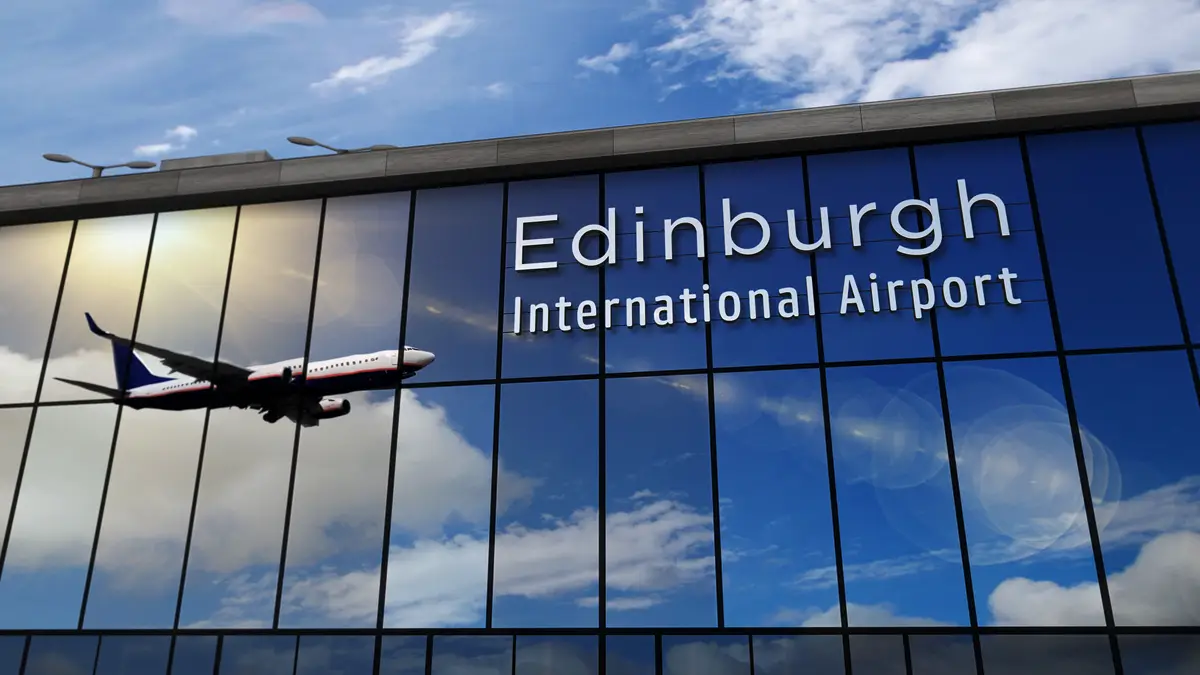
Scotland has several international airports, and your arrival experience will be much the same at any of them. The main entry points are:
Edinburgh Airport – Scotland’s busiest airport, with direct flights from across Europe, North America (including several US cities), and the Middle East. It’s well connected to the city centre by tram, bus, and taxi. If you’re heading to Edinburgh, see my complete guide to Edinburgh.
Glasgow Airport – Scotland’s second international airport, with a strong network of European and transatlantic routes. A bus service connects the airport to Glasgow city centre in about 15 minutes.
Aberdeen Airport – Useful for visitors heading to the northeast of Scotland, Royal Deeside, or the Cairngorms. Smaller than Edinburgh and Glasgow but with decent domestic and European connections.
Inverness Airport – The gateway to the Highlands, with flights from London and several other UK cities. It is a small, manageable airport and an excellent way to reach the Scottish Highlands quickly.
At all Scottish airports, you will pass through UK Border Force on arrival. If you hold a biometric passport from an eligible country, you can use the automated e-passport gates, which are quick and efficient. Otherwise, you will join the queue for manual passport checks. Border officers may ask about the purpose of your visit, where you are staying, and when you plan to leave – this is routine and nothing to worry about.
Arriving by ferry

If you are arriving in Scotland by ferry from Northern Ireland (Larne or Belfast to Cairnryan), you will need the same documentation as you would for a flight. Although the crossing is within the UK and Ireland, document checks can be carried out. Ferries from continental Europe to the UK typically dock in English ports (such as Dover or Hull), from where you would travel overland to Scotland – no further checks are needed once you have cleared UK immigration.
Arriving by train from England
There is no border checkpoint between England and Scotland. If you take the train from London to Edinburgh (about four and a half hours on the east coast line) or drive up the motorway, you simply cross from one country to the other without stopping. You may see a “Welcome to Scotland” sign on the A1 or the M74, but there is no immigration control. For those planning a driving trip, I have a guide to driving in Scotland and a Scotland road trip planning tool that may help.
What You Can and Can’t Do as a Visitor
A Standard Visitor visa or an ETA allows you to visit Scotland for tourism, to see friends and family, to attend business meetings or conferences, and to study short courses of up to six months. You can also volunteer with a registered charity for up to 30 days.
What you cannot do is work – either paid or unpaid – for a UK employer, or be self-employed. You also cannot access public funds (benefits), get married without a specific Marriage Visitor visa, or use repeated visits to effectively live in the UK. If you are thinking about working or relocating to Scotland rather than just visiting, you will need a different type of visa entirely. I have written a guide to moving to Scotland from America that covers the main work and residency visa routes in detail.
The maximum stay for a standard visit is six months per entry. Visitor visas generally cannot be extended, though there are limited exceptions for medical treatment. If you stay beyond your permitted time, you risk being barred from future entry to the UK.
Currency, Customs, and What to Bring

Scotland uses the pound sterling (£), the same currency as the rest of the UK. However, Scotland has its own banknotes issued by three banks: the Bank of Scotland, the Royal Bank of Scotland, and the Clydesdale Bank. These look different from Bank of England notes but are perfectly valid throughout the UK. ATMs (cash machines) are widely available in cities and towns, and contactless card payments are accepted almost everywhere. In more remote Highland and island locations, it is worth carrying some cash as a backup – not every small shop or cafe has a card reader.
If you are bringing more than £10,000 (or the equivalent in any currency) into the UK, you must declare it at the border.
In terms of customs, you can bring most personal items with you. There are restrictions on alcohol, tobacco, firearms, and certain food products (particularly meat and dairy from outside the UK). You can bring personal medication without declaring it, though it is sensible to carry a doctor’s letter if you are travelling with controlled drugs or large quantities of any medication. The UK Government’s guidance on bringing goods into the country covers the full rules.
Frequently Asked Questions
Do Americans need a visa to visit Scotland?
No. US citizens can visit Scotland for up to six months without a visa. However, you do need an Electronic Travel Authorisation (ETA), which costs £20 and must be applied for before you travel. The ETA is valid for two years and covers multiple trips. You will also need a valid US passport.
Do EU citizens need a visa to visit Scotland after Brexit?
No. EU citizens can still visit Scotland for up to six months without a visa. However, since April 2025, they need an ETA (£20), and since Brexit, they must travel on a passport – national ID cards are no longer accepted for entering the UK. Irish citizens are exempt from all of these requirements.
How long does an ETA take to process?
Most ETA applications are approved within minutes. The UK Government advises allowing up to three working days, and you must apply at least three days before your travel date. Apply through the official UK ETA app or the GOV.UK website to avoid unnecessary delays or inflated fees from third-party sites.
Can I visit Scotland with just an ID card?
Only if you are an Irish citizen. Since Brexit, all other nationalities – including EU citizens – need a valid passport to enter the UK. National ID cards are no longer accepted.
Is there a border between Scotland and England?
There is a geographical border, but there are no immigration or customs checkpoints. You can drive, take the train, or walk between England and Scotland without any checks. Immigration control happens at the point of entry to the UK (airports, seaports), not at the internal border between Scotland and England.
Do children need their own ETA?
Yes. Every traveller, including children and babies, needs their own ETA linked to their own passport. You can apply on behalf of a child using the UK ETA app or website. At £20 per person, a family of four will pay £80 in total.
What happens if my ETA is refused?
If your ETA application is refused, you will not be able to travel to the UK on a visa-free basis. You would instead need to apply for a Standard Visitor visa (£135 for up to six months). The £20 ETA fee is non-refundable regardless of the outcome. Common reasons for refusal include criminal history, previous immigration violations, or security concerns.
Start Planning Your Trip
Once you have your entry requirements sorted, the fun part begins – planning what to do when you get here. Scotland packs an extraordinary amount into a small country, and whether you have three days or three weeks, there is more than enough to fill your time. I have written comprehensive guides to many of Scotland’s best destinations and experiences, including:
- Edinburgh – The Complete Guide to Scotland’s Capital
- The Scottish Highlands – Everything You Need to Know
- Things to Do on the Isle of Skye
- Orkney Travel Guide
- A Guide to the City of Stirling
- Best Walks and Hikes in Scotland
- Midges in Scotland – How to Avoid Them
- Free Scotland Travel Itineraries
If you are planning a road trip, my Scotland road trip planning tool can help you build a route based on your interests, starting point, and available time. And if you want to know more about driving in Scotland – including the joys of single-track roads – I have a guide for that too.
Scotland is one of the most welcoming countries in the world, and we are genuinely pleased when people take the time to visit. The entry requirements are a small administrative hurdle, but once you are through the airport and out on the road, the paperwork will be the last thing on your mind. I hope this guide has cleared up any confusion, and I look forward to welcoming you.
All information was correct at the time of writing, please check things like entry costs and opening times before you arrive.

Leave a comment below