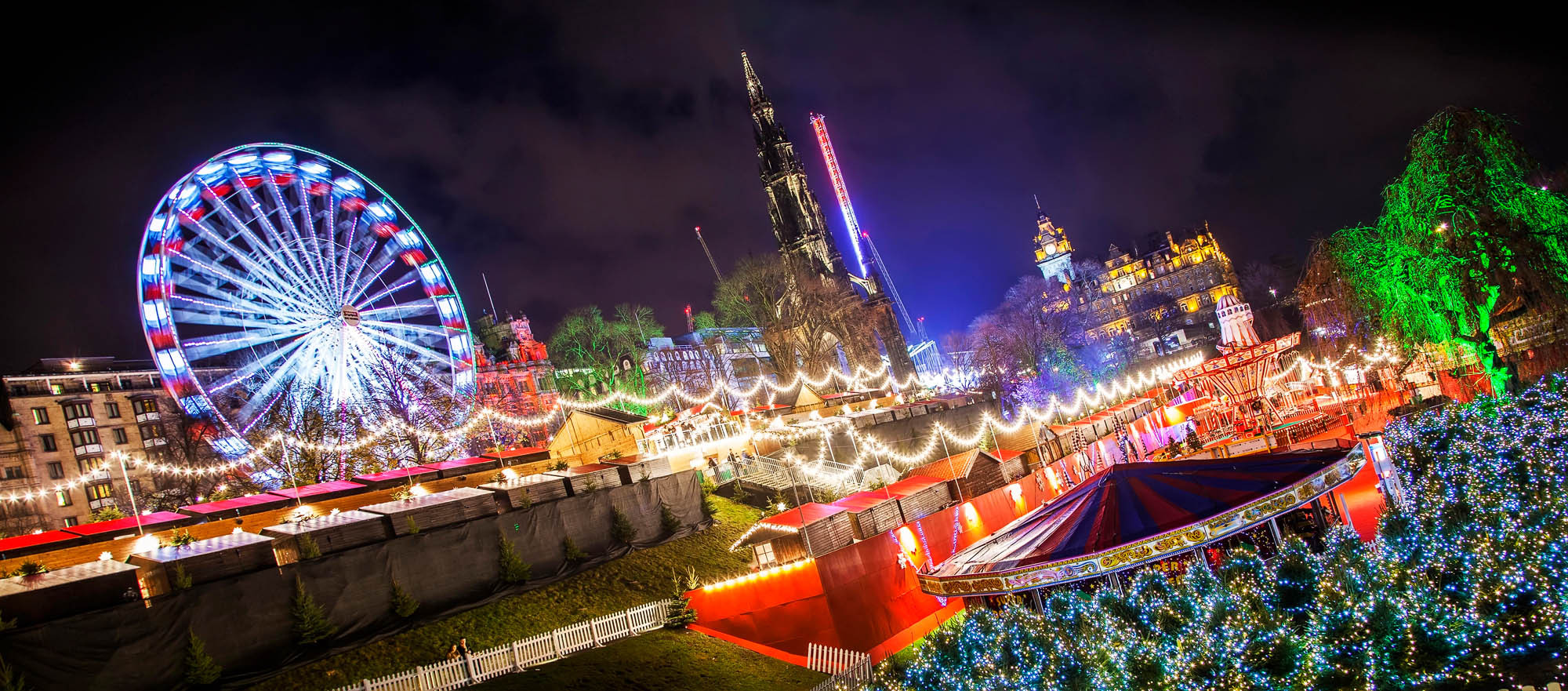
If there is one night of the year that truly defines Scotland, it is Hogmanay. New Year's Eve is celebrated all over the world, of course, but nowhere is it celebrated with quite the same depth, passion and history as it is here. Hogmanay is not just a party. It is a centuries-old cultural tradition woven into the fabric of Scottish life, a night when ancient rituals, community spirit, fire, music, food and whisky come together in a way that is uniquely and unmistakably Scottish.
Whether you have lived in Scotland your whole life or you are visiting for the first time, experiencing a proper Scottish Hogmanay is something that stays with you. We have seen in the New Year in all kinds of ways over the years, from massive street parties to quiet firesides with family, and every one of them has felt special. There really is nothing else like it.

What is Hogmanay?
Hogmanay is the Scots word for the last day of the old year, 31st December, but in practice it refers to the entire celebration surrounding the New Year. In many parts of Scotland, the festivities stretch across several days, often starting on the 30th of December and running right through to the 2nd of January, which is a public holiday in Scotland. That extra day of recovery is very much needed, and even then it is barely enough.
While the rest of the UK might see in the new year with a glass of fizz in front of the television, Scotland takes things to a completely different level. Hogmanay has historically been considered more important than Christmas itself in many Scottish households. This is not an exaggeration. For centuries, Christmas was barely celebrated in Scotland at all, and Hogmanay carried all the festive weight that Christmas bore in other countries.
The History of Hogmanay
To understand why Hogmanay means so much to Scots, you need to understand the history behind it. The roots of the celebration stretch back thousands of years, long before Scotland was even Scotland.
Many of the traditions associated with Hogmanay have their origins in the pagan festivals of the Norse and the Celts. The Vikings, who settled across much of northern and western Scotland from the 8th and 9th centuries onwards, paid particular attention to the winter solstice, the shortest day of the year. Their midwinter festival of Yule was a time of feasting, fire and celebration, and many of those customs became embedded in Scottish culture. In Shetland, where the Norse influence remains strongest, New Year is still referred to as Yules. The Gaelic festival of Samhain, which marked the end of the harvest and the beginning of the darker half of the year, also fed into the traditions that would become Hogmanay.
The real turning point came with the Protestant Reformation in the 16th century. The Kirk, the established Church of Scotland, took a dim view of Christmas, regarding it as a Catholic or "Papist" feast. Christmas celebrations were actively discouraged and eventually banned by the Scottish Parliament in 1640. Although that ban was lifted in 1712, the attitudes stuck. Christmas Day did not become a public holiday in Scotland until 1958, and Boxing Day was not recognised until 1974. For the best part of 400 years, many Scots worked through Christmas as normal.
All of that festive energy, the gift giving, the family gatherings, the feasting and the merriment, was channelled instead into Hogmanay. New Year became Scotland's main winter celebration, and the traditions surrounding it grew richer and deeper with every passing generation. Even after Christmas made its return as a holiday, Hogmanay never lost its place at the heart of Scottish culture. If anything, Scots now get the best of both worlds.
Where Does the Word "Hogmanay" Come From?
The origin of the word Hogmanay is one of those questions that has kept linguists and historians busy for centuries, and there is still no definitive answer. Several theories compete, and each has its supporters.
The most commonly cited theory links the word to the Old French "hoginane" or "hoguinané," meaning a gift given at New Year or a gala day. This connection is sometimes attributed to Mary, Queen of Scots, who returned to Scotland from France in 1561 and may have brought the term with her. Others point to the Norman French "hoguignetes," referring to gifts exchanged at New Year in Normandy.
There are Norse connections too. The Scandinavian word "hoggunott" referred to the midwinter slaughter and the feasting that followed. Given the deep Viking influence on Scottish culture, this is entirely plausible. A Flemish origin has also been suggested, with "hoog min dag" meaning "great love day," reflecting the significant Flemish immigration to Scotland between the 11th and 17th centuries. And then there is the Anglo-Saxon "haleg monath," meaning "holy month."
One particularly interesting theory connects the word to "hogman," a type of inferior bread or "alms bread." A record from around 1320 shows Robert the Bruce donating three grades of loaves to the canons of Restenneth Priory, with hogman being the lowest grade. In Fife, the last day of the year was historically known as "Cake-day," referring to the cakes and bread distributed when children and the poor went from door to door. In other parts of Scotland, it seems the name evolved from "Hogman-day" and gradually softened into Hogmanay.
In the south of Scotland, particularly Roxburghshire, the word appears without the "m" as "Hunganay," which adds yet another wrinkle. Whatever the true origin, the word was in common use by 1604, when it first appeared in written records, and it has been the name for Scotland's greatest celebration ever since.
First Footing
Of all the Hogmanay traditions, first footing is the one that is most widely practised and most deeply cherished. The custom is simple in concept but rich in meaning. After the bells ring at midnight, the first person to cross the threshold of your home is your "first foot," and tradition holds that this person sets the tone for the entire year ahead.
The ideal first footer is a tall, dark-haired man. This preference is widely believed to date back to the Viking age, when a blond or red-haired stranger appearing at your door after dark was far more likely to be a raider than a friend. A dark-haired visitor was more likely to be a fellow Scot and therefore a welcome sight.
The first footer should never arrive empty-handed. The traditional gifts each carry their own symbolic meaning. A lump of coal represents warmth for the home in the year ahead. Shortbread or black bun (a dense, rich fruit cake encased in pastry) ensures the household will have plenty of food. Salt represents flavour and preservation. And of course a bottle of whisky is brought to toast the new year and share good cheer. In some communities, a silver coin would also be given, symbolising financial prosperity.
In return, the first footer is welcomed with generous hospitality. Food and drink are offered, and the visitor is made to feel at home. This exchange of gifts and hospitality is at the very heart of Hogmanay, and it captures something essential about Scottish culture: the belief that generosity and warmth towards others, even strangers, will be repaid in kind.
First footing is one of those customs that might sound old-fashioned on paper, but it genuinely still happens across Scotland. We have had first footers arrive at our door well after midnight, bottle in hand and smile on their face, and there is a real magic to it. The visits can go on well into the small hours, with groups of friends and neighbours making the rounds from house to house, and in some communities this continues right through the night and into the next day.
Redding the House
Before the celebrations can begin, there is work to be done. The Hogmanay tradition of "redding the house" (redding being Scots for tidying or putting in order) involves giving the home a thorough clean from top to bottom before midnight on the 31st. The idea is to sweep away the old year's dirt, clutter and bad luck, and to welcome the new year with a fresh, clean home.
Traditionally, this extended beyond just cleaning the rooms. The ashes would be cleared from the fireplace, and a new fire would be laid and lit before midnight. Any outstanding debts were to be repaid, and borrowed items returned to their owners. The principle was straightforward: start the new year with a clean slate in every sense. To begin the year with an untidy house or unpaid debts was considered very bad luck indeed.
Saining: The Ancient Blessing Ritual
One of the oldest and most fascinating Hogmanay traditions is saining, a Gaelic blessing ritual that was once widely practised in the Highlands and Islands. Saining (from the Scots word meaning to bless, protect or consecrate) involved purifying the household and its inhabitants to ward off evil spirits at the turning of the year.
The ritual was performed early on New Year's morning. First, a member of the household would fetch water from a "dead and living ford," a river crossing that was routinely used by both the living and funeral processions carrying the dead. This water was considered to have protective qualities. The head of the household would drink from it, then sprinkle it throughout every room of the house, over the beds, and on all the inhabitants.
Next came the juniper. Branches of juniper were set alight and carried blazing through every room of the house and into the byre (the barn where livestock were kept). The house would be sealed up tight, with all doors and windows closed, and the thick, pungent juniper smoke was allowed to fill every corner until it caused sneezing and coughing among the occupants. This fumigation was believed to purify the home and drive away any evil spirits that might have taken up residence during the dark days of winter.
Once the house was thoroughly smoked, all the doors and windows would be thrown open to let in the cold, fresh air of the new year. The woman of the house would then administer what was tactfully described as "a restorative" from the whisky bottle, and the family would sit down together for their New Year breakfast.
While saining in its full form is rare today, elements of it survive. The tradition of cleaning the house and clearing the fireplace before midnight is a direct descendant, and there has been something of a revival of interest in juniper burning in recent years, particularly among those with an interest in Scottish folk traditions.
Fire Festivals and the Power of Flame
Fire plays a central and spectacular role in Hogmanay celebrations across Scotland. This is no accident. In the pagan midwinter festivals that predated Christianity, fire symbolised the sun and the promise of its return after the shortest, darkest days. Flames were believed to have the power to purify, to ward off evil spirits, and to welcome back the light. These ancient beliefs have survived in remarkable fashion, and some of Scotland's most dramatic Hogmanay events are fire festivals that would not look out of place a thousand years ago.
Stonehaven Fireballs
The fireball ceremony in Stonehaven, Aberdeenshire, is one of the most visually spectacular Hogmanay events anywhere in Scotland. On the stroke of midnight, a procession of locals marches down the High Street swinging enormous fireballs above their heads on long metal poles. The fireballs are wire cages packed with combustible materials, and as they are swung in great arcs through the darkness, they trail sparks and flame in patterns that are genuinely mesmerising to watch.

The procession ends at the harbour, where the fireballs are hurled into the water in a blaze of light. The whole spectacle draws thousands of spectators to this small coastal town, and the sight of the arcing flames reflected in the dark harbour water is unforgettable. The tradition has been going for well over a century and is thought to have its origins in a cleansing ritual to burn away any bad spirits from the old year so that the new year could begin clean and purified.
The Burning of the Clavie, Burghead
Just along the Moray coast from us, the village of Burghead hosts one of the most ancient and distinctive fire festivals in Scotland. The Burning of the Clavie takes place not on Hogmanay itself, but on 11th January, the date of New Year's Eve under the old Julian calendar. When Britain adopted the Gregorian calendar in the 1750s, the people of Burghead, known locally as Brochers, refused to abandon their traditional date. They decided to celebrate New Year twice, keeping the 11th of January as their own "Old New Year."

The Clavie itself is a large herring barrel cut down to size, filled with tar, wood staves and peat. It is nailed onto a carrying pole using a specially forged nail, the same nail that is ritually reused every year. At around 6pm, the Clavie is lit (traditionally using peat from the hearth of a former Burghead Provost) and hoisted onto the shoulders of the Clavie King, who leads a procession of the Clavie Crew through the narrow streets of the old part of the town.
Only Burghead natives can serve on the Clavie Crew, a group of around 15 men, traditionally fishermen, who take turns carrying the blazing barrel on its set route clockwise through the village. Along the way, smouldering pieces of the Clavie are handed to certain households to bring good luck for the coming year. The procession finally makes its way to the summit of Doorie Hill, the site of an ancient Pictish fort, where the Clavie is wedged onto a stone altar and refuelled until it blazes as a beacon visible for miles around. When the fire eventually collapses, spectators rush to collect embers, which are believed to bring luck, protection and prosperity. Pieces of the Clavie are sent all over the world to exiled Brochers who have moved away but still hold the tradition close.

Nobody knows exactly how far back the tradition stretches. Written records from 1750 already refer to it as an "ancient custom," and in 1689, young men of the village were rebuked by the church courts for "having made a burning clavie, paying it superstitious worship, and blessing the boats after the old heathen custom." Some historians believe it could reach back over a thousand years to the days of the Picts, who had a major fort on the site of modern Burghead. Whatever its true age, the Burning of the Clavie is a unique and deeply atmospheric event. If you have never seen it, it is well worth the visit.
Biggar Bonfire
In the South Lanarkshire town of Biggar, a massive bonfire is the centrepiece of Hogmanay celebrations. An enormous pile of wood is gradually built up in the town centre during the final weeks of the year, and it is lit at 9.30pm on New Year's Eve. The townsfolk gather round to welcome the new year in the warm, fiery glow, and it has become a beloved local tradition that draws visitors from across the Borders and beyond.
Edinburgh's Torchlight Procession
Edinburgh's Hogmanay festivities traditionally begin on the 30th of December with the Torchlight Procession, a modern continuation of those ancient fire traditions. Over 15,000 torchbearers carrying flaming torches are led through the historic Old Town by massed pipes and drums and a Viking longship. The procession winds from the Meadows down through the city, creating a spectacular river of fire against the backdrop of Edinburgh's dramatic skyline. It is an awe-inspiring sight and a fitting way to open Scotland's biggest New Year celebration.

Edinburgh's Hogmanay
Edinburgh is rightly famous for hosting one of the biggest and most spectacular New Year celebrations on the planet. The city's Hogmanay festival dates back to 1993 and has grown into a multi-day extravaganza that draws tens of thousands of visitors from around the world every year.
The celebrations typically run from around the 29th of December through to New Year's Day, and the programme is packed with events. The headline event is the famous Hogmanay Street Party along Princes Street, with Edinburgh Castle dramatically lit up as the backdrop. Up to 45,000 revellers pack the city centre for a night of live music across multiple stages, DJs, international street theatre, pipers, drummers, funfair rides and street food. At midnight, a massive fireworks display is launched from Edinburgh Castle, and the whole crowd joins hands for a mass rendition of Auld Lang Syne. It is one of those genuinely unforgettable experiences.

The Concert in the Gardens, held in the Ross Bandstand in West Princes Street Gardens, is another major draw, featuring headline music acts performing beneath the castle. Previous performers have included the likes of Biffy Clyro, Madness, and Primal Scream, and the setting is hard to beat. There are also ceilidh events, candlelit concerts in St Giles' Cathedral, comedy shows and family-friendly events like the Bairns' Hogmanay.
Edinburgh's Hogmanay is big enough to have held a Guinness World Record. The 1996-97 celebration was recognised as the world's largest New Year party, with an estimated 400,000 people in attendance. Numbers have since been restricted for safety reasons, but the atmosphere remains electric. The festival was named in the Discovery Channel's "Top 25 World Travel Experiences" and is regularly listed as one of the best New Year celebrations anywhere on the planet.

If you are planning to attend, a few practical tips are worth noting. Book accommodation well in advance because Edinburgh fills up fast and prices reflect the demand. The Street Party is a ticketed event, so buy tickets early. Dress for the weather: this is an outdoor event in a Scottish December, so layers, waterproofs and sturdy footwear are essential. There is a no-umbrellas policy for safety and sightline reasons. And arrive early, because last entry is at 11pm.
The Loony Dook
If the street party and the fireworks represent the height of Hogmanay, then the Loony Dook represents its gloriously unhinged morning after. On New Year's Day, hundreds of people in South Queensferry, just north of Edinburgh, wade, dive and throw themselves into the freezing waters of the Firth of Forth, many of them wearing outlandish fancy dress costumes.
The tradition began in 1986 as a joke among a group of friends who thought a cold dip might be a good hangover cure. The name "Loony Dook" is delightfully literal: "loony" is short for lunatic and "dook" is Scots for dip. What started as a handful of mates has grown into a cultural phenomenon. The Loony Dook now attracts over a thousand participants and thousands more spectators, with the Forth Rail Bridge providing a stunning backdrop.

The event was part of the official Edinburgh's Hogmanay programme for several years, but after some controversy over rising ticket prices, it returned to its roots as a free, community-organised event in 2023. There is no registration required, and spectators are very welcome. Fancy dress is strongly encouraged, and you will see everything from superheroes to the Loch Ness Monster to people dressed as the Forth Bridge itself.
The Loony Dook has inspired similar events across Scotland, with New Year's Day cold water dips now taking place at locations including Portobello, North Berwick, Dunbar, St Andrews, Broughty Ferry and Kirkcaldy. The water around Scotland in January is, to put it mildly, not warm. But if you are looking for a way to start the year feeling truly alive, there are worse options.
Hogmanay Beyond Edinburgh
While Edinburgh understandably grabs the headlines, Hogmanay celebrations happen the length and breadth of Scotland, and some of the smaller, more local events are just as memorable.
Highlands and Islands
In the Highlands and Islands, Hogmanay often takes on a quieter but no less meaningful character. In many rural communities, the celebration is still very much centred on the home: gathering with family and neighbours, sharing food and drink, singing songs and telling stories through the night. The tradition of going from house to house, sometimes with a song or a poem to offer, keeps alive a spirit of community and hospitality that feels increasingly rare in the modern world.
On the Isle of Lewis, there is a striking old tradition where boys and young men would form groups, with the leader wearing a sheepskin while the others carried a sack. The groups would move from house to house, chanting a Gaelic rhyme, and each household would give them bannocks for their sacks. In some predominantly Gaelic-speaking areas, including parts of the Western Isles, New Year is sometimes celebrated on 12th January, following the old Julian calendar date.
Orkney: The Kirkwall Ba'
Orkney has its own wonderfully distinctive way of marking the new year. On New Year's Day (and again on Christmas Day), the streets of Kirkwall become the stage for the Ba', a mass street football game between two teams, the Uppies and the Doonies. The game has been played for hundreds of years, with the earliest records dating to at least 1650, though it is believed to be much older and may have its roots in the Norse Yule celebrations.
The game begins at 1pm when the Ba', a specially handcrafted, cork-filled leather ball, is thrown up from the Mercat Cross in front of St Magnus Cathedral. Which side you play for was traditionally determined by where you were born: south of the cathedral made you an Uppie, north made you a Doonie (the names come from "up the gates" and "doon the gates," from the Old Norse "gata" meaning road or path). These days, family allegiance tends to decide your team.

The Uppies' goal is to touch the Ba' against a wall at the south end of the town. The Doonies must get it into the harbour and immerse it in salt water. There are no written rules, no time limits, no pitch boundaries and no referee. The game mostly takes the form of a massive, slow-moving scrum through Kirkwall's narrow streets, though breakouts can send the Ba' hurtling down alleyways and laneways in sudden bursts of chaos. The Ba' has been known to travel through houses and across rooftops. Shops and businesses board up their windows in advance, and some families delay their Christmas or New Year's dinner entirely until the game is done.
Games can last for hours, often not ending until early evening. When one side finally reaches their goal, the Ba' itself is awarded to a player on the winning team who has given long and distinguished service, often spanning 20 years or more. To win a Ba' is considered one of the highest honours in Orcadian life. Tradition holds that an Uppie win will bring a good harvest, while a Doonie win means good fishing.
There is also a Boys' Ba' earlier in the day, for players aged 15 and under, where boys as young as five can be seen hovering around the edges of the scrum making their first tentative pushes. It is controlled chaos of the best kind, and a uniquely Orcadian experience.
The Food and Drink of Hogmanay
No Hogmanay celebration is complete without the right food and drink on the table. The traditional fare is deeply tied to the customs of the night, and many of these foods double as first footing gifts.
Shortbread is an absolute must. Proper, buttery, crumbly shortbread, made with just butter, sugar and flour, is a cornerstone of Hogmanay hospitality. It is offered to every guest and is one of the traditional gifts a first footer brings to the door.
Black bun is the other great Hogmanay baking tradition, though it is very much an acquired taste. Despite the name, it is not a bun at all but a dense, rich fruit cake completely encased in a thin shell of pastry. Inside, it is packed with raisins, currants, almonds, spices and a generous splash of brandy or whisky. Traditionally, black bun was prepared in early December and left to mature for weeks, developing an intense, dark flavour. It is heavy, sticky and absolutely delicious if you enjoy rich, spiced fruit cake.
Steak pie on New Year's Day is another firmly established tradition in many Scottish households. The pie is typically prepared in advance and served as the main meal on the 1st of January, providing much-needed sustenance after the excesses of the night before. In many families, Scotch broth or a big pot of soup also features, warming and fortifying in equal measure.

Haggis, neeps and tatties makes an appearance on many Hogmanay tables too. It is, after all, our national dish, and Hogmanay is as good an excuse as any to enjoy it. Some families serve it as part of a bigger spread, others make it the centrepiece.
And then, of course, there is whisky. A dram at midnight is non-negotiable. Whether it is a fine single malt or a decent blend, Scotch whisky is central to the Hogmanay experience. It is raised in a toast as the bells ring, shared between friends and family, offered to first footers, and sipped through the small hours as the conversation and the celebrating flow on. In our house, there is always a big pot of something warming on the stove for when folk drift in after midnight, and the whisky bottle is never far from reach.
Auld Lang Syne
No account of Hogmanay would be complete without Auld Lang Syne, the song that has become the anthem of New Year celebrations not just in Scotland but around the world. The Guinness Book of World Records lists it as one of the most frequently sung songs in the English language.
The song was written down by Robert Burns in 1788 as part of his mission to collect and preserve traditional Scottish songs and poetry. Burns encountered the song during his travels and recognised its beauty, though the melody itself was in print some 80 years before Burns published his version. The title translates loosely as "for old times' sake" or "for the sake of days gone by," and the song is a tender reflection on friendship, memory and the passage of time.
While Auld Lang Syne is sung around the globe at midnight, there is nothing quite like hearing it in Scotland, where people actually know the words (well, most of them) and sing it with genuine feeling. The proper tradition involves joining hands with your neighbours in a large circle. At the final verse, you cross your arms across your chest, link hands with the people beside you, and rush into the middle of the circle at the end. Linking arms with family, friends and complete strangers to belt it out while fireworks explode overhead is one of those moments that genuinely sends a shiver down your spine.
Hogmanay Superstitions and Customs
Hogmanay comes with a rich collection of superstitions and customs, many of them rooted in the ancient belief that the turning of the year is a liminal time when the boundaries between the ordinary world and the supernatural are at their thinnest.
Beyond first footing and redding the house, there are numerous smaller traditions and beliefs that have been passed down through generations. It is considered bad luck to let the fire go out before midnight. Some families would ensure that all borrowed items were returned and all debts settled before the bells. Gifts exchanged at Hogmanay were historically known as "hogmanays," and in many communities children would go from door to door on New Year's Eve reciting rhymes and songs in exchange for treats, in a tradition that echoes the guising of Halloween.
The concept of Handsel Monday, the first Monday of the new year, was once an important tradition. This was when presents were given and a roast dinner would be eaten to celebrate. The word "handsel" means gift, and Handsel Monday was the traditional day for exchanging New Year's presents. While this custom has largely died out in modern Scotland, its spirit lives on in the gift-giving aspect of first footing.
Planning a Hogmanay Trip to Scotland
If you are thinking of visiting Scotland to experience Hogmanay for yourself, you will not regret it. Here are some things worth knowing to help you plan.
The celebrations typically span several days. Edinburgh's Hogmanay festival usually runs from around the 29th of December through to the 1st of January, with the torchlight procession on the 30th, the main street party and fireworks on the 31st, and the Loony Dook on New Year's Day. Other towns and cities run their own events throughout this period.
Accommodation books up fast, particularly in Edinburgh. If you are planning to attend Edinburgh's Hogmanay, book your hotel, B&B or apartment as far in advance as possible. Prices are at their peak, but there are options at various budget levels if you plan ahead. Staying in one of the towns around Edinburgh (Dunfermline, Linlithgow, North Berwick) and travelling in by train or bus is a good alternative.
Weather is going to be cold. Possibly very cold. Scotland in late December and early January can serve up anything from crisp, frosty nights with clear skies to sideways rain and biting wind. Pack warm layers, waterproof outer clothing and sturdy, comfortable footwear. If you are attending an outdoor event, gloves, a hat and a scarf are essentials, not luxuries.
For a quieter, more intimate experience, consider heading to one of the smaller celebrations outside the big cities. Stonehaven's fireballs, the Burning of the Clavie in Burghead, Biggar's bonfire, or simply celebrating in a Highland village or a cosy pub will give you a very different but equally authentic taste of Scottish Hogmanay. And if you can extend your trip to the 11th of January, the Burning of the Clavie in Burghead gives you the chance to see in the New Year a second time.
Frequently Asked Questions About Hogmanay
What does Hogmanay mean?
Hogmanay is the Scots word for the last day of the year, 31st December. It is used to refer to both the day itself and the wider New Year celebrations in Scotland. The exact origin of the word is uncertain, with theories linking it to Old French, Norse, Gaelic, Flemish and Anglo-Saxon roots. The most popular theory connects it to the French "hoginane," meaning a gift or gala day at New Year.
When is Hogmanay celebrated?
Hogmanay falls on 31st December every year. However, the celebrations often extend over several days. In Edinburgh, the festival typically runs from around the 29th of December through to the 1st of January. The 2nd of January is a public holiday in Scotland, giving people an extra day to recover. In Burghead, Moray, the Burning of the Clavie celebrates "Old Hogmanay" on 11th January, the date of New Year's Eve under the old Julian calendar.
Why is Hogmanay more important than Christmas in Scotland?
For around 400 years, from the Protestant Reformation in the 16th century until the mid-20th century, Christmas was effectively sidelined in Scotland. The Kirk regarded it as a Catholic celebration and discouraged its observance. Christmas Day did not become a public holiday until 1958. During those centuries, all the festive energy of gift-giving, family gathering and feasting was channelled into Hogmanay instead, and the tradition stuck. Today, Scots celebrate both, but Hogmanay retains a special cultural significance.
What is first footing?
First footing is the tradition of being the first person to cross the threshold of a home after midnight on New Year's Eve. The first footer is believed to set the luck for the year ahead. Traditionally, the ideal first footer is a tall, dark-haired man, and they should bring symbolic gifts: a lump of coal for warmth, shortbread or black bun for food, salt for flavour, and whisky for good cheer. The first footer is welcomed with hospitality and refreshments.
What is the Burning of the Clavie?
The Burning of the Clavie is an ancient fire festival held every 11th January in Burghead on the Moray coast. A tar-filled barrel (the Clavie) is set alight and carried through the streets of the village by the Clavie Crew before being placed on a stone altar on Doorie Hill and allowed to burn. Smouldering pieces are distributed to locals for good luck. The tradition celebrates the "Old New Year" under the Julian calendar and may date back over a thousand years.
What is the Loony Dook?
The Loony Dook is a New Year's Day tradition in which people plunge into freezing cold water, most famously at South Queensferry on the Firth of Forth near Edinburgh. Participants often wear fancy dress and the event draws over a thousand dookers and thousands of spectators. It began in 1986 as a hangover cure joke among friends and has since grown into a beloved Scottish tradition, with similar events now held at beaches across the country.
What is the Kirkwall Ba'?
The Kirkwall Ba' is a mass street football game played on Christmas Day and New Year's Day in Kirkwall, Orkney. Two teams, the Uppies and the Doonies, battle to move a handcrafted leather ball to their respective goals at opposite ends of the town. There are no written rules, no time limits and no referee. Games can last for hours and are played through the narrow streets of Kirkwall in a slow-moving scrum that can involve hundreds of players. The tradition dates back centuries and has roots in Norse Yule celebrations.
What food is traditionally served at Hogmanay?
Traditional Hogmanay food includes shortbread, black bun (a rich, dense fruit cake wrapped in pastry), haggis, neeps and tatties, and steak pie (usually served on New Year's Day). Scotch broth or soup is often prepared for the small hours. Whisky is the drink of choice for toasting the bells at midnight, and food and drink are central to the hospitality offered to first footers and guests.
What is saining?
Saining is an old Highland blessing ritual traditionally performed at Hogmanay. It involves sprinkling water collected from a "dead and living ford" (a river crossing used by both the living and funeral processions) around the house, then fumigating the home with the smoke of burning juniper branches to drive out evil spirits. After the house was thoroughly smoked, the doors and windows were opened to let in the fresh air of the new year, and whisky was taken as a restorative.
What is Auld Lang Syne and why is it sung at Hogmanay?
Auld Lang Syne is a Scottish song written down by Robert Burns in 1788, based on a traditional folk song he encountered on his travels. The title translates roughly as "for old times' sake" and the song reflects on friendship and the passage of time. It became the traditional midnight song at Hogmanay in Scotland and has since spread around the world. In Scotland, it is sung with linked hands in a circle, with the tradition of crossing arms and rushing to the centre at the end of the final verse.
Can I attend Edinburgh's Hogmanay?
Yes. Edinburgh's Hogmanay is open to visitors from around the world and attracts tens of thousands of people every year. The main street party and the Concert in the Gardens are ticketed events, so buy your tickets well in advance. The Torchlight Procession also requires tickets. Some events, including the Bairns' Hogmanay family event, are free. Book accommodation as far ahead as possible, as Edinburgh fills up fast over the Hogmanay period.
Is 2nd January a public holiday in Scotland?
Yes. Scotland is unique in the UK in having the 2nd of January as a public holiday, in addition to New Year's Day. This reflects the importance of Hogmanay in Scottish culture and provides what is, frankly, a very necessary extra day of recovery after the celebrations.
Hogmanay: A Celebration Like No Other
What strikes you most about Hogmanay, once you step back and look at the full picture, is just how deep it runs. This is not a celebration that was invented by a marketing team or dreamed up by a tourism board. Its roots stretch back through centuries of Scottish history, through the Reformation and the banning of Christmas, through Viking longships and Celtic bonfires, through the ancient rhythms of darkness and light that our ancestors marked at the winter solstice. Every tradition, from the coal carried by a first footer to the juniper smoke of a saining ritual, connects the Scotland of today to the Scotland of a thousand years ago.
And yet Hogmanay has never stood still. It has absorbed new customs and adapted old ones. The Loony Dook is barely 40 years old but already feels like it has been part of the Scottish calendar forever. Edinburgh's Hogmanay festival only dates back to 1993 but has become one of the most recognised New Year celebrations on earth. The Burning of the Clavie, on the other hand, was already ancient when church courts tried to stamp it out in 1689, and the Brochers of Burghead are still carrying their blazing barrel through the streets today. That combination of the ancient and the new, the reverent and the riotous, is part of what makes Hogmanay so special.
At its heart, though, Hogmanay is about people. It is about opening your door to a stranger and welcoming them with warmth and whisky. It is about linking arms with the person next to you and singing a 250-year-old song that still means something. It is about gathering round a fire, whether that fire is a candle on a kitchen table, a bonfire in a town square, or a tar-filled barrel blazing on a Pictish hilltop. It is about community, generosity and the shared belief that the new year, whatever it brings, is worth celebrating together.
However you choose to mark it, whether you find yourself in the thick of Edinburgh's street party, watching fireballs arc across the harbour in Stonehaven, joining a scrum of Uppies and Doonies in the streets of Kirkwall, or simply raising a glass by a roaring fire in a Highland cottage, Hogmanay in Scotland is an experience like no other. It is a celebration that captures everything that makes this country special: the warmth of the people, the depth of the traditions, the beauty of the landscape, and that uniquely Scottish talent for throwing a party that the whole world wants to be part of.
Bliadhna Mhath Ùr! Happy New Year!
All information was correct at the time of writing, please check things like entry costs and opening times before you arrive.

Leave a comment below