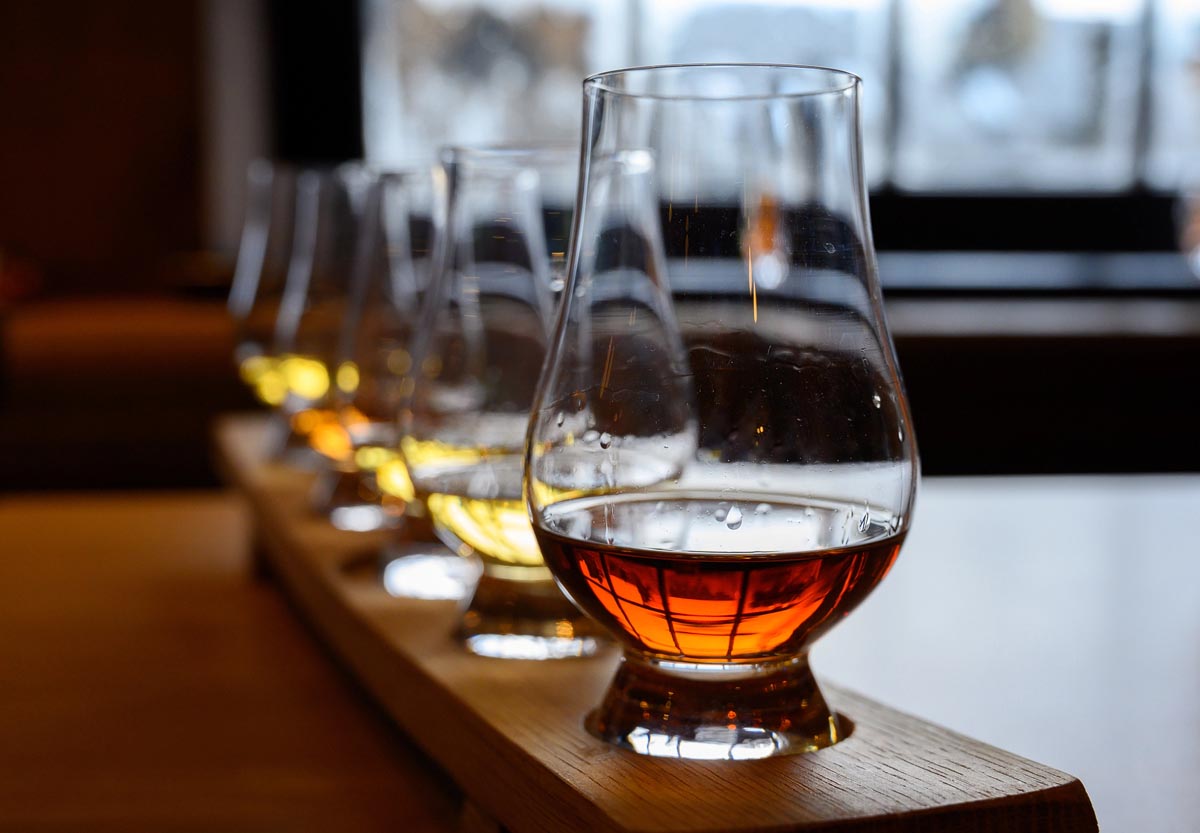
Scotland has more than 130 active whisky distilleries, and a significant number of them welcome visitors. That sounds wonderful in theory, but it also presents a genuine problem: where do you actually start? I’ve lived in Moray – right in the middle of Speyside whisky country – for most of my life, and I still haven’t managed to visit them all. So if you’re planning a trip to Scotland and want to fit in a distillery tour or three, this guide should help you narrow down your choices and make the most of your time.
What follows is not a generic list of “the top ten distilleries” pulled together from a quick Google search. This is a region-by-region breakdown covering Speyside, the Highlands, Islay, the Islands, the Lowlands and Campbeltown – with honest assessments of what each tour offers, who it suits, and what makes certain distilleries worth the journey over others. Whether you’re a complete whisky beginner or someone who already knows their wash still from their spirit still, there’s something here for you.
Table of Contents
- What to Expect on a Distillery Tour
- Speyside – The Whisky Heartland
- The Highlands
- Islay – The Peat and Smoke Capital
- The Islands
- The Lowlands & Edinburgh
- Campbeltown
- Planning Your Distillery Tour
- Frequently Asked Questions
What to Expect on a Distillery Tour
If you’ve never visited a whisky distillery before, here’s what typically happens. Most standard tours last between 60 and 90 minutes and follow the whisky-making process from start to finish: you’ll see where the barley is milled, the mash tun where it’s mixed with hot water, the washbacks where fermentation happens, and then the stillhouse – invariably the highlight – where the copper pot stills work their magic. The tour usually ends in a tasting room where you’ll sample two to four drams, sometimes with a guided nosing to help you pick out flavours.

Standard tours typically cost between £10 and £20 per person, though some distilleries still offer free basic tours. Premium experiences – think warehouse tastings straight from the cask, blending sessions, or behind-the-scenes access to areas not covered on the standard tour – can run from £30 up to £150 or more. The Macallan and Glenfiddich both offer high-end experiences at the upper end of that range, while smaller distilleries often deliver something equally memorable for a fraction of the price simply because you’re getting a more personal experience.
A few practical points worth knowing: almost all distilleries now require advance booking, especially during summer. Designated drivers are well looked after – most places will offer soft drinks or miniatures to take home instead. Photography rules vary; some distilleries are relaxed about it while others restrict photos in certain production areas. Wear sensible shoes, as distillery floors can be wet and uneven. And if you’re planning to visit more than one distillery in a day, two or three is the sweet spot – any more than that and your palate (and your legs) will be done.
Speyside – The Whisky Heartland
Speyside is home to more than half of Scotland’s malt whisky distilleries – over 50 of them concentrated in a relatively compact area centred on the River Spey in the northeast of Scotland. The region runs roughly from Inverness in the west through to Keith in the east, with Dufftown – self-proclaimed “Malt Whisky Capital of the World” with its seven distilleries – sitting right at the centre. This is my home patch. I live near Buckie on the Moray coast, and Speyside’s distilleries are all within easy driving distance.

Speyside whiskies tend to be lighter, sweeter and more approachable than those from other regions, with characteristic notes of fruit, honey, vanilla and caramel. The soft water from the Spey – filtered through granite and low in minerals – plays a significant role in this character. For first-time visitors to Scotland, Speyside is arguably the best region to start your whisky journey, both for the accessibility of the drams and the sheer concentration of distilleries within a small area. You can read more about the region in my guide to the best things to do in Moray and my 5-day Moray travel itinerary.
Glenfiddich
If you only visit one distillery in Scotland, many people would tell you to make it Glenfiddich – and I’d struggle to argue with them. Founded in 1887 by William Grant, who built the distillery with help from his nine children and a single stonemason, Glenfiddich remains family-owned to this day. It’s the world’s best-selling single malt Scotch, and the tour operation reflects that status. The visitor centre is superb, the guides are knowledgeable and engaging, and the shop is one of the most impressive I’ve seen at any distillery.

Glenfiddich offers several tour tiers. The standard Explorers Tour is a solid introduction that covers the full production process with a tasting at the end. The Pioneers Tour goes deeper, including warehouse access, while premium experiences include the Malt Master’s Apprentice and private tastings in the Solera Room. If you’re in Dufftown, it’s well worth combining your distillery visit with nearby Balvenie Castle, which sits right next to the distillery grounds.
The Macallan
The Macallan’s visitor centre, which opened in 2018, is unlike anything else in the whisky world. Designed by Rogers Stirk Harbour + Partners, the building features a dramatic undulating grass-covered roof that rises from the landscape like a series of rolling hills. Inside, the architecture is equally striking, with a timber-lattice roof structure and panoramic views across the 485-acre Easter Elchies estate.

A word of caution: The Macallan has significantly limited the number of distillery tours available, so booking well in advance is essential. If tours are sold out, you can still visit the bar (which has an extraordinary whisky wall displaying bottles from across the range), the exhibition, the boutique shop and the brasserie. The setting alone is worth the visit. Tasting experiences and tours vary in price, but expect this to be one of the pricier options in Speyside – you’re paying for a premium, luxury experience.
Glen Grant
Glen Grant in Rothes is a personal favourite of mine. Janette and I took the kids here on a sunny June day, primarily to see the gardens, and we were genuinely blown away. The distillery was founded in 1840, making it one of the oldest in Scotland, but the real draw beyond the whisky is the extraordinary Victorian garden created by Major James Grant in the late 1800s. A woodland path leads you alongside the distillery buildings and then into beautifully maintained gardens with a short gorge walk featuring small waterfalls. Entry to the gardens and visitor centre is free. You can read my full write-up in the Glen Grant Distillery Gardens article.

Strathisla
Strathisla in Keith holds the distinction of being the oldest continuously operating distillery in the Highlands, with records dating to 1786. It’s also one of the most photogenic distilleries you’ll find anywhere in Scotland. The twin pagodas topped with decorative weather vanes, the old waterwheel, and the beautifully maintained lawn make it look like something from a whisky brand’s marketing dream – except it’s entirely real. The whisky produced here is the heart malt of Chivas Regal, so if you’re interested in understanding blended Scotch as well as single malts, this is an excellent distillery to visit.

The Balvenie
The Balvenie sits right next door to Glenfiddich in Dufftown (both are owned by William Grant & Sons) but the experience could not be more different. Where Glenfiddich is polished and high-volume, The Balvenie is more intimate and craft-focused. This is one of the few distilleries in Scotland that still carries out the full traditional process on site: they grow their own barley, malt it on their own malting floor, and employ their own coppersmith and coopers. Tour availability is limited and tends to sell out far in advance, particularly for the more premium experiences. If you can get a spot, the depth of the tour is outstanding.
Cardhu
Cardhu has one of the best stories of any distillery in Scotland. It was effectively founded by Helen Cumming in the 1810s, making her one of the earliest female pioneers in the industry. The Cummings were illicit distillers who famously flew a red flag to warn neighbouring farms when the exciseman was on his rounds. Helen’s daughter-in-law Elizabeth later obtained the licence and ran the distillery with considerable business acumen, eventually selling it to Johnnie Walker. The tour does a good job of bringing this history to life. Cardhu produces a smooth, honeyed malt with vanilla notes that’s particularly approachable for those newer to whisky.
Speyside Cooperage
Strictly speaking this isn’t a distillery, but no whisky tour of Speyside is complete without a visit to the Speyside Cooperage near Craigellachie. This is where you gain a genuine appreciation for the role of the oak cask in whisky production. From a viewing gallery above the workshop floor, you can watch the coopers at work – skilled craftsmen repairing and rebuilding casks at an astonishing pace. It’s mesmerising to watch and gives you context that no distillery tour alone can provide. Around 70% of a whisky’s final flavour comes from the cask it matures in, so understanding cooperage genuinely changes how you think about whisky.

If you want to experience Speyside with a knowledgeable local guide and avoid the hassle of driving between distilleries, I’d recommend Speyside Executive Hire, a family-run luxury tour company based near Aberlour. Mark and Hayley Fraser know the area inside out and can create bespoke itineraries tailored to your preferences.
The Highlands
The Highlands is the largest and most geographically diverse whisky region in Scotland, stretching from the central belt up to the far north coast. Highland whiskies vary enormously in character – from light and floral to rich and full-bodied – which makes generalisations tricky. What the region does offer consistently is spectacular scenery as a backdrop to your distillery visits. Many Highland distilleries are located on or near major tourist routes, making them easy to incorporate into a broader Scotland road trip.
Dalwhinnie
Dalwhinnie is a perfect first distillery for anyone new to whisky. Located just off the A9 in the heart of the Highlands, the distillery sits at an elevation of 326 metres, making it one of the highest in Scotland. The pristine white buildings with their twin pagodas set against the surrounding moorland and hills make for a striking arrival. The tour is well-structured and not too long, and their signature 15-year-old is a beautifully smooth, honeyed dram that even people who think they don’t like whisky tend to enjoy. They also offer a whisky and chocolate pairing that works surprisingly well. You can read more about the distillery and village in my Dalwhinnie article.

Glen Ord
Glen Ord, located near Muir of Ord just outside Inverness, is one of the most underrated distillery tours in Scotland. The visitor centre underwent a significant upgrade and the result is one of the finest in the country in terms of design and content. The exhibition covers cooperage, cask influence and the full whisky-making process with excellent audio-visual presentations, and the tour itself gives access to most key production stages including the impressive stillhouse with its large south-facing windows. What makes Glen Ord particularly interesting is its proximity to the Glen Ord Maltings next door, one of the largest in Scotland, which supplies malted barley to several Diageo distilleries. For the full story, read my Glen Ord Distillery article.

Glengoyne
Glengoyne occupies a unique position – literally. The distillery straddles the Highland Line, meaning the stills sit in the Highlands but the warehouses where the whisky matures are technically in the Lowlands. Located at Dumgoyne, just north of Glasgow, it’s one of the most accessible distilleries for visitors based in Glasgow or Edinburgh. Glengoyne is known for using unpeated barley dried solely by warm air (no peat smoke), producing a clean, fruity malt. The tour operation has a warm, friendly atmosphere and the guides consistently receive excellent reviews. It’s a very good option if you’re visiting central Scotland and want to fit in a distillery tour without a major detour.
Oban
Oban Distillery is unusual in that it sits right in the centre of the coastal town of the same name. In fact, the town grew up around the distillery, which was established in 1794. It’s a compact operation – one of the smallest in Scotland – but the tour is engaging, the guides are excellent, and the whisky itself (a 14-year-old single malt) is a beautiful coastal Highland dram with a honeyed, slightly smoky character. It’s also perfectly placed if you’re heading to the islands, as Oban is the main ferry port for Mull, Coll, Tiree and other Inner Hebrides.
Clynelish
Clynelish, near Brora in Sutherland, is a distillery that serious whisky enthusiasts seek out specifically. The waxy, slightly oily character of Clynelish whisky is distinctive and highly regarded among connoisseurs, but the distillery doesn’t have the brand recognition of the bigger Speyside names. That works in your favour as a visitor – the tours tend to be quieter and more personal. If you’re driving the NC500, Clynelish makes an excellent stop in the east Sutherland section of the route.
Islay – The Peat and Smoke Capital
Islay (pronounced “eye-luh”) is a small island off Scotland’s west coast, but in whisky terms it punches absurdly above its weight. With nine active distilleries on an island just 25 miles long, Islay has arguably the highest concentration of world-class whisky anywhere on the planet. The whiskies here are famous for their bold, smoky, peaty character – a result of the island’s dense peat bogs being used to dry the malted barley. Islay malts are an acquired taste for some, but for those who love them, nothing else comes close.
Getting to Islay requires a ferry from Kennacraig on the Kintyre Peninsula (about two and a half hours sailing) or a short flight from Glasgow. Once there, the distilleries are well spread around the island and easily reached by car. A word of advice: don’t try to cram too many distillery visits into one day. Two or three is plenty. The island itself is beautiful, with dramatic coastline, sandy beaches and wonderful wildlife, so leave time to enjoy the setting as well as the whisky.
Ardbeg
Ardbeg sits on the south coast of Islay, and for many peat lovers it represents the pinnacle of Islay whisky. The distillery was founded in 1815 and has built a devoted global following – the Ardbeg Committee fan club has more than 120,000 members worldwide. The tour gives you a thorough walkthrough of the production process, and the Old Kiln Café is one of the best places to eat on the island. What strikes you at Ardbeg is the sense of community around the brand; this is a distillery that genuinely engages with its fans.

Lagavulin
Lagavulin is a mile along the coast from Ardbeg and has been producing whisky since at least 1816 (though illicit distilling at the site likely goes back much further). The Lagavulin 16 is one of the great whiskies of the world – rich, deeply smoky, with layers of complexity that reward slow drinking. The distillery sits in a picturesque bay near the ruins of Dunyvaig Castle, and the setting alone is worth the journey. Tours offer a range of experiences from the standard guided tour through to warehouse demonstrations and premium tastings. It gained even wider fame as the favourite whisky of Ron Swanson in the TV show Parks and Recreation, which has brought a whole new audience to Islay.
Laphroaig
Laphroaig is the third distillery on that famous south coast stretch (all three are within two miles of each other, making a walking tour between them entirely feasible on a fine day). What sets Laphroaig apart is that it still operates its own traditional malting floor – you can watch the barley being turned by hand and see the peat being shovelled into the kiln. It’s a tactile, immersive experience that brings the whisky-making process to life in a way that more modernised distilleries can’t quite match. The Laphroaig tour is consistently rated as one of the best in Scotland for this reason.
Kilchoman
Kilchoman is a relative newcomer, founded in 2005, and it’s the only independent farm distillery on Islay. What makes Kilchoman special is that it’s a true field-to-bottle operation – they grow and malt their own barley on site, which is increasingly rare in the modern whisky industry. The scale is small and the atmosphere is relaxed, which makes for a refreshing contrast if you’ve already visited the bigger Islay names. If you want to understand the full grain-to-glass process in one place, Kilchoman is the best distillery in Scotland to do it.
The Islands
The Scottish islands (excluding Islay, which has its own classification) are home to some wonderfully characterful distilleries. Island whiskies don’t form a single official category in the same way Islay or Speyside do – they’re technically part of the Highland region – but they share a maritime influence that gives them a distinctive coastal character: briny, sometimes smoky, often with a minerality that reflects the wild environments they’re made in.
Talisker
Talisker is the only distillery on the Isle of Skye, and the setting is spectacular. Located on the shores of Loch Harport with the Cuillin mountains as a backdrop, it’s one of the most scenically positioned distilleries in Scotland. Founded in 1830, Talisker produces a distinctive whisky with a peppery, smoky character and a briny edge that reflects its coastal location. The standard tour is well-run, and they offer a popular whisky and chocolate pairing experience. If you’re visiting Skye (and you should – see my guide to things to do on the Isle of Skye), Talisker is a must. Book in advance during summer as it’s extremely popular.

Highland Park
Highland Park in Kirkwall, Orkney, is Scotland’s most northerly distillery and one of its finest. Making whisky since 1798, Highland Park is one of the few distilleries that still cuts its own peat from Hobbister Moor and malts a proportion of its own barley on traditional malting floors. The result is a whisky with a distinctive heathery, honeyed smokiness that sits beautifully between the big Islay peat monsters and the gentle Speyside malts. The distillery offers a range of tours at different price points, including the Magnus Eunson experience, which allows you to taste seven different whiskies. Getting to Orkney is part of the adventure – ferry from Scrabster or Gill’s Bay, or fly from Inverness, Edinburgh or Aberdeen.

Torabhaig
Torabhaig is Skye’s second distillery, opened in 2017 in a converted 19th-century farmstead on the Sleat peninsula. It’s a much smaller and quieter operation than Talisker, which makes it appealing if you want to avoid crowds. The whisky is still young but showing real promise, with a coastal, lightly peated character. If you want a more personal, less commercial experience on Skye, Torabhaig is well worth seeking out. The drive down to Sleat is beautiful too – this is the “Garden of Skye”, with a noticeably gentler landscape than the dramatic north.
The Lowlands & Edinburgh
The Lowlands is Scotland’s smallest whisky region by number of distilleries, but it’s experiencing something of a revival with several new operations opening in recent years. Lowland whiskies tend to be lighter, grassier and more delicate than their Highland and Speyside counterparts – they’re sometimes described as ideal “breakfast whiskies”, though I’m not sure I’d take that entirely literally.
Glenkinchie, about 15 miles southeast of Edinburgh, is the most established Lowland distillery for visitors. Often referred to as “the Edinburgh Malt”, it has a good visitor centre with an excellent scale model of a distillery and runs a shuttle bus from the city. For something completely different, Port of Leith Distillery in Edinburgh’s docks is the UK’s first vertical distillery – the whisky-making process happens across multiple floors of a striking modern building. It’s a fascinating architectural concept and the bar has quickly become one of Edinburgh’s best whisky destinations. The Scotch Whisky Experience on the Royal Mile is another solid option if you’re based in the capital – it’s not a working distillery, but the interactive tour is an excellent introduction to the world of Scotch.
Campbeltown
Campbeltown, on the Kintyre Peninsula, was once known as the “Whisky Capital of the World”. In the 1800s this small town was home to more than 30 distilleries. Today only three survive: Springbank, Glengyle and Glen Scotia. That decline makes the story of Campbeltown whisky a bittersweet one, but the distilleries that remain produce exceptional spirit.

Springbank is the star. This is the only distillery in Scotland where 100% of the production process is carried out on the premises – from malting the barley to bottling the finished whisky. Five generations of the Mitchell family have owned and managed the operation, and the handmade approach means every tour offers genuine insight into traditional whisky-making at its most authentic. Springbank produces three distinct whiskies under one roof: Springbank (lightly peated), Longrow (heavily peated) and Hazelburn (unpeated), which makes for a fascinating tasting comparison. Campbeltown is a three-hour drive from Glasgow, so it takes commitment to get there, but for serious whisky enthusiasts it’s an essential pilgrimage.
Planning Your Distillery Tour
A few final thoughts to help you get the most from your distillery visits in Scotland.

Book ahead. This cannot be overstated. Popular distilleries like The Macallan, Talisker, Balvenie and Ardbeg have limited tour capacity and can sell out weeks or months in advance, especially between May and September. Even quieter distilleries benefit from booking to guarantee your slot.
Don’t overdo it. Two or three distillery visits in a day is ideal. Beyond that, your palate starts to fatigue and everything begins to blur together. Leave time between visits for a walk, some food, or just to enjoy the scenery.
Consider a guided tour. If you want to visit multiple distilleries in one day without worrying about driving, guided whisky tour operators are an excellent option. Companies like Speyside Executive Hire in Moray, Rabbies from Edinburgh, and Scottish Routes all offer well-organised multi-distillery day tours and longer itineraries.
Mix big and small. A great whisky trip combines the polished, high-production visitor experiences (Glenfiddich, Macallan, Highland Park) with smaller, more intimate distilleries (Kilchoman, Torabhaig, Clynelish). The smaller places often give you the most memorable experiences because you get closer to the people and the process.
Non-whisky drinkers are welcome too. Most distillery visitor centres have expanded well beyond whisky in recent years. Glen Grant has its gardens, The Macallan has its architecture and brasserie, many distilleries now produce gin as well, and the history and science of distillation is genuinely interesting regardless of whether you enjoy the end product. Designated drivers are always well looked after with soft drinks and sometimes miniatures to take home.
Combine with other attractions. Distillery visits work brilliantly as part of a wider Scotland itinerary. In Speyside, combine them with Balvenie Castle, Linn Falls in Aberlour, or the Moray coast. For a broader Scotland road trip that includes distillery stops, have a look at my 7-day Scotland itinerary.
Frequently Asked Questions
How much does a whisky distillery tour cost in Scotland?
Standard tours typically cost between £10 and £20 per person and include a guided walkthrough of the production process with a tasting of two to four whiskies at the end. Premium experiences – warehouse tastings, blending workshops, VIP access – range from £30 to £150 or more. Some distilleries, like Glen Grant, offer free entry to their visitor centres and grounds.
Do I need to book distillery tours in advance?
Yes, booking in advance is strongly recommended for almost all distilleries, particularly between May and September. Popular distilleries like The Macallan, Talisker and The Balvenie can sell out weeks or even months ahead. Booking online through each distillery’s website is the easiest way to secure your preferred date and time.
Which whisky region is best for beginners?
Speyside is generally the best starting point for whisky newcomers. The whiskies are typically lighter, sweeter and more approachable, with notes of fruit, honey and vanilla rather than the intense peat smoke of Islay. Distilleries like Glenfiddich, Glen Grant and Dalwhinnie all offer excellent beginner-friendly tours.
Can I visit distilleries if I don’t drink alcohol?
Absolutely. The production process, the history, the architecture and the settings are all fascinating regardless of whether you drink the whisky at the end. Most distilleries offer soft drinks to non-drinkers and designated drivers, and many will provide miniatures to take home instead. Distilleries like Glen Grant and The Macallan are worth visiting purely for their grounds and architecture.
How many distilleries can I visit in one day?
Two or three is the ideal number. This gives you enough time to enjoy each tour properly, ask questions, and appreciate the tastings without rushing. Any more than three and you risk palate fatigue and the experiences start to blend together. If you’re visiting Islay or Speyside where distilleries are close together, three is easily achievable with time for lunch in between.
What is the best time of year to visit Scottish distilleries?
Most distilleries are open year-round, though some have reduced hours or seasonal closures between November and March. Summer (June to August) offers the longest days and best weather but is also the busiest period with higher prices and more competition for tour slots. May, September and early October are excellent shoulder-season choices – the weather is often still good, the distilleries are quieter, and you’ll have a more relaxed experience. The Spirit of Speyside Festival, usually held in late April or early May, is a brilliant time to visit if you want to combine distillery visits with tastings, events and ceilidhs.
Is it worth visiting the Scotch Whisky Experience in Edinburgh?
The Scotch Whisky Experience on the Royal Mile is not a working distillery, but it’s an excellent interactive introduction to Scottish whisky. The barrel ride through a mock-up distillery is entertaining, the guided tasting is well-structured, and the collection of Scotch whisky bottles in the vault is genuinely impressive. It’s a great option if you’re short on time and can’t make it out to a working distillery, or as an introduction before you head to Speyside or Islay.
Scotland’s whisky distilleries offer some of the most rewarding visitor experiences in the country. Whether you’re tasting a 15-year-old Dalwhinnie in the shadow of the Cairngorms, watching coopers at work in Speyside, or breathing in the peat smoke on Islay, there is something about visiting the place where whisky is made that transforms how you think about the drink. You don’t need to be a whisky expert to enjoy it – you just need to be curious. Slàinte mhath.
All information was correct at the time of writing, please check things like entry costs and opening times before you arrive.

Leave a comment below