
From Glasgow to Melbourne - A Scottish Chemist's Australian Legacy
John Macadam was born on 29 May 1827 at Northbank, near Glasgow, into a family deeply rooted in Scotland's industrial revolution. His father, William Macadam, was a prominent Glasgow businessman who owned spinning and textile printing works in Kilmarnock, and served as both a burgess and bailie (magistrate) of the city. The elder Macadam and his fellow industrialists had pioneered the use of chemistry to develop large-scale industrial fabric printing processes, establishing the region's reputation for textile innovation. This environment of scientific application to industry would profoundly influence young John's future career.
Growing up in this atmosphere of chemical innovation and industrial enterprise, Macadam received a private education in Glasgow before embarking on his scientific studies at the age of fifteen. In 1842, he began studying chemistry at the Andersonian University, which would later become the University of Strathclyde. His exceptional talent was recognised early - by 1844, still only seventeen years old, he was appointed senior assistant at the university, demonstrating a particular flair for analytical chemistry that would define his professional life.
Education and Early Career in Scotland
Macadam's quest for advanced knowledge took him to the University of Edinburgh, where he studied under the renowned Professor William Gregory. Between 1846 and 1847, he assisted Dr George Wilson in his laboratory in Brown Square, gaining invaluable practical experience in chemical analysis. Late in 1847, he returned to Glasgow and established his own chemistry classes in rooms on High John Street, beginning what would become a distinguished teaching career.
During this period, Macadam's growing reputation in scientific circles led to his election as a fellow of the Royal Scottish Society of Arts in 1847, followed by membership of the Glasgow Philosophical Society in 1848. Recognising the need for formal medical qualifications to complement his chemical expertise, he turned his attention to medical studies at the University of Glasgow. He received his Licentiate of the Faculty of Physicians and Surgeons (L.F.P.S.) and completed his medical degree (M.D.) in 1854, followed by Fellowship of the Faculty of Physicians and Surgeons of Glasgow (F.F.P.S.G.) in 1855.
A New Life in Colonial Melbourne
At the age of twenty-eight, Macadam made the momentous decision to emigrate to Australia. On 8 June 1855, he boarded the sailing ship Admiral in Scotland, bound for Melbourne in the Colony of Victoria. After a three-month voyage, he arrived on 8 September 1855, having already secured a position before leaving Scotland as lecturer in chemistry and natural science at Scotch College, Melbourne, which had been founded just four years earlier in 1851. This was the beginning of a remarkable decade in which Macadam would establish himself as one of colonial Australia's most prominent scientists and public figures.
Just over a year after his arrival, on 18 September 1856, Macadam married Elizabeth Clark in Melbourne. In a remarkable coincidence, Elizabeth had arrived from London just three days before their wedding, travelling on the same ship, the Admiral, that had carried Macadam to Australia the previous year. The vessel had set sail from London on 7 June 1856 and reached Melbourne's Hobson's Bay on 15 September. The couple would have two sons, though tragically both died in infancy - John Melnotte Macadam (1858-1859) lived only five months, whilst William Castlemaine Macadam (1860-1865) survived his father by just a few months, dying at the age of five.
Building Melbourne's Scientific Community
Macadam threw himself into Melbourne's burgeoning scientific establishment with characteristic energy. Elected to the Philosophical Institute of Victoria in 1855, he quickly became central to its operations, serving on its Council. Between 1857 and 1862, he held the crucial position of honorary secretary, and edited the first five volumes of the society's Transactions from 1855 to 1860. He was instrumental in the successful campaign to obtain a royal charter for the organisation, and played an active role in erecting the society's meeting hall. In January 1860, his efforts bore fruit when the Philosophical Institute became the Royal Society of Victoria and moved into its new building. He continued as honorary secretary and was appointed vice-president in 1863.
In 1857, the University of Melbourne recognised Macadam's Glasgow medical degree by awarding him an MD ad eundem. The following year brought further professional advancement when he was appointed Victorian Government Analytical Chemist, a position that reflected the colony's growing need for scientific expertise in matters of public health and safety. In 1860, he added the role of health officer to the City of Melbourne, writing several important reports on public health matters. Between 1857 and 1858, he also taught at Geelong Church of England Grammar School (now Geelong Grammar School), spreading his educational influence beyond Melbourne.
Pioneer of Medical Education
One of Macadam's most significant contributions came in 1861 when he served as secretary to the Victorian Industrial Exhibition. Following the exhibition's closure, he began delivering a series of lectures on chemistry for medical students at the Analytical Laboratory, with Richard Eades lecturing on materia medica. These extramural classes proved crucial in hastening the formation of the Medical School at the University of Melbourne. On 3 March 1862, Macadam became the first person to teach at the new University of Melbourne School of Medicine when he delivered his inaugural lecture on chemistry. He was appointed lecturer in chemistry and practical chemistry, becoming a founding figure in Australian medical education.
The Burke and Wills Expedition
From 1857 to 1865, Macadam served as honorary secretary to the Exploration Committee of the Royal Society of Victoria, a role that would link his name to one of Australia's most famous and tragic expeditions. The committee organised the Burke and Wills expedition, officially known as the Victorian Exploring Expedition, which aimed to cross the Australian continent from south to north, a distance of approximately 3,250 kilometres from Melbourne to the Gulf of Carpentaria.
The expedition, led by Robert O'Hara Burke with William John Wills as deputy commander, departed Melbourne on 20 August 1860 with nineteen men. Macadam, understanding the perils of such an undertaking, insisted on adequate provisions for the explorers' safety. Burke, Wills, John King and Charles Gray succeeded in reaching the northern coast near the Gulf of Carpentaria in February 1861, becoming the first Europeans to cross Australia from south to north. However, the return journey proved catastrophic. Gray died of exhaustion on the way back, and when the three survivors reached the supply depot at Cooper Creek on 21 April 1861, they found it had been abandoned just hours earlier.
Burke and Wills both died of starvation and malnutrition in late June 1861, with only John King surviving after being taken in by the Yandruwandha Aboriginal people. A rescue party led by Alfred Howitt found King on 15 September 1861. The tragedy resulted in the greatest loss of life of any Australian inland expedition, with seven men dying in total. Whilst initial criticism fell upon the Royal Society, it became widely recognised that Macadam's foresight as secretary of the Exploration Committee could not have prevented the deaths, which resulted from decisions made in the field. Burke, Wills and Gray were given Australia's first state funeral on 21 January 1863.
Political Service and the Macadamia Legacy
Alongside his scientific and educational work, Macadam entered politics, serving in the Victorian Legislative Assembly from 1859 to 1864 as the Member for Castlemaine. In 1861, he held the ministerial position of Postmaster-General, whilst also sponsoring bills related to medical practitioners and food adulteration - legislation that drew on his expertise as an analytical chemist.
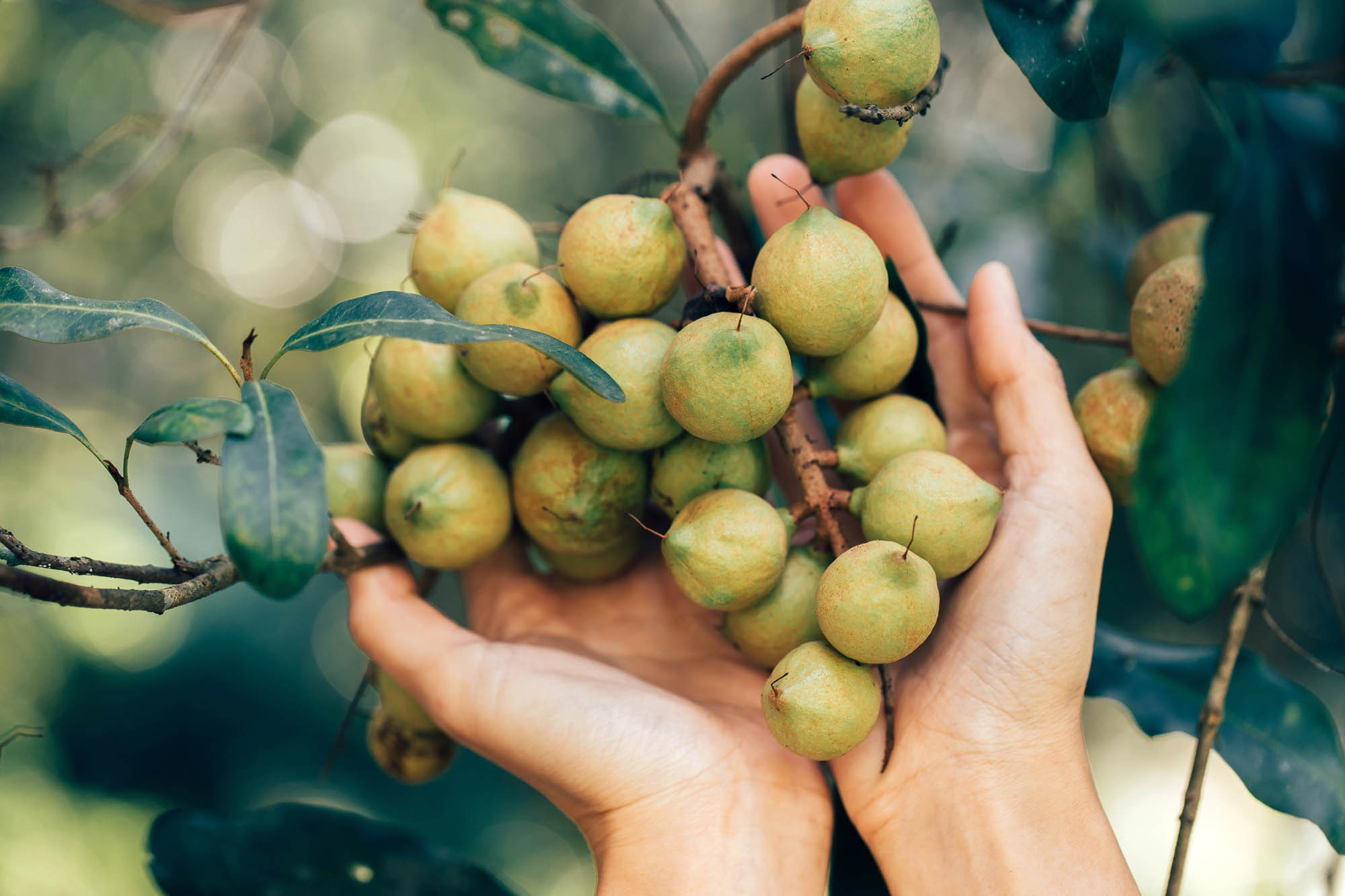
Perhaps the most enduring tribute to Macadam came in 1857 when the German-Australian botanist Baron Ferdinand von Mueller named a genus of Australian trees Macadamia in his honour. Mueller, who was Director of the Royal Botanic Gardens in Melbourne and served alongside Macadam at the Philosophical Institute of Victoria, had been on a botanical expedition with Walter Hill, Director of the Botanic Gardens in Brisbane. When they encountered a distinctive tree bearing hard-shelled nuts that Aboriginal Australians had long valued as food, Mueller chose to dedicate this "beautiful genus" to his friend and colleague John Macadam. The irony of this lasting tribute is that Macadam never saw a macadamia tree, nor tasted the nut that would carry his name around the world.
In a lighter historical footnote, Macadam also played a small role in Australian sporting history. On 7 August 1858, he served as one of two umpires at a football match between Scotch College and Melbourne Grammar School, one of the earliest games of what would evolve into Australian rules football. This match is now commemorated by a statue outside the Melbourne Cricket Ground.
Tragic Death at Sea
By March 1865, Macadam was in ill health, yet he agreed to travel to New Zealand to give expert testimony as an analytical chemist in a murder trial. Captain W.A. Jarvey stood accused of fatally poisoning his wife, and Macadam's expertise was considered crucial to the case. The jury failed to reach a verdict at the first trial. During the voyage home, Macadam fractured his ribs in rough weather. The injury led to pleurisy with effusion, and despite medical advice not to return for the adjourned trial, Macadam felt duty-bound to do so.
Accompanied by his medical student assistant John Drummond Kirkland, Macadam sailed aboard the SS Alhambra to attend the postponed trial. He never arrived. On 2 September 1865, at the age of just thirty-eight, John Macadam died at sea. Kirkland gave evidence at the trial in his place, and Captain Jarvey was subsequently convicted. Macadam's body was returned to Melbourne and interred in the Presbyterian section of the Melbourne General Cemetery. His widow Elizabeth remarried in 1868 to John Dalziel Dickie, with whom she had four more children. She lived until 1915, dying in Brighton.
A Lasting Scientific Legacy
John Macadam's brief but extraordinarily productive life left an indelible mark on Australian science, education, and public life. In just ten years in Australia, he helped establish the foundations of scientific education in Victoria, pioneered medical teaching at university level, served in government, and contributed significantly to the colony's scientific institutions. He was part of a small dynasty of Scottish scientists specialising in analytical chemistry - his family included his elder half-brother William Macadam, his younger brother Stevenson Macadam, and nephews William Ivison Macadam and Stevenson J.C.G. Macadam, all of whom followed in his footsteps.
Today, whilst most people have never heard the name John Macadam, they have almost certainly encountered his legacy - every time someone enjoys the rich, buttery flavour of a macadamia nut. The macadamia has become a global delicacy, with commercial production spreading from its native Australia to Hawaii, South Africa, and beyond. It stands as a fitting monument to a Scottish chemist who dedicated his short life to advancing scientific knowledge and education, and who died in service to the pursuit of justice. From the industrial workshops of Kilmarnock to the lecture halls of Melbourne, John Macadam's journey embodied the scientific spirit of the nineteenth century - curious, dedicated, and willing to cross the world in pursuit of knowledge and truth.


