
The Fierce King Who Strengthened Scotland and Defended the Church
Alexander I, known posthumously as "The Fierce", lived from around 1078 to 23 April 1124 and reigned as King of Alba (Scotland) from 1107 until his death. The fifth son of the formidable Malcolm III and his saintly queen Margaret, Alexander inherited a kingdom torn between Gaelic traditions and Anglo-Norman influences, between northern independence and southern feudalisation. Though he ruled only the northern half of Scotland whilst his brother David governed the south as Prince of the Cumbrians, Alexander proved himself a king of determination and piety - ruthlessly crushing rebellions in Moray whilst simultaneously championing ecclesiastical foundations and defending Scottish church independence from English archiepiscopal ambitions. His seventeen-year reign laid important groundwork for the administrative and religious developments that would flourish under his successor and brother, David I.
Royal Lineage and Early Life
Alexander was born around 1077 or 1078, the fifth son of Malcolm III "Caennmor" (meaning "Great Head" or "Big Chief") and his second wife Margaret, granddaughter of Edmund II of England. Through his mother, Alexander was connected to the pre-conquest English royal house - Margaret was the sister of Edgar Ætheling, the Anglo-Saxon prince who had a legitimate claim to the English throne but never ruled. This Anglo-Saxon royal blood would profoundly influence Alexander and his siblings, connecting them to English culture whilst they ruled a still predominantly Gaelic kingdom.
Alexander was named in honour of Pope Alexander II, reflecting his mother's deep piety and her determination to strengthen the Scottish church's connections with Rome. Queen Margaret, who would later be canonized as Saint Margaret of Scotland, was renowned for her religious devotion and her efforts to reform the Scottish church along Roman lines. Growing up in her household, Alexander absorbed both her piety and her conviction that Scotland's religious and cultural future lay in closer alignment with Continental Christendom rather than Celtic traditions.
Alexander was raised alongside numerous siblings in a household that blended Gaelic Scottish kingship with Anglo-Norman cultural influences. His brothers included Edgar (who would reign 1097-1107), Edmund (who briefly ruled with Donald III), and David (who would become the great reforming king David I). He also had half-siblings from his father's first marriage to Ingibjorg Finnsdottir, including Duncan II who was briefly king in 1094 before being murdered.
Malcolm III died in 1093 during a raid into Northumberland, and Margaret died of grief just days later. The succession crisis that followed was violent and complex, with Malcolm's brother Donald III (Domnall Bán) seizing the throne. The young Alexander and his full siblings fled to England, finding refuge at the court of William Rufus. It would be years before they could return to Scotland.
The Path to Kingship
In 1097, with English military support, Alexander's brother Edgar successfully claimed the Scottish throne, deposing Donald III. Alexander was perhaps throughout Edgar's reign his unmarried brother's heir presumptive. Certainly by 1104, he was recognised as such - in that year he was the senior layman present at the examination of the remains of Saint Cuthbert at Durham Cathedral prior to their re-interment, a position of honour that reflected his status.
During Edgar's reign, Alexander held lands in Scotland north of the Forth and in Lothian, gaining experience in governance and military affairs. He would have become familiar with the challenges of ruling a kingdom that straddled multiple cultural worlds - the Gaelic-speaking Highlands and Islands, the increasingly Anglo-Norman influenced Lowlands, and the Norse-influenced territories of the north and west.
A Divided Inheritance
When King Edgar died on 8 January 1107, Alexander succeeded to the Scottish crown, but the inheritance came with a significant condition. In accordance with Edgar's will, which had apparently been agreed in advance by Edgar, Alexander, David, and their brother-in-law Henry I of England, the kingdom was divided. Alexander received the lands north of the Forth and Clyde - the heartland of ancient Alba. Their younger brother David was granted an appanage in southern Scotland, receiving the lands of the former kingdom of Strathclyde or Cumbria as Prince of the Cumbrians.
This partition, whilst unusual, was not entirely unprecedented in Scottish royal practice. It may have been intended to prevent conflict between the brothers whilst providing David with substantial territories and experience in governance. David's lands included Strathclyde, and in 1113, perhaps at the instigation of Henry I of England and with the support of his Anglo-Norman allies, David demanded and received additional lands in Lothian along the Upper Tweed and Teviot. Whilst David did not receive the title of king, his principality in southern Scotland gave him considerable autonomy, though his lands remained theoretically under Alexander's final authority as King of Scots.
The partition of Teviotdale and Tweeddale to David was unpopular in some quarters, particularly amongst Gaelic nobles who saw it as favouring Anglo-Norman influence. A contemporary Gaelic poem laments: "It is bad what Malcolm's son has done, dividing us from Alexander; he causes, like each king's son before, the plunder of strong men from the Gael." However, the arrangement does not appear to have seriously damaged relations between the two brothers, who would maintain an effective partnership throughout Alexander's reign.
Alexander the Fierce
Alexander earned his posthumous nickname "The Fierce" through his vigorous suppression of rebellion in northern Scotland. According to the chronicler Andrew of Wyntoun, writing in the fifteenth century, Alexander was holding court at Invergowrie near Dundee when he was attacked by "men of the Isles". Rather than remaining defensive, Alexander immediately pursued his attackers northward to "Stockford" in Ross (near present-day Beauly), where he defeated them decisively. This swift, aggressive response earned him his fearsome reputation.
The most significant challenge to Alexander's authority came from Moray, the powerful province in northern Scotland that had its own traditions of independence. The Mormaerdom or Kingdom of Moray was ruled by descendants of Macbeth (Mac Bethad mac Findláich) and Lulach - men who had themselves ruled all of Alba within living memory. In 1116, the Annals of Ulster record: "Ladhmann son of Domnall, grandson of the king of Scotland, was killed by the men of Moray." The king referred to was Alexander's father Malcolm III, and Domnall was Alexander's half-brother - meaning Ladhmann was Alexander's nephew.
This murder of a royal relative by Moray rebels could not be left unpunished. Alexander launched a fierce campaign into Moray, ruthlessly crushing the rebellion. The identity of the Mormaer or King of Moray at this time remains uncertain - it may have been Óengus of Moray or his father - but Alexander's campaign effectively ended Moray's pretensions to independent kingship. His suppression of these northern rebellions significantly strengthened royal authority by dismantling rival power centres and integrating peripheral regions more firmly under the Scottish crown's control.
The Mearns also required attention. The only known Mormaer of Mearns, Máel Petair, had murdered Alexander's half-brother Duncan II in 1094. Alexander's campaigns against resistance in Moray and the Mearns demonstrated that he would tolerate no challenge to royal authority from semi-independent provincial magnates.
Yet Alexander's fierceness was selective. The chronicler John of Fordun, writing in the fourteenth century, characterised him thus: "Now the king was a lettered and godly man; very humble and amiable towards the clerics and regulars, but terrible beyond measure to the rest of his subjects; a man of large heart, exerting himself in all things beyond his strength." This duality - devotion to ecclesiastical matters alongside severity toward secular opponents - characterised contemporary perceptions of his reign.
Defender of the Scottish Church
Whilst fierce toward rebels, Alexander was genuinely pious and became a devoted patron of the church. He continued his mother Saint Margaret's work of strengthening and reforming ecclesiastical institutions in Scotland. His religious foundations included reviving the see of Dunkeld, establishing an Augustinian priory at Scone around 1122, and founding an abbey on the island of Inchcolm in the Firth of Forth.
The legend of Inchcolm Abbey's foundation perfectly captures Alexander's character. According to tradition, Alexander was crossing the Firth of Forth in 1123 when his ship was caught in a terrible storm. He took refuge on the small island of Inchcolm, where a hermit provided him with shelter and simple hospitality. Grateful for being saved, Alexander swore to build an abbey on the island. He fulfilled this vow, establishing a religious house that would become one of the most beautiful monastic sites in Scotland.
Alexander also made grants of land intended for an Augustinian priory at St Andrews, possibly the same foundation intended to honour his late wife. He appointed his mother's chaplain and hagiographer, Turgot, as Bishop of St Andrews (or Cell Rígmonaid) in 1107, presumably by royal command. This demonstrated Alexander's determination to control ecclesiastical appointments in his realm.
Indeed, Alexander's most significant ecclesiastical battles concerned the independence of the Scottish church from English archiepiscopal authority. When the Archbishop of York attempted to extend his jurisdiction over St Andrews, Alexander vigorously defended Scottish ecclesiastical independence. The case of Eadmer, Turgot's would-be successor as Bishop of St Andrews, illustrates this conflict. Eadmer had the backing of the Archbishop of Canterbury, Ralph d'Escures, but Alexander's wishes ultimately prevailed over these English ecclesiastical ambitions.
In January 1124, shortly before his death, Alexander nominated Robert, prior of Scone, to St Andrews, underscoring his commitment to appointing loyal figures who respected Scottish ecclesiastical autonomy. These episodes highlight Alexander's strategy of bolstering the church's independence from English control whilst leveraging ecclesiastical institutions to consolidate royal authority - a policy that would be continued and expanded by his brother David I.
Relations with England
Despite his defence of Scottish ecclesiastical independence, Alexander maintained generally cordial relations with his brother-in-law Henry I of England. His marriage to Sybilla of Normandy, an illegitimate daughter of Henry I, probably occurred between 1107 and 1114, though the exact date is uncertain. This marriage alliance cemented the connection between the Scottish and English royal houses - Henry I had already married Alexander's sister Edith (who took the name Matilda upon marriage).
Contemporary English chronicler William of Malmesbury's account unfairly attacks Sybilla, but evidence suggests that Alexander and Sybilla were actually a devoted couple, despite being childless. Sybilla was noted for her piety and shared Alexander's religious interests. She died in July 1122 at Eilean nam Ban (Kenmore on Loch Tay) in mysterious, unrecorded circumstances, and was buried at Dunfermline Abbey. Alexander did not remarry, and the chronicler Walter Bower wrote that Alexander planned an Augustinian priory at Eilean nam Ban dedicated to Sybilla's memory. He may even have taken steps to have her venerated as a saint, reflecting the depth of his devotion.
In 1114, Alexander demonstrated his loyalty to Henry I by serving as leader of a Scottish contingent in Henry's campaign in Wales against Gruffudd ap Cynan of Gwynedd. As a vassal of the English king for his English lands (and arguably for his Scottish throne), Alexander fulfilled this feudal obligation, commanding troops in a campaign far from Scottish concerns.
The dispute over the Teviot and Tweeddale territories granted to David in 1113 does not appear to have caused lasting trouble between Alexander and Henry. This suggests that whilst Alexander was willing to defend specifically Scottish interests (particularly ecclesiastical independence), he understood the value of maintaining good relations with the more powerful English monarchy.
Administrative Development
Though his reign is less celebrated for administrative innovation than his successor David I's would be, Alexander began important developments in royal governance. He introduced elements of centralized administration, including appointing Scotland's first known chancellor to oversee the production of royal charters. This marked a shift toward written authentication of royal grants and privileges.
Surviving documents from his reign - including three original charters held at Durham Cathedral and copies from Scone Priory dated between 1107 and 1124 - reveal the use of a royal seal and formalized witness lists comprising bishops, earls, and other dignitaries. These charters represented a shift from oral traditions toward bureaucratic governance that would accelerate under David I but had its origins in Alexander's reign.
By granting lands and privileges in charters to loyal followers and ecclesiastical houses, Alexander introduced elements of feudal obligation that foreshadowed the more systematic enfeoffment under David I. His suppression of rebellions in Moray and elsewhere reduced the power of semi-independent Gaelic mormaers and earls, setting precedents for centralized kingship that subsequent rulers would expand.
An Illegitimate Son
Though his marriage to Sybilla produced no children, Alexander had at least one illegitimate son, Máel Coluim mac Alaxandair. This young man would later, in the 1130s, become involved in a revolt against David I, attempting to claim some form of inheritance from his royal father. However, these claims came to nothing, and David I's succession remained secure.
Death and Legacy
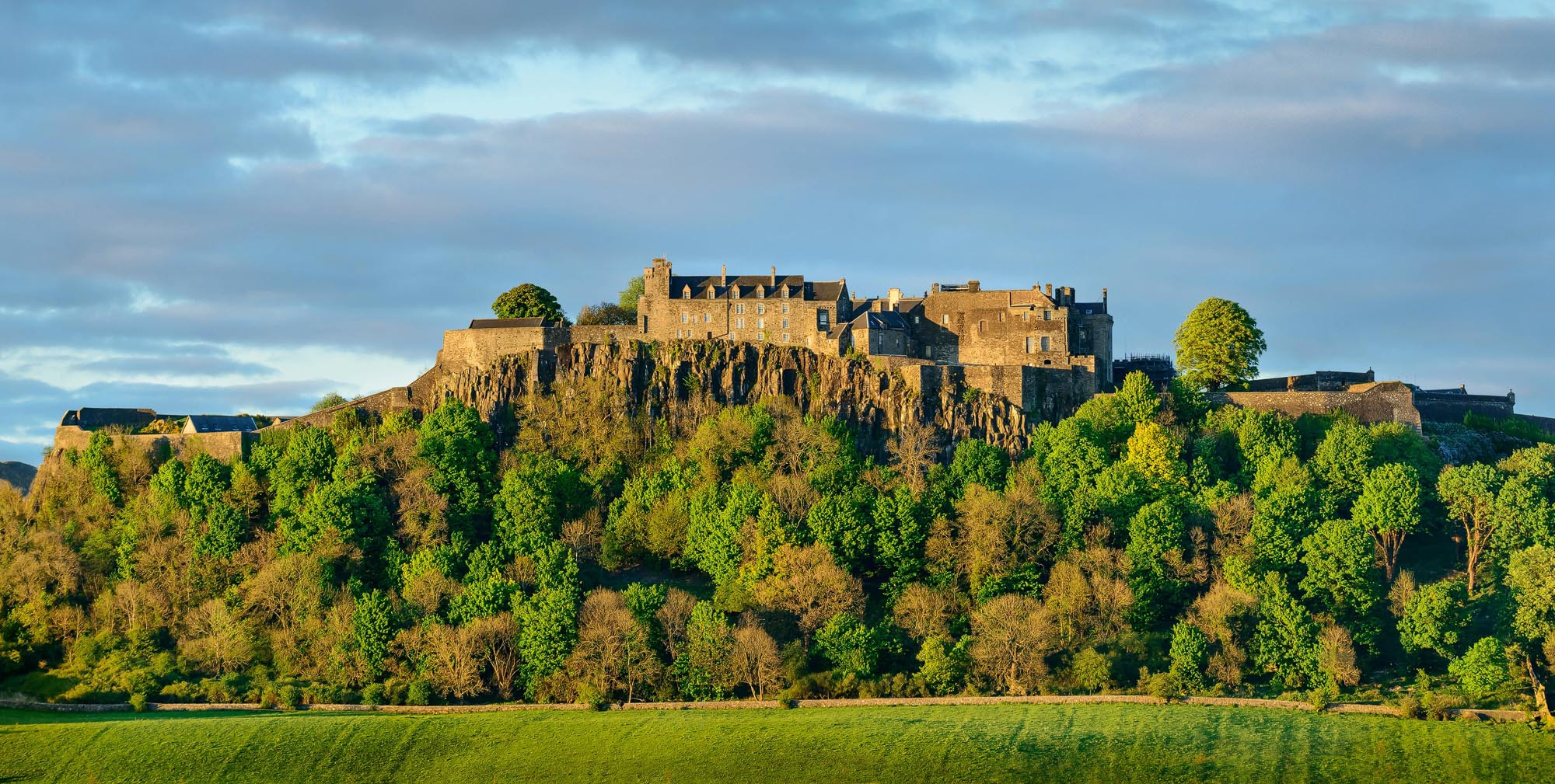
Alexander I died in April 1124 at his court at Stirling Castle, at approximately 46 years of age. He was buried at Dunfermline Abbey alongside his parents Malcolm III and Saint Margaret, and near his wife Sybilla. His brother David, probably acknowledged as heir since Sybilla's death two years earlier, succeeded him without opposition.
Alexander's seventeen-year reign had been consequential. He had maintained the kingdom's integrity despite its partition, ruling the northern heartland effectively whilst cooperating with his brother David in the south. He had ruthlessly suppressed rebellions that threatened royal authority, earning his fierce reputation but also establishing the precedent that the King of Scots would tolerate no rivals. He had been a generous patron of the church, founding religious houses and defending Scottish ecclesiastical independence from English encroachment. He had introduced early administrative reforms that would be built upon by his successors.
Whilst overshadowed by the more celebrated reign of his brother David I, Alexander I played a crucial transitional role in Scottish royal history. He bridged the gap between the Gaelic kingship of Malcolm III and the increasingly feudalized monarchy of David I. His campaigns in Moray and elsewhere demonstrated that royal authority could be enforced even in the most independent-minded provinces. His ecclesiastical patronage continued the work begun by his mother Saint Margaret. His administrative innovations, modest though they were, pointed toward the more sophisticated governance that would characterise later medieval Scotland.
The nickname "The Fierce" has ensured Alexander I is remembered primarily as a warrior-king, ruthless in suppressing rebellion. Yet the complete picture reveals a more complex figure - a learned and godly man, humble toward the clergy but terrible to lay opponents, a king who strengthened royal authority whilst championing religious foundations, a ruler who balanced Gaelic traditions with Anglo-Norman innovations. He was, as John of Fordun observed, "a man of large heart, exerting himself in all things beyond his strength" - a fitting epitaph for a king who gave his utmost in service of his crown and his faith.


