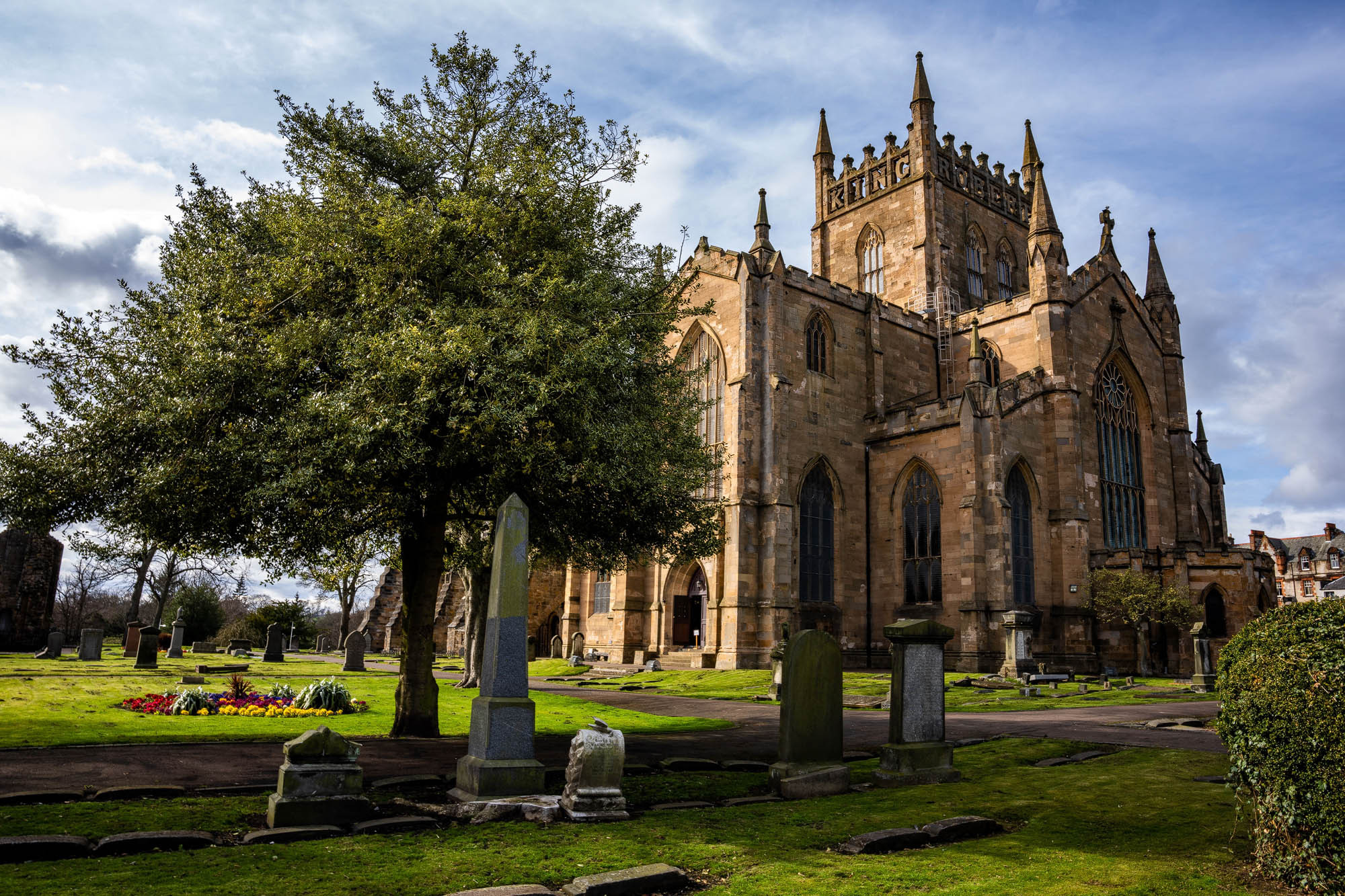

Scotland's Last Golden Age King
King Alexander III of Scotland reigned during what historians have come to regard as a Golden Age for the nation - a period of unprecedented peace, prosperity, and territorial expansion that would tragically end with his untimely death. His 37-year reign from 1249 to 1286 saw Scotland achieve its greatest extent in the medieval period, successfully resist English overlordship, and enjoy economic growth that touched every corner of the realm. Yet Alexander's legacy is tinged with tragedy, for his death on a stormy night near Kinghorn would plunge Scotland into a succession crisis that led directly to centuries of conflict with England.
A Boy King in Troubled Times
Alexander was born on 4 September 1241 at Roxburgh Castle, the only son of King Alexander II and his second wife, Marie de Coucy. His birth was a matter of considerable relief to the Scottish court. Alexander II's first marriage to Joan of England had been childless, creating dangerous uncertainty about the succession. Marie de Coucy, daughter of Lord Enguerrand III of Coucy, was a member of the French nobility with distant connections to the French royal house. Her marriage to Alexander II served the dual purpose of producing an heir and strengthening Scotland's ties with France, potentially offering a counterbalance to the looming influence of England.
When his father died suddenly from a fever on 6 July 1249 during a military campaign in the Western Isles, young Alexander was thrust onto the throne at the tender age of seven. He was inaugurated as King of Scots at Scone Abbey on 13 July 1249, in a ceremony steeped in ancient Scottish tradition. At his coronation, he was greeted by the ollamh rígh, the royal poet of Scotland, who proclaimed "Benach De Re Albanne" (God Bless the King of Scots) and recited the young king's genealogy back through the ages, linking him to the ancient Celtic kings of Alba.
The years of Alexander's minority were marked by bitter power struggles between rival Scottish factions, each seeking to control the young king and govern in his name. Two main parties emerged: one led by Walter Comyn, Earl of Menteith, and the other by Alan Durward, Justiciar of Scotia. The Comyn faction initially held sway, but the political landscape remained volatile and dangerous. At one point during these turbulent years, Alexander was even kidnapped by one of the competing factions, highlighting the precarious nature of his position.
Marriage and English Interference
Henry III of England, always eager to extend his influence over Scotland, saw opportunity in the chaos of Alexander's minority. On Christmas Day 1251, when Alexander was just ten years old, he was knighted by Henry III at York. The following day, 26 December 1251, he married the English king's eldest daughter, Princess Margaret, who was eleven. The marriage was clearly designed to bring Scotland more firmly under English control, but even at this young age, Alexander demonstrated the strong will that would characterise his reign.
When Henry III seized the opportunity to demand homage from his new son-in-law for the Kingdom of Scotland itself, Alexander refused. This was a crucial moment. While Alexander held some estates south of the Scottish border for which homage to the English crown was appropriate, he firmly insisted that Scotland itself was given to him by God alone, not by any earthly overlord. Years later, when pressed again on the matter of homage, Alexander would only swear fealty for the English lands he held personally, emphatically stating that Scotland paid homage to no one but God. This principled stance would have profound implications for Scotland's future independence.
In 1255, an interview between the two kings at Kelso saw a shift in power, with the Durward faction gaining ascendancy over the Comyn party. However, by 1257, the Comyns had regained influence by seizing control of the young king, forcing their rivals to accept a regency representative of both factions. This uneasy balance lasted until Alexander came of age.
Taking Control and Turning West
On attaining his majority at the age of 21 in 1262, Alexander immediately declared his intention to complete his father's unfinished business: bringing the Western Isles and the western seaboard under Scottish control. These territories, including the Inner and Outer Hebrides, much of Argyll, and the Isle of Man, had been under Norwegian sovereignty since the late 11th century. Alexander II had attempted both diplomatic purchase and military conquest before his death cut short his ambitions.
Alexander III first tried diplomacy, sending an embassy to King Haakon IV of Norway in 1261 with an offer to purchase the disputed islands. When Haakon flatly refused and even arrested the Scottish ambassadors, Alexander tried a more forceful approach. In 1262, he ordered William, Earl of Ross, to launch an attack on the Isle of Skye. This deliberate provocation achieved its aim - it brought matters to a head.
The Battle of Largs and the End of Norse Power
King Haakon IV's response was formidable. In July 1263, he assembled what the Icelandic Annals described as the largest fleet ever to leave Norway - somewhere between 120 and 200 longships. The Norwegian king sailed first to Orkney and Shetland, then south through the Hebrides, gathering additional forces from local lords and reasserting Norwegian authority over the region. Most of the Norse-Gaelic lords who owed allegiance to Norway submitted to Haakon's overwhelming show of force, with only Ewen MacDougall notably attempting to remain neutral.
By September 1263, Haakon's fleet had reached the Firth of Clyde and anchored off the Isle of Arran. Alexander III, however, had no intention of engaging in a naval battle against such overwhelming odds. Instead, he employed a strategy of remarkable cunning. He opened diplomatic negotiations with the Norwegian king, ostensibly to discuss terms, but in reality buying precious time. Alexander knew that autumn was approaching, and with it the fearsome storms of the Scottish west coast. He needed only to delay until the weather turned.
For most of September, negotiations dragged on, with Alexander artfully prolonging the discussions while Haakon grew increasingly impatient and frustrated. Meanwhile, Alexander had assembled a Scottish army at Ayr under the command of Alexander Stewart, 4th High Steward of Scotland, shadowing the Norwegian fleet's movements. Finally, on the night of 30 September 1263, Alexander's patience was rewarded. A fierce storm swept across the Clyde, wreaking havoc on the Norwegian fleet. Several ships were driven ashore at Largs, others were sunk, and the fleet was scattered and severely damaged.
On 2 October 1263, as Norwegian crews attempted to salvage their beached vessels, the Scottish army attacked. What became known as the Battle of Largs was actually a series of sharp, brutal skirmishes rather than a single pitched battle. The Norwegians, caught between the Scottish forces on land and their damaged fleet at sea, were unable to form proper battle lines. Though the battle itself was tactically indecisive, with neither side achieving a clear victory on the field, strategically it was a disaster for Norway.
Haakon's position was now hopeless. With winter approaching, his fleet damaged, his army demoralised, and no prospect of victory, he had no choice but to withdraw. He sailed north to Orkney, intending to winter there and renew his campaign in the spring. However, the 59-year-old king fell ill and died at the Bishop's Palace in Kirkwall on 15 December 1263. With him died any realistic Norwegian hope of retaining control over the Western Isles.
The Treaty of Perth
Haakon's son and successor, King Magnus VI (known as Magnus the Lawmender), had no appetite for continuing his father's expensive and now futile war. After nearly three years of negotiations, the Treaty of Perth was concluded on 2 July 1266. Under its terms, Norway ceded the Isle of Man and all the Western Isles to Scotland in return for an immediate payment of 4,000 marks (roughly equivalent to £2,667 sterling or £4,000 Scots) and an annual payment of 100 marks in perpetuity (the "Annual of Norway"). Norway retained only Orkney and Shetland, which would not become part of Scotland until 1468-69, when they were pledged as part of the dowry for James III's bride, Margaret of Denmark.
The acquisition of the Western Isles represented a tremendous achievement for Alexander and for Scotland. For the first time, the Scottish crown had clear sovereignty over virtually all of what we would recognise as modern Scotland, with the exception of the Northern Isles. In 1284, Alexander formalised this new reality by investing Angus Macdonald, head of Clan Donald, with the title of Lord of the Isles. Though the Lords of the Isles would frequently act with considerable independence over the following two centuries, sometimes in opposition to the Scottish crown, they were now legally vassals of the King of Scots rather than foreign rulers.
A Golden Age of Peace and Prosperity
With the Norwegian threat resolved and England preoccupied with its own affairs, Scotland enjoyed an extended period of peace and relative prosperity under Alexander's rule. The king proved adept at managing the competing noble factions at his court, carefully balancing power between different groups and favouring none too exclusively. This political skill, combined with the absence of external threats, allowed trade and agriculture to flourish.
Scottish exports of wool, hides, and timber found eager markets across northern Europe. Berwick, in particular, became one of the most thriving ports in Britain, rivalling English cities in its wealth and importance. Silver poured into Scotland from this trade, and the tangible evidence of this prosperity could be seen across the land. New monasteries were founded, cathedrals were built or expanded, and castles were strengthened and modernised. The Scottish crown's income from customs duties and rents increased substantially, providing resources for further development and defence.
Agriculture improved as well, with new lands brought under cultivation and agricultural techniques spreading across the country. The population grew, and with it a sense of Scottish national identity. Andrew of Wyntoun, writing decades later in his Orygynale Cronykil of Scotland, would capture this sense of a golden age in an early Scots poem lamenting Alexander's death: "Quhen Alexander our kynge was dede, That Scotlande lede in lauche and le, Away was sons of alle and brede, Off wyne and wax, of gamyn and gle." (When Alexander our king was dead, Who led Scotland in law and loyalty, Gone were abundance of bread and ale, Of wine and wax, of games and glee.)
Family Tragedy
While Alexander's political and military achievements brought glory to his realm, his personal life was marked by devastating tragedy. His marriage to Margaret of England produced three children: Margaret (born 28 February 1261), Alexander (born 21 January 1264), and David (born 20 March 1273). All three would predecease their father in circumstances that left Alexander increasingly desperate for an heir.
Queen Margaret died on 26 February 1275 at Cupar Castle in Fife, possibly from complications related to childbirth or illness. She was buried at Dunfermline Abbey, leaving Alexander a widower at the age of 33. Their youngest son David died in June 1281 at Stirling Castle, aged only eight. Their daughter Margaret, who had married King Eric II of Norway in 1281, died in childbirth on 9 April 1283 at Tønsberg, Norway. She left behind a daughter, also named Margaret, who would become known to history as the Maid of Norway.
Most devastating of all was the death of Prince Alexander, the heir to the throne, who died on 28 January 1284 at Lindores Abbey after a long illness. He was only twenty years old and had been married twice, but both marriages had been childless. His death left the ageing king without a direct male heir, a crisis of the first magnitude in medieval politics.
The Succession Crisis
A week after Prince Alexander's death, the Scottish Parliament met to address the succession crisis. They recognised the king's three-year-old granddaughter, Margaret, Maid of Norway, as heir presumptive to the Scottish throne. However, Alexander was only 44 years old - still young enough to father more children and produce the male heir that medieval politics demanded. He decided to remarry.
On 14 October 1285, Alexander took as his second wife Yolande de Dreux, Comtesse de Montfort, daughter of Robert IV, Comte de Dreux. She was young, healthy, and from a distinguished French noble family. There was every reason to hope that this marriage would produce the sons Scotland needed to ensure a stable succession. Alexander and his court celebrated the wedding with great festivities at Jedburgh Abbey.
According to the chronicler Raphael Holinshed, writing centuries later in his often fanciful Chronicles, a disturbing omen occurred at the wedding feast. He claimed that "a creature resembling death, naked of flesh and lire, with bare bones right dreadfull to behold" appeared at the end of a dance, causing the celebration to be hurriedly concluded. Walter Bower's Scotichronicon tells a similar tale of a ghostly figure that "seemed to glide like a ghost rather than walk on feet" appearing among the dancers. Whether these accounts have any basis in fact or are later embellishments, they certainly fitted the tragic events that would follow.
A Fateful Ride in the Dark
On the evening of 18 March 1286, King Alexander was at Edinburgh Castle, having spent the day in meetings with his royal advisers and celebrating his second marriage, which was now five months old. Despite the lateness of the hour and deteriorating weather conditions, Alexander declared his intention to cross the Firth of Forth and ride to Kinghorn in Fife, where Queen Yolande was staying. Some accounts suggest that the next day, 19 March, was Yolande's birthday, and Alexander was eager to be with his young bride.
His counsellors strongly urged him to wait until morning, pointing out the dangerous conditions - darkness, an approaching storm, and treacherous terrain. One account records that Alexander Le Saucier, a burgess of Inverkeithing (possibly the town's saltpan operator or a royal servant), bluntly warned the king: "My lord, what are you doing out in such weather and darkness? Will you not stay the night with us and eat, drink and be merry?" The king brushed aside all warnings, insisting that he would not be kept from his queen.
Alexander crossed the Firth of Forth from Dalmeny to Inverkeithing, despite the pleas of those accompanying him. Upon reaching Inverkeithing, his party again urged him to stay the night, but the king refused and set off along the coastal path towards Kinghorn with only a small retinue and two local guides. What happened next remains unclear. At some point near Kinghorn, Alexander became separated from his companions in the darkness and storm.
The following morning, 19 March 1286, the king's body was discovered on the shore near Pettycur, close to Kinghorn. His neck was broken, clearly from a fatal fall. The assumption has always been that his horse lost its footing in the dark on the steep, rocky coastal path and threw the king to his death. While popular tradition speaks of the king falling from a cliff, modern analysis of the terrain suggests there was no sheer cliff at the spot where his body was found, but rather a very steep, rocky embankment that would indeed have been fatal in the darkness. Some later writers would suggest foul play, but there is no credible evidence of murder - it appears to have been a tragic accident, the result of a king's stubborn determination to be with his wife overriding his judgement about the risks.
The Consequences of a King's Death
Alexander III was buried with great ceremony at Dunfermline Abbey, the traditional resting place of Scottish monarchs. As he left no surviving children, the immediate hope was that Queen Yolande might be pregnant with a child who would become the heir. However, when Yolande's pregnancy ended - probably in a miscarriage or stillbirth - in November 1286, that hope died with it. The throne now passed to Alexander's granddaughter, Margaret, Maid of Norway, who was still only three years old and living in Norway with her father, King Eric II.
A group of six Guardians of Scotland was appointed to govern the realm during Margaret's minority. Negotiations began for Margaret to marry Prince Edward of England (later Edward II), son of Edward I, which would have united the Scottish and English crowns. However, tragedy struck again when the young Margaret died in September 1290, probably in Orkney, while travelling to Scotland. She was only seven years old and had never set foot in the kingdom she was to rule.
With no clear heir, Scotland faced what became known as the Great Cause - a succession dispute between thirteen rival claimants to the throne. The two main contenders were John Balliol and Robert Bruce (grandfather of the famous Robert the Bruce). The Guardians fatefully invited Edward I of England to arbitrate the dispute. Edward seized the opportunity to assert his long-desired overlordship of Scotland. In 1292, he selected John Balliol as king, but only after forcing Balliol to pay homage to him as a vassal.
Edward's heavy-handed treatment of Scotland and King John's subsequent rebellion led to Edward's invasion of Scotland in 1296, beginning the Wars of Scottish Independence that would rage for decades. The Stone of Destiny was removed to Westminster, Balliol was deposed and imprisoned, and Scotland came under English occupation. It would take the heroic efforts of William Wallace and Robert the Bruce to restore Scottish independence, culminating in the famous victory at Bannockburn in 1314.
All of this tragedy and bloodshed flowed from that fateful night when Alexander III insisted on riding through a storm to be with his wife. As chroniclers noted, but for the king's decision to take that particular path on that particular night, the names of William Wallace, Robert the Bruce, and Bannockburn would be unknown to history, and Scotland might have continued its golden age indefinitely.
Legacy and Commemoration
Despite the catastrophic consequences of his death, Alexander III's 37-year reign is remembered as one of the most successful in Scottish history. He was known as "Alexander the Glorious," and his achievements were substantial. He successfully completed his father's ambition of bringing the Western Isles under Scottish control, effectively ending centuries of Norse Viking influence in Scotland. He maintained Scottish independence against English claims of overlordship, despite the close family connections created by his marriage to Margaret of England.
Under his rule, Scotland achieved its greatest territorial extent in the medieval period and enjoyed unprecedented peace and prosperity. He balanced the competing interests of powerful noble families with considerable skill, maintained generally good relations with England (his brother-in-law Edward I became king in 1272), and fostered the growth of trade and agriculture. The law was effectively administered, internal conflicts were minimal, and Scotland presented itself to the world as a stable, self-governing kingdom.
In 1886, on the 600th anniversary of his death, a monument was erected at Kinghorn near the approximate spot where Alexander died. The monument, sometimes known as the Alexander III Monument or the Kinghorn Cross, stands as a reminder of the king who brought Scotland to the peak of medieval prosperity and independence, only for it all to be lost through the accident of his untimely death.
When Robert the Bruce finally secured Scottish independence and was crowned king in 1306, he set himself the explicit task of restoring Scotland to the state it had achieved under Alexander III's personal rule. In this sense, Alexander's reign became a model for what a successful Scottish monarchy should look like - a kingdom independent and strong enough to resist external threats, yet open and prosperous enough to participate fully in European trade and culture. It is little wonder that his memory was revered by later generations of Scots as a golden age, forever lost yet never forgotten.


