
A Scottish Airman's Extraordinary Journey from Dumfries to Heroism
Edward Callander's life was a remarkable tale of resilience, courage, and unwavering determination in the face of overwhelming adversity. Born in 1917 in Dumfries, Scotland, his path would take him from a troubled childhood through the ranks of the French Foreign Legion to becoming a decorated RAF bomber crewman, before meeting a tragic end at the hands of the Gestapo in 1944. His story represents one of the lesser-known but profoundly moving narratives of Scottish heroism during the Second World War.
A Challenging Start
Edward Callander's early years were marked by hardship that would have broken many. When he was just one year old, his mother was committed to the Crichton Mental Hospital in Dumfries, where she would remain until her death many years later. The Crichton, established in 1839, was one of Scotland's pioneering mental health institutions, but for young Edward, it meant a childhood without maternal care.
Edward and his siblings - a brother and a sister - were raised by an aunt and their father. However, his father's own struggles cast a long shadow over the household. Having served with the King's Own Scottish Borderers in the Dardanelles campaign during the First World War, Edward's father suffered from what would today be recognised as post-traumatic stress disorder. The Dardanelles campaign of 1915-1916 was one of the most brutal theatres of the Great War, and many who survived its horrors carried psychological wounds that would never fully heal.
Growing up in such circumstances, Edward seems to have struggled to find his place in the world. As a teenager in Dumfries, he got into trouble with the authorities - the specific nature of his transgressions is not recorded, but they were sufficient to prompt him to leave Scotland entirely. Seeking a fresh start, the young man made his way to London, joining the thousands of Scots who had migrated south in search of opportunity.
The French Foreign Legion
In 1936, still aged only 19, Edward Callander made a decision that would define his life - he left London bound for France and joined the legendary French Foreign Legion. The Legion, founded in 1831, had long been a refuge for men seeking adventure, redemption, or simply a chance to start anew with no questions asked about their past. For a young Scot with a troubled background, it offered exactly that opportunity.
The timing of Callander's enlistment proved significant. By the late 1930s, Europe was sliding inexorably towards war, and the French Foreign Legion would soon find itself at the forefront of the coming conflict. After completing his basic training in North Africa, Callander became part of a military tradition that prized discipline, endurance, and brotherhood above all else.
Battle of Narvik
In Spring 1940, Edward Callander's baptism of fire came in one of the most dramatic campaigns of the early war years. He was among the Legionnaires of the 13th Foreign Legion Demi-Brigade (13e DBLE) who formed part of the Anglo-French forces deployed to Norway to contest the German invasion. The 13e DBLE had originally been formed and trained for mountain warfare to support Finland in its Winter War against the Soviet Union, but when that conflict ended, the unit was redirected to Norway.
The Battle of Narvik, fought in the far north of Norway, was strategically vital. The port of Narvik was the outlet for Swedish iron ore, upon which Nazi Germany's war machine depended. Control of this ice-free port could potentially strangle German industry. On 13 May 1940, Legionnaires of the 13e DBLE, including Callander, carried out the first opposed amphibious assault of the war, successfully capturing the village of Bjerkvik at the head of Nerjangs Fjord. This was the first French victory over German forces in the Second World War.
On 28 May, the Foreign Legion, supported by Norwegian troops, finally launched the main attack on Narvik itself, landing north of the town. After fierce fighting, the Allied forces captured Narvik. The 13e DBLE suffered significant casualties, but they had achieved something remarkable. However, this victory came too late - the catastrophic situation in France following the German breakthrough at Sedan meant that Allied forces had to evacuate Norway. For many Legionnaires, including Callander, this bitter-sweet triumph was just the beginning of their war.
Return to Britain and the RAF
Following the fall of France in June 1940, the 13e DBLE found itself in Britain. General Charles de Gaulle called upon French forces to continue the fight under British command, but only about 1,000 of the roughly 14,000 French soldiers present accepted. Most of those who did were Legionnaires from the 13e DBLE, particularly Poles, Czechoslovaks, and Jews who feared reprisals if returned to Axis-controlled territory.
Edward Callander, however, chose a different path. Having proven his courage and fighting spirit with the Legion, he returned to his homeland and joined the Royal Air Force. He trained as a rear gunner on Wellington bombers - one of the most dangerous positions in Bomber Command. The rear gunner occupied a cramped, isolated turret at the back of the aircraft, exposed to the bitter cold of high altitude and responsible for defending the bomber from enemy night fighters attacking from behind.
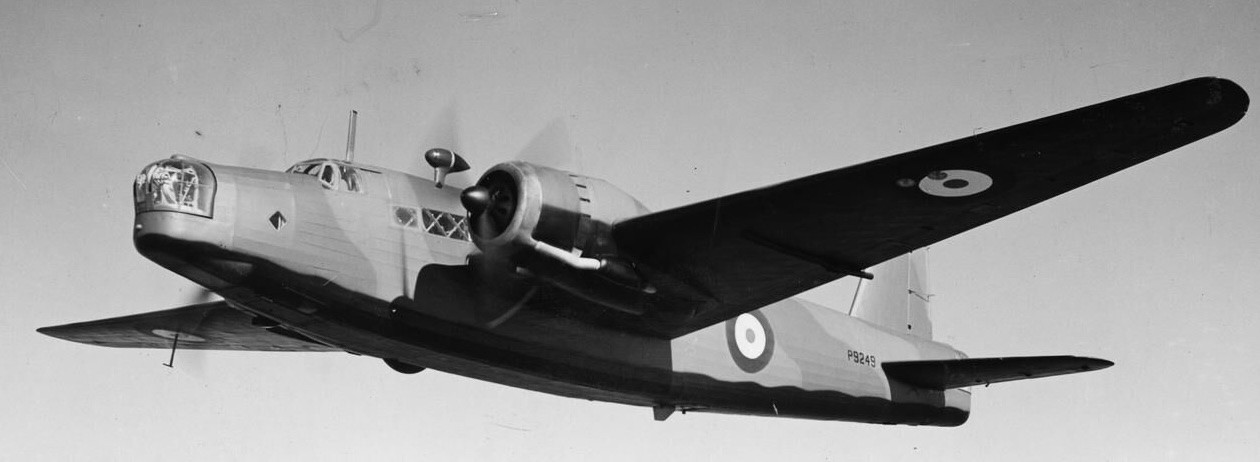
Callander was posted to RAF Marham in Norfolk, one of Bomber Command's key stations. From this base, he flew Wellington bombers on night operations over enemy territory. The Vickers Wellington, affectionately known as the "Wimpy," was the RAF's main medium bomber in the early war years, constructed with a revolutionary geodetic framework that gave it remarkable resilience to battle damage.
Distinguished Service
Operating from RAF Marham, Edward Callander flew a total of 50 missions over enemy territory - an extraordinary achievement that testified to his skill, courage, and remarkable luck. Each mission over occupied Europe was fraught with danger: anti-aircraft fire, searchlights, enemy night fighters, mechanical failures, and the ever-present threat of collision in the darkness all conspired to make bomber operations one of the most hazardous duties of the war.
In 1941, Callander's exemplary service was recognised when he was awarded the Distinguished Flying Medal. This decoration was instituted in 1918 and awarded to non-commissioned aircrew for acts of valour, courage, or devotion to duty while flying in active operations against the enemy. For a rear gunner, whose vigilance could mean the difference between survival and disaster for his entire crew, this was a well-deserved honour.
The Distinguished Flying Medal represented not only Callander's personal courage but also the respect he had earned from his fellow airmen. In Bomber Command, where casualties were devastatingly high, completing 50 missions was an achievement that few would match.
Shot Down Over Stuttgart
Edward Callander's luck finally ran out on the night of 6 May 1942, during a raid over Stuttgart in south-western Germany. Stuttgart was a major industrial centre and a frequent target for RAF Bomber Command. On that night, Callander's Wellington was hit, likely by anti-aircraft fire or a night fighter, forcing the crew to abandon their aircraft.
Callander survived the bail-out and was captured by German forces. As an RAF airman, he was handed over to the Luftwaffe, who maintained prisoner-of-war camps specifically for captured aircrew. He was sent to Stalag Luft III, located near Sagan in what is now Poland, approximately 100 miles south-east of Berlin.
Life at Stalag Luft III
Stalag Luft III would become one of the most famous POW camps of the Second World War, but when Callander arrived in 1942, it was still relatively new, having opened just two months earlier. The camp was specifically selected by the Luftwaffe because its location in sandy soil would make tunnelling extremely difficult. The Germans believed it would be nearly escape-proof.
The camp was run by the Luftwaffe rather than the SS, and by the standards of German POW camps, conditions at Stalag Luft III were relatively humane. The German guards generally treated the Allied aircrew with a degree of professional respect. However, for men like Edward Callander, mere survival in captivity was not enough. The duty of a captured serviceman was to attempt escape if possible, both to rejoin the fight and to tie up enemy resources in guarding and hunting for escapees.
The Escape Artist
Edward Callander proved to be a particularly determined escaper. During his time at Stalag Luft III, he attempted to escape on three separate occasions - a remarkable record that demonstrated his refusal to accept captivity.
His first escape attempt was part of a large-scale tunnel break-out. Many prisoners at Stalag Luft III were involved in elaborate escape operations, and Callander joined a group who successfully tunnelled their way out of the camp. The tunnelling operations at Stalag Luft III were sophisticated affairs, with prisoners displaying remarkable ingenuity in disposing of sand, shoring up tunnels, and creating false identities and civilian clothing. However, like most escapees from this attempt, Callander was recaptured.
Demonstrating remarkable audacity, Callander managed to evade his captors a second time while being returned to the camp after his first escape. This opportunistic escape showed his constant vigilance for any chance to regain his freedom. Again, however, he was eventually recaptured and returned to Stalag Luft III.
For most prisoners, two escape attempts would have been more than enough, but Edward Callander was not one to give up. In 1944, he made his third and most daring escape attempt. This time, he hid for over two days in a disused water tank - an extraordinarily uncomfortable and claustrophobic ordeal that required immense physical and mental endurance. When he finally emerged, he had successfully evaded the immediate search and manhunt that typically followed an escape.
The Journey to Danzig
Callander managed to travel an astonishing distance before his final recapture. He made it all the way to Danzig (now Gdansk) on the Baltic coast - approximately 250 miles north-east of Sagan. This achievement was remarkable, requiring him to travel through enemy territory, avoid checkpoints, find food and shelter, and maintain his cover story, all while speaking little or no German. The fact that he reached Danzig, a major port city, suggests he may have been attempting to stow away on a neutral vessel to Sweden, the closest neutral country accessible by sea.
Unfortunately, Callander was recaptured before he could complete his escape. Under normal circumstances, he would have been returned to Stalag Luft III to face solitary confinement in the "cooler" as punishment. However, by 1944, the rules had changed.
Murdered by the Gestapo
Instead of being returned to the Luftwaffe-run POW camp, Edward Callander was handed over to the Gestapo - Nazi Germany's secret police. This was a death sentence. The Gestapo, answerable to Heinrich Himmler and the SS rather than the Wehrmacht, had no respect for the Geneva Conventions or the rules of war that governed the treatment of prisoners.
Edward Callander was shot by the Gestapo in 1944. He was 27 years old. The exact circumstances of his death are not recorded in detail, but the pattern was depressingly familiar. Gestapo "escorts" would take recaptured escapees to a remote location, order them to stop for a rest or to relieve themselves, and then shoot them in the back at close range. Their bodies would be cremated and their ashes returned to the camp in urns.
By 1944, Adolf Hitler had ordered that escaping POWs were to be handed over to the Gestapo rather than returned to military custody. This policy was a war crime, deliberately implemented to terrorise Allied prisoners and deter escape attempts. The most notorious example came with the "Great Escape" from Stalag Luft III in March 1944, when 50 of the 76 escapees were murdered by the Gestapo on Hitler's direct orders. While Callander's escape was separate from this famous breakout, he fell victim to the same murderous policy.
Legacy
Edward Callander's story is one of extraordinary courage and determination. From his difficult childhood in Dumfries to his service with the French Foreign Legion, from his distinguished career as an RAF rear gunner to his repeated escape attempts from captivity, he displayed a resilience and fighting spirit that commands profound respect.
His life was documented in the book "Fighter! Fighter! The Story of Edward Callander" by John Brenan and Richard Frost, ensuring that his sacrifice would not be forgotten. Today, Callander's story stands as a testament to the often-overlooked Scottish contributions to the Allied cause during the Second World War, and to the countless individual acts of heroism that, taken together, secured victory over fascism.
Edward Callander never returned to his native Dumfries, but his memory lives on as an example of extraordinary courage in the face of overwhelming odds. His determination to escape captivity, even after two failed attempts, speaks to a spirit that refused to be broken. In giving his life in the struggle against Nazi tyranny, this young man from Dumfries joined the ranks of Scotland's heroes, his name forever linked with those who sacrificed everything for freedom.


