
A Scottish Modernist Painter and Theatre Designer
Robert MacBryde was one of Scotland's most compelling mid-20th century artists, whose vibrant Cubist still lifes and expressive landscapes made him a leading figure in Britain's Modernist movement. Born into a working-class family in Ayrshire, MacBryde defied the odds to become a celebrated painter whose work graced London's most prestigious galleries. Together with his lifelong partner Robert Colquhoun, he formed one half of "the two Roberts", an inseparable creative partnership that captivated the bohemian art world of 1940s London. Though his later years were marked by struggle and tragedy, MacBryde's artistic legacy endures as a testament to his exceptional talent and indomitable spirit.
Early Life in Maybole
Robert MacBryde was born on 5 December 1913 in Maybole, a small market town in South Ayrshire. His father, John MacBryde, worked as a cement labourer, whilst his mother was Agnes Kennedy MacBryde. The family lived in modest circumstances, representative of Scotland's working-class communities during the early 20th century. Young Robert left school at the age of 15, as was common for boys from his background, and immediately entered the workforce to help support his family.
For the next five years, MacBryde toiled in a factory - some accounts specify it as a shoe factory - experiencing the harsh realities of industrial labour that would later inform his artistic sensibilities. Despite the demanding nature of factory work, MacBryde harboured dreams beyond the assembly line. He possessed a natural artistic talent and an ambition that refused to be constrained by his circumstances. This determination would eventually lead him to pursue formal art education, a path rarely accessible to someone of his social class.
Glasgow School of Art and Meeting Robert Colquhoun
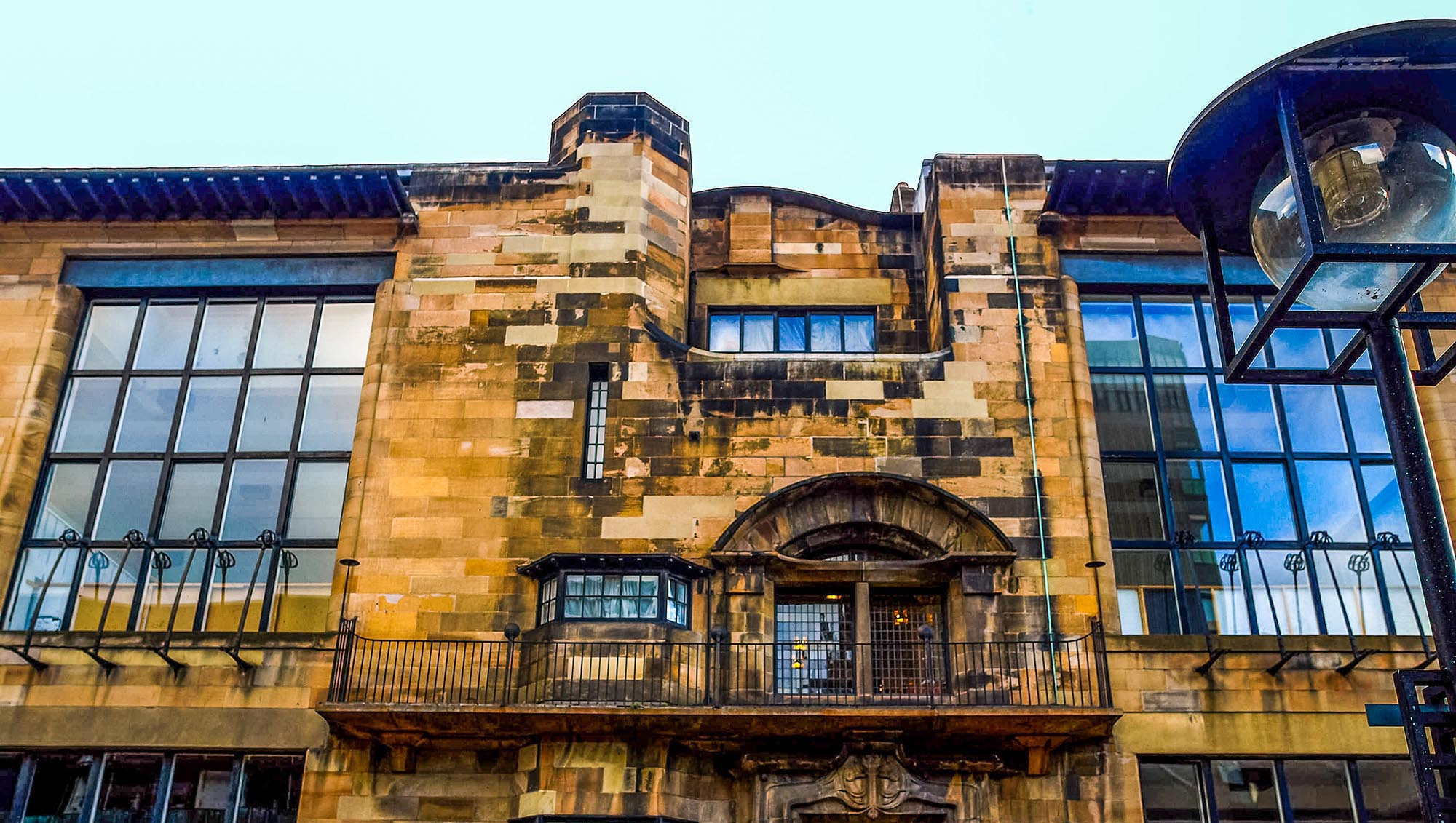
In 1932, at the age of 19, MacBryde won a grant to attend the prestigious Glasgow School of Art, marking a transformative moment in his life. It was on his first day at the school in 1933 that he met Robert Colquhoun, a fellow working-class student from Kilmarnock who had also won a scholarship. The two young men, both from rural Ayrshire backgrounds and both named Robert, formed an immediate and profound connection. What began as a friendship quickly blossomed into a romantic relationship and lifelong partnership that would define both their personal lives and artistic careers.
The pair became inseparable, known affectionately as "the two Roberts" to their fellow students and tutors. Their relationship was tacitly acknowledged and even encouraged by the art school staff. When Colquhoun won the Glasgow School of Art's travelling scholarship in 1938, the faculty - realising he would likely share the funds with MacBryde - provided additional money so both young artists could travel together through Europe. The two Roberts set off on their grand tour, visiting France and Italy, where they immersed themselves in the great artistic traditions and absorbed the influences of Continental Modernism, particularly the work of Picasso and Georges Braque. MacBryde's appreciation for Braque's style was so evident that he later earned the affectionate nickname "MacBraque" amongst his peers.
Their European adventure was cut short by the outbreak of the Second World War in 1939, forcing them to return to Britain. During their five years at Glasgow School of Art, both artists had developed distinctive styles whilst maintaining a symbiotic creative relationship. Their tutor, Ian Fleming, captured this unique bond in a striking double portrait of the pair painted in 1937-1938, which won the prestigious Guthrie Award when exhibited at the Royal Scottish Academy.
London Years and Rising Success
MacBryde moved to London in 1939, establishing a joint studio that Colquhoun would later join. The two Roberts set up home at 77 Bedford Gardens, which they shared with fellow artists John Minton and, from 1943, the Polish-Jewish painter Jankel Adler. Their studio became legendary in London's art world, renowned for vibrant parties that attracted the bohemian elite of the era. Despite the privations and dangers of wartime London, this period marked the beginning of MacBryde's ascent in the British art scene.
In 1943, MacBryde held his first solo exhibition at the prestigious Lefevre Gallery in London, a remarkable achievement for a young artist from such humble origins. His work was heavily influenced by Graham Sutherland and John Piper, and he quickly established himself as a prominent member of the Modernist school. MacBryde's paintings from this period were characterised by brightly coloured Cubist compositions, particularly his still life works which demonstrated his exceptional sense of colour and formal composition. His pieces were generally smaller and more intimate than Colquhoun's grand figurative works, focusing predominantly on still lifes that transformed everyday objects - fruit, vegetables, household items - into vibrant geometric abstractions.
During the 1940s, MacBryde and Colquhoun were at the height of their fame and influence. They cultivated an extraordinary circle of friends that read like a who's who of mid-century British cultural life: Francis Bacon, Lucian Freud, Michael Ayrton, and writers including Dylan Thomas, Fred Urquhart, George Barker, Elizabeth Smart, and Frank Norman. The two Roberts were regular fixtures in Soho and Fitzrovia, the beating heart of London's bohemian scene. In this milieu, where homosexuality remained illegal but was tacitly tolerated, they could live openly as partners and artists. The work of both Roberts was regularly exhibited at the Lefevre Gallery, and critics hailed them as leading lights of their generation. In 1947, the renowned artist and writer Wyndham Lewis reviewed their joint exhibition, noting that their work was "almost identical" and they could be regarded "almost as one artistic organism".
A 1949 feature in the popular magazine Picture Post showcased MacBryde alongside other leading British artists, asking "Seven Artists Tell Why They Paint". It was recognition of his position at the forefront of contemporary British art.
Theatre Design and Artistic Evolution
During and after the Second World War, MacBryde collaborated with Colquhoun on several prestigious theatre design projects, marking an important diversification of their creative output. Their designs were characterised by bold, imaginative modernist aesthetics that brought their painterly sensibilities to the stage. Notable commissions included creating sets for Sir John Gielgud's production of Macbeth, a staging of King Lear at Stratford-upon-Avon, and perhaps most significantly, the complete set and costume designs for Léonide Massine's Scottish-themed ballet "Donald of the Burthens", produced by the Sadler's Wells Ballet at Covent Garden in 1951. These collaborative projects represented rare instances where the two Roberts worked together on joint pieces, as they typically maintained separate painting practices despite their intertwined lives.
As the 1940s progressed into the 1950s, MacBryde's painting style evolved considerably. His work shifted from the bright, optimistic hues of his earlier Cubist pieces towards darker tones and a more Expressionist approach. His later still lifes and landscapes possessed a haunting, melancholic quality that perhaps reflected both his personal circumstances and the changing artistic climate. These works retained his mastery of colour and composition but were imbued with greater emotional depth and complexity.
Decline and Difficult Years
The 1950s brought profound challenges for both Roberts. The art world's attention shifted dramatically towards Abstract Expressionism and other avant-garde movements, and the figurative Modernism that had made MacBryde and Colquhoun famous suddenly seemed dated. Gallery sales declined precipitously, and the two artists found themselves increasingly marginalised. Financial pressures mounted as both men struggled to maintain their creative output.
Compounding their professional difficulties was their escalating alcoholism. Both Roberts had always enjoyed drinking and the social aspects of bohemian life, but by the early 1950s, their consumption had become destructive. According to friends, they could be classified as alcoholics, and serious artistic work became nearly impossible. Their relationship, though deeply loving, could be tempestuous - both were heavy drinkers, and their arguments could turn violent. Colquhoun's occasional bisexual liaisons caused MacBryde considerable jealousy and distress.
By the mid-1950s, the two Roberts were living in near destitution. They spent time at Tilty Mill near Thaxted in Essex, acting as caretakers for the four children of the writer Elizabeth Smart in exchange for accommodation. Smart, recognising their desperate circumstances, generously paid off their outstanding pub bill of £1,500 - an enormous sum at the time that testified to the extent of their drinking. Despite their poverty, MacBryde continued to paint remarkable works, sometimes using unconventional materials. One account suggests he occasionally used canvas salvaged from pilfered deck chairs when proper materials were unavailable.
In 1959, the pioneering television director Ken Russell filmed the two Roberts for the BBC's arts programme "Monitor", capturing them in elegant monochrome in a rural Suffolk cottage. The footage poignantly documented their continued artistic practice despite obvious physical decline. The film showed MacBryde's process as he created "Still Life With Melon", cutting an oval from newspaper, daubing it a "screaming kind of yellow", and applying it to canvas. Meanwhile, Colquhoun's hands trembled visibly as he worked on his portrait "Circus Woman", the sureness of his artistic vision betrayed by the weakness of his body.
Tragedy and Final Years
In September 1962, Robert Colquhoun was offered a one-man exhibition - a glimmer of hope for a career revival. He worked through the night preparing new works for the show, but the years of heavy drinking had taken their irreversible toll. On 20 September 1962, at the age of just 47, Colquhoun suffered heart failure and died in MacBryde's arms at their studio on Museum Street, London.
Colquhoun's death devastated MacBryde. Having lost not only his life partner but his artistic alter ego, he found himself adrift. Shortly after the funeral, MacBryde moved to Ireland, where he shared a house with the celebrated Irish poet Patrick Kavanagh, with whom he had been friendly in London. However, MacBryde continued drinking heavily and, according to those who knew him, made no serious effort to paint again. The Times newspaper later observed that MacBryde had "disappeared into obscurity" following Colquhoun's death.
On 6 May 1966, tragedy struck again. MacBryde was outside a pub in Dublin, reportedly dancing in the street, when he was struck and killed by a car. He was 52 years old. The circumstances of his death - exuberant and reckless, fuelled by alcohol - seemed to encapsulate both the creative vitality and self-destructive tendencies that had characterised his life.
Legacy and Rediscovery
For decades after their deaths, Robert MacBryde and Robert Colquhoun remained relatively obscure, their contributions overshadowed by contemporaries like Francis Bacon and Lucian Freud who lived longer and whose careers flourished in subsequent decades. Their works languished in storage in public collections or disappeared into private hands. However, recent years have witnessed a significant reassessment of their importance to British Modernism.
Major retrospectives, including "The Two Roberts" exhibition at the Scottish National Gallery of Modern Art in 2014-2015, have brought their work back into the spotlight. Art historians now recognise MacBryde's exceptional talent for colour, his innovative approach to still life composition, and his important role in the development of British Modernist painting. His works are held in prestigious public collections including the Tate Gallery, the National Galleries of Scotland, and numerous regional museums across Britain.
Critics have particularly praised MacBryde's ability to transform humble domestic objects into compelling formal arrangements that balance abstraction with emotional resonance. His proto-Cubist still lifes possess what one reviewer described as "homely comfort" combined with enigmatic symbolism, creating works that are simultaneously accessible and intellectually engaging. Though often overshadowed by Colquhoun's more dramatic figurative works, MacBryde's paintings are increasingly recognised as possessing equal artistic merit, with their subtle harmonies and sophisticated colour relationships demonstrating his mastery of the medium.
The story of the two Roberts has also gained recognition as an important chapter in LGBTQ+ history. Living and loving openly in an era when homosexuality was criminalised, MacBryde and Colquhoun represented a form of defiant authenticity. Their relationship and artistic partnership has been documented in memoirs by friends including Anthony Cronin's "Dead as Doornails" and Arthur Berry's autobiography "A Three And Sevenpence Half Penny Man", which describe them with affection and respect. The poet Paul Potts, a close friend, wrote movingly of MacBryde, declaring he possessed more "love in his nature" than anyone since Francis of Assisi.
Robert MacBryde's life was marked by extraordinary highs and devastating lows. From his humble beginnings in an Ayrshire town to the glamorous galleries and studios of London, from celebrated success to destitution and obscurity, his journey encompassed the full spectrum of an artist's existence. Yet through it all, he remained devoted to his craft and to Robert Colquhoun, creating a body of work that continues to resonate with viewers today. His paintings - vibrant, enigmatic, emotionally complex - stand as enduring testament to a singular artistic vision forged in the crucible of mid-20th century British Modernism.


