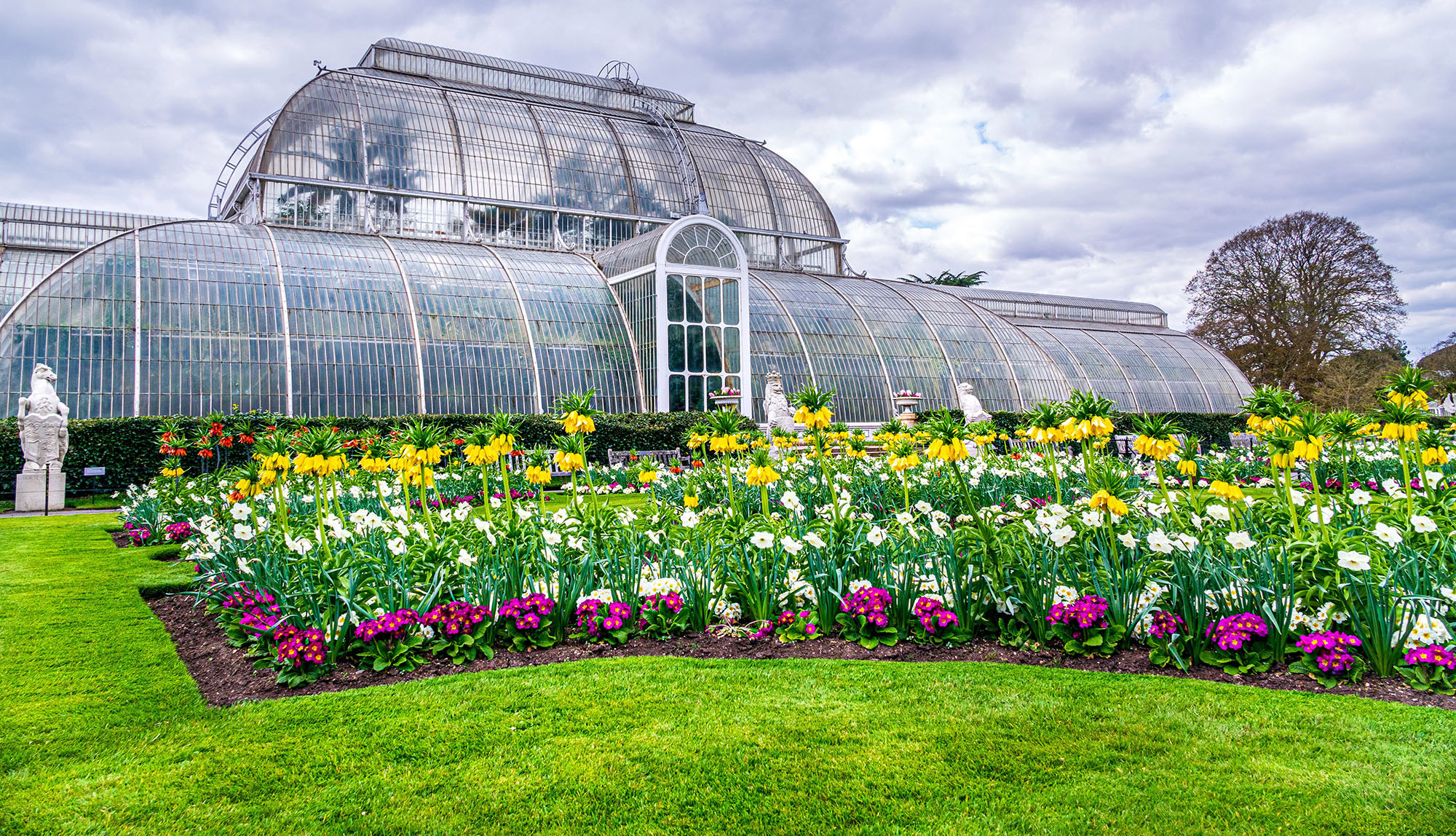

The Scottish Gardener Who Founded the Reputation of Kew Gardens
William Aiton, born in 1731 near Hamilton in Lanarkshire and dying on 2 February 1793, stands as one of the most influential horticulturalists of the eighteenth century and the man who truly founded the reputation of Kew Gardens as the world's pre-eminent botanical institution. From humble beginnings as the son of a Lanarkshire gardener, Aiton rose to become director of the Royal Botanic Gardens at Kew, where he transformed a modest royal garden into the largest and most important botanical collection in Europe. His monumental work, Hortus Kewensis, catalogued over 5,500 plant species and established the scholarly standards for botanical record-keeping that continue to this day. Through his friendship with Sir Joseph Banks and his patronage of plant collectors like Francis Masson, Aiton created a global network that brought botanical specimens from every corner of the world to England's shores.
Early Life and Training
William Aiton was born in 1731 in a small village near Hamilton in Lanarkshire, Scotland, the eldest of eleven children of William Aiton of Wailsely. The family's circumstances were modest, and young Aiton was destined for the practical profession of gardening - a respectable trade that offered reliable employment for those with skill and dedication.
Aiton received thorough training in the profession of gardening, learning the practical skills of plant cultivation, soil management, pruning, and propagation that would serve as the foundation for all his later achievements. Unlike many who would achieve botanical fame, Aiton came from the practical, hands-on tradition of professional gardeners rather than the scholarly world of university-trained botanists. This grounding in practical horticulture would prove invaluable, giving him an intimate, experiential knowledge of how plants actually grew and what they needed to thrive.
The Move to London and Philip Miller
In 1754, at the age of 23, Aiton made the momentous decision to leave Scotland and travel to London in search of greater opportunities. This move would change his life and, ultimately, the history of British botany. In 1755, he secured a position as assistant to Philip Miller, the renowned superintendent of the Chelsea Physic Garden.
Philip Miller was perhaps the most eminent gardener of his time, author of the celebrated and immensely important Gardener's Dictionary, which had become the standard reference work for horticulturalists throughout Europe. Working under Miller at Chelsea was equivalent to attending the finest horticultural university in the world. The Chelsea Physic Garden, founded in 1673 by the Worshipful Society of Apothecaries, housed an extraordinary collection of medicinal and exotic plants, and served as both a teaching garden and a research institution.
Miller's influence on young Aiton cannot be overstated. Under Miller's tutelage, Aiton's botanical knowledge expanded enormously. He learned not just the practical aspects of cultivation but also plant taxonomy, the principles of classification developed by Carl Linnaeus, and the importance of maintaining accurate records of plant origins and cultivation history. Miller's exacting standards and encyclopedic knowledge set a benchmark that Aiton would carry with him throughout his career.
The five years Aiton spent at Chelsea (1755-1759) were formative, transforming him from a skilled Scottish gardener into a botanist of real sophistication. The connections he made during this period would also prove invaluable in his later work at Kew.
Appointment to Kew Gardens
In 1759, a remarkable opportunity presented itself. Princess Augusta, the Dowager Princess of Wales and mother of the future King George III, had decided to establish a botanical garden at Kew House, her royal residence on the Thames southwest of London. She needed someone to plant and manage this new garden, working under the supervision of John Haverfield.
Aiton's aptitude and growing reputation led to his engagement for this prestigious position. At just 28 years old, he was appointed to plant and manage what would become the Royal Botanic Gardens at Kew - the inauguration of what is today one of the world's most important scientific institutions.
This was an extraordinary commission. Princess Augusta also engaged Sir William Chambers, the distinguished Scottish-Swedish architect, as landscape architect to lay out the grounds in the fashionable mode of the day. Chambers designed the orangery, the famous pagoda (which still stands today), and several classical temples, creating a landscape that combined horticultural science with aesthetic beauty.
For scientific direction, the Princess relied on John Stuart, 3rd Earl of Bute, a most accomplished and knowledgeable botanist who became one of the greatest patrons of botanical science in Britain. Bute personally introduced many new species to Kew, and William Chambers recorded Bute's extraordinary assiduity in assembling plants from many parts of the globe with the ambition of making Kew's collection the largest in Europe. For Aiton, the responsibility of caring for this rapidly growing collection was immense, but Bute encouraged him in every possible way, recognising and nurturing the young gardener's abilities.
Building Kew's Reputation
From 1759 until his death in 1793, William Aiton dedicated himself to building Kew Gardens into an institution of world importance. His achievement was remarkable - he took what had begun as a modest royal garden and, through tireless effort and vision, created the most significant botanical collection in Europe.
Aiton took every opportunity to increase the collections at Kew. He understood that to become truly great, Kew needed to go beyond simply receiving plants from various donors - it needed a systematic programme of plant collection from around the world. In 1772, he was instrumental in sending out Francis Masson, one of the first botanical collectors formally employed by an institution, to the Cape of Good Hope in South Africa. Masson sailed with Captain James Cook aboard HMS Resolution and spent nearly three years collecting plants in southern Africa, sometimes working alongside the Swedish botanist Carl Thunberg. By the time Masson returned to Kew in 1775, he had sent back over 500 previously unknown plant species - an extraordinary haul that significantly enhanced Kew's collections and reputation.
This pioneering initiative established Kew as the centre of a global network of plant collection that would expand dramatically under Aiton's stewardship and reach its fullest expression under Sir Joseph Banks. Masson would go on to collect in the Canary Islands, Madeira, the Azores, the West Indies, and eventually North America, always sending his discoveries back to Aiton at Kew.
Partnership with George III and Sir Joseph Banks
In 1783, Aiton's responsibilities expanded significantly when he was promoted to the management of the royal forcing and pleasure gardens at Kew and Richmond, whilst retaining his post as director of the botanical garden. King George III, who had succeeded to the throne in 1760, took a personal interest in Kew and ordered a house to be built there for Aiton, recognising the indispensability of the gardener he had inherited from his mother.
After Princess Augusta died in 1772, Kew came under the unofficial but highly effective direction of Sir Joseph Banks, the renowned naturalist who had sailed with Captain Cook on his first great voyage. Banks was undoubtedly the greatest scientific impresario of the day and was determined to build Kew into a botanical institution that would surpass the famous gardens in Paris, Vienna, and elsewhere in Europe.
Banks spared no effort in building up the collection at Kew, using his extensive connections with naval officers, merchants, doctors, and travellers throughout the British Empire to obtain plants. All these specimens were entrusted to Aiton, who had to ensure their successful cultivation in England's challenging climate. Banks and Aiton developed a close friendship based on mutual respect - Banks admired Aiton's extraordinary skill in plant cultivation, whilst Aiton appreciated Banks's scientific vision and his ability to secure royal and governmental support for botanical endeavours.
Together with Daniel Carl Solander (Banks's Swedish librarian and botanist) and Jonas Dryander (another of Banks's assistants), Banks and Aiton formed a formidable team that would produce Aiton's magnum opus.
Hortus Kewensis
In 1789, after more than sixteen years of painstaking work undertaken during whatever leisure his daily duties allowed, William Aiton published Hortus Kewensis, or a Catalogue of the Plants Cultivated in the Royal Botanic Garden at Kew. This three-volume work would prove to be of fundamental importance to botanical science.
Hortus Kewensis contained an enumeration of approximately 5,600 plant species under cultivation at Kew, but it was far more than a simple list. For each plant, Aiton provided meticulous information: its country of origin, who first cultivated it in Britain, and when it was introduced. This historical record-keeping was unprecedented in its thoroughness. Aiton gathered this information not just from books but from personal inquiry among his contemporaries, interviewing elderly gardeners and consulting private correspondence to establish accurate dates and attributions.
The work also contained descriptions of new species, though Aiton was honest enough to acknowledge assistance. Although no explicit indication was given in the published volumes, the descriptions of new species were actually contributed by Daniel Solander, and botanists have always recognised this. The type specimens of these novelties were placed in Banks's herbarium, now incorporated into the British Museum collections. Jonas Dryander also contributed to the work.
This collaboration highlights an important aspect of Aiton's character and achievement. He was fundamentally a practical gardener rather than a trained botanist or scholar. As William Curtis remarked in The Botanical Magazine in 1791: "The great length of time Mr. Aiton has been engaged in the cultivation of plants, the immense numbers which have been the constant objects of his care through every period of their growth, joined to his superior discernment, give him a decided superiority in the prima facie knowledge of living plants over most Botanists of his day."
Whilst Aiton might not have possessed the scholarly apparatus to write botanical descriptions in technical Latin himself, his practical knowledge of how plants actually grew was unparalleled. He understood what modern gardeners would call "plant behaviour" - how specimens from different parts of the world responded to British conditions, what they needed to thrive, when they flowered and fruited. This experiential knowledge was perhaps more valuable than theoretical learning alone.
Hortus Kewensis was extraordinarily well received. The entire first impression sold out within two years, a remarkable commercial success for such a specialised scientific work. It remains today an invaluable historical resource, providing botanical historians with precise information about when various exotic plants first arrived in Britain and began their journey from curiosities to common cultivars.
A second, enlarged edition appeared in 1810-1813, edited by Aiton's eldest son William Townsend Aiton, who had succeeded his father as superintendent of Kew Gardens in 1793.
Character and Personal Life
Contemporary accounts paint a picture of William Aiton as a man of admirable personal qualities. His private character was described as "highly estimable for mildness, benevolence, piety, and every domestic and social virtue." He was extremely active and energetic, yet combined this drive with a gentle and considerate manner that won him friends across all social classes.
Aiton married a woman named Elizabeth, about whom little else is recorded. Together they had at least six children - four daughters and two sons. Both sons followed their father into horticulture: William Townsend Aiton succeeded him at Kew, whilst John Townsend Aiton was placed in charge of the Royal Garden at Windsor. The family's dynastic involvement with royal horticulture would continue for another half-century.
Among Aiton's friends were some of the most distinguished figures of the age. Besides Sir Joseph Banks, his close friends included Bishop Goodenough, Jonas Dryander, and John Zoffany, the famous artist who lived in nearby Strand-on-the-Green. The fact that these eminent men served as pallbearers at Aiton's funeral speaks to the high esteem in which he was held - it was unusual for a professional gardener, however successful, to count bishops, baronets, and renowned artists among his intimate friends.
Final Years and Death
William Aiton remained active in his beloved gardens until illness forced him to slow down in late 1792. He died of liver disease on 2 February 1793, at the age of 62, at his house in Kew. He was buried in St Anne's Churchyard, Kew, where he lies with his wife Elizabeth, four daughters, and two sons in the family tomb.
His death was marked by tributes in The Gentleman's Magazine and other publications, with one obituary noting that whilst Kew had lost its master gardener, Aiton had been fortunate to leave behind "promising young men to carry on what he has so happily begun" - a reference to his sons, particularly William Townsend Aiton.
Legacy
William Aiton's legacy endures in multiple forms. Most obviously, he transformed Kew Gardens from a royal pleasure ground into a serious scientific institution. The reputation he established has only grown stronger - today, the Royal Botanic Gardens, Kew is a UNESCO World Heritage Site, housing the largest and most diverse botanical collections in the world, and remains at the forefront of plant science and conservation.
His system of plant collection, involving trained collectors sent to specific regions with royal and institutional support, became the model for botanical exploration throughout the nineteenth century. The network he helped establish with Banks would eventually span the globe, with Kew serving as the hub for plant exchange and information that facilitated the movement of economically important species throughout the British Empire.
Hortus Kewensis remains an indispensable historical resource, consulted by botanical historians whenever they need to establish the provenance and cultivation history of plant species in Britain. The meticulous record-keeping Aiton pioneered became standard practice at Kew and other major botanical gardens.
Aiton is commemorated by the specific epithet "aitonis" in botanical nomenclature. The genus Aitonia, a monotypic South African plant described by Carl Peter Thunberg in 1780, honours him directly. This interesting genus was introduced into cultivation by Francis Masson, whom Aiton had trained and sent to South Africa - a fitting tribute that connects Aiton's name with one of the collectors whose work he made possible.
A portrait in oils of William Aiton, painted during his lifetime, hangs in the museum of the Royal Gardens at Kew, where it serves as a reminder of the humble Scottish gardener who became the architect of one of the world's great botanical institutions. From this portrait, engravings were produced and widely distributed, ensuring that Aiton's image, like his reputation, would endure.
Perhaps William Aiton's greatest achievement was demonstrating that practical horticultural skill, when combined with vision, diligence, and collaborative spirit, could advance botanical science as effectively as formal academic training. He proved that a gardener with "superior discernment" and intimate knowledge of living plants could make contributions to botanical knowledge that matched or exceeded those of university-educated scholars. In doing so, he helped establish horticulture as a respected scientific discipline rather than merely a practical craft.
William Aiton died over two centuries ago, but every visitor to Kew Gardens walks through the institution he created, and every botanist who consults historical cultivation records benefits from the standards he established. The modest Scottish gardener who arrived in London in 1754 with nothing but his skills and his ambition had, by the time of his death in 1793, created something that would outlast him by centuries - a living library of the world's plant diversity and a model for botanical gardens everywhere.


