
The Last Independent Lord of Galloway and Grandfather of a King
Alan of Galloway, also known as Alan FitzRoland, lived from approximately 1175 to 1234 and stands as one of the most powerful and influential magnates in thirteenth-century Scotland. As the hereditary Lord of Galloway and Constable of Scotland, he wielded authority across the Kingdom of Scotland, the Irish Sea zone, and northern England during a tumultuous period of Anglo-Scottish conflict. Born into the semi-independent MacFergus dynasty that had ruled Galloway since the early twelfth century, Alan was the last legitimate ruler of Galloway as an autonomous lordship. His strategic marriages connected him to Scottish royalty, and through his daughter Devorgilla, he became the grandfather of King John Balliol of Scotland. Alan's death in 1234 triggered a succession crisis that ended Galloway's independence and brought the region fully under Scottish royal control.
Birth and Lineage
Alan was born around 1175, the eldest son of Roland (also called Lochlann), Lord of Galloway, and Helen de Morville. His parentage connected two powerful lineages - the native Gaelic lords of Galloway and the Anglo-Norman de Morville family. His mother Helen was the daughter of Richard de Morville, who had been Constable of Scotland, and sister and heir of William de Morville, Lord of Lauderdale and Cunningham. Through this maternal line, Alan would inherit not only extensive lands but also the prestigious office of Constable of Scotland.
His paternal ancestry was equally distinguished, tracing back to Fergus, Lord of Galloway, who first appeared in historical records in 1136. Fergus had established Galloway as a semi-autonomous lordship, maintaining a careful balance between Scottish royal authority and effective independence. Remarkably, the mother of at least two of Fergus's children - including Alan's grandfather Uhtred - was an unnamed daughter of Henry I, King of England, making Alan a blood relative of the early thirteenth-century English kings. This royal connection would prove significant throughout Alan's career, allowing him to navigate the complex political landscape between Scotland and England.
Fergus had also forged alliances across the Irish Sea by marrying his daughter Affraic to Amlaíb mac Gofraid, King of the Isles. These early twelfth-century marital alliances meant that Alan was also related to the kings of the Isles - important players in the maritime politics of the era. Alan's lineage thus positioned him at the intersection of Gaelic, Anglo-Norman, and Norse-Gaelic power structures.
Inheritance and Early Career
Roland, Alan's father, died in December 1200, and Alan succeeded to the lordship of Galloway. He also inherited the constableship of Scotland, a pre-eminent position which had passed to his father through his mother's family, the de Morvilles. As Constable, Alan was responsible for leading the king's royal forces and held a status equivalent to the earls of the realm. At the time of his succession, Galloway existed as a semi-independent state within Scotland - the Lords of Galloway had traditionally maintained cautious relations with both Scotland and England, accepting the authority of whichever kingdom suited their interests and acting with considerable autonomy when circumstances permitted.
Alan first appears in courtly circles around 1200, about the time he inherited his father's possessions and offices. In his twenties, he was already moving in the highest circles of Scottish and English politics. His position as Lord of Galloway gave him control over a strategically important region in southwest Scotland, whilst the constableship made him one of the most powerful military figures in the Scottish kingdom.
Strategic Marriages
Alan married at least three times, each marriage strengthening his political position and expanding his network of influence. His first marriage was to a daughter of Roger de Lacy, Constable of Chester, which produced at least one daughter, Helen, who would later marry Roger de Quincy, Earl of Winchester. Through this de Lacy connection, Alan secured ties to powerful Anglo-Norman nobility in northern England and Chester.
His second and most significant marriage was to Margaret of Huntingdon, the eldest daughter of David, Earl of Huntingdon. David was the younger brother of two Scottish kings - Malcolm IV and William I - and the great-grandson of King David I. This marriage connected Alan directly to Scottish royalty and produced two daughters who would shape British history: Christiana, who married William de Forz, Earl of Aumale, and Devorgilla, who would become one of medieval Scotland's most significant women.
Alan's third marriage was to Rose (or Rohese), daughter of Hugh de Lacy, Earl of Ulster. This marriage, contracted around 1229, connected him to the most powerful Anglo-Norman family in Ireland but produced no offspring.
Beyond his legitimate marriages, Alan also had an illegitimate son named Thomas, whose existence would become critically important after Alan's death.
The Morville Inheritance
In 1217, Alan's mother Helen de Morville died, and he secured her substantial inheritance. This included the lordships of Lauderdale and Melrose (in the Scottish Borders) and other extensive estates. With this inheritance coming almost two decades after he had succeeded his father, Alan became one of the most powerful magnates in the Scottish realm, controlling territory from Galloway in the southwest through the Borders region. His landholdings in Scotland were complemented by estates in the Kingdom of England, making him a cross-border magnate of the first rank.
Service to the English Crown and Magna Carta
Alan's extensive English holdings and his relationship with the English royal family made him an important figure in King John of England's court. He was one of John's advisors concerning Magna Carta, the great charter of liberties forced upon John by rebellious barons in 1215. This involvement placed Alan at the centre of one of the most significant constitutional developments in English history.
However, Alan navigated the crisis carefully. Up until 1215, he had successfully served both his liege lords - the kings of England and Scotland - balancing obligations that often pulled in opposite directions. When civil war erupted following John's repudiation of Magna Carta, Alan found himself in an increasingly difficult position. Alexander II of Scotland, who had succeeded his father William I in 1214, saw the English crisis as an opportunity to pursue Scottish claims to northern England, particularly Northumberland.
Alan played a considerable part in these northern English ambitions during the violent aftermath of Magna Carta's rejection. His military power, extensive landholdings in both kingdoms, and strategic position made him a key player in the cross-border conflict that would continue for several years.
The Irish Dimension
Alan participated actively in the English colonisation of Ulster, receiving a massive grant in the region from King John. This Irish involvement extended Galloway's maritime and political influence across the Irish Sea, connecting Alan to the complex world of Anglo-Norman expansion in Ireland. Galloway's location and naval capabilities - the region was known for its galley-based seafaring traditions - made it a natural bridge between Scotland, Ireland, and the Isle of Man.
Alan integrated Galloway's traditional maritime strength with recruited Irish and Hebridean forces, facilitating amphibious operations that temporarily expanded his influence into Ulster and the Isle of Man. These operations demonstrated the continuing importance of naval power in the Irish Sea zone and Galloway's particular expertise in this domain.
Constable of Scotland and Military Leadership
As Constable of Scotland, Alan commanded the royal forces in multiple campaigns throughout his career. He was known for his military strength and the size of the army he could field from Galloway. The region had a reputation for producing fierce warriors, and under Alan's leadership, Gallovidian forces played crucial roles in Scottish military operations.
Alan aided the Scottish crown against rebel claimants in the western and northern peripheries of the kingdom. In particular, he helped suppress challenges from the Meic Uilleim (descendants of King Duncan II) who periodically rose in rebellion claiming the Scottish throne. According to historical chronicles, when a certain Gilla Escoip (almost certainly a member of the Meic Uilleim) burned the castle of Abertarff and sacked Inverness around 1228, Alan as Constable led forces north to crush the rebellion.
His involvement in Isle of Man politics was equally significant. Through a complex series of interventions involving rival claimants to the Manx kingship, Alan attempted to extend Gallovidian influence over the island. These operations involved naval forces and reflected the continuing contest between Norwegian, Scottish, and local powers for control of the Hebrides and Mann.
Religious Patronage
Like many powerful medieval lords, Alan was a significant patron of the Church. His great-grandfather Fergus had founded Dundrennan Abbey, the Cistercian monastery where Alan would eventually be buried. Alan himself founded Tongland Abbey, another Cistercian house in Galloway, continuing his family's tradition of supporting reformed monasticism.
In a demonstration of his piety and political connections, Alan accompanied Robert de Brus (grandfather of Robert the Bruce) and Walter FitzAlan (progenitor of the Stewart dynasty) on a pilgrimage to Canterbury to witness the placing of the remains of Saint Thomas Becket in a new shrine. This pilgrimage brought together three of the most powerful families in Scotland and demonstrated Alan's integration into the highest levels of Scottish aristocratic society.
Death and Succession Crisis
Alan died in February 1234 and was buried at Dundrennan Abbey in Galloway. His death is recorded by the Annals of Ulster, the Chronicle of Melrose, and the Chronicle of Lanercost - the multiple chronicle entries reflecting his importance in both Scottish and Irish Sea politics. Amongst the monastic ruins at Dundrennan, a dilapidated effigy of grey stone is generally identified as marking his tomb.
As the last Gallovidian ruler in the legitimate patrilineal line descended from Fergus, Alan's death brought an abrupt end to about half a century of relatively stable rule under himself and his father. The lack of a legitimate male heir created a succession crisis that would fundamentally change Galloway's political status.
Alan's only legitimate son, also named Thomas, had predeceased him. This left his three surviving daughters as his heirs according to feudal law: Helen (married to Roger de Quincy, Earl of Winchester), Christiana (married to William de Forz, Earl of Aumale), and Devorgilla (married to John Balliol). King Alexander II moved quickly to divide Alan's estates and considerable wealth among these three daughters and their husbands, effectively partitioning the lordship of Galloway.
The Gallovidian Uprising
However, traditional Gaelic law in Galloway recognised a different form of succession. Under Celtic custom, illegitimate sons could inherit if they were acknowledged by their father and accepted by the community. The people of Galloway rose in rebellion, attempting to make Alan's illegitimate son Thomas their lord. According to the Chronicle of Melrose, they appealed to King Alexander II to take the whole lordship into his own hands rather than partition it among Alan's daughters, suggesting that whilst they might accept that illegitimacy excluded Thomas under feudal law, they were unwilling to accept female succession and the division of their homeland among Anglo-Norman lords.
Alexander denied their request and moved swiftly to crush the subsequent uprising. One of the Scots who played a key part in destroying the Gallovidian resistance was Ferchar mac in tSagairt, Earl of Ross, a rising star in Alexander's administration. The suppression was thorough and marked the definitive end of Galloway's semi-autonomous status. The region was fully integrated into the Scottish kingdom, its distinctive Gaelic institutions subordinated to royal authority.
Following Alan's death, the constableship of Scotland passed to Roger de Quincy, husband of Alan's eldest surviving daughter Helen, keeping the office within the family but removing it from Gallovidian control.
Legacy Through Devorgilla
Alan's most enduring legacy came through his daughter Devorgilla, Lady of Galloway. After receiving her third of the partitioned Galloway estates, Devorgilla and her husband John Balliol became two of the wealthiest and most influential nobles in Britain. Their son, John Balliol, was chosen as King of Scotland in 1292, making Alan the grandfather of a Scottish king.
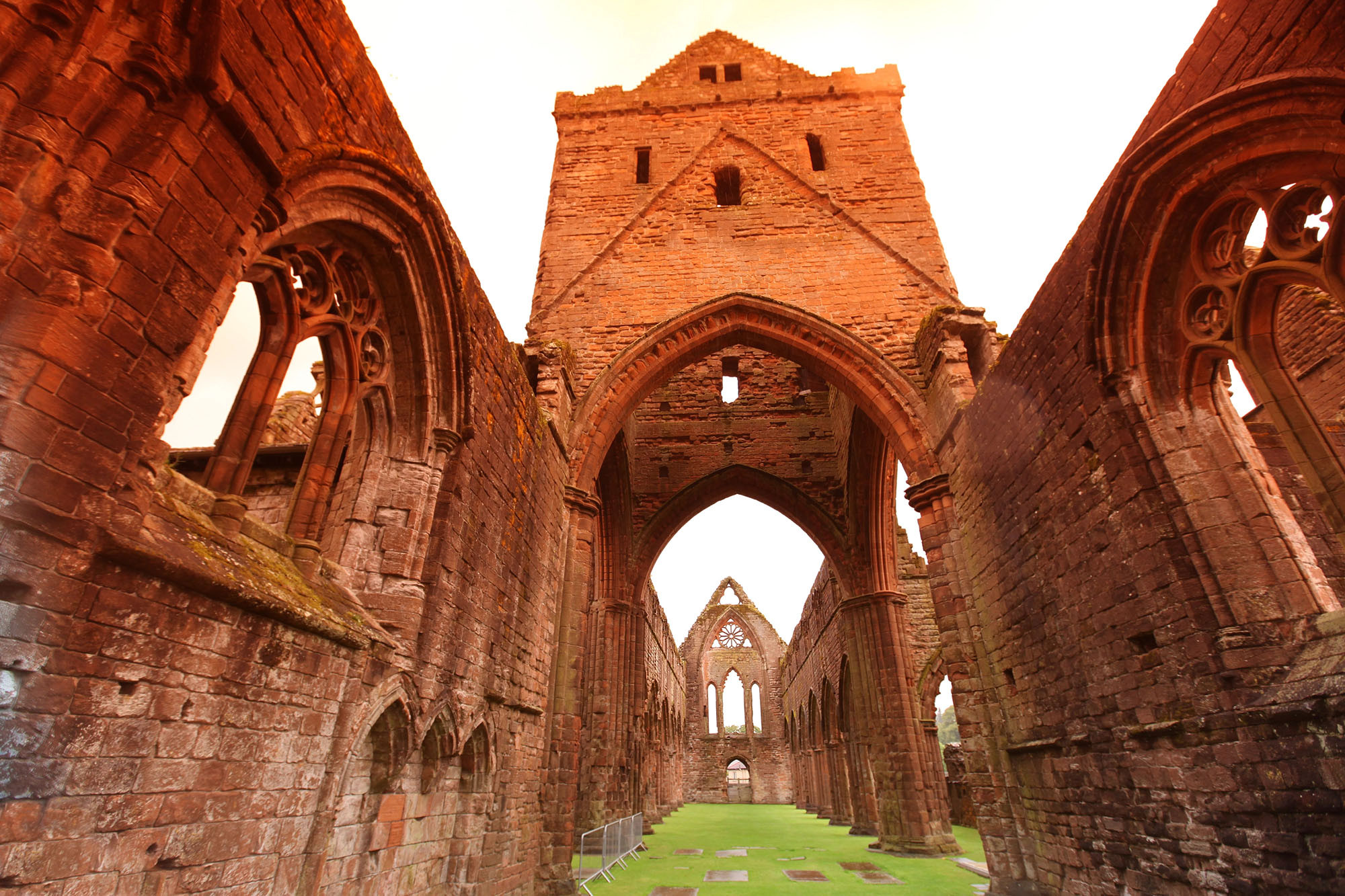
Devorgilla is remembered as one of medieval Scotland's great benefactors. She and her husband founded Balliol College, Oxford, which remains one of Oxford University's most prestigious colleges. After John Balliol's death, Devorgilla carried his embalmed heart with her in an ivory casket and was eventually buried with it at Sweetheart Abbey, a Cistercian monastery she founded near Dumfries in his memory. Through Devorgilla's charitable works and political significance, Alan's influence extended far beyond his death.
Assessment
Alan of Galloway was a pragmatic and effective regional magnate who preserved Galloway's semi-autonomous status during a period of intensifying pressure from the Scottish monarchy. His strategic marriages connected him to the Scottish royal family, powerful English nobility, and the Anglo-Norman lords of Ireland. His military capabilities, extensive landholdings, and hereditary office of Constable made him one of the most powerful men in Scotland during the reigns of William I and Alexander II.
Alan's life reflected the complex political geography of the thirteenth-century British Isles, where loyalties crossed national boundaries, maritime power in the Irish Sea remained crucial, and figures like Alan could simultaneously serve English and Scottish kings whilst maintaining regional autonomy. His participation in events ranging from Magna Carta to the colonisation of Ulster to the suppression of Scottish rebellions demonstrates the wide geographical and political range of his influence.
The end of Galloway's independence following Alan's death was probably inevitable given the centralising ambitions of the Scottish monarchy, but Alan had successfully delayed this outcome throughout his lifetime. His ability to balance Gaelic traditions with feudal obligations, to maintain military power whilst cultivating courtly influence, and to preserve regional autonomy whilst serving royal authority marked him as one of the ablest political operators of his age.
Through Devorgilla and her descendants, including King John Balliol, Alan's bloodline continued to shape Scottish history for generations. The lordship of Galloway that he had ruled as the last of the MacFergus dynasty was divided and integrated into the Scottish realm, but the memory of Galloway's semi-independent past, and of lords like Alan who had preserved it, would endure in the region's distinctive identity.


