Scotland's Pioneering Mathematical Astronomer
Flora Sadler was a remarkable Scottish mathematician and astronomer whose groundbreaking work in celestial navigation and astronomical computation helped shape 20th-century science. Rising from humble beginnings in Aberdeen to become a Principal Scientific Officer at the Royal Observatory and the first woman to serve as Secretary of the Royal Astronomical Society, Flora's life exemplified determination, intellect, and a passion for understanding the heavens.
Early Life and Education
Flora Munro McBain was born on 4 June 1912 in Aberdeen, the eldest of three children in a working-class family. Her father, John McBain, worked as a dairyman's carter, whilst her mother, Isabella Webster, was employed as a domestic servant. Despite the family's modest means, Flora showed exceptional academic promise from an early age.
Like many children from poor families in the early 20th century, Flora left school at the age of 15 to help support her household. However, her headmaster recognised her extraordinary potential and persuaded her parents to allow her to return to education. This decision would prove transformative. Flora earned four Highers and won a scholarship to study mathematics and physics at the University of Aberdeen when she was 18 - a remarkable achievement for a young woman from her background in that era.
At the University of Aberdeen, one of Scotland's ancient institutions founded in 1495, Flora flourished. She graduated with honours in mathematics and physics in 1934, joining a distinguished lineage of Aberdeen mathematicians and scientists. Her success represented not only personal triumph but also demonstrated the growing, albeit still limited, opportunities for women in higher education and scientific fields during the inter-war period.
Early Career and Research at Aberdeen
Following her graduation, Flora remained at the University of Aberdeen from 1934 to 1937, holding various positions that showcased her versatility and dedication. She worked as a demonstrator and lecturer in applied mathematics, sharing her knowledge with a new generation of students. Simultaneously, she conducted important research into radium sources for cancer treatment, contributing to the emerging field of radiotherapy at a time when understanding of radioactivity and its medical applications was still developing.
This period also marked Flora's first encounter with astronomical research. During the summer of 1935, she worked as a vacation student at the Nautical Almanac Office at the Royal Observatory in Greenwich, studying eclipse computation. This experience would prove pivotal in shaping her future career path.
The Siberian Eclipse Expedition
In 1936, Flora participated in an expedition to Siberia to observe the total solar eclipse of 19 June. This astronomical event was particularly attractive to British observers, as the eclipse path swept across the Mediterranean, the Black Sea, and into Siberia, with the point of greatest eclipse occurring at coordinates 56 degrees north and 104 degrees east, where observers experienced 2 minutes and 31 seconds of totality.
For Flora, witnessing this celestial phenomenon sparked a profound passion for astronomy that would define the rest of her professional life. The experience of travelling to the remote regions of Siberia, collaborating with fellow astronomers, and observing one of nature's most spectacular displays ignited an enthusiasm that would drive her subsequent career choices and research focus.
The Nautical Almanac Office
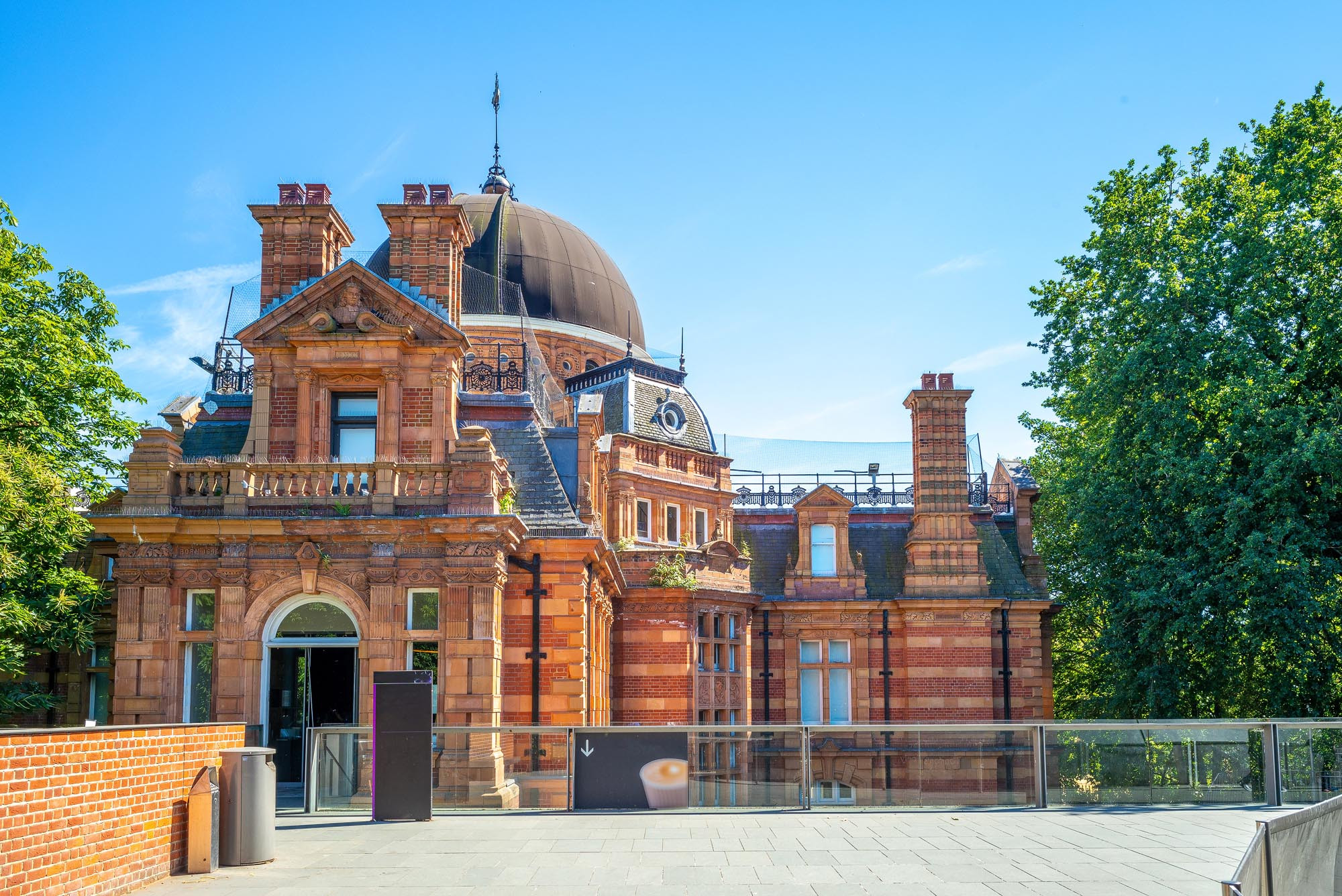
In 1937, Flora successfully applied for a position at the Royal Observatory's Nautical Almanac Office in Greenwich, joining shortly after Donald Harry Sadler had been appointed as Superintendent. The Nautical Almanac Office, established in 1818, was responsible for producing astronomical tables and ephemerides essential for maritime navigation - publications that enabled sailors to determine their position at sea using celestial observations.
Flora specialised in the computation of astronomical and navigational tables, particularly focusing on the intricate mathematics of the Moon's motion and the prediction of stellar occultations - phenomena where the Moon passes in front of stars, temporarily blocking their light. This work required exceptional mathematical skill and meticulous attention to detail, as navigators and astronomers worldwide relied on the accuracy of these calculations.
During the Second World War, the Nautical Almanac Office was relocated from London to the safer environment of Bath to protect both staff and the vital work being conducted. The office expanded temporarily to meet wartime needs, producing crucial navigational data for military operations. Flora's expertise was so valued that when Professor John Carroll requested her transfer to assist with government radar research, the request was declined - her work at the Nautical Almanac Office was deemed too important to spare her.
Post-War Achievements and Leadership
Following the war, Flora's career reached new heights. In 1949, the Nautical Almanac Office became one of the first departments to move to the Royal Observatory's new site at Herstmonceux Castle in Sussex, where Flora continued her vital computational work. She eventually rose to become head of the Occultation Section and was promoted to Principal Scientific Officer, a remarkable achievement in an era when women in senior scientific positions remained relatively rare.
In February 1948, Flora took on the duties of editor of the Royal Astronomical Society's professional journal, Monthly Notices of the Royal Astronomical Society. Her competence in this role led to an historic appointment: from 1949 to 1954, she became the first woman to serve as Secretary of the Royal Astronomical Society. This position placed her at the heart of Britain's astronomical establishment, less than 35 years after women had been permitted to become Fellows of the Society in 1916.
Flora's work during this period had international significance. Her calculations contributed to understanding variations in the Earth's rotation and the establishment of precise time standards. The tables she helped produce were used by navigators across the globe, from merchant vessels to naval fleets, making her work essential to international maritime commerce and defence.
Marriage and Personal Life
On 22 December 1954, Flora married Donald Harry Sadler, who had been her colleague and superior as Superintendent of the Nautical Almanac Office since 1937. Their marriage came as a surprise to colleagues and was described by contemporaries as "the astronomical romance of the decade". The couple had worked closely together for nearly two decades, sharing a passion for astronomical computation and international scientific collaboration.
After marrying, Flora continued her work at the Observatory but reduced her hours, likely to accommodate the couple's active social life. Their home became well known to astronomers from many different countries, as they frequently hosted dinner parties that brought together the international astronomical community. Despite reducing her official working hours, Flora remained dedicated to her research and professional responsibilities.
Retirement and Later Years
Flora retired from the Royal Observatory in 1973, ending a distinguished 36-year career that had transformed both astronomical computation and opportunities for women in science. However, her connection to the astronomical community remained strong through her husband Donald, who continued his work with various international astronomical organisations following his own retirement in 1972.
The couple spent their retirement years at their home in Cooden, Sussex, remaining active in scientific circles and maintaining the friendships they had cultivated over decades of international collaboration. Donald Sadler died in 1987, leaving Flora bereft of her life partner and professional companion of more than three decades.
Following her husband's death, Flora returned to Aberdeen, the city of her birth, to be closer to her family. Her nieces later recalled her generosity towards her younger sister and other family members throughout her life. In 1998, Flora suffered a serious fall and was obliged to move from her bungalow into a nursing home. She died on Christmas Day, 25 December 2000, at the age of 88.
Legacy and Impact
Flora Sadler's career spanned a transformative period in both astronomy and women's participation in science. She entered university at a time when female scientists faced significant barriers and prejudice, yet through talent, determination, and hard work, she achieved positions of genuine authority and influence. Her appointment as the first female Secretary of the Royal Astronomical Society broke an important barrier and paved the way for future generations of women in astronomy.
Her technical contributions were substantial and enduring. The astronomical tables and ephemerides she computed enabled accurate navigation at sea for decades and contributed to fundamental understanding of lunar motion and Earth's rotation. At a time when computers were human beings performing calculations rather than electronic machines, Flora's mathematical skill and precision were essential to the advancement of astronomical science and practical navigation.
Flora's journey from a poor Aberdeen household to the pinnacle of British astronomy embodied the expanding opportunities of the 20th century, whilst also highlighting the barriers that remained. Her story reminds us of the countless talented individuals whose contributions to science might have been lost had they not possessed both exceptional ability and the determination to overcome circumstance. In breaking ground as a female leader in astronomy, Flora Sadler helped ensure that future generations would judge scientists by their abilities rather than their gender.


