
The Clanranald Bard - Poet, Soldier, and Champion of the Gaelic Tongue
Alexander MacDonald - known in Gaelic as Alasdair MacMhaighstir Alasdair, meaning "Alasdair, son of the Reverend Alasdair" - was one of the most remarkable and turbulent figures of 18th-century Scotland. Born around 1698 at Dalilea on the banks of Loch Shiel in Moidart, he was a poet of extraordinary power, a Jacobite soldier, a pioneering lexicographer, and a passionate defender of the Gaelic language at a time when it faced its gravest threat. His life wove together the great upheavals of his era - the suppression of Highland culture, the doomed Jacobite rising of 1745, and the beginning of a Gaelic literary renaissance - into a story that still resonates today.
Early Life and Education
Alasdair was born into both the Scottish nobility and Clan MacDonald of Clanranald, one of the most powerful clans in the western Highlands. His father, the Reverend Alexander MacDonald (known as Maighstir Alasdair, or "Master Alexander"), served as the Church of Scotland minister for a wide parish that included the south end of Loch Shiel and Finnan's Isle. It was a landscape of extraordinary beauty - remote, Gaelic-speaking, and deeply rooted in a culture stretching back centuries.
According to tradition, young Alasdair showed the signs of a born poet from his earliest years, "lisping in numbers" and beginning to rhyme as a small child. He was educated at home by his father, who schooled him not only in Gaelic literature and the traditions of the Highland bards but also in Classical languages, giving him a remarkably broad literary foundation. He later attended the University of Glasgow, though he appears to have left before completing his degree - reportedly to marry young and begin his own path in life.
As a cousin of Flora MacDonald and a man of good family and education, Alasdair moved comfortably between the Gaelic world of the western Highlands and the wider culture of Enlightenment Scotland. This dual perspective would define everything he wrote.
Schoolmaster and Lexicographer
In 1729, Alasdair was appointed teacher at Island Finnan by the Scottish Society for the Propagation of Christian Knowledge (SSPCK), an organisation that founded schools "where religion and virtue might be taught to young and old." Over the following years he worked in several of their schools across Ardnamurchan and the surrounding area, including Kilchoan and Corryvullin, where in 1739 he composed one of his best-known early poems, Allt an t-Siucar - The Sugar Brook.
The SSPCK had a strongly Protestant ethos and, in its early years, a policy of discouraging the Gaelic language in favour of English - a deeply impractical approach in a region where most people spoke nothing else. Alasdair understood this tension better than most, and in 1741 he produced a landmark solution: a 200-page Gaelic-English vocabulary, Leabhar a Theagasc Ainminnin, the first printed secular book in Scottish Gaelic and the first Gaelic-English dictionary ever published. This remarkable achievement allowed the SSPCK to begin officially teaching in both languages, and it stands as a foundational document in the history of Gaelic literature.
By 1744, however, Alasdair had largely abandoned his teaching duties. Rumours circulated that he was writing erotic verse, that he was quietly recruiting men for the Jacobite cause, and that his loyalties lay far from the Protestant schoolroom. In July 1745 he was formally dismissed from his post - whether for his poetry, his absences, or his politics remains unclear. It hardly mattered. History was about to sweep him in a very different direction.
The Rising of 1745 - Soldier and Bard
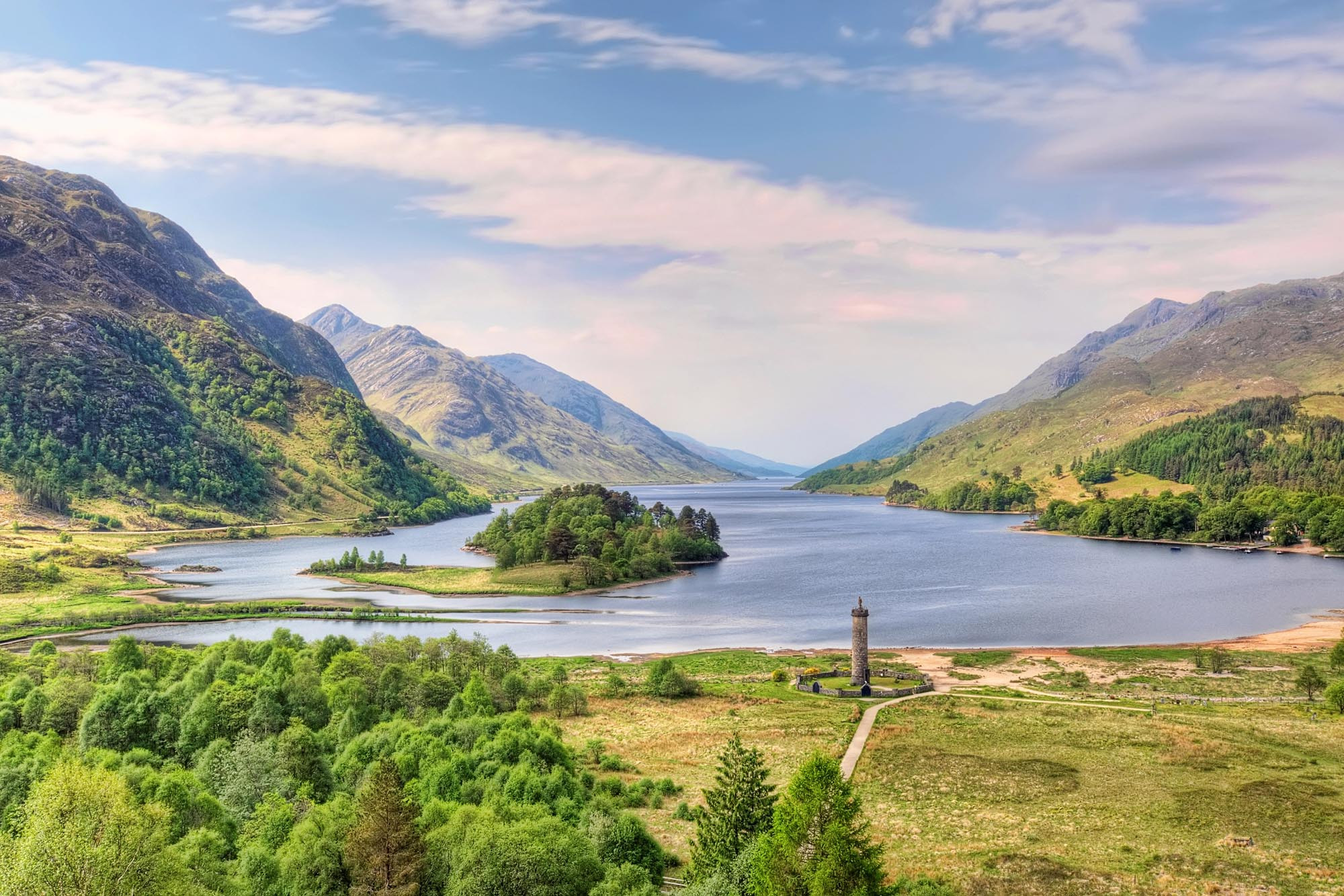
In August 1745, Alasdair MacMhaighstir Alasdair was among the first men to rally to Bonnie Prince Charlie's standard at Glenfinnan, that iconic spot at the head of Loch Shiel where the Jacobite rising of 1745 formally began. He had spent the preceding years writing fiercely pro-Jacobite poetry, and there is a compelling tradition that his verses, read aloud across the Highlands and even at the French court, helped persuade Prince Charles Edward Stuart to sail from France and launch his audacious campaign to reclaim the British throne for the House of Stuart.
At Glenfinnan, Alasdair received the first captain's commission in the Prince's army and took command of around fifty men he had personally recruited from Ardnamurchan. He served with the Clan Ranald Regiment throughout the entire campaign - the exhilarating march south to Edinburgh, the victory at Prestonpans, the advance into England, and the long retreat north that ended in catastrophe on the windswept moorland of Culloden on 16 April 1746. He was also appointed Prince Charles's personal Gaelic tutor, a role that placed him at the very heart of the Jacobite court.
After the crushing defeat at Culloden and the brutal reprisals that followed, Alasdair spent months in hiding with his wife and children, sheltering in the woods and remote glens of his own country. He re-emerged only after the Act of Indemnity of 1747 offered a degree of safety to former Jacobite soldiers.
The Poet in Exile - A Book Burned by the Hangman
In 1749, Alasdair was appointed Baillie - a magistrate and land agent - for the island of Canna, a post granted by the Captain of Clanranald. The appointment gave him a measure of security, but his restless creative energy was building towards something extraordinary. In 1751, he travelled to Edinburgh to publish his collected poems under the title Ais-Eiridh na Sean Chánoin Albannaich - The Resurrection of the Ancient Scottish Language. It was a defiant, magnificent title for a collection that contained some of the finest Gaelic poetry ever written: nature poems of vivid intensity, elegies for a lost Highland way of life, and searing political verse attacking the Hanoverian government and celebrating the Jacobite cause.
The authorities were not amused. The unsold copies of the book were seized and burned by the public hangman in Edinburgh's market square in 1752 - a striking image of state censorship that only burnished Alasdair's reputation. Remarkably, twelve copies survived, and the collection went on to inspire what scholars now call the Golden Age of Gaelic poetry, encouraging a generation of bards and helping to establish Scottish Gaelic as a living literary language rather than a dying relic.
Around the same time, Alasdair published a separate poem called An Airce - The Ark - which was so ferociously anti-Campbell in its sentiments that it too caused a scandal. Fearing prosecution, he fled Edinburgh and spent the following years moving between the remote communities of the western Highlands - Glenuig, Inverie in Knoydart, Morar, and Arisaig - occasionally falling foul of local clergy who disapproved of the more irreverent and sensual passages in his verse.
Legacy and Later Life
Alasdair's greatest poetic achievement is widely considered to be Birlinn Chloinne Raghnaill - The Birlinn of Clanranald - an epic poem describing a sea voyage from South Uist to Ireland in a traditional Highland galley. The poem is celebrated for the extraordinary precision and vividness of its description of the sea, the rigging, the crew, and the storm, written by a man who clearly knew his subject from experience. It stands comparison with the great sea poems of any literature and has been translated into English multiple times, most recently by poet Alan Riach in 2015.
The scholar Derrick S. Thomson described Alasdair as "a man of strong views and violent emotions but with a hard intellectual cast of mind also; he was learned in the Gaelic tradition and open to influence from his other reading; he was an innovator and a conservative; and his poetry is full of the stimulating contradictions that proceed from these diversities." Modern Celticist Robert Dunbar has called him "the greatest poet of the eighteenth-century Golden Age of Gaelic poets."
Alasdair spent his final years settled at Arisaig on the west coast of Inverness-shire, where the Captain of Clanranald had granted him land. He travelled widely to meet and correspond with other Gaelic bards, including his close friend John MacCodrum, the official bard to Sir James MacDonald of Sleat. He died around 1770 at Sannaig near Arisaig, and was buried in St Maelrubha's Roman Catholic cemetery there. Although the exact location of his grave has been forgotten, a bronze wall plaque was erected in 1927 by "a few Jacobite admirers in New Zealand and some fellow clansmen at home, in recognition of his greatness as a Gaelic poet."
His son Ranald published a collection of Gaelic poetry in Edinburgh in 1776, preserving several of his father's works for future generations. In 2020, after more than two centuries during which prudish editors had censored the more outspoken passages, the first complete and uncensored collection of Alasdair's poetry was finally published - a fitting recognition of a man who spent his entire life refusing to be silenced.
Visiting Alasdair's Scotland
The landscape that shaped Alexander MacDonald's life and poetry remains one of the most hauntingly beautiful in Scotland. Loch Shiel, where he was born at Dalilea, stretches south from Glenfinnan - the very spot where he rallied to the Jacobite cause in 1745 and where the famous monument now stands above the water. The Glenfinnan Monument and Visitor Centre, managed by the National Trust for Scotland, tells the story of that fateful day in August 1745. The village of Arisaig, where he spent his final years and is buried, lies at the end of the Road to the Isles - a journey through some of the most dramatic coastal scenery in the Highlands, with views across to Eigg, Rum, and the Outer Isles that he celebrated in his verse.


