
The Man Who Restored a King: Scotland's Most Powerful Military Governor
George Monck, 1st Duke of Albemarle, is one of the most remarkable figures of 17th-century British history - a soldier of fortune who switched sides during the Civil War, ruled Scotland with an iron fist for the Parliamentarians, and then quietly engineered one of the most audacious political reversals in history: the bloodless restoration of King Charles II. Born in Devon but defined by Scotland, Monck's story is one of pragmatism, ambition, and extraordinary timing.
Early Life and a Soldier's Education
George Monck was born on 6 December 1608 at the family estate of Potheridge in Devon, the second son of Sir Thomas Monck, a member of the landed gentry whose finances had fallen into difficulty. His mother, Elizabeth Smith, was the daughter of one of Exeter's most prosperous merchants, a man who served as Mayor of the city three times. Such mixed origins - gentry pride combined with commercial pragmatism - may well have shaped the calculating, methodical character Monck would display throughout his life.
His military career began at the age of 16, when he joined the English expedition against Cadiz in 1625 as an ensign under his cousin Sir Richard Grenville. It did not begin quietly. Back in England, Monck attacked the Under-Sheriff of Devon after the official arrested his father for debt, leaving the man with injuries that proved fatal. To escape prosecution, Monck returned to the continent, joining English attacks on La Rochelle in 1627 and 1628. In 1629 he volunteered for the Dutch army under the Prince of Orange, fighting against the Spanish in the Thirty Years' War. He spent nine years in Dutch service, gaining an outstanding professional education in siege warfare, battlefield tactics, and military discipline that set him apart from many English officers of his generation.
Civil War and Changing Allegiances
Returning to England in 1638, Monck took up a position in King Charles I's army during the Bishops' Wars against Scotland, serving as lieutenant-colonel in the Earl of Newport's regiment. He distinguished himself at the Battle of Newburn in 1640, where he helped save the English artillery from a Scottish assault. His growing reputation as a professional soldier saw him appointed to command in Ireland, where he served during the Irish Rebellion of 1641 under the Earl of Ormond. He fought effectively in Leinster, though his record was darkened by two massacres of surrendered garrisons in County Kildare in 1642.
When Charles I brought an Irish army to England to support the Royalist cause in the Civil War, Monck came with it. In January 1644 he was captured by Parliamentarian forces at the Battle of Nantwich and spent the next two years as a prisoner in the Tower of London. He used the time productively, writing his treatise Observations on Military and Political Affairs, a work that would later be published and admired for its practical wisdom. On his release in 1647, Monck shifted allegiance to Parliament - a pragmatic move not unusual among professional soldiers of the era - and was given command of Parliamentary forces in Ireland, though he made little headway there against the stubborn resistance he encountered.
The Conquest of Scotland
Monck's association with Scotland began in earnest in 1650, when he joined Oliver Cromwell's campaign to subjugate the country. He commanded Monck's Regiment of Foot, formed on 23 August 1650 from elements of existing regiments - some of whose soldiers had been reluctant to serve under an officer with his Royalist past. That reluctance was soon overcome. Monck and his regiment played a crucial role at the Battle of Dunbar on 3 September 1650, one of Cromwell's most decisive victories, routing a Scottish army that had outnumbered the English force.
When Cromwell marched south to pursue Charles II's army into England, he left Monck in command in Scotland to complete the conquest. It was a task Monck undertook with characteristic thoroughness - and occasional ruthlessness. He took Stirling Castle after a ten-day siege on 14 August 1651 and captured Dundee on 1 September. At Dundee, in a grim act of exemplary punishment, he allowed his troops to sack the city. The assault killed up to 2,000 of the city's 12,000 inhabitants and destroyed 60 ships in the harbour - an episode that cast a long shadow over his time in Scotland. By 26 May 1652, the last Royalist stronghold, Dunnottar Castle on the Kincardineshire coast, had fallen to his forces.
Under the Tender of Union subsequently imposed on Scotland, the Scots were granted 30 seats in a united Parliament in London, and Monck was appointed military governor of Scotland - in effect, its ruler. He governed from Edinburgh, maintaining a network of strong garrisons at key points including Inverness and Ayr. Royalist uprisings were suppressed, and Monck did not hesitate to use extreme measures: prisoners who could not be dealt with otherwise were shipped as slaves to the West Indies. Yet contemporary accounts also note that his rule, while firm, was more orderly and less arbitrary than many feared. He extended effective central control into the Highlands and Scottish islands to a degree previously unknown to any English administration.
Admiral and Highland Campaign
Such was Monck's versatility that in 1653 he was called upon to take charge of part of the English fleet during the First Anglo-Dutch War - despite having no significant prior naval experience. He proved himself a capable commander at sea, introducing innovations including signal flags and the line-of-battle formation that would influence naval warfare for generations. The war marked the beginning of England's rise as a dominant naval power at the expense of the Dutch.
In April 1654 Monck returned to Scotland to suppress a fresh Royalist uprising led by Major-General John Middleton, who had landed at Dornoch from Holland. The decisive engagement came on 19 July 1654, when Monck's forces surprised Middleton at Dalnaspidal near Loch Garry in the southern Highlands, effectively ending organised Royalist resistance in Scotland for the remainder of the Interregnum. Monck continued as governor, watching developments in England with his characteristic patience while maintaining order in Scotland with a firm hand.
The March South and the Restoration
When Oliver Cromwell died in September 1658, the political situation in England rapidly unravelled. His son Richard proved unable to hold power, and competing factions - Army grandees, republicans, Presbyterians, and secret Royalists - pulled the Commonwealth in different directions. Monck, observing events from Edinburgh, kept his own counsel. He maintained contact with Charles II in Holland through the architect William Bruce, who acted as a discreet go-between, but he gave nothing away publicly and refused to be drawn into premature action.
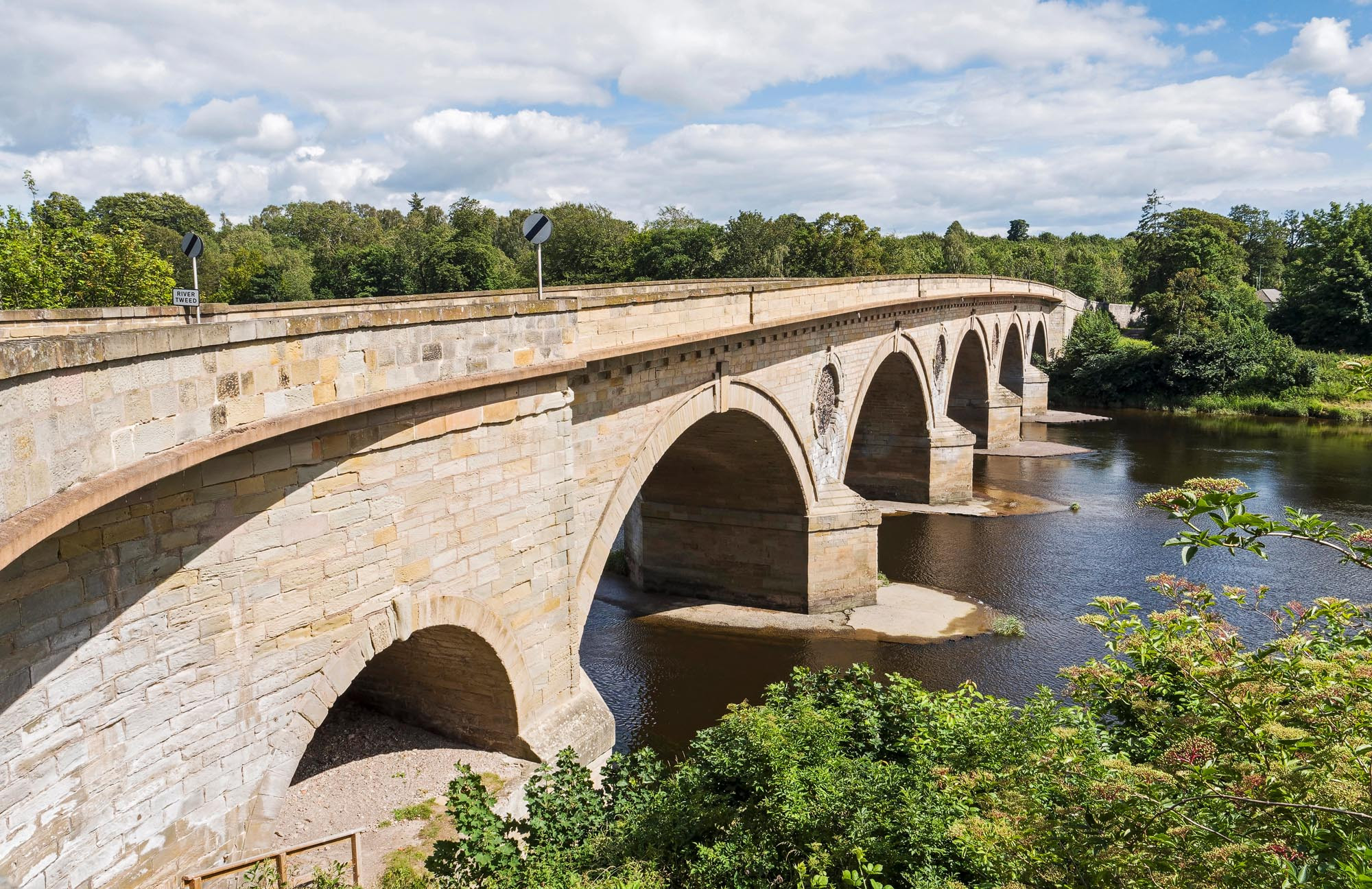
When Major-General John Lambert dissolved the Rump Parliament by force in October 1659, Monck made his move - though still with extraordinary caution. He declared against the military regime, demanded the restoration of Parliament, and began preparing his army. On 24 November 1659 he was appointed commander in chief of all Parliamentary forces in Britain. In December he gathered an army of around 5,000 infantry and 2,000 cavalry at Coldstream, right on the Scottish-English border. On 1 January 1660, he began his march south. The troops who set out from Coldstream that New Year's Day included Monck's own Regiment of Foot, which would later adopt the name the Coldstream Guards - one of the oldest and most celebrated regiments in the British Army, a living legacy of that march.
Monck arrived in London on 2 February 1660. His intentions remained opaque throughout - even his closest officers did not know what he planned. Having assumed effective control of the capital, he recommended to Parliament on 1 May that they invite Charles II to return. It was an act of consummate political timing. No blood was spilled, no battle was fought. Charles II landed at Dover on 25 May 1660, and Monck was there on the shore to meet him. According to one account, the king embraced and kissed him. The following day at Canterbury, Monck was knighted and invested with the Order of the Garter.
Rewards and Later Years
Charles II's gratitude was generous and immediate. On 7 July 1660, Monck was raised to the peerage as Baron Monck of Potheridge, Earl of Torrington, and Duke of Albemarle - titles chosen to reflect his claimed descent from the great medieval Beauchamp family. He was appointed to the Privy Council, made Master of the Horse, Lord Lieutenant of Devon, and Lord Lieutenant of Ireland (a role he delegated rather than performed in person). He received a pension of £7,000 per year, extensive estates in England and Ireland, and in 1663 a share of a vast grant of land in North America that became the Province of Carolina. Albemarle Sound in what is now North Carolina still bears his name.
Monck remained a significant figure at court but showed little appetite for the intrigues of Restoration politics. When the Second Anglo-Dutch War broke out in 1665, he returned to sea, sharing command with Prince Rupert. He won considerable public admiration for remaining in London throughout the Great Plague of 1665, when most of the government had fled to Oxford. He was also present during the Great Fire of London in 1666. Samuel Pepys, who knew him, described him as "the heaviest man in the world, but stout and honest to his country" - a verdict that captures something essential about a man whose greatest qualities were solidity, reliability, and patience rather than brilliance.
George Monck died on 3 January 1670. His wife Anne, whom he had married in 1653, died less than a month later, on 29 January. Their only surviving son, Christopher, 2nd Duke of Albemarle, died childless in 1688, bringing the dukedom to an end. Monck was buried in Westminster Abbey, where his tomb stands in the north aisle of Henry VII's Chapel. His funeral, paid for by a grateful king, was long delayed by bureaucratic complications and did not take place until 30 April 1670 - but when it came, it was celebrated with great pomp.
Monck's Legacy in Scotland
George Monck left a complex legacy in Scotland. He was an occupier and a conqueror, responsible for the sacking of Dundee and the deportation of prisoners. Yet he also brought a degree of order and efficient administration that Scotland had rarely experienced, extending central authority into regions that had long been beyond any government's reach. His base at Edinburgh, his garrisons across the country, and his defeat of repeated Royalist uprisings shaped Scottish politics for a crucial decade.
The most enduring monument to his time in Scotland stands not in any Scottish city but on parade grounds across the world - in the form of the Coldstream Guards, the regiment that bears the name of the small Border town from which he began his march south on New Year's Day 1660. That march changed British history, and Scotland, for all its ambivalence about the man who governed it by force, played an essential part in making it possible.


