
The Cannie Scots Granny Who Conquered the World with a Secret Recipe
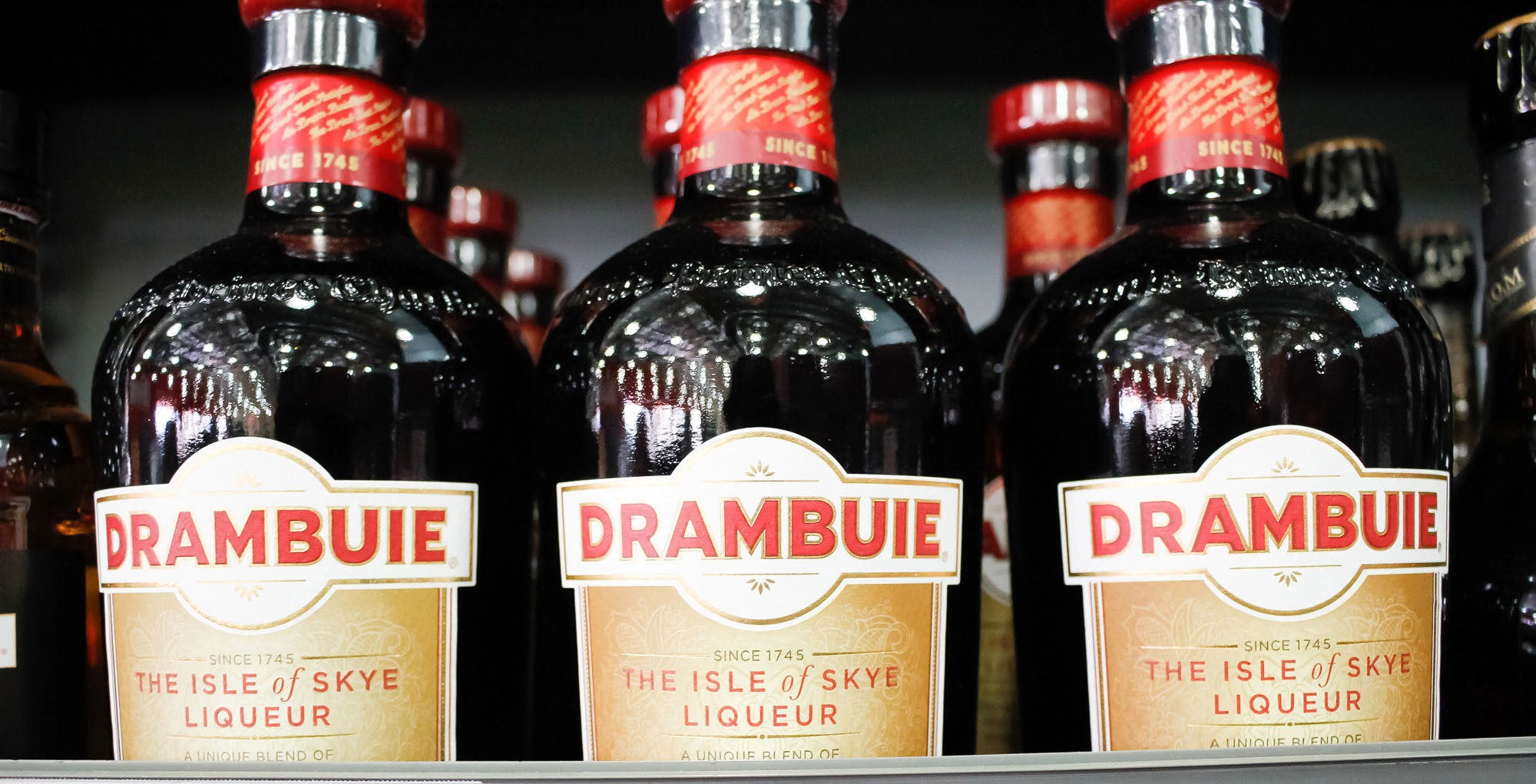
Behind one of Scotland's most beloved exports - Drambuie, the golden whisky liqueur steeped in Jacobite legend - stood a determined woman from Caithness whose business instincts, flair for showmanship, and iron discretion transformed a modest family drink into a global phenomenon. Georgina MacKinnon, known to all as Gina, was born on 1 March 1884 in Wick, the daughter of John Davidson, a fish processor, and Maggie Russell. Few who knew her modest beginnings in that wind-battered northern town could have predicted that she would one day guard a million-dollar secret atop the Eiffel Tower, travel the world flanked by her own bagpipers, and earn a royal honour for her services to British exports.
From Schoolteacher to Entrepreneur
Around 1910, Georgina left Wick for Edinburgh, taking up a post as a schoolteacher. At her local church she met Malcolm MacKinnon - known familiarly as Calum - who had moved to Edinburgh from Skye a decade earlier and was working for the spirit wholesale company W. MacBeth and Son. The two shared not just a faith but, it would soon emerge, a remarkable eye for commercial opportunity. They married in 1915, the year after Malcolm had made a bold and pivotal move: establishing The Drambuie Liqueur Company Limited as a standalone entity, having persuaded MacBeth's creditors to allow him to take over the struggling business.
It was Gina herself, according to company history, who had urged Malcolm to seize the opportunity. With war clouds gathering over Europe in the summer of 1914, it was a daring gamble - but one that would eventually pay extraordinary dividends.
The Legend Behind the Liqueur
The story of Drambuie is inseparable from Scottish history. According to tradition, when Bonnie Prince Charlie fled Scotland after his defeat at the Battle of Culloden in 1746, the Clan MacKinnon sheltered him and helped him reach the mainland, from where a French ship carried him to safety. In gratitude, the Prince - or perhaps a member of his entourage - is said to have gifted the clan the recipe for his personal herbal elixir. Some accounts attribute the recipe to his royal apothecary, and there is even a medicine box, discovered after the retreat from Culloden and still held at the Royal College of Physicians in Edinburgh, that lends a tantalising layer of plausibility to the tale.
The MacKinnons made the liqueur in small quantities for their own consumption for over a century. In the 1870s it began to be served at the Broadford Inn on Skye (now the Broadford Hotel), and by 1893 the name Drambuie had been registered as a trademark. The name itself comes from the Gaelic - either an dram buidhe meaning "the yellow drink" or an dram buidheach meaning "the drink that satisfies". By 1909, Malcolm MacKinnon had begun producing it commercially for the first time, though initial sales were modest: just twelve cases in the first year. By 1916, however, Drambuie had become the first liqueur to be stocked in the cellars of the House of Lords, who declared it "of excellent quality and much appreciated".
Taking the Helm
When Malcolm MacKinnon died in 1945, Gina assumed the role of chairwoman of the Drambuie Liqueur Company. She was sixty-one years old. Rather than stepping back from the business, she threw herself into it with extraordinary energy. With her brother serving as vice-chairman and her son Norman taking on the day-to-day management as Managing Director, Gina carved out a unique role for herself: that of the brand's globe-trotting ambassador and guardian of its most precious asset - the secret recipe.
The company expanded considerably in the post-war years. Production moved to a purpose-built facility on Edinburgh's Easter Road, and new, larger premises quadrupled blending and bottling capacity, making it the largest liqueur-producing plant in the country. Gina continued to personally prepare the secret concentrate - a mysterious blend of whisky, honey, herbs and spices - at her home, Williamcraigs House in Linlithgow, a turreted Scottish baronial mansion listed by Historic Scotland as the place where Drambuie was developed. Each month, the concentrate was driven under lock and key to company headquarters, where just four small vials were sufficient to produce 1,200 gallons of Drambuie.
The Art of Mystery - and Marketing
Gina MacKinnon was a natural storyteller who understood instinctively that Drambuie's greatest asset was not simply its taste but its mystique. She cultivated an aura of intrigue around the recipe with considerable skill, starting the tradition that it would be known only to a single female member of the MacKinnon family at any one time. The recipe had been written down just once, she maintained, and that copy sat in a bank vault. She would buy additional random ingredients whenever she went shopping, to throw any would-be spies off the scent.
On her extensive marketing tours - particularly to the United States, where Drambuie had moved quickly to capitalise on the end of Prohibition in 1933 - Gina travelled with her own pair of bagpipers, a flamboyant touch that made her instantly memorable. Her snow-white hair and seemingly slight frame belied a formidable business mind, and American journalists adored her. A famous 1961 headline in the Sunday Dispatch called her "the Cannie Wee Grannie with the million-dollar secret", while one interview, conducted at the top of the Eiffel Tower, found her cheerfully refusing to reveal a single detail of the recipe to the persistent journalist.
The strategy worked brilliantly. In 1953, Drambuie won gold medals at international competitions, and fascination with the "sole keeper of a recipe made in the turret of her castle" kept the brand in the press. Between 1960 and 1970, annual sales soared to 750,000 cases, with the American market leading the charge.
The Rusty Nail and the Rat Pack
A key moment in Drambuie's rise to international fame came through an unlikely alliance with Hollywood glamour. The Rusty Nail - a simple cocktail combining Scotch whisky with Drambuie over ice - had existed in various forms since its debut at the British Industries Fair in 1937, but it had no agreed name until 1963, when Gina MacKinnon herself formally endorsed and trademarked "Rusty Nail" as the drink's official title. The timing was perfect. Frank Sinatra, Dean Martin, and Sammy Davis Jr - the legendary Rat Pack at the height of their cultural power - became associated with the cocktail, lending it an effortless cool that advertising money could never have bought. Today the Rusty Nail remains one of the International Bartenders Association's official "Unforgettable" cocktails.
Legacy and Honours
In June 1964, Georgina MacKinnon was awarded an OBE by the Queen in recognition of her outstanding services to British exports. It was a fitting tribute to a woman who had spent nearly two decades carrying Scotland's most romantic liqueur to every corner of the globe.
In her later years, Gina stepped back from the chairmanship, passing the precious recipe to her daughter-in-law and thus maintaining the tradition of female custodianship that she herself had established. She retired to breed cattle near Linlithgow, at Williamcraigs House - the same turreted mansion from which she had dispatched the secret concentrate to Edinburgh each month. She continued working almost to the very end of her life, and died on 11 April 1973, aged eighty-nine.
Georgina MacKinnon left behind a company transformed beyond recognition. From twelve cases sold in its first commercial year to 750,000 cases annually at its peak; from a small Edinburgh office to a worldwide brand drunk by Rat Pack legends and royal households alike - the growth of Drambuie during her tenure was remarkable. In 2014, the brand was acquired by William Grant and Sons for an estimated £100 million, a sum that speaks volumes about the foundations Gina MacKinnon had laid. The secret recipe, that carefully guarded inheritance from Skye and from the Jacobite past, remains known to very few - a legacy as golden and enduring as the liqueur itself.


