
A Scottish Engineer Who Revolutionised Victorian Industry
Sir William Fairbairn stands as one of the towering figures of Victorian engineering, a man whose innovations in bridge design, shipbuilding, and structural engineering transformed 19th-century industry. Born in humble circumstances in the Scottish Borders, Fairbairn rose through determination, ingenuity, and an unshakeable commitment to scientific experimentation to become a Fellow of the Royal Society and the 1st Baronet of Ardwick. His work on the revolutionary Britannia Bridge, his pioneering use of wrought iron in construction, and his systematic investigations into structural failures established principles that continue to influence engineering today.
Early Life and Apprenticeship
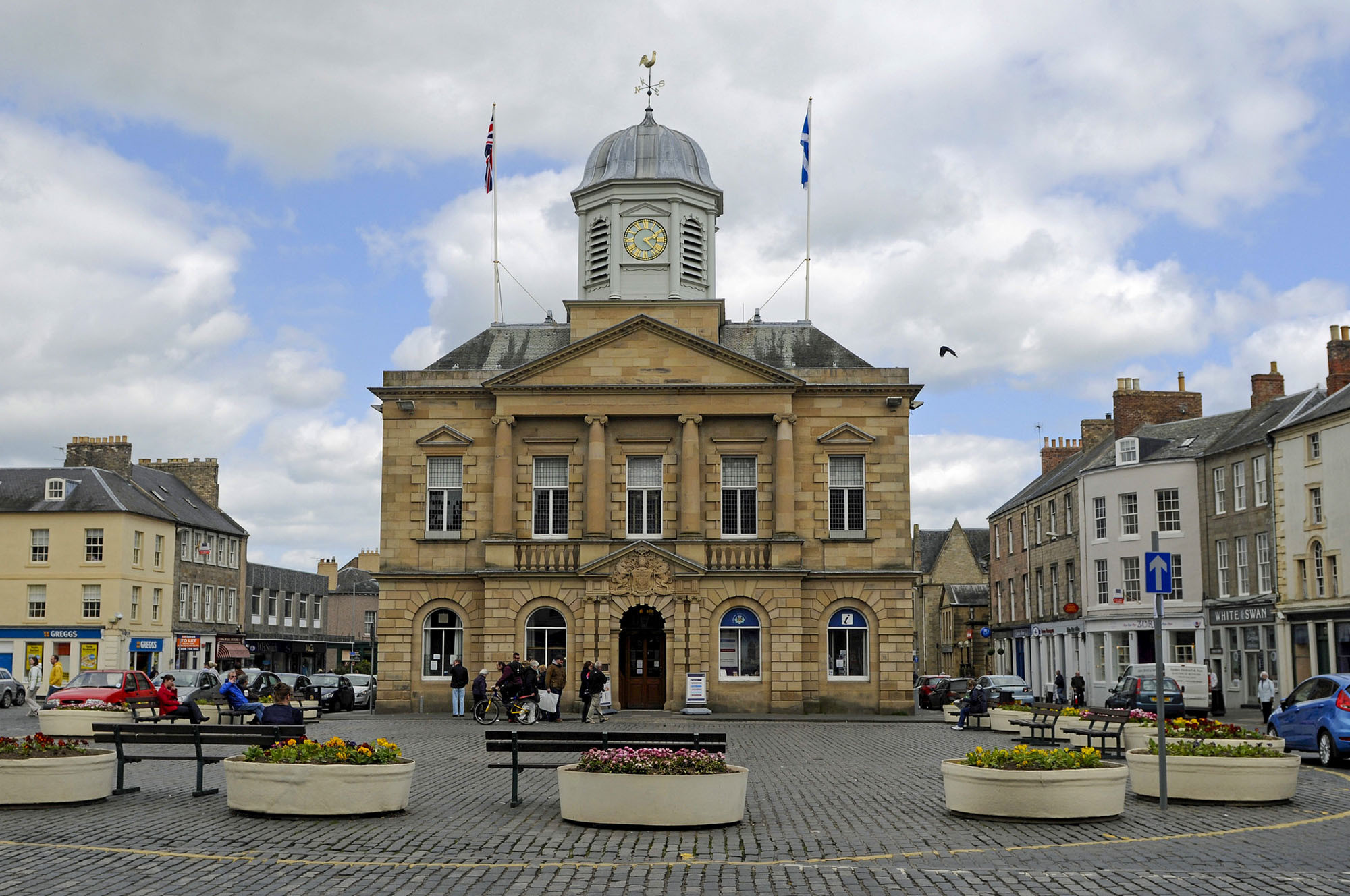
William Fairbairn was born on 19 February 1789 in Kelso, a market town in Roxburghshire (now in the Scottish Borders). He was the eldest son of Andrew Fairbairn, who had served in the navy during the American War of Independence before returning to Scotland to work as a farm steward and later a farmer. His mother was Margaret Henderson, daughter of a Jedburgh tradesman. The family lived a peripatetic existence, moving frequently between farms in the Scottish Highlands, North Yorkshire, and Tyneside as Andrew sought agricultural employment.
Young William received his initial education at parish schools, notably at Munlochy in Ross-shire between 1799 and 1803, where he learned reading and arithmetic. His uncle also taught him bookkeeping. The family's frequent relocations meant an interrupted education, but these experiences fostered in Fairbairn a resourcefulness and practical problem-solving ability that would serve him throughout his career. An early sign of his mechanical aptitude came when he created a makeshift push chair to help transport his younger brother Peter, who was unwell. Peter would later become Sir Peter Fairbairn, a distinguished engineer in his own right, knighted for his contributions to textile machinery and eventually serving as Mayor of Leeds.
In 1803, while the family was living in Knaresborough, the 14-year-old William took his first job working on a bridge being constructed by the renowned engineer John Rennie. This early exposure to civil engineering proved formative, despite an accident that left him injured. Later that year, the Fairbairns moved to a farm at Percy Main Colliery near Newcastle upon Tyne, a relocation that would shape William's future. At the colliery, he began working with machinery, and in 1804, at the age of 15, he was apprenticed to John Robinson, a millwright at Percy Main.
The apprenticeship lasted seven years and proved transformative. Fairbairn demonstrated such technical ability that he was appointed to look after the engines at Percy Main Colliery. It was during this period that he formed a friendship that would prove significant throughout his career - he became acquainted with a fellow young engineer named George Stephenson, whose son Robert would later become one of Fairbairn's most important collaborators.
From Manchester to Millwright
In March 1811, upon completing his apprenticeship, Fairbairn left Newcastle for London, seeking greater opportunities. He worked briefly for the engineering firms of Rennie and Penn, gaining exposure to advanced engineering practices. However, the bustling capital did not suit him, and in 1813, at the age of 24, he relocated to Manchester, the beating heart of Britain's Industrial Revolution.
Manchester was experiencing explosive growth as the world's first industrial city, its cotton mills driving unprecedented economic expansion. Fairbairn initially found work with Adam Parkinson and later with Thomas Hewes. However, a disagreement with Hewes in 1816 over the design of the Blackfriars Bridge over the River Irwell led to Fairbairn striking out on his own. On 16 June 1816, he married Dorothy, and the following year, at the age of 28, he entered into partnership with a former shop-mate, James Lillie, establishing the mill-machinery business Fairbairn and Lillie Engine Makers.
The partnership proved successful, with the firm becoming renowned for its mill machinery during Manchester's cotton boom. Fairbairn demonstrated not only technical excellence but also innovative business practices. When his workforce went on strike over riveting work, he responded by inventing one of the world's first riveting machines, a device that would later prove crucial in his shipbuilding and bridge construction enterprises.
However, Fairbairn's ambitions extended beyond mill machinery. He was fascinated by the structural properties of iron and began collaborating with Eaton Hodgkinson, a leading theorist on the strength of materials, to determine optimal cross-sections for iron beams. Their partnership in the 1820s and 1830s advanced understanding of how iron behaved under load, research that would inform Fairbairn's later revolutionary work.
Innovation in Iron and Early Bridge Work
In the 1820s, Fairbairn's interest in iron structures led him into railway bridge design. He and Hodgkinson designed the bridge over Water Street for the Liverpool and Manchester Railway, which opened in 1830 - one of the pioneering railways of the age. This project marked Fairbairn's entry into a field where he would make his most lasting contributions.
The partnership with Lillie dissolved in 1832, as Lillie did not share Fairbairn's enthusiasm for diversifying into new areas of engineering. The business was renamed William Fairbairn and Sons, allowing Fairbairn the freedom to pursue his broader vision. When the cotton industry fell into recession in the late 1820s and early 1830s, Fairbairn proved his adaptability by diversifying into the manufacture of boilers for locomotives and, most significantly, into shipbuilding.
Pioneering Iron Shipbuilding
Fairbairn recognised that iron offered significant advantages over wood for ship construction, but many in the maritime industry remained sceptical. Perceiving a ship as essentially a floating tubular beam, he challenged existing design standards dictated by Lloyd's of London. In 1830, Fairbairn and Lillie built the iron paddle-steamer Lord Dundas in Manchester, one of the earliest iron vessels constructed.
However, building ships in an inland city presented obvious logistical challenges. In 1834-35, Fairbairn established a dedicated shipyard at Millwall on the River Thames in London, marking the creation of the earliest iron-shipbuilding yard of any significant size in England. Over the next 15 years, the Millwall yard built more than 80 iron vessels, introducing advanced construction techniques and proving the viability of iron shipbuilding on the Thames.
Among the notable vessels constructed at Millwall were the Pottinger, weighing 1,250 tons and built for the Peninsular and Oriental Company, HMS Megaera for the British Government, and numerous other vessels for commercial and military clients. Fairbairn's shipbuilding work took him beyond Britain - his designs and expertise spread to Brazil, Sweden, Russia, France, Turkey, and Australia, establishing his international reputation.
In 1839, Fairbairn added locomotive construction to his repertoire at Millwall. Remarkably, despite the works having no railway access, the yard completed over 400 locomotives by 1862 for major railway companies including the Great Western Railway and the London and North Western Railway. In 1848, Fairbairn retired from direct involvement in shipbuilding, but his innovations had permanently altered the industry.
The Lancashire Boiler and Safety Innovations
One of Fairbairn's most important practical innovations came in 1844 with the development of the Lancashire boiler, featuring twin flues. His investigations revealed that cylindrical boilers experienced dangerous hoop stress that caused them to crack along their length. To address this, he designed multi-tube boilers using smaller shells instead of one large cylinder, significantly reducing stress concentrations and improving safety.
This work was driven by Fairbairn's deep concern for industrial safety. The Victorian era was marked by frequent and catastrophic boiler explosions that killed and maimed workers. Fairbairn became one of the first engineers to systematically investigate such failures, conducting detailed studies and publishing his findings. His research into boiler explosions led him to initiate a boiler inspection service, contributing to the establishment of the Manchester Steam Users' Association in 1854, the same year he became President of the Institution of Mechanical Engineers.
The Britannia Bridge - Engineering Triumph
Fairbairn's most celebrated achievement came in the 1840s when Robert Stephenson, son of his old friend George, faced the challenge of carrying the Chester and Holyhead Railway across the Menai Strait between mainland Wales and the island of Anglesey. The strait was a critical link in the route connecting London to the port of Holyhead, enabling passage to Dublin and Ireland. The existing Menai Suspension Bridge carried only road traffic, and the Admiralty insisted that any new bridge maintain a clearance of at least 100 feet above high water to allow tall sailing ships to pass beneath.
Stephenson retained both Fairbairn and Hodgkinson as consultants. The challenge was immense - the bridge required two main spans of 460 feet, far exceeding any previous wrought iron construction. The longest wrought iron span to that date had been merely 31 feet 6 inches, barely one-fifteenth of what was required. Stephenson initially envisaged that the structure would need support from suspension chains.
It was Fairbairn who conceived the revolutionary solution - a rectangular tube or box girder through which trains would run. This tubular bridge design was entirely novel, treating the bridge as a rigid beam rather than a suspended structure. Fairbairn drew on his shipbuilding experience, recognising the parallels between the forces acting on a ship's hull and those that would affect a tubular bridge.
To develop the design, Fairbairn conducted extensive testing. At his Millwall shipyard, he constructed a 75-foot scale model and subjected it to rigorous experiments. These tests revealed that rectangular box girders performed better than elliptical tubes, and that the top of the tube needed cellular construction for additional strength, while the side panels required stiffening. Through repeated testing, Fairbairn demonstrated that the tubes could be made sufficiently strong to support their own weight plus an additional 2,000 tons of evenly distributed load - the weight of multiple trains.
Crucially, Fairbairn's experiments proved that auxiliary suspension chains were unnecessary. The tubular structure itself, properly designed, could bear the entire load. This finding was revolutionary - it meant the bridge could be a true rigid structure. Construction began in 1846, with the tubes assembled on shore, then floated into position and hydraulically lifted into place, an innovative construction method in itself.
The design was first tested on a smaller scale with the Conway Bridge, which opened in 1848 and remains in its original tubular form today, still in use more than 175 years later. The success at Conway paved the way for the much larger Britannia Bridge, which opened on 5 March 1850. With its four spans totalling 1,511 feet and comprising two parallel tubular continuous beams each weighing 5,270 tons, the Britannia Bridge was six times larger than any girder bridge previously constructed - the greatest increment in span in the entire history of bridge building up to that time.
The bridge was decorated with four enormous limestone lions sculpted by John Thomas, standing as guardians at either end. For its era, it was described as a bridge of "magnitude and singular novelty," and despite later heavier loadings, it proved to be one of the most easily maintained and successful railway bridges in the United Kingdom. Stephenson and Fairbairn's tubular design influenced many subsequent engineers, including Isambard Kingdom Brunel, and its principles remain relevant to modern bridge construction.
The Britannia Bridge operated reliably for 120 years until a catastrophic fire in May 1970 damaged the tubes beyond repair. The bridge was subsequently rebuilt with steel arch construction, reopening for rail traffic in 1972 and later expanded to carry road traffic as well by 1980.
Structural Safety and Scientific Investigation
Fairbairn was acutely aware that Victorian engineering was operating at the frontiers of knowledge, and not all ventures succeeded. Bridge collapses, mill failures, and boiler explosions were all too common. Fairbairn became a pioneer in the systematic investigation of structural failures, applying scientific methodology to understand why structures failed and how to prevent future disasters.
His report on the collapse of a mill at Oldham exposed poor design methods used by architects when specifying cast iron girders for heavily loaded floors. In another significant investigation, he condemned the use of trussed cast iron girders and advised Robert Stephenson not to use the concept in a bridge being built over the River Dee at Chester in 1846. Tragically, his advice went unheeded. The Dee Bridge collapsed in May 1847, killing five passengers on a train crossing at the time. This disaster raised profound concerns about the integrity of railway bridges across the entire network.
Fairbairn's response was to intensify his research. He conducted some of the first serious studies of metal fatigue - the effects of repeated loading on wrought and cast iron girders. Using techniques such as repeatedly dropping a 3-tonne weight on iron until it fractured, he showed that crack growth from incipient flaws could lead to catastrophic failure. His work demonstrated that fracture could occur not just from single overload events but from cumulative damage over time.
From 1861, at the request of the UK Parliament, Fairbairn began large-scale testing of iron structures, establishing protocols that helped make engineering more scientific and systematic. His experimental approach - testing prototypes, measuring results, and refining designs based on data - represented a fundamental shift from intuition-based engineering to evidence-based practice.
Salts Mill and Later Major Works
Between 1851 and 1853, Fairbairn undertook what he considered his masterwork of mill construction - the spinning and weaving alpaca mill at Saltaire, near Bradford, commissioned by Sir Titus Salt. When built, it was the largest factory in the world. Fairbairn was responsible for its entire iron structure, the layout of machinery, the design and manufacture of boilers and steam engines, and nearly two miles of line-shafting that transmitted power throughout the building.
The scale was staggering - ten multi-tube boilers generated steam to drive two independent condensing engines. The mill could spin enough wool to serve 1,200 power looms, weaving 5,000 miles of cloth per year. It had its own gasworks and gasometer providing 5,000 lights. Safety was paramount - Fairbairn personally tested 400 iron beams to ensure no flaws existed in the castings. Every known improvement was adopted to maintain comfortable temperature and healthy ventilation for the thousands of workers.
Fairbairn also designed a tubular-girder bridge over the River Aire running through Saltaire. Proud of this commission, he published the mill's plans in a book that ran to four editions and was translated into French and Spanish, spreading his engineering principles internationally.
In 1854, during the Crimean War, Fairbairn designed a floating corn mill for Sebastopol, demonstrating the versatility of his engineering expertise. Throughout his career, he built over 1,000 bridges, employing his pioneering designs using long riveted tubular section girders. While the massive wrought iron tubular bridges like Britannia proved too costly for widespread adoption, Fairbairn developed more economical wrought iron trough bridges that incorporated the principles he had refined.
Author, Educator, and Scientific Leader
Fairbairn was not merely a practical engineer but also a significant contributor to engineering literature and education. He wrote and lectured extensively to learned societies, and several of his books became standard texts for practising engineers. His two-part work "Mills and Millwork" (1861 and 1863) went through three editions in his lifetime. He also published influential works including "Iron, Its History, Properties, and Processes of Manufacture" (1861), "Treatise on Iron Ship Building" (1865), "Useful Information for Engineers" (1856), and "An Account of the Construction of the Britannia and Conway Tubular Bridges" (1849).
His educational influence extended through the engineers he trained. Fairbairn mentored a significant number of gifted engineers, including five who became professors of engineering, spreading his scientific and experimental approach throughout the profession.
Fairbairn was a lifelong learner himself, joining the Institution of Civil Engineers in 1830 and maintaining active membership throughout his career. He was elected a Fellow of the Royal Society in 1850 - one of the highest honours in British science. In 1852, he was elected to the Académie des Sciences in Paris, recognising his international stature. From 1854 to 1855, he served as the third President of the Institution of Mechanical Engineers, succeeding George Stephenson and Robert Stephenson. He was also President of the British Association for the Advancement of Science in 1861 and served as President of the Manchester Literary and Philosophical Society from 1855 to 1860.
Honours and Recognition
In 1859, Fairbairn was conferred with Honorary Membership of the Institution of Engineers and Shipbuilders in Scotland, acknowledging his Scottish roots and contributions. He had turned down a knighthood in 1861, but in 1869, at the age of 80, he accepted the honour of becoming the 1st Baronet of Ardwick in Lancashire, where he had lived since 1840. The title recognised his transformative contributions to engineering and industry.
Fairbairn was a man of strong principles and active in his community. He attended Cross Street Unitarian Chapel in Manchester throughout his life, where a memorial bust was erected to him, though this was later destroyed in the Manchester Blitz during the Second World War. In 1844, he rode in one of 13 private carriages in the funeral cortege of Dr John Dalton, the eminent chemist and physicist.
Legacy and Final Years
Sir William Fairbairn died on 18 August 1874 at Moor Park, Farnham in Surrey, at the home of his son-in-law, the civil engineer JF La Trobe Bateman. He was 85 years old and had remained intellectually active until near the end, though he succumbed to a severe bronchial cold. He was predeceased by three of his sons, a personal tragedy that marked his later years.
His funeral demonstrated the enormous esteem in which he was held. The procession from his residence in Ardwick to St Mary's Church in Prestwich was witnessed by an estimated 50,000 to 70,000 people - an extraordinary outpouring of public respect. Shops and homes closed their curtains as the cortege passed. Fairbairn was buried in the churchyard of St Mary's Church, Prestwich, alongside other notable engineers. His wife, Dame Dorothy Fairbairn, who was born on 24 October 1791, outlived him by nearly eight years, dying on 11 January 1882.
Fairbairn's contributions were commemorated in various ways. A statue was erected in Manchester Town Hall, honouring his transformative impact on the city's industrial development. Portraits of him hang in the National Portrait Gallery and the Scottish National Portrait Gallery. The Royal Manchester Institution exhibited a portrait by Charles Allen du Val at the Royal Academy Exhibition of 1869.
His legacy extends far beyond physical monuments. As The Engineer wrote in his obituary, "It is difficult to discover a branch of the art of mechanical engineering to which Fairbairn has not contributed something." Modern mechanical engineering science owes its origins to Fairbairn and his contemporary WJM Rankine - Rankine made unique contributions to theory, while Fairbairn's unique place in engineering history is as the master of engineering experiment. More than any of his contemporaries, he pointed the way to advances in engineering through scientific experiment.
Fairbairn stands as an icon of the heroic age of Victorian engineering, straddling the era of the practically-trained ingenious millwright and the modern professional engineer. From humble Scottish beginnings, he rose through talent, determination, and intellectual rigour to transform multiple industries. His pioneering use of wrought iron, his revolutionary tubular bridge design, his systematic investigation of structural failures, and his commitment to safety established principles that continue to inform engineering practice today. In an age of rapid technological change and unprecedented industrial expansion, William Fairbairn proved himself one of the truly indispensable figures who built the modern world.


