
The Visionary Scot Who Founded the Bank of England and Dreamed of a Scottish Empire
Born in the remote farming hamlet of Skipmyre in Dumfriesshire in April 1658, William Paterson would become one of the most influential and controversial figures in Scottish history. A man of extraordinary vision and ambition, he founded the Bank of England, established the Bank of Scotland, and masterminded the catastrophic Darien Scheme that nearly bankrupted Scotland and hastened the 1707 Act of Union with England. His life reads like an adventure novel, spanning continents and involving dealings with merchants, buccaneers, monarchs, and parliaments.
From Dumfriesshire Farm to Caribbean Merchant
Paterson grew up on his parents' farmhouse in Tinwald parish, near modern-day Dumfries. Little is known about his education, though his later writing suggests he received solid schooling, probably at the local parish school. At seventeen, seeking to escape the religious persecution then sweeping Scotland, he left for Bristol to live with a relative of his mother. When that relative died in 1674, it's believed Paterson inherited a small property which he sold to finance his passage to the New World.
For seven or eight years, Paterson lived in the Bahamas and wider West Indies, working as a merchant and building both his fortune and his business acumen. During this formative period, he developed relationships with local traders and even buccaneers, learning the intricate workings of Caribbean commerce. Some historical accounts suggest his activities bordered on piracy, though this may be exaggerated. What's certain is that he thrived in this rough-and-tumble world, and it was here that he first conceived his bold vision for the Darien Scheme - a trading colony on the Isthmus of Panama that would revolutionise global commerce.
By 1681, Paterson had returned to England and established himself in London, becoming a member of the prestigious Merchant Taylors' Company on 16 November of that year. He was admitted to the company's livery in 1689. His experiences in the Americas, combined with time spent in Holland and other parts of Europe, had given him an unusually sophisticated understanding of international trade, banking practices, and financial markets.
The Foundation of the Bank of England
In 1691, as England struggled to finance its war debt during the Nine Years' War, Paterson came into the public eye for the first time. He submitted a proposal to Parliament for the creation of a national bank that could bolster public finances. Though initially rejected, his vision captured the attention of influential figures including Charles Montagu, then Lord of the Treasury.
By 1694, Paterson's dream became reality. He published "A Brief Account of the Intended Bank of England," outlining a revolutionary scheme: the bank would loan £1.2 million to the government, and in return, subscribers would be incorporated as The Governor and Company of the Bank of England, with banking privileges including the right to issue banknotes.
On 27 July 1694, the Royal Charter was granted, and the Bank of England was born - one of the most important financial institutions in history. Paterson became one of the original directors, holding a substantial qualification of £2,000. However, his tenure proved short-lived. In February 1695, following a bitter dispute with fellow directors over his proposal for an interest-bearing fund to help London's orphans, Paterson voluntarily withdrew from the board he had worked so hard to create.
A Pioneer of Free Trade
Paterson was far ahead of his time in economic thinking. Decades before Adam Smith's The Wealth of Nations, he was writing passionately about free trade. One of his most famous observations captures his visionary outlook: "Trade will increase trade, and money will beget money, and the trading world shall no more want work for their hands, but will rather want hands for their work."
Beyond economics, Paterson advocated for progressive social reforms including universal education, freedom from imprisonment for honest debtors, and useful employment for criminals. In 1703, he even offered his valuable collection of books and pamphlets - in English, French, German, and Dutch - to form the nucleus of a public library dedicated to the study of trade and finance. He was, in every sense, a man of the Enlightenment.
The Bank of Scotland and Scottish Ambitions
After his departure from the Bank of England, Paterson turned his attention northward. In 1695, he moved to Edinburgh with a new mission: to convince the Scottish Parliament and people that they needed their own national bank to support overseas trading. Scotland, envious of England's lucrative colonial trade and barred from English ports abroad by the Navigation Acts, was receptive to his message.
Paterson's advocacy proved successful. On 17 July 1695, the Scottish Parliament passed an act establishing the Bank of Scotland, which began operations the following year. In 1696, he was made a burgess of Edinburgh in recognition of his contributions. But Paterson's ambitions for Scotland extended far beyond banking - he had a grand colonial scheme that would capture the nation's imagination and ultimately lead to disaster.
The Darien Dream: A Scottish Empire in Panama
Paterson's vision for the Darien colony was breathtaking in its scope. He proposed establishing a Scottish settlement on the Isthmus of Darien (modern-day Panama) that would serve as an entrepôt - a commercial hub controlling trade between the Atlantic and Pacific Oceans. Ships from around the world would call at this colony, and goods would be transported the short distance across the isthmus, avoiding the perilous journey around Cape Horn. It was, in essence, a precursor to the Panama Canal by over two centuries.
Paterson had tried to sell his scheme first to the Holy Roman Empire, then to the Dutch Republic, but both rejected it. The English initially showed interest, but powerful lobbying by the East India Company - which feared competition - led the English Parliament to withdraw support and ban English investment.
In Scotland, however, Paterson found an eager audience. The 1690s were desperate times - crop failures, trade restrictions, and economic stagnation had left the nation impoverished. Writer John Prebble described the mood when the scheme was unveiled: "It was as if a window had been opened, flooding the grey and impoverished rooms of Scotland with the sunlight of the Indies."
On 26 June 1695, the Scottish Parliament passed an Act establishing the Company of Scotland Trading to Africa and the Indies. Paterson himself subscribed £3,000. The response was extraordinary: by August 1696, Scots had raised £400,000 - roughly a quarter to half of Scotland's entire liquid capital. Almost every Scot with £5 to spare invested. Towns and cities contributed. Members of Clan Forbes alone subscribed over £1,700. It was a national movement, driven by hope and desperation in equal measure.
The Voyage to Caledonia
On 12 July 1698, five ships - Saint Andrew, Caledonia, Unicorn, Dolphin, and Endeavour - sailed from Leith with approximately 1,200 men, women, and children aboard. Sir John Dalrymple, Earl of Stair, wrote that "the whole city of Edinburgh poured down upon Leith to see the Colony depart, amidst the tears and prayers and praises of relations and friends." The ships carried a year's supply of food and what the colonists believed were valuable trading goods, including 25,000 pairs of leather shoes.
William Paterson, now married to Hannah Kemp (his second wife, following the death of his first wife Elizabeth Turner in New England), sailed with his wife and child. However, he had been deprived of his position as a director of the company following internal disputes, and travelled as a private citizen.
The journey itself was traumatic. Those kept below deck during the voyage around northern Scotland found conditions so appalling that some later said it was comparable to the worst parts of the entire Darien experience. By the time the fleet reached Darien on 2 November 1698, many were already sick, and power struggles had erupted among the elected councillors.
Paradise Lost: The Caledonian Catastrophe
The colonists named their settlement New Edinburgh and called the territory New Caledonia. They immediately began constructing Fort St. Andrew and clearing land to plant yams and maize. But the harsh reality quickly became apparent: the land was unsuitable for cultivation, the hot and humid climate bred disease, and the Indigenous Guna people had no interest in the trinkets and goods the Scots had brought to trade.
Worse still, King William III - under pressure from Spain, which claimed the territory, and wishing to maintain Spanish support against France - had issued proclamations forbidding English colonies in Jamaica, New York, and throughout the Americas from providing any assistance to the Scottish settlement. When desperate colonists tried to buy provisions from Jamaica, they were turned away.
Disease swept through New Edinburgh. Malaria, fever, and dysentery killed as many as ten people per day by the summer of 1699. Food supplies dwindled. The first graves Paterson and his fellow colonists dug were for the dead, including his own wife. Letters sent home painted an absurdly optimistic picture - apparently by agreement among the leadership - leaving Scotland completely unprepared for the disaster unfolding.
In July 1699, after just eight months, the surviving colonists - fewer than 300 of the original 1,200 - abandoned New Edinburgh and sailed away. Some headed to New York, others tried to return to Scotland. Paterson was among the survivors, though he was gravely ill and had lost his wife and child.
The Second Wave: Compounding the Tragedy
In a cruel twist of fate, news travelled slowly in the seventeenth century. Before word of the disaster reached Scotland, a second expedition of four ships carrying 1,300 enthusiastic colonists had already departed in November 1699. They arrived on 30 November to find New Edinburgh abandoned, overgrown, and littered with graves.
Devastated but determined, they attempted to revive the settlement. However, they faced the same deadly conditions, plus increased Spanish hostility. In January 1700, fearing Spanish attacks, the Scots raided the Spanish fort at Toubacanti. This only escalated tensions. After a month of sustained Spanish assaults on Fort St. Andrew, the Scots surrendered in April 1700 and were permitted to leave.
A third, smaller fleet had also departed Scotland before news arrived. In total, over 2,500 Scots sailed to Darien across all expeditions. Fewer than a few hundred survived. Of sixteen ships that left Scotland, only a handful returned. The economic loss exceeded £400,000 (some estimates suggest £500,000), and Scotland's economy teetered on the brink of collapse.
Aftermath: From Bankruptcy to Union
William Paterson returned to Scotland in December 1699, a broken man. Like his country, he had been virtually bankrupted by Darien. The few survivors who made it home faced ostracisation from families and society; many ultimately returned to the Americas to escape the stigma.
Despite his personal losses, Paterson remained active in public affairs. He resumed trading and became a key figure in the negotiations that led to the Acts of Union between England and Scotland in 1707. By 1705, he had returned to Edinburgh to help calculate the "Equivalent" - £398,085 that England would pay Scotland as compensation for Darien losses and to offset Scotland's share of England's national debt. Though Paterson's own claim was initially omitted from the company's debts, he was eventually awarded £18,241 in debentures in 1715.
Many historians believe the Darien disaster was the decisive factor pushing Scotland toward union with England. The economic devastation left Scotland with little choice but to accept English terms, including access to English colonial markets - the very thing Darien had sought to bypass.
Final Years and Legacy
Paterson spent his final years in Westminster, London, continuing to write on economic matters and advocate for progressive causes. In 1701, he published "Proposals and Reasons for Constituting a Council of Trade," calling for interventionist measures to revive Scotland's economy. He also published revised proposals for free trade across Central and South America, and in 1706, his "Wednesday Club Dialogues upon the Union" argued that any union with England must guarantee Scotland equal taxation, freedom of trade, and proportionate representation in Parliament.
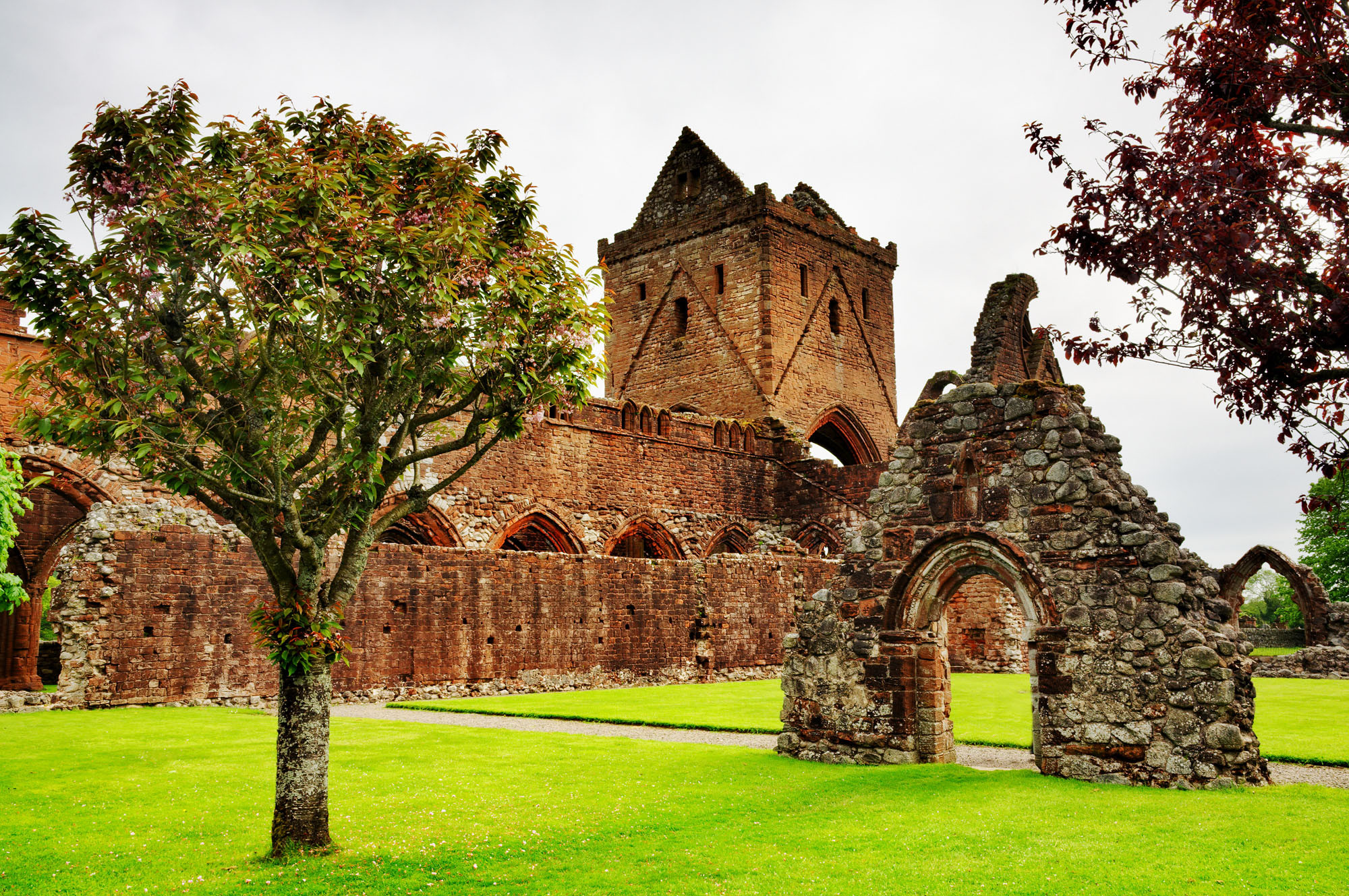
William Paterson died on 22 January 1719 in Westminster. His body was taken north and buried in the graveyard at Sweetheart Abbey near New Abbey in Dumfries and Galloway - a fitting final resting place for a Dumfriesshire man whose vision had shaped nations. A commemorative plaque was unveiled there in 1974.
Paterson's library, described as a "valuable collection of books in most Faculties," including voyages, travels, and works on law and economics, was sold at retail sale in London beginning 24 March 1719.
A Man Ahead of His Time
William Paterson remains one of history's most fascinating figures - a man of brilliant foresight whose practical applications sometimes led to tragedy. The Bank of England, which he founded, became one of the world's most influential financial institutions. His advocacy for free trade anticipated Adam Smith by decades. His vision for Panama as a global trading hub was vindicated when the Panama Canal opened over two centuries later.
Yet the Darien Scheme - perhaps his grandest vision - ended in catastrophe, costing thousands of lives and helping to extinguish Scotland's independence. Historian Francis Russell Hart observed that Paterson's plans were "vast and magnificent," worked out in "minute detail," and were "possible and practical." The tragedy wasn't the vision itself but the hostile circumstances: English and Dutch opposition, Spanish aggression, and inadequate provisioning against which Paterson repeatedly protested in letters that went unheeded.
In Scotland, Paterson's name still evokes strong feelings - admiration for his achievements, sorrow for the Darien disaster, and recognition that he was, above all, a Scot who dared to dream that his nation could stand as an equal on the world stage.


