It’s the question that every Outlander fan asks sooner or later: where is Craigh na Dun? The fictional standing stone circle is one of the most iconic locations in Diana Gabaldon’s bestselling novels and the Starz television adaptation – the very spot where Claire Randall touches an ancient stone and is hurled back in time from 1945 to 1743. Fans have been travelling to Scotland in search of it ever since.
The short answer is that Craigh na Dun doesn’t exist. It never has. But the story behind where it was filmed, what inspired it, and where you can find real standing stones in Scotland that come close to matching the fictional description is fascinating – and that’s what this article is all about.
Is Craigh na Dun a Real Place?
No. Craigh na Dun (Gaelic: Creag an Dùin, roughly translating to “rock of the fort”) is entirely fictional. Diana Gabaldon created the stone circle for her first Outlander novel, published in 1991 (titled Cross Stitch in the UK). In the books, it’s described as a circle of tall standing stones on a hilltop within day-trip distance of Inverness – stones at least twice Claire’s height, with a distinctive cleft stone through which a time traveller can pass.
Here’s the thing that surprises a lot of fans: Gabaldon hadn’t actually visited Scotland when she wrote the first novel. She was living in Arizona and the idea for Outlander came to her after watching a 1960s Doctor Who serial called The War Games, which featured a young Scots character from 1745 played by Frazer Hines. The image of a young man in a kilt stuck with her, and she decided to set her novel in 18th-century Scotland. So Craigh na Dun isn’t based on any specific real stone circle – it came from Gabaldon’s imagination, informed by general knowledge of Scotland’s ancient stone monuments.
That said, Scotland has hundreds of genuine stone circles, standing stones and cairns scattered across the country, many of them thousands of years old. It’s easy to see how Gabaldon’s fictional creation fits so naturally into the real Scottish landscape.
Where Was Craigh na Dun Filmed?
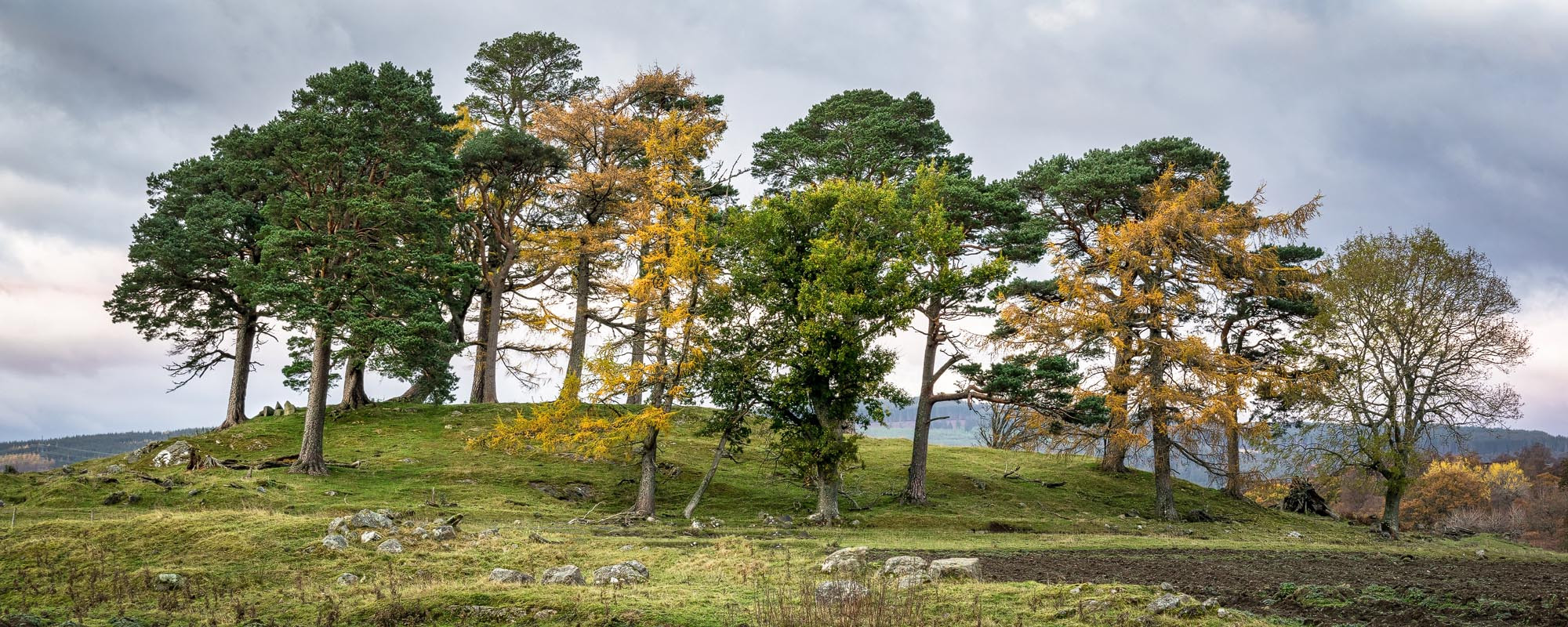
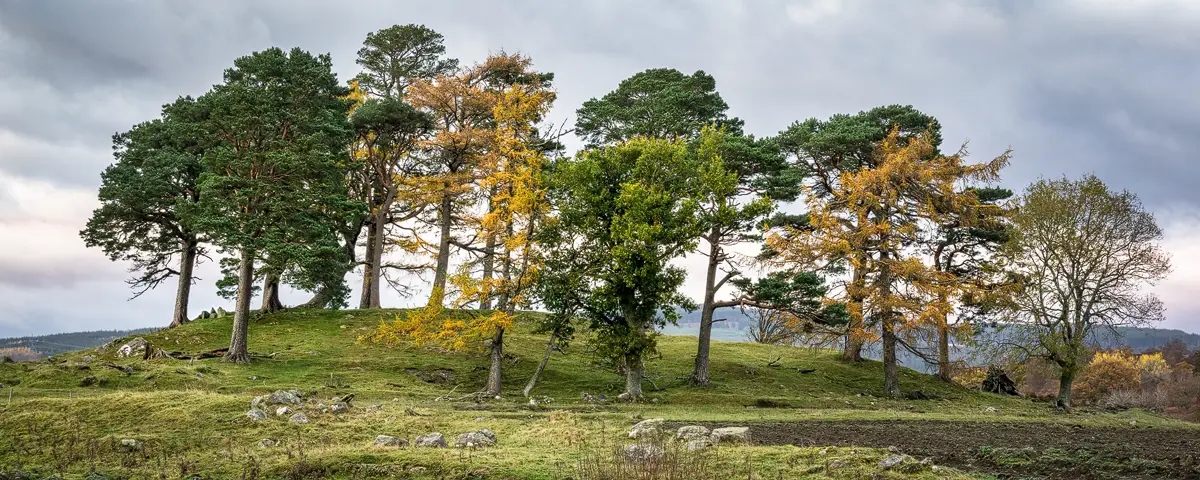
When the Outlander production team needed a real location to bring Craigh na Dun to life for the television series, they settled on a beautiful spot in Highland Perthshire. The filming location is near the village of Kinloch Rannoch, on privately-owned farmland at Tullochcroisk, south of Dunalastair Reservoir in Tay Forest Park.
The specific site is a grassy hillock topped with mature Scots pines, sitting in open farmland with the spectacular conical peak of Schiehallion visible in the background. If you’ve watched the show, you’ll recognise the mound immediately – even without the stones, it has a distinctive shape and the cluster of trees on the summit gives it a slightly otherworldly feel. It’s easy to see why the location scouts chose it.
The address for the filming location is Lassintullich, near Pitlochry, PH16 5QF. If you search Google Maps for “Outlander film location (Craigh na Dun)” you’ll find a pin marking the exact spot. It’s on the south side of the reservoir, reached via a minor road east of Kinloch Rannoch village.
Kinloch Rannoch wasn’t just used for the Craigh na Dun scenes. The area featured in numerous other Outlander sequences across multiple seasons – the surrounding landscape of Rannoch Moor is one of the last great wildernesses in Europe, and the production team made good use of it. This part of Perthshire is genuinely remote and achingly beautiful, which is exactly what the series needed.
How the TV Standing Stones Were Made
Here’s a detail that tends to shatter the illusion slightly: the standing stones you see in Outlander aren’t real. They were props, made from styrofoam (some sources say fibreglass), sculpted and painted to look like authentic weathered stone. Production designer Jon Gary Steele designed the circle, and executive producer Ronald D. Moore revealed on the official Outlander podcast that the stones were light enough for a single person to pick up and carry. They were transported to the Kinloch Rannoch location, planted in the ground for filming, and removed afterwards.
The visual design of the stones was based on the Callanish Standing Stones on the Isle of Lewis in the Outer Hebrides – one of Scotland’s most famous and visually dramatic stone circles. The tall, slender, cross-shaped arrangement of the Callanish Stones clearly influenced the look of the Craigh na Dun set. In the Men in Kilts series, Sam Heughan and Graham McTavish visited the Callanish Stones and acknowledged them as the inspiration for the TV design.
So if you visit the filming location today, you won’t find any standing stones. What you will find is the same atmospheric hilltop and the same stunning Perthshire views that made the scenes so memorable on screen.

What Inspired Craigh na Dun?
Since Gabaldon hadn’t visited Scotland before writing the first novel, the inspiration for Craigh na Dun is a more layered question than most fans realise. There are three real-world locations that are commonly connected to it, each for different reasons.
The Callanish Standing Stones, Isle of Lewis
The Callanish Stones (or Calanais, in Gaelic) are the real stone circle that most closely matches the physical description and visual appearance of Craigh na Dun as seen on screen. Located on the west coast of the Isle of Lewis in the Outer Hebrides, these Neolithic standing stones date back over 5,000 years – making them older than Stonehenge. The tall, slender stones arranged in a distinctive cruciform pattern were the direct visual model used by the TV set designers when creating the Craigh na Dun props. If you want to stand among stones that look like what you see in the show, Callanish is the place to go.
Clava Cairns, near Inverness
The Bronze Age burial cairns and standing stones at Balnuaran of Clava – universally known as Clava Cairns – are often cited as Gabaldon’s primary inspiration for Craigh na Dun. They’re located just a few minutes’ drive from Culloden Battlefield, east of Inverness, which gives them a strong geographic connection to the Outlander story. The site includes passage graves, ring cairns and tall standing stones in a beautiful woodland setting, and crucially, one of the stones has a natural cleft – a split through the middle – that bears a striking resemblance to the cleft stone through which Claire travels in the novels.
The fascinating part is that Gabaldon only visited Clava Cairns after she had already written the first Outlander book. She was reportedly surprised to discover the cleft stone there. She used a photograph of it on the back cover of The Outlandish Companion. However, Gabaldon herself has noted that if Clava Cairns were truly Craigh na Dun, Claire would surely have mentioned the three large burial cairns at the site – something she never does in the novels. So Clava Cairns is probably best understood as a coincidental echo rather than a direct inspiration, though the connection is undeniably powerful.
Craig Dunain, Inverness
This is a connection that most casual fans miss entirely. There’s a hill just outside Inverness called Craig Dunain – note the similarity to “Craigh na Dun” – which has a standing stone on its summit overlooking the city. In Gabaldon’s books, Craigh na Dun is described as a hill with a stone circle that overlooks Inverness, and Craig Dunain fits that description remarkably well. The standing stone at Craig Dunain is the remains of a Neolithic chambered cairn from around 4000–2000 BC, and it can be reached via the Great Glen Way walking route from Inverness.
Members of the Inverness Outlanders fan group have championed Craig Dunain as the “real” Craigh na Dun, and when they asked Gabaldon on social media whether she’d ever visited the stones there, she confirmed she hadn’t – suggesting it’s another coincidence rather than a deliberate reference. But it’s a compelling one, and the walk up to the standing stone at sunrise is said to be quite special.
How to Visit the Craigh na Dun Filming Location
If you’re set on visiting the exact spot where the Outlander crew erected their styrofoam stones, here’s what you need to know.
The filming location is on private farmland at Tullochcroisk, and it’s not a formal tourist attraction. There’s no visitor centre, no gift shop, no signage and no facilities. However, access has generally been permitted by the landowner, and many Outlander fans visit without any issues. Please respect the fact that this is a working farm with livestock – dogs are not allowed, gates should be left as you find them, and you should take all your rubbish with you.
Getting there by car is really the only practical option – there’s no public transport nearby. From Edinburgh, the drive takes around two hours. From Perth, it’s roughly 90 minutes. From Inverness, allow about an hour and 40 minutes. The final stretch involves narrow single-track roads, which is par for the course in Highland Perthshire.
Once you arrive at the south side of Dunalastair Reservoir, you’ll see a small gravel area where you can park. The hillock is visible from the road – once you know what you’re looking for, the distinctive cluster of Scots pines on the mound is immediately recognisable. It’s a short walk from the road to the site itself.

While you’re in the area, Kinloch Rannoch and the surrounding landscape are well worth exploring in their own right. Rannoch Moor is one of the wildest and most atmospheric places in Scotland, and Schiehallion – the fairy hill of the Caledonians – dominates the skyline. This is genuinely remote Highland countryside, and visitors are often struck by how quiet and unspoiled it feels.
Real Stone Circles to Visit in Scotland
If you want the full Craigh na Dun experience – actually standing among ancient standing stones in atmospheric Scottish settings – there are several genuine sites that come much closer to the fictional description than the bare hilltop at Kinloch Rannoch.
The Callanish Standing Stones on the Isle of Lewis are the obvious first choice. They’re visually the closest match to what you see on screen, they’re over 5,000 years old, and the site is free to visit. A visitor centre with a café and exhibition sits nearby. Getting to Lewis requires a ferry from Ullapool or Uig on Skye, which makes it more of an adventure – but that’s part of the appeal.
Clava Cairns near Inverness is the easiest option for anyone already visiting the Highlands. It’s free, it’s atmospheric, and the combination of standing stones, passage graves and woodland creates a genuinely mystical feeling. It’s also just a short drive from Culloden Battlefield and the Culloden Viaduct, making it easy to combine into a half-day itinerary.
For something more off the beaten track, the recumbent stone circles of Aberdeenshire are extraordinary. Sites like East Aquhorthies near Inverurie offer the kind of secluded, atmospheric experience that matches the spirit of Craigh na Dun perfectly – ancient stones in quiet countryside settings where you might be the only visitor.
The Ring of Brodgar and the Stones of Stenness on Orkney are also world-class stone circle sites, and the Machrie Moor Standing Stones on Arran offer a hauntingly remote experience on open moorland with very few signs of modern civilisation.
The Outlander Effect on Scottish Tourism
The impact of Outlander on Scottish tourism has been enormous. VisitScotland estimated that screen tourism was worth £161 million to Scotland in 2023 alone, and Outlander has been the single biggest driver of that figure. Some filming locations have seen visitor numbers increase by hundreds – and in some cases thousands – of percent since the show premiered in 2014.
If you’re planning an Outlander-themed trip around Scotland, we’ve put together a comprehensive guide to the main Outlander filming locations in Scotland, covering everything from Doune Castle (Castle Leoch) and Blackness Castle (Fort William) to Culross (Cranesmuir) and Midhope Castle (Lallybroch). Several of these locations, like Dunure Castle and Beauly Priory, also have their own detailed articles on our site.
With the prequel series Outlander: Blood of My Blood now airing and already renewed for a second season, the Outlander effect on Scottish tourism shows no sign of slowing down.
Frequently Asked Questions
Is Craigh na Dun a real place in Scotland?
No. Craigh na Dun is a fictional location created by Diana Gabaldon for the Outlander novel series. The stone circle and the time-travel portal do not exist in real life. However, the Craigh na Dun scenes in the TV series were filmed at a real location near Kinloch Rannoch in Perthshire, and Scotland has many genuine ancient stone circles that are well worth visiting.
Where exactly was Craigh na Dun filmed?
The TV filming location is on private farmland at Tullochcroisk, south of Dunalastair Reservoir, near the village of Kinloch Rannoch in Highland Perthshire. The address is Lassintullich, near Pitlochry, PH16 5QF. You can find it on Google Maps by searching for “Outlander film location (Craigh na Dun)”.
Can you still see the standing stones at the filming location?
No. The standing stones seen in the TV series were temporary props made from styrofoam and fibreglass. They were erected for filming and removed afterwards. All you’ll find at the site today is the distinctive grassy hillock topped with Scots pines – still recognisable from the show, but without any stones.
What real stone circle inspired Craigh na Dun?
There’s no single answer. The Callanish Standing Stones on the Isle of Lewis were the visual model for the TV props. Clava Cairns near Inverness is often cited as a literary inspiration, particularly because of its cleft stone, though Gabaldon only visited the site after writing the first novel. Craig Dunain hill near Inverness has a similar name and a standing stone overlooking the city, matching the book’s description.
Is the Craigh na Dun filming location free to visit?
Yes, there is no charge to visit the site. However, it’s on private farmland with no formal visitor facilities. Access has been permitted by the landowner, but visitors should be respectful of the working farm environment. Dogs are not allowed due to livestock, and you should take all rubbish with you.
How do I get to the Craigh na Dun filming location?
Driving is the only practical option as there’s no public transport nearby. From Edinburgh it’s about two hours, from Perth around 90 minutes, and from Inverness approximately one hour and 40 minutes. The final approach is via narrow single-track roads. There’s a small gravel parking area near the site.
What other Outlander filming locations can I visit in Scotland?
Scotland has dozens of Outlander filming locations spread across the country. Key sites include Doune Castle (Castle Leoch), Blackness Castle (Fort William), Culross (Cranesmuir), Midhope Castle (Lallybroch), Falkland (1940s Inverness) and the Highland Folk Museum. Our full guide to Outlander filming locations in Scotland covers all the main sites with visiting information.
A Hilltop Worth Visiting
I’ve always found the Craigh na Dun story fascinating – not just the fictional time-travel element, but the way a place that doesn’t technically exist has become one of the most sought-after destinations in Scotland. The hillock at Kinloch Rannoch is just a mound with some trees on it, but stand there looking out over Dunalastair Reservoir towards Schiehallion and you understand exactly why the Outlander team chose it. There’s something about that spot. Scotland has that effect on people – Gabaldon felt it from 5,000 miles away in Arizona, and millions of fans have felt it through their screens ever since.
Whether you make the trip to Kinloch Rannoch, stand among the 5,000-year-old Callanish Stones on Lewis, or explore the atmospheric cairns and standing stones at Clava, the magic that Gabaldon tapped into is absolutely real. Scotland’s ancient stone monuments have been inspiring awe and wonder for millennia. Outlander simply introduced a few million more people to the feeling.
All information was correct at the time of writing, please check things like entry costs and opening times before you arrive.


Leave a comment below