
The Explorer Who Opened Africa to the World
William Balfour Baikie was a remarkable Scottish physician, explorer, naturalist, and philologist whose pioneering expeditions up the Niger and Benue rivers transformed European understanding of West Africa and proved that tropical exploration could be undertaken without devastating loss of life. Born in Kirkwall, Orkney in 1825, he conducted the first clinical trial demonstrating that quinine could prevent malaria, founded the city that would become Nigeria's administrative capital, and earned such respect among the Nigerian people that his name became synonymous with Europeans in the region for generations to come.
Early Life in Orkney
William Balfour Baikie was born on 27 August 1825 in Kirkwall, the principal town of the Orkney Islands, into one of the wealthiest and most influential families in the archipelago. His father, Captain John Baikie RN, had achieved distinction as a Royal Navy officer, commanding flagships during the Napoleonic Wars. This naval heritage would profoundly influence young William's future career and adventures.
As a boy, Baikie was described as possessing a studious, hard-working, and retiring disposition - a youth who kept to himself whilst demonstrating exceptional intellectual abilities. After attending grammar school, where he received tutoring that prepared him for university study, he enrolled at the University of Edinburgh to study medicine at the remarkably young age of sixteen.
Even as a university student, Baikie demonstrated the wide-ranging intellectual interests that would characterise his entire career. In 1846, whilst still only nineteen years old, he wrote and published "A List of Books and Manuscripts Relating to Orkney and Zetland", revealing his early interest in natural history and scholarly research about his native islands. During his final year at Edinburgh, he was appointed Clinical Clerk at the Royal Infirmary - a unique opportunity offered to only one student each year, testament to his exceptional abilities and dedication.
Early Naval Career and Natural History
Upon taking his medical degree in 1848, Baikie entered the Royal Navy as an assistant surgeon, following in his father's professional footsteps. His first year of naval service proved characteristically productive - he found time to write and publish "Historia Naturalis Orcadensis: Zoology, Part I", though Part II was never completed. This work demonstrated his abiding passion for the natural history of his homeland.
Between 1848 and 1851, Baikie served on a succession of naval vessels and at various naval hospitals, including service with the Mediterranean fleet during 1850-1851. In 1851, he was posted to the Royal Hospital Haslar near Portsmouth, one of the Royal Navy's principal medical establishments. It was here that his life would take a dramatic turn towards African exploration.
At Haslar, Baikie came to the attention of Sir Roderick Murchison, the distinguished geologist and president of the Royal Geographical Society. Murchison recognised in the young Scottish physician precisely the combination of medical skill, scientific curiosity, and personal character needed for a daring venture into one of the world's most dangerous regions.
The First Niger Expedition - A Medical Triumph
In 1854, the Liverpool merchant Macgregor Laird, with government support and backing from the Royal Geographical Society, organised an expedition to explore the Niger and Benue rivers. The expedition had multiple objectives: to explore the Benue River to the limit of navigation, open trade with peoples along the riverbanks, collect natural history specimens, and investigate the slave trade. On Murchison's recommendation, the 27-year-old Baikie was appointed as surgeon and naturalist to the expedition.
Laird commissioned the construction of a special iron-hulled paddle steamer, the Pleiad, for the voyage. The vessel was placed under the command of Captain John Beecroft, the British Consul for the Bight of Benin. However, fate had other plans - Beecroft died at Fernando Po (now Bioko) before the expedition properly commenced. When the ship's surgeon was transferred to serve in the Crimean War, and it became clear that the Pleiad's captain was incompetent, command of the entire expedition fell unexpectedly to Baikie at just 27 years of age.
The young physician was about to stake his reputation and the lives of every man under his command on an untested medical theory. For years, explorers had attempted to penetrate the interior of West Africa, but whilst they encountered natural barriers and occasional hostility from local populations, it was malaria that posed the greatest threat. The Bight of Benin had earned the grim sobriquet "the White Man's Grave" - European mortality rates on West African expeditions often exceeded 70 percent.
Baikie was aware that Dr Alexander Bryson, an Assistant Surgeon in the West Africa Squadron, had published a report in 1847 suggesting that quinine - which had been successfully used to treat malaria - might also work as a prophylactic to prevent the disease. Whilst quinine extracted from the bark of the South American cinchona tree had been known since the 17th century, it had always been administered after infection occurred. Bryson's radical proposal was that regular doses before exposure might prevent infection altogether.
Baikie determined to conduct what would be the first clinical trial of prophylactic quinine use. As he recorded in his journal: "Being now fairly in the river, we commenced giving, morning and evening, to all Europeans on board, two thirds of a glass of quinine wine, which contained about five grains of quinine, believing that this would act as a prophylactic or preventive, while exposed - as everyone must be while in the Delta - to the influence of malaria."
The Pleiad sailed from Portsmouth on 24 May 1854. Over the next 118 days, Baikie navigated the vessel through the Niger Delta, sailed to the confluence of the Niger and Benue rivers, then proceeded up the Benue for over 250 miles beyond the point reached by any previous European expedition. Throughout the journey, he continued his twice-daily administration of quinine wine to every European crew member whilst simultaneously collecting extensive natural history specimens.
The results were nothing short of revolutionary. At a time when similar voyages routinely lost three-quarters of their crew to fever, Baikie's expedition returned without the loss of a single life. He had proven conclusively that Europeans could penetrate the interior of tropical Africa and survive. The expedition had been charged with attempting to provide assistance to the German explorer Heinrich Barth, who had crossed the Benue in 1851, but Baikie was unable to obtain reliable information about Barth's whereabouts.
Recognition and Publication
When Baikie returned to England in 1855, he was welcomed as a hero. The expedition had achieved its objectives spectacularly - proving that steamships could navigate the Niger and Benue rivers, exploring and charting over 250 miles of previously unmapped territory, establishing the viability of missionary stations, and most importantly, demonstrating that the prophylactic use of quinine made African exploration survivable.
Baikie returned to his position at Haslar Hospital, where, in addition to his regular medical duties, he worked to catalogue and distribute the extensive collection of natural history specimens he had gathered. In 1856, he published "Narrative of an Exploring Voyage up the Rivers Kwora and Binue" (using the contemporary spellings for Niger and Benue), which included detailed accounts of his groundbreaking use of prophylactic quinine. The book attracted wide attention both for its geographical discoveries and its medical breakthrough.
The Royal Geographical Society nominated him for one of its prestigious awards, recognising both his geographical achievements and his contribution to making African exploration viable. Nigerian bishop Samuel Crowther, who had been a member of the expedition, published his own impressions in "Journal of an Expedition up the Niger and Tshadda Rivers" (1855), providing additional perspective on Baikie's leadership and the expedition's significance.
The Second Expedition and Disaster
In March 1857, Baikie - now holding the rank of British Consul - embarked on a second Niger expedition aboard the Pleiad. The objectives were to build upon the success of the first voyage, establish permanent trading stations, and continue exploration of the river systems. The botanist Charles Barter, who had trained at Kew Gardens and served as foreman at Regent's Park for the Royal Botanic Society, accompanied the expedition as its plant specialist.
The second voyage began promisingly, with the expedition spending two years exploring the Niger and establishing contacts with local populations. However, disaster struck when the Pleiad was wrecked whilst navigating rapids on the river. The vessel was destroyed, and the expedition members were scattered. Charles Barter contracted dysentery and died at Rabba, Nigeria in 1859; he is commemorated by the plant genus Barteria. The surviving crew members were stranded in the vast interior for over a year before rescue could be arranged.
When a ship finally arrived to evacuate the survivors and return them to England, every member of the expedition gratefully boarded - except Baikie himself. In a decision that would define the remainder of his life, the Scottish physician elected to remain alone in Africa, determined to carry out the purposes of the expedition single-handedly.
The Founding of Lokoja
Baikie first considered establishing a British Consular Agency at Kabba, but faced opposition from the local king - possibly because Baikie was firmly opposed to the slave trade, which still provided substantial income for some tribal leaders. Instead, he chose a site at the confluence of the Niger and Benue rivers where a model farm had been established by a British government expedition in 1841, only to be abandoned within twelve months following the deaths of most of the white settlers.
Landing from a small boat with one or two native followers, Baikie established his base at this strategic location, which he named Lokoja. After purchasing the site and concluding a treaty with the Fula emir of Nupe, he set about creating what he envisioned as a permanent settlement and trading centre.
Working largely alone, Baikie proceeded to clear ground, build houses, construct enclosures, and lay the foundations for what would become a thriving town. In less than five years of extraordinary effort, he had opened up navigation of the Niger, constructed roads, and established a market where native produce was brought for sale and barter. His settlement attracted representatives from almost all the tribes of West-Central Africa, and more than 2,000 traders visited the town in its first three years.
To the diverse commonwealth he had created, Baikie acted as ruler, physician, teacher, and priest. He provided free medical care to the local population, established schools, and conducted Christian services. His enlightened approach to working with indigenous peoples, treating them with respect and fairness, earned him extraordinary esteem. The ruler of the Sokoto Caliphate designated him "King of Lokoja" - a remarkable honour for a European in that era.
Linguistic and Biblical Scholarship
Throughout his years at Lokoja, Baikie pursued ambitious scholarly projects alongside his administrative and medical duties. He collected detailed vocabularies of nearly fifty African languages and dialects, making him one of the most accomplished philologists working in West Africa. This linguistic work was painstaking and required patient engagement with speakers of diverse tongues across the region.
His most significant linguistic achievement was translating substantial portions of the Bible and prayer book into Hausa, one of West Africa's major languages. His translation of the Psalms into Hausa was published by the Bible Society in 1881, seventeen years after his death, and represented a major contribution to making Christian scripture accessible to West African peoples. He also translated religious texts into Arabic for Muslim communities.
In 1861, Baikie privately printed "Observations on the Hausa and Fuifulde (i.e. Fula) Languages", a scholarly work that demonstrated the depth of his philological knowledge. This work, along with his extensive unpublished notes and vocabularies, provided invaluable resources for future linguistic scholars and missionaries working in the region.
Peaceful Relations and Rare Conflict
Remarkably, throughout his residence at Lokoja, Baikie had to employ armed force against surrounding tribes only once. This extraordinary record of peaceful relations testified to his diplomatic skills, his fair dealing with local populations, and his genuine respect for African peoples and cultures. At a time when many European ventures in Africa were characterised by violence and exploitation, Baikie's settlement stood as an example of what could be achieved through cooperation and mutual respect.
His success in maintaining peace whilst firmly opposing the slave trade - which remained economically important to some tribal leaders - demonstrated considerable courage and diplomatic acumen. He navigated the complex political landscape of the Sokoto Caliphate and surrounding territories with sensitivity to local customs and power structures.
Legacy to Orkney and Shetland
Despite his consuming work in Africa, Baikie never forgot his Orcadian roots. He authored various works concerning Orkney and Shetland, maintaining his connection to the islands that had shaped his early years. His contributions to the natural history and bibliography of the Northern Isles remained valuable resources for scholars studying the region.
The plant genus Baikiaea was named in his honour, commemorating his extensive contributions to botanical science through the specimens he collected and catalogued during his expeditions.
Final Years and Untimely Death
By 1864, after seven years of continuous residence in Africa, Baikie's health had seriously deteriorated under the cumulative strain of the tropical climate and his relentless work schedule. At his temporary quarters in Sierra Leone on 10 December 1864, he worked to complete various reports and publications expected by the Colonial and Foreign Offices whilst attempting to regain his strength for the voyage home. His wife and children waited for his return 600 miles away in Lokoja, whilst his elderly father awaited him in Kirkwall.
On 12 December 1864, just two days later and two weeks before his 40th birthday, William Balfour Baikie died of tropical fever - the very disease he had done so much to combat. He was buried at Sierra Leone, never having seen his father again or returned to the family he had left in Africa. The climate that his care, skill, and knowledge had shielded so many from had finally claimed him.
An Enduring Legacy
After Baikie's death, the British government made the short-sighted decision to abolish the consulate at Lokoja in 1866. However, the trading post he had established remained influential, and through private enterprise, the district where he had worked so successfully was finally secured for Great Britain some twenty years later. In 1900, Lokoja became the capital of the Northern Nigeria Protectorate, retaining its administrative importance after the foundation of Nigeria in 1914 - a direct legacy of Baikie's vision and work.
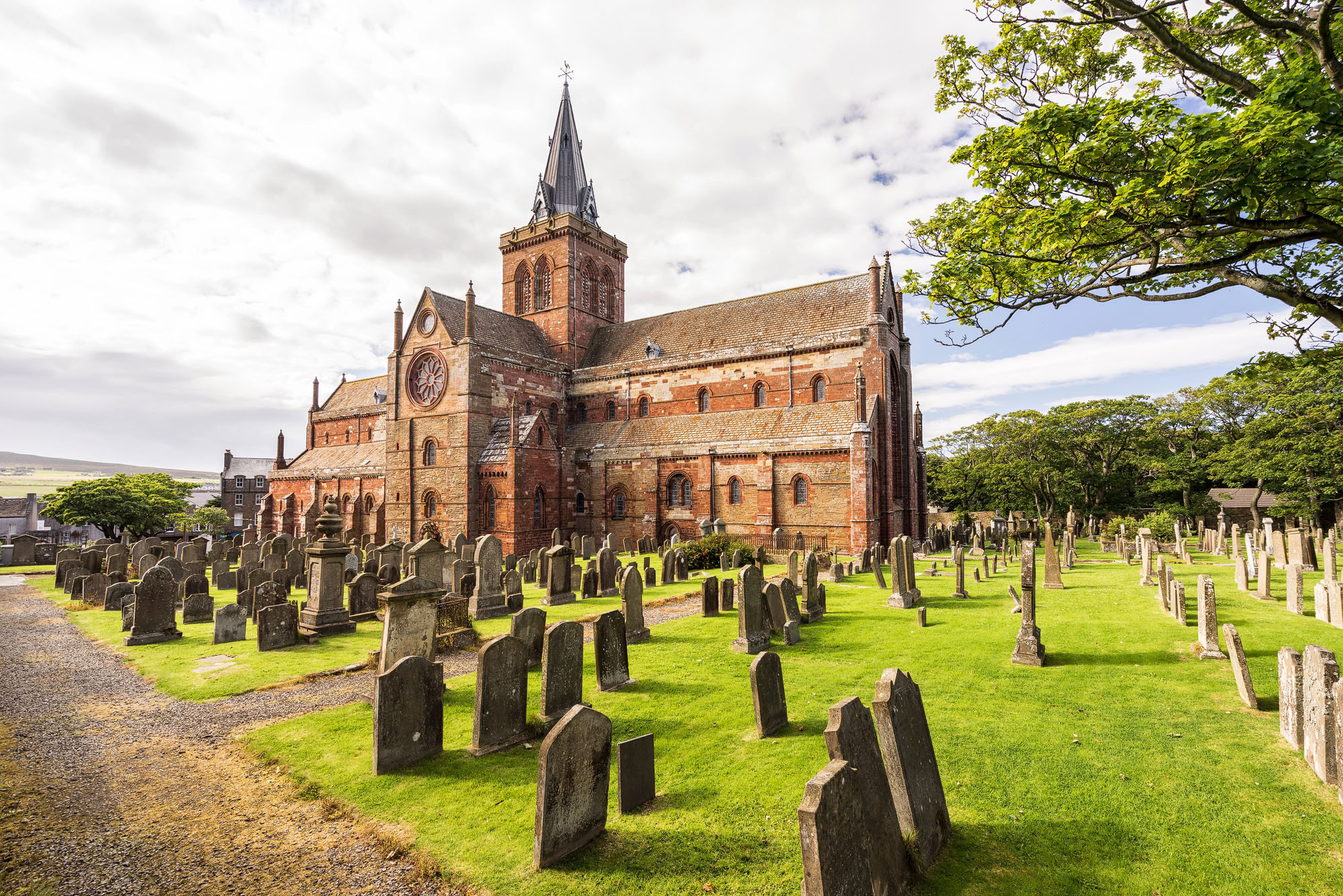
A monument to Baikie's memory was placed in the nave of St Magnus Cathedral in Kirkwall, his birthplace. The inscription provides an eloquent summary of his achievements: "William Balfour Baikie, MDRN, FRGS, FBS, FSA (Scot). Born at Kirkwall 27th August 1825. The explorer of the Niger and Tchadda, the translator of the Bible into the languages of Central Africa, and the pioneer of education, commerce, and progress, among its many nations. He devoted life, means, and talents, to make the heathen, savage, and slave, a free and Christian man. For Africa, he opened new paths to light, wealth and liberty - for Europe, new fields of science, enterprise and beneficence. He won for Britain new honour and influence, and for himself the respect, affection, and confidence of the chiefs and people."
Perhaps most remarkably, Baikie's enlightened approach to working with indigenous peoples earned him such profound respect that his name entered the languages of Nigeria. The Igbo word "Beke" means "white man", derived from Baikie's name, whilst "England" became known as "Ela Beke" - the land of Baikie. Writing on the 100th anniversary of his death, Ernest Marwick observed that "although thousands of white men have come and gone, it is with cordial respect that the Niger River people remember William Balfour Baikie." Even 150 years after his death, white visitors to the region were still greeted warmly as "Baikie" - an extraordinary testament to the lasting impression he made.
Baikie's published descriptions of Africa also had unexpected influence beyond exploration and colonisation. His vivid accounts helped inspire Dr David Livingstone, the famous Scottish missionary and physician, to undertake his own African adventures.
In an age that demanded daring and courage from African explorers, Baikie proved himself equal to any contemporary adventurer. Yet he differed from many in being an educated, scientific observer of the African scene - an intellectual rather than a mere daredevil. His meticulous records, linguistic studies, and natural history collections contributed substantially to European understanding of West Africa.
Most importantly, his demonstration that prophylactic quinine could prevent malaria transformed the possibilities for European activity in tropical regions worldwide. His clinical trial aboard the Pleiad in 1854 proved a turning point in medical history, opening not just Africa but all malarial regions to exploration, trade, missionary work, and eventually colonisation - for better or worse.
William Balfour Baikie's short life - he died before reaching his 40th birthday - was packed with extraordinary achievements. From his scholarly work on Orkney's natural history to his groundbreaking medical research, from his geographical discoveries to his linguistic scholarship, from his founding of a major African city to his translation of scripture into native languages, he demonstrated remarkable breadth of talent and dedication to human advancement. He remains one of Orkney's most distinguished sons and one of Scotland's great explorers, a man who opened new paths not through conquest but through science, compassion, and genuine respect for the peoples he encountered.


