
Ask a gardener in the south of England what makes gardening hard and they’ll usually say slugs or a hosepipe ban. Ask a Scottish gardener and you’ll get a longer answer: wind that flattens a row of beans overnight, a June frost that nips the potatoes back, soil that’s either sodden clay or thin acid peat, and a growing season that feels like it starts late and ends early. And yet Scotland grows some of the finest soft fruit in the world, keeps subtropical gardens alive at the same latitude as Hudson Bay, and has a walled-garden tradition that was solving climate problems with clever engineering two hundred years before anyone said the word “microclimate”.
Living in Moray, I garden in one of the drier, sunnier corners of the country, but I’ve spent enough time up glens and out on the west coast to know how different conditions can be within a couple of hours’ drive. This article pulls together what actually works when you garden in Scotland – the climate you’re really dealing with, the techniques that make the difference, what to plant, and where to go for inspiration. It’s written for people gardening here, but I hope it’s just as interesting if you’re reading from somewhere warmer and wondering how anything grows this far north at all.

Understanding the Scottish climate – it’s not one climate
The single biggest mistake people make is treating “Scotland” as one gardening zone. It isn’t. The country splits into several very different growing environments, and knowing which one you’re in matters more than almost anything else you’ll read.
The west coast is mild and wet. It’s warmed by the Gulf Stream (more properly the North Atlantic Drift), the current of warm water that swings up from the tropics and keeps the western seaboard several degrees milder than its latitude has any right to be. Rainfall can top 100 inches a year in places, hard frosts are relatively rare, and this is where you find gardens growing tree ferns, palms and rhododendrons the size of houses. The trade-off is the wet and the wind coming straight off the Atlantic.
The east coast – Moray, Aberdeenshire, Angus, Fife, the Lothians – is colder in winter but drier and sunnier in summer. Frosts are harder and later, but you get the daylight and the ripening heat that soft fruit and vegetables love. This is why the great fruit-growing districts are all in the east.
The Highlands and inland glens are the toughest: hard frosts, cold air that pools in valley bottoms, a short season and often thin, acidic soil. Frost pockets are a real thing here – cold air runs downhill like water and settles in the low ground, so the bottom of a sloping garden can be several degrees colder than the top.
And then there are the islands – Orkney, Shetland, the Western Isles – where it’s the relentless salt-laden wind rather than the cold that limits what you can do. If you’re wondering just how cold it really gets, we go into the detail in our guide to Scotland’s weather, and the answer surprises a lot of people.
The practical upshot: find out whether you’re in the mild-and-wet camp or the cold-and-dry camp, because it changes everything from what you plant to when you plant it.
The one advantage nobody mentions: the long summer day
Scottish gardeners spend so much time apologising for the weather that they forget the country’s secret weapon. In midsummer this far north the days are enormous – in the far north you’re looking at eighteen hours of daylight and a sky that never fully goes dark, the “simmer dim” they call it in Shetland.
Those long days let plants make up for the shorter season by growing fast when they do get going. It’s the reason early potatoes and salad crops romp away in June and July, and it’s a big part of why Scottish soft fruit is so good. Berries ripen slowly under cool temperatures but long light, and that slow ripening is exactly what builds flavour. Growers and chefs will tell you a Scottish raspberry has a depth to it that a fast-ripened southern one simply doesn’t. Blairgowrie in Perthshire was once known as “Berry Town” and shipped so much fruit south that a dedicated train, the “Raspberry Special”, ran to Covent Garden. That whole industry exists because of the cool-days-long-light combination.
So the mindset that works up here isn’t “how do I fight the climate” so much as “how do I lean into what it’s good at” – and it’s genuinely good at fruit, roots and leafy greens.

Shelter first: the single most important thing you can do
If there’s one lesson that runs through every good Scottish garden, from a windswept croft to the great estates, it’s this: sort out your shelter before you worry about anything else. Wind does more damage here than cold. It shreds leaves, snaps stems, dries out soil and, worst of all, strips warmth away from plants through constant wind chill. A plant that would happily survive a still frost at minus five can be killed by a lower temperature carried on a hard wind.
Creating a windbreak is how you build your own microclimate, and it’s worth understanding that a solid barrier is not what you want. A solid fence or wall creates damaging turbulence on the leeward side as the wind tips over the top and slams back down. What you want is something that filters and slows the wind – roughly 50% permeable is the target. Options that work in Scotland:
- A hedge of something tough – beech, hawthorn, hornbeam, or for coastal gardens the brilliant salt-tolerant Griselinia or Escallonia.
- A shelterbelt of trees on a larger plot – this is exactly how the famous west-coast gardens were started. Osgood Mackenzie planted over 100 acres of woodland at Inverewe purely to screen the garden before he could grow anything ornamental at all.
- Slatted fencing or purpose-made windbreak netting with gaps, rather than a solid panel.
- Internal shelter too – low hedges, woven willow, even strategically placed shrubs to break the wind up within the garden.
It takes patience, because a hedge or shelterbelt needs a few years to do its job, but nothing else you do will pay back as well. Once you’ve knocked the wind down you can grow things that your exposed neighbour a hundred yards away simply can’t. If your garden is a bigger project than a hedge will fix, it can be worth talking to a professional about landscaping a Scottish garden so that shelter, levels and drainage are designed in from the start rather than fought with afterwards.
Know your soil – and it’s probably acidic
Scottish soils vary enormously, but a good rule of thumb is that much of the country, especially the west and the Highlands, sits on the acidic side. Peaty, acid soil over ancient hard rock is common; the east has more in the way of fertile loams and some heavier clays, and pockets of more alkaline soil exist in places like East Lothian.
Test your soil pH – a cheap kit from any garden centre does the job – because it tells you what will be happy and what will sulk. The good news is that acid soil is exactly what a whole cast of glorious plants wants. Rhododendrons, azaleas, camellias, heathers, blueberries and pieris are all ericaceous, acid-loving plants, and they thrive across huge parts of Scotland almost without trying. It’s no accident that Scotland’s great gardens are famous for their rhododendron and azalea collections – the soil and the cool, damp air suit them perfectly.
If your soil is heavy and wet, which a lot of Scottish gardens are, the single best thing you can do is add organic matter – garden compost, well-rotted manure, leaf mould – and keep adding it. It opens up clay so roots can breathe and water can drain, and it feeds the soil life that keeps everything ticking over. Raised beds are hugely popular here for exactly this reason: they let you build good, free-draining soil above ground where the native ground is cold and waterlogged, and they warm up faster in spring.

Extending the season – the Scottish gardener’s craft
Because the season is short, learning to stretch it at both ends is the skill that separates a good year from a frustrating one. This is where a bit of kit and a bit of technique earn their keep.
Starting under cover. Sowing seed indoors on a windowsill or in a heated propagator, or in a greenhouse, gives seedlings a head start of several weeks before they ever meet the outdoor cold. For anything tender – tomatoes, courgettes, squash, French beans – this isn’t a luxury in Scotland, it’s close to essential.
Cold frames, cloches and fleece. These are the cheap, unglamorous heroes of Scottish gardening. A cloche over a row, a sheet of horticultural fleece thrown over on a frosty night, a cold frame to harden plants off – each buys you a few degrees and a few weeks, and a few degrees is often all that stands between a crop and a failure. Keep fleece to hand right through spring, because late frosts in May and even early June are a genuine risk in much of the country.
A greenhouse or polytunnel. If you get serious about growing your own food in Scotland, this is the investment that changes what’s possible. Under cover you can reliably grow tomatoes, cucumbers, peppers, chillies and aubergines that struggle or fail outdoors, and you extend your salad and leaf season at both ends. Polytunnels have become a familiar sight across the Scottish countryside for exactly this reason, and even a small model transforms a back garden’s output.
Choosing early and quick varieties. Half the battle is picking plants bred to crop fast. First and second early potatoes, quick-maturing carrots like Nantes and Autumn King, fast salad leaves – these are chosen to get in and out before the weather turns. Wherever you can, buy from Scottish nurseries and growers, because their stock is already adapted to the conditions and their advice is worth its weight.
What actually grows well in Scotland
Rather than a plant that theoretically survives, here’s what genuinely flourishes and rewards the effort.
Root vegetables love the cool. Carrots, parsnips, swedes (the “neep” of neeps and tatties – and yes, there’s a whole story in what neeps actually are) and beetroot all do well, and several of them actually taste sweeter after a frost, which converts their starches to sugars.
Potatoes are practically a national crop. Scotland’s cool climate and its reputation for virus-free seed potatoes make it ideal spud country, and earlies in particular make the most of the long June days.
Brassicas – kale, cabbage, Brussels sprouts, purple sprouting broccoli – are some of the hardiest things you can grow and will stand right through winter. Kale in particular is bomb-proof and, like the roots, sweetens with frost. Net them, though, because pigeons will strip young plants bare.
Alliums – onions, leeks, garlic – sit quietly through the cold months and crop in the warmer ones. Leeks are a brilliant, reliable winter standby.
Soft fruit is where Scotland genuinely excels. Raspberries, strawberries, blackcurrants, gooseberries, brambles, blueberries – the cool-climate, long-light combination makes all of them superb. If you grow one thing for fruit, make it raspberries: buy Scottish-raised canes so they’re already suited to the conditions, give them sun and shelter from wind, and grow both summer and autumn types for a long picking season.
Hardy ornamentals for colour and structure: rhododendrons and azaleas for spring; heathers for year-round texture and winter colour (our piece on Scottish heather goes into the different types); montbretia (crocosmia), hardy geraniums, astilbes that love the damp, and primulas that thrive in cool moisture. For structure, tough evergreens and grasses that shrug off wind.

Growing the exotic: how palms and tree ferns survive in Scotland
Here’s the part that astonishes visitors. On the mild west coast and in the south-west, gardeners grow plants you’d associate with a far warmer country – palms, tree ferns, echiums, and great banks of tender rhododendrons. This isn’t a trick; it’s the Gulf Stream doing its work, combined with clever shelter.
The Cabbage Palm (Cordyline australis) from New Zealand and the hardy Chusan Palm (Trachycarpus fortunei) are the two you’ll see most often, sometimes surprisingly far north wherever the site is mild and sheltered. We wrote a whole article on whether there really are palm trees in Scotland, because it’s one of the questions we get asked most – and the answer is a definite yes, with caveats.

The lesson for the home gardener is the one Osgood Mackenzie proved at Inverewe over 150 years ago: modify the climate and you change what’s possible. Get the shelter right, choose a warm corner, give tender plants a well-drained root run and some winter protection, and you can grow things your latitude says you shouldn’t. Every Scottish garden has a warm south-facing spot against a wall that’s a couple of degrees kinder than the rest of the plot – find yours and use it for your riskier treasures.
The genius of the Scottish walled garden
Long before anyone talked about microclimates, Scotland’s estate gardeners were engineering them in stone. The traditional walled garden – you’ll find them at castles and estates all over the country – was a sophisticated piece of climate control.
The high walls did several jobs at once: they blocked the wind, they trapped the sun’s warmth and radiated it back at night, and they created a still, sheltered pocket several degrees warmer than the open ground outside. Fruit trees were trained flat against the walls as espaliers and fans to soak up that stored heat, which is how Scottish gardens grew peaches, apricots and grapes that had no business ripening this far north.
The most ingenious went further still. Some estates built “hot walls” – hollow walls with internal flues, heated by fires or hot air ducted through from boiler houses behind, so the brickwork itself was warmed to coax on delicate fruit. You can still see the exposed flues in some surviving walls. Sir Walter Scott spent a small fortune on a hot-wall system at Abbotsford, and grand examples were built at estates from the Lothians to the north-east. Gardens were also often built on a gentle south-facing slope so that cold air would drain away downhill and warm air stay trapped against the walls – the same frost-drainage principle any gardener can use today.
It’s worth visiting a restored walled garden just to see these ideas in action, because every one of them – shelter, stored heat, a warm wall for tender things, drainage of cold air – scales straight down to a normal back garden.

Gardening with wildlife and the seasons
One of the real pleasures of gardening here is how close the wildlife is. A Scottish garden is rarely just yours – it’s shared with roe deer that’ll browse your roses, red squirrels in the right areas, hedgehogs, frogs and newts in the pond, and a huge range of birds. Living in Moray, we see plenty of visitors to the garden, and a bit of tolerance goes a long way. Leaving a corner a little wild, growing nectar-rich flowers, and keeping a pond does more for the health of a garden than any amount of tidiness.
Slugs deserve a mention because the damp climate makes them a serious opponent – encouraging their predators (frogs, hedgehogs, ground beetles, thrushes) is more effective in the long run than any nightly patrol. And if you want to bring a bit of the wider Scottish landscape into how you garden, our guide to foraging in Scotland is a good companion – a lot of what grows wild here, from brambles to wild garlic, is happy in a garden too.
Work with the seasons rather than against them. Autumn is for planting trees, shrubs and spring bulbs while the soil is still warm. Winter is for planning, pruning and getting shelter and structure in. Late winter and early spring are for sowing under cover. And summer, with its endless light, is for making the most of the short, generous window when everything grows at once.
Frequently asked questions about Scottish gardening
What can I grow in a Scottish garden?
A great deal. Root vegetables (carrots, parsnips, swedes, beetroot), potatoes, brassicas (kale, cabbage, sprouts, broccoli), leeks, onions and garlic all thrive. Soft fruit – raspberries, strawberries, blackcurrants, gooseberries, blueberries – grows superbly. For ornament, rhododendrons, azaleas, heathers, camellias, primulas and hardy perennials do well in the cool, often acidic conditions. On the mild west coast you can even grow palms and tree ferns.
When does the growing season start in Scotland?
Later than the rest of the UK. Outdoor sowing usually gets going properly from April into May, and you should be ready for frost well into May and occasionally early June, especially inland and in the Highlands. The trade-off is very long summer days that let plants grow fast once they start. Starting seeds under cover in late winter is the standard way to get ahead.
Why is Scottish soil often acidic, and does it matter?
Much of Scotland sits on ancient hard rock with peaty, high-rainfall soils, which tend towards the acidic. It matters because it decides what will thrive. Acid soil is ideal for rhododendrons, azaleas, heathers, camellias and blueberries. If you want to grow lime-loving plants you’ll need to improve the soil or grow them in pots. A cheap pH test kit tells you exactly what you’re working with.
How do I protect my garden from wind in Scotland?
Create a permeable windbreak – a hedge, a shelterbelt of trees, or slatted fencing or netting that filters the wind rather than a solid wall that causes turbulence. Aim for roughly 50% permeability. Wind chill does more damage than cold alone, so getting shelter established is the most valuable single thing you can do, even though a hedge takes a few years to mature.
Can you really grow palm trees in Scotland?
Yes, in the right places. The Gulf Stream keeps the west coast and south-west mild enough that hardy palms like the Chusan Palm and Cabbage Palm survive outdoors, particularly in sheltered, well-drained spots. They’re a common sight in milder coastal gardens. Inland and in the Highlands they’re much harder to keep going through a cold winter.
Do I need a greenhouse to garden in Scotland?
Not to grow the hardy staples – roots, brassicas, soft fruit and hardy ornamentals all do fine outdoors. But if you want tomatoes, cucumbers, peppers, chillies or aubergines to crop reliably, a greenhouse or polytunnel makes an enormous difference, and it extends your salad and seedling season at both ends. Even a small one is one of the best investments a Scottish grower can make.
What’s the best fruit to grow in Scotland?
Raspberries. The cool climate and long summer light are close to perfect for them, which is why Scottish raspberries are so highly regarded. Buy Scottish-raised canes, give them sun and shelter, and grow both summer- and autumn-fruiting types for a picking season that runs from midsummer to the first frosts. Strawberries, blackcurrants and gooseberries are close behind.
Scottish gardens worth visiting for inspiration
Nothing teaches you more than walking round a garden that has already solved the problems you’re facing. These are some of the best places in Scotland to see the techniques above in action, from Gulf Stream exotica to classic walled kitchen gardens.
- Inverewe Garden, Wester Ross – the definitive Gulf Stream garden. Osgood Mackenzie turned a barren, windswept headland into a subtropical paradise of rhododendrons, eucalyptus, palms and Himalayan blue poppies, all made possible by shelterbelts and the warm Atlantic current. The single best lesson in what shelter can achieve.
- Logan Botanic Garden, Dumfries & Galloway – often called Scotland’s most exotic garden. In the mild south-west it grows tree ferns, 15 species of palm, and southern-hemisphere plants from South Africa, Australia and Chile in a beautiful walled setting.
- Royal Botanic Garden Edinburgh – founded in 1670 and one of the great botanic gardens of the world, with a famous rock garden, a Chinese hillside, a Scottish native plants collection and the wonderful Victorian glasshouses.
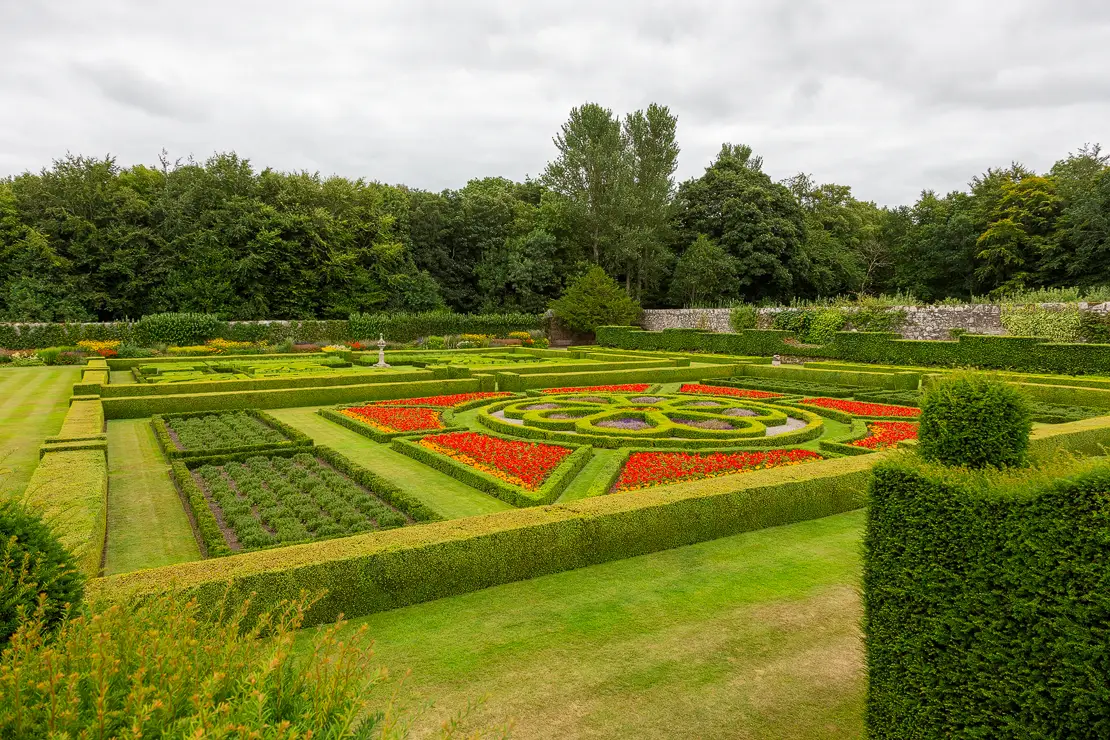
- Pitmedden Garden, Aberdeenshire – a spectacular restored 17th-century formal walled garden, with intricate parterres laid out in box hedging. A masterclass in the walled-garden tradition.
- Crathes Castle, Aberdeenshire – famous Arts and Crafts walled gardens divided into a series of themed “rooms” by superb old yew hedges, with colour-themed borders that reward a slow wander.
- Cawdor Castle, near Nairn – three distinct gardens including a walled garden, a flower garden and a wild garden, all beautifully kept and lovely in any season.
- Ballindalloch Castle, Speyside – a handsome rock garden and walled garden in the heart of whisky country, and an easy one to combine with a Speyside day out.
- Glen Grant Distillery Gardens, Rothes – a restored Victorian garden laid out by the distillery’s founder, with woodland walks, a waterfall and orchards. Proof that Moray does ornamental as well as productive.
If you want to go further, Scotland’s Gardens Scheme opens hundreds of private gardens to visitors on set days each year – a brilliant way to see what real people grow in conditions just like yours, and to pick up ideas (and often plants) from the gardeners themselves.
A final thought
People from warmer places sometimes pity Scottish gardeners, and they’ve got it exactly backwards. Yes, the wind is a menace and the season is short and you’ll lose the odd plant to a freak June frost. But there’s a particular satisfaction in gardening somewhere that makes you earn it – in coaxing a warm corner into growing something it shouldn’t, in eating raspberries that taste better than anything you can buy, in watching a shelterbelt you planted finally start to do its job. The Scots who built those hot walls two centuries ago weren’t defeated by the climate; they out-thought it. That’s still the spirit of it. Work with what this country is good at, be a bit stubborn about the rest, and a Scottish garden will give you back far more than you’d ever expect this far north.
All information was correct at the time of writing, please check things like entry costs and opening times before you arrive.




Leave a comment below